
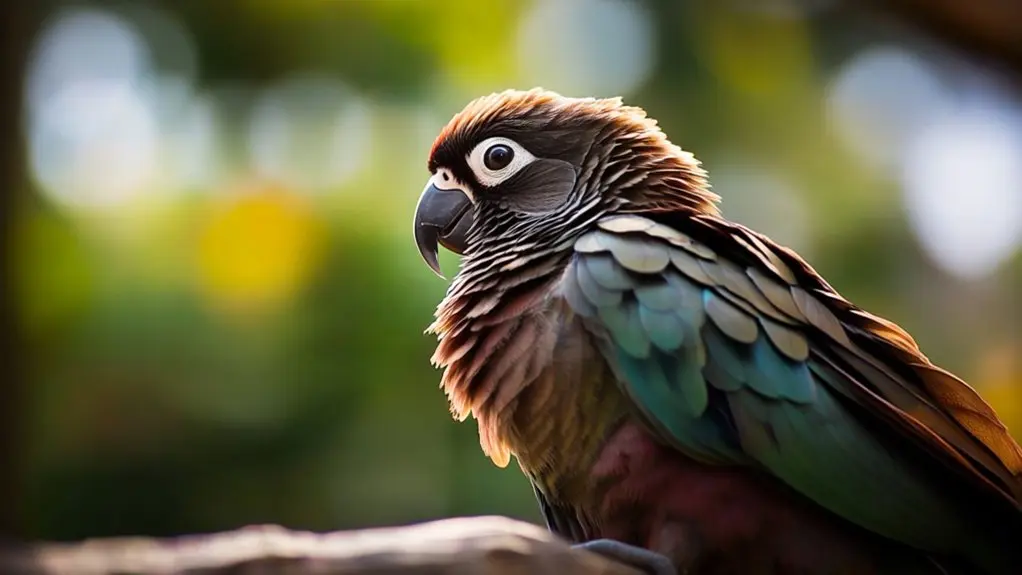
Yes, birds can show signs of mental distress through behaviors like feather plucking, excessive vocalization, and social withdrawal. These behaviors are often triggered by stress, captivity, or changes in their environment.
While these signs do suggest emotional difficulties, true mental illness in birds needs a thorough assessment to rule out physical causes. Captivity-related stress is a big factor that affects their wellbeing.
Understanding these behaviors and what triggers them can help you take better care of your bird’s emotional health. This knowledge also gives you a chance to prevent problems and know when to step in with support.
Recognizing Mental Health Symptoms in Birds
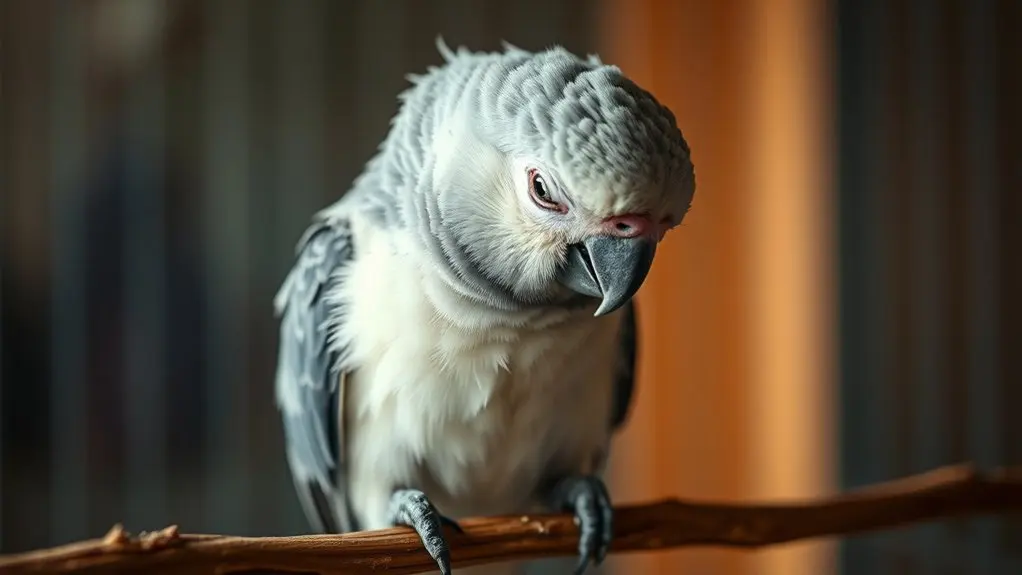
Although birds can’t verbally communicate their distress, you can recognize mental health symptoms by observing specific behavioral changes.
Feather plucking is a prominent indicator, where birds excessively remove their own feathers. This behavior is often linked to emotional or psychological distress.
Feather plucking signals emotional or psychological distress in birds through excessive self-feather removal.
Additionally, vocalization changes such as increased screaming, altered call patterns, or reduced vocal activity can signal underlying mental health issues.
You should also monitor for repetitive movements, pacing, or social withdrawal, which further suggest distress.
These behaviors often coincide with physical signs, including loss of appetite and lethargy.
Accurate identification requires careful observation of these behavioral shifts alongside environmental and physical health assessments.
Noticing these symptoms early enables timely intervention to address the bird’s well-being and prevent further deterioration of mental health.
How Stress and Environment Affect Bird Behavior
You’ll notice that birds in captivity often develop stress-induced behaviors, like feather-plucking. This usually happens because they don’t get enough environmental stimulation or social interaction.
Out in the wild, things like habitat loss and noise pollution can really throw off their normal behavior and raise their stress levels.
Captivity Stress Effects
How does captivity influence bird behavior and mental health? Captive birds often face chronic stress due to restricted space, social isolation, and lack of stimulation. This stress can damage feather health through behaviors like feather-plucking.
Elevated corticosterone levels indicate physiological stress responses linked to emotional distress. When birds can’t express natural behaviors, their mental well-being deteriorates. You’ll notice abnormal activities such as self-mutilation emerge under these conditions.
However, providing social enrichment and improving environmental complexity can help reduce these effects. Studies show that opportunities for social interaction and more engaging surroundings reduce stress-related behaviors and promote healthier feather condition.
Environmental Stressors Impact
Captive birds show clear signs of stress when confined, but wild birds also face significant challenges from environmental stressors. Habitat fragmentation and pollution effects disrupt their natural behavior, causing increased vigilance, altered foraging, and physiological stress marked by elevated corticosterone levels.
You’ll notice that social disruptions from human activity or environmental changes elevate anxiety and provoke stress-related behaviors such as aggression or feather plucking. Although direct evidence is limited, chronic exposure to these stressors may induce mental health issues akin to those seen in captivity.
Recognizing how environmental stressors affect wild birds highlights the critical need to preserve natural habitats. This preservation helps maintain their mental and physical well-being by mitigating the adverse impacts of habitat fragmentation and pollution effects on their behavior.
Common Signs of Bird Mental Health Issues in Pets
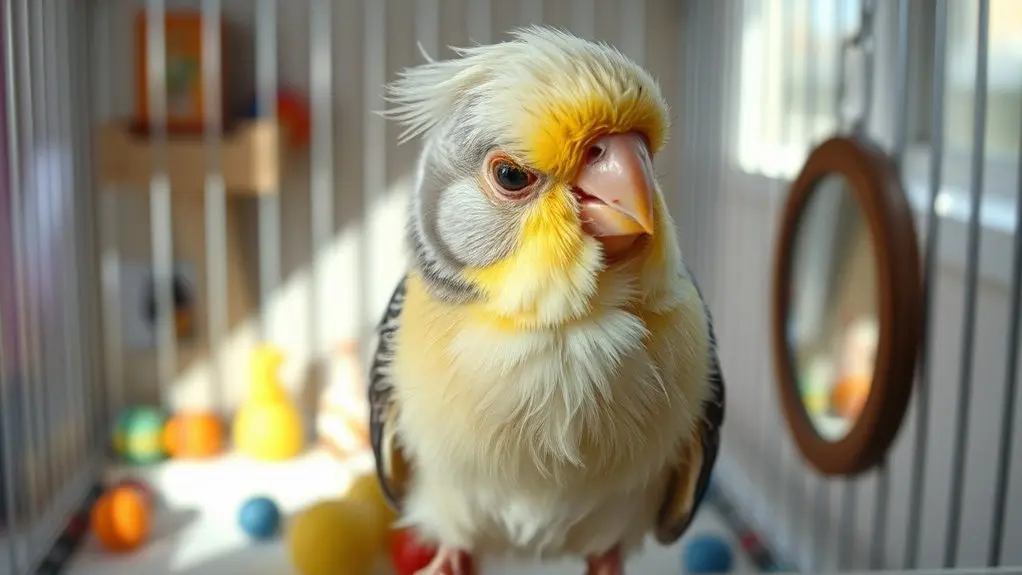
Although birds can’t verbally express their distress, you can identify mental health issues in pet birds by observing specific behavioral changes. Unlike natural processes such as bird migration that follow seasonal patterns, abnormal behaviors like feather plucking and self-mutilation signal potential psychological distress.
You may notice compulsive feather chewing that alters feather coloration, indicating stress or boredom. Excessive screaming, pacing, or head bobbing often accompany anxiety or social withdrawal. Changes in appetite and lethargy also reflect emotional imbalance.
Recognizing these signs early is vital for intervention. Providing environmental enrichment and social interaction can help reduce symptoms. Monitoring these behaviors objectively allows you to differentiate normal physiological changes from mental health concerns, ensuring timely veterinary care and improving your bird’s overall well-being.
How Captivity Affects Your Bird’s Mental Health
You’ll notice that keeping your bird in captivity exposes it to certain stressors, like having limited space and less social interaction. These things can actually raise their stress hormone levels.
Because of this, you might see some changes in their behavior, like feather plucking or pacing back and forth repeatedly. These are signs that their mental health might be affected.
Knowing this can help you understand why it’s so important to provide environmental enrichment to help reduce their distress.
Stressors In Captivity
How does confinement affect a bird’s mental well-being? Captivity restricts flight agility, limiting natural exercise and exploration, which leads to increased stress. Environmental inadequacies, such as insufficient space and lack of enrichment, prevent birds from expressing innate behaviors.
This disruption messes with normal vocalization patterns that are critical for communication. Social deprivation makes things worse since many birds rely on flock interactions to maintain psychological health.
Frequent human disturbances, inconsistent routines, and improper diets add to these stressors and intensify anxiety.
Such conditions often result in chronic stress, which shows up as behaviors like feather-plucking and pacing. Unlike wild birds, whose stressors are natural and temporary, captive birds face prolonged confinement-related pressures.
This seriously impacts their mental health, so it’s super important to address these factors in avian care.
Behavioral Changes Observed
Several behavioral changes commonly emerge in birds subjected to captivity, reflecting the mental strain imposed by confinement. You might observe feather plucking, which is a self-destructive behavior linked to stress and lack of stimulation.
Captive birds may develop stereotypic behaviors, which are repetitive, invariant actions with no obvious goal. These usually indicate psychological distress.
These behaviors often result from environmental deprivation, social isolation, and the inability to perform natural activities. Common signs include persistent feather plucking that leads to bald patches.
You might also notice repetitive pacing or head bobbing.
Other signs are excessive vocalizations or complete silence. Birds might show aggression towards cage mates or humans. They could even lose interest in normal feeding or play.
Recognizing these changes is essential because they highlight the impact captivity has on your bird’s mental health and welfare. Paying attention to these signs can help you take steps to improve your bird’s environment and wellbeing.
Vet Care for Bird Mental Health: When to Seek Help
Although birds can display subtle signs of mental distress, such as feather plucking or excessive vocalization, recognizing when to seek veterinary care is essential for their well-being. If your bird exhibits self-harm, prolonged lethargy, or persistent screaming, consult an avian veterinarian promptly.
The vet will perform diagnostic tests to exclude physical causes that might underlie behavioral changes. In some cases, temporary psycho-pharmaceutical treatment may be necessary to alleviate severe emotional distress.
Beyond medical intervention, maintaining dietary enrichment and ensuring adequate social interaction are crucial for mental health. Regular veterinary check-ups help monitor both physical and psychological conditions, allowing early identification and management of issues.
Do Wild Birds Show Signs of Mental Health Problems?
While wild birds face numerous environmental stressors, evidence for chronic mental health problems similar to those observed in captive birds remains limited. You might notice that wild birds exhibit temporary stress responses linked to specific challenges, but these rarely develop into persistent conditions.
Factors influencing their behavior include disruptions during bird migration altering flight patterns, habitat loss affecting nesting behaviors, pollution impacting sensory functions, social disruption within flocks causing stress signals, and the rare occurrence of compulsive behaviors like feather plucking.
Unlike captive birds, wild birds’ stress is usually acute and context-dependent. Although environmental pressures can provoke maladaptive responses, clear documentation of chronic mental health issues in wild populations is scarce.
This emphasizes the resilience and adaptability inherent in natural settings.
Understanding Bird Emotions to Improve Their Care
Because birds display behaviors that reflect emotional states, understanding these signals is essential for improving their care and welfare. You can observe bird communication through vocalizations and body language, which often indicate their emotional condition.
Recognizing signs like feather-plucking or excessive screaming helps you identify distress caused by environmental or social stressors.
Emotional bonding plays a significant role in a bird’s psychological health, as strong social interactions reduce stress and promote well-being. Although birds don’t experience mental illness identically to humans, they can develop behavioral issues from captivity or trauma.
Practical Ways to Support Your Bird’s Emotional Wellbeing
Recognizing your bird’s emotional signals is just the first step. Actively supporting their mental wellbeing requires intentional actions. You can enhance your bird’s emotional health by addressing key environmental and social factors.
Understanding your bird’s emotions is essential, but intentional care truly supports their mental wellbeing.
Keep an eye on changes in bird vocalizations and feather coloration, as these often indicate emotional states or stress.
To support wellbeing, you should:
- Provide environmental enrichment with toys and foraging to reduce boredom.
- Guarantee regular social interaction to prevent loneliness and feather plucking.
- Offer a balanced diet including fresh fruits, vegetables, and pellets.
- Create a safe, spacious habitat that mimics natural conditions.
- Monitor behavioral changes closely and consult an avian vet if needed.
These strategies scientifically promote emotional stability. They help reduce anxiety and support overall mental health in captive birds.
Taking these steps can make a real difference in your bird’s happiness and wellbeing.
What Every Bird Owner Should Know About Bird Mental Health
If you keep a pet bird, understanding its mental health is vital for ensuring long-term wellbeing. Birds can develop anxiety behaviors and engage in feather plucking, which often signal emotional distress or environmental inadequacies.
Captivity-related stressors such as social deprivation or insufficient enrichment increase the risk of these behaviors.
Since individual responses vary, you should monitor your bird closely for signs like excessive screaming, apathy, or self-harm.
Addressing mental health involves providing environmental enrichment and appropriate companionship to reduce stress.
In some cases, veterinary-prescribed psycho-pharmaceuticals may be necessary for stabilization.
Early recognition and intervention are essential to prevent chronic mental health issues.
By staying attentive to these factors, you help safeguard your bird’s emotional and psychological wellbeing effectively.
Just keep an eye on your bird and be ready to make changes to keep them happy and healthy.
Frequently Asked Questions
Can Bird Species Differ in Susceptibility to Mental Health Issues?
Yes, you’ll find bird species differ in susceptibility to mental health issues. Complex bird social behaviors and stress-related feather coloration changes indicate emotional distress.
This is especially true in intelligent, social species like parrots. It really highlights how vulnerability can vary across avian species.
Do Birds Have Specific Brain Regions Linked to Emotions?
You’ll find that birds possess specific brain regions, like the pallium and amygdala, essential for avian cognition and emotional regulation. These areas help them process complex emotions and social behaviors.
Even though birds lack a mammalian neocortex, they still manage to handle these sophisticated tasks pretty well. It’s fascinating how their brains work differently but achieve similar results.
How Do Birds Recover From Trauma Without Human Intervention?
Like a symphony restoring harmony, birds recover from trauma by engaging in social behaviors and exploiting safe environments. These help buffer environmental stressors and promote healing.
They do this through preening, resting, and social bonding. All of this happens naturally, without any human intervention. It’s pretty amazing how they manage on their own.
Are There Any Medications Safe for Treating Bird Anxiety?
You won’t find FDA-approved medications in avian pharmacology specifically for bird anxiety. Instead, bird therapy techniques like behavioral interventions and environmental enrichment provide safer, more effective management.
Medications remain experimental and require expert veterinary oversight. So, it’s usually best to focus on non-drug methods first when helping a stressed bird.
Can Bird Mental Health Problems Affect Their Lifespan?
You might expect behavioral changes to only affect mood, but they also impact lifespan. Social influences causing stress can weaken immunity, leading to illness.
Conclusion
You might not see a bird’s feelings the way you do in humans, but subtle changes in their behavior, like restless pacing or feather plucking, can signal mental distress. Just as a storm unsettles a fragile nest, stress and captivity can disrupt their emotional balance.
By observing these signs closely and seeking veterinary care when needed, you can help your bird thrive in a healthy, supportive environment. This way, you ensure their mind stays as vibrant as their plumage.