
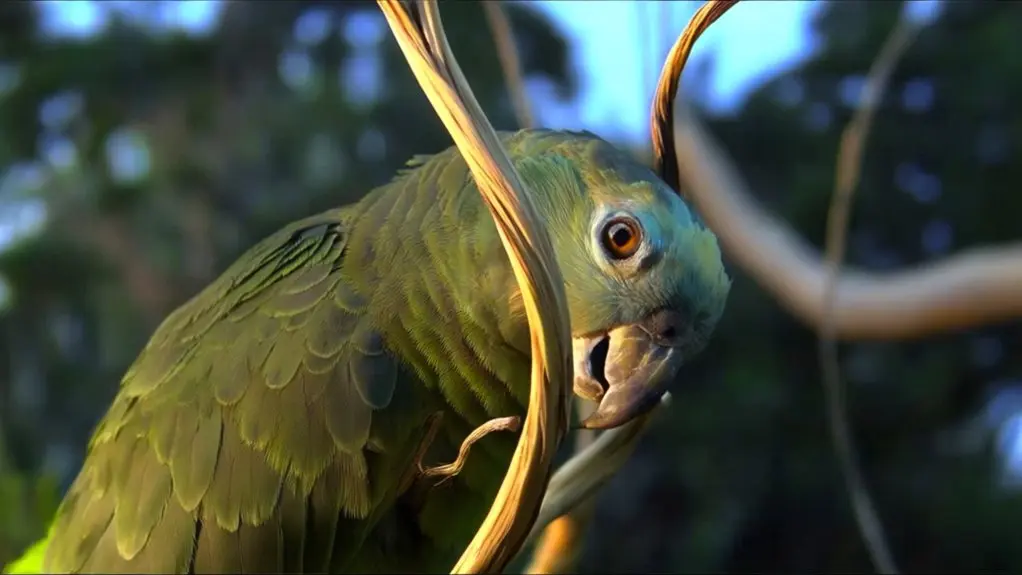
Yes, birds can experience mental problems like stress, anxiety, and depression, much like mammals. You might notice signs such as feather plucking, abnormal vocalizations, increased aggression, or withdrawal. Their brain structures, including the pallium and nidopallium, regulate emotions and cognition, which influence their behavior.
Captivity and environmental stressors greatly raise mental health risks by limiting natural behaviors. Understanding these factors can help you recognize and address bird mental health challenges more effectively. It’s important to pay attention to these signs so you can support your feathered friend in the best way possible.
Common Mental Health Issues in Birds
Although often overlooked, birds can experience mental health issues such as stress, anxiety, and depression, much like mammals do. When you observe birds, changes in feather health often provide critical clues to their mental state. Poor feather condition, including plucking or damage, may indicate psychological distress.
Additionally, alterations in vocal patterns, such as excessive alarm calls or unusual silence, can signal anxiety or depression. Captive birds face heightened risks due to environmental stressors like isolation and lack of enrichment, which disrupt normal behaviors.
Understanding these mental health issues requires careful observation of both physical markers and behavioral changes. By recognizing the links between feather health and vocal patterns, you can better assess a bird’s psychological well-being and address potential mental health challenges scientifically and objectively.
It’s all about paying close attention and being mindful of what your feathered friends are trying to communicate.
Common Signs of Bird Mental Health Problems
Recognizing mental health issues in birds starts with identifying specific signs that indicate psychological distress. You may observe feather plucking, which is a common self-harm behavior where birds pull out their own feathers. This usually signals emotional or environmental stress.
Recognizing mental health issues in birds begins by spotting signs like feather plucking linked to emotional or environmental stress.
Vocal distress is another sign, like nonstop alarm calls or repetitive vocalizations. These often reflect anxiety or agitation.
Behavioral changes, such as increased aggression, withdrawal, or abnormal attack attempts outside the breeding season, can also suggest mental health problems.
These symptoms frequently arise in captive birds because of social loss or inadequate environments. Catching these signs early means you can address the underlying issues quickly, which really helps your bird’s psychological well-being.
Keeping an eye on these behaviors objectively makes it easier to step in at the right time and prevent things from getting worse.
How Bird Brain Structure Influences Mental Health
When you examine bird brain structure, you’ll find that the pallium plays a critical role in their cognitive functions and emotional regulation, much like the cerebral cortex in mammals. Within this structure, the nidopallium is essential for avian cognition, governing problem-solving, social interaction, and mood regulation.
Although birds’ brains differ anatomically from mammals, they share neurochemical systems, such as serotonin and dopamine pathways, that influence mental states. Variations in brain region size, particularly reduced forebrain volume, can compromise emotional processing and predispose certain species to mental health challenges.
Additionally, neural plasticity in birds supports behavioral adaptation but may also heighten vulnerability to stress-related disorders when environmental conditions are unfavorable. Understanding these structural and functional aspects helps clarify how bird brain organization directly impacts their mental health.
Why Captivity Increases Bird Mental Health Risks
When birds are kept in captivity, they deal with stressors that just aren’t part of their natural lives. This can really throw off their behaviors and how their bodies work, which raises their risk for mental health problems.
For example, social isolation is a big deal. Birds rely on interactions with others for emotional balance, so being alone can be tough on them.
Plus, if their environment isn’t stimulating enough, they might start showing unusual behaviors. That’s why it’s so important to create spaces that mimic their natural habitats as much as possible.
Stressors Unique To Captivity
Although birds have adapted to diverse environments in the wild, captivity imposes unique stressors that markedly increase their risk of mental health problems.
In the wild, feather coloration and migration patterns serve functional roles, but captivity disrupts these natural behaviors, leading to psychological distress.
You should consider these stressors: Restricted environments limit natural foraging and exploration, reducing mental stimulation. Lack of environmental complexity causes boredom, prompting abnormal behaviors. Absence of natural stimuli prevents instinctual activities, increasing stress and anxiety.
Social Isolation Effects
Since social interaction plays a critical role in wild birds’ psychological well-being, captivity often disrupts these natural social structures. This disruption leads to increased stress and abnormal behaviors.
When you isolate birds socially, they lose essential social bonds that are vital for their mental stability. This deprivation triggers behavioral changes like feather plucking and excessive vocalizations. These behaviors act as coping mechanisms.
Without regular social contact, birds may develop compulsive behaviors that reflect significant psychological distress. Studies confirm that the absence of social bonds in captivity raises mental health risks compared to wild birds.
As you observe captive birds, it becomes clear that social isolation is a key factor influencing their mental decline. This really highlights how essential social structures are for maintaining healthy behavioral patterns in avian species.
Environmental Enrichment Importance
Beyond the impact of social isolation, the physical environment in captivity plays a vital role in birds’ mental health. Flight restrictions and diet deficiencies commonly occur in captive settings, limiting natural behaviors and environmental stimuli. This increases the risk of stress-related issues such as feather plucking and abnormal vocalizations.
To reduce these risks, environmental enrichment is essential. You should focus on providing varied perches and adequate space to encourage natural flight and movement. Offering diverse foraging opportunities helps address diet deficiencies and stimulates cognitive function.
It’s also important to facilitate social interactions and mimic natural habitats. This helps reduce stress and prevents behavioral abnormalities.
Studies consistently show that enriched environments greatly improve captive birds’ mental well-being compared to impoverished conditions.
How Environment and Social Factors Affect Bird Behavior
You’ll notice that environmental stressors, like habitat destruction and pollution, can provoke some pretty unusual behaviors in birds—whether they’re out in the wild or living in captivity.
When birds face social isolation or lose members of their flock, it often leads to distress signals, such as alarm calls or even feather plucking.
Looking at these factors side by side really helps us understand how life in captivity differs from natural settings when it comes to influencing bird behavior.
It’s interesting to see just how much the environment and social surroundings shape what birds do and how they react.
Environmental Stress Impacts
When environmental conditions shift dramatically, birds often respond with altered behaviors that reflect underlying stress. Climate change disrupts migratory patterns, forcing birds to adjust routes and timing. This can increase their vulnerability to predation and reduce reproductive success.
Habitat destruction and pollution also contribute to stress, leading to abnormal behaviors. You’ll notice these impacts through increased agitation and distress during seasonal or human-induced environmental changes.
You might also see heightened self-destructive behaviors in captive birds deprived of environmental enrichment. Behavioral abnormalities such as alarm calling and feather plucking can be triggered by external stressors too.
These environmental stressors influence a bird’s mental state, often mirroring symptoms comparable to mental health issues in humans. It really shows how profoundly environmental factors can impact avian behavior.
Social Isolation Effects
Although birds rely heavily on social interactions, isolation can severely disrupt their behavior and mental health. When deprived of conspecifics, you’ll notice abnormal behaviors like feather grooming deficits, feather plucking, excessive vocal communication, and repetitive movements. These behaviors indicate heightened stress and anxiety, which impair mental well-being.
Social isolation during critical developmental stages causes long-lasting behavioral abnormalities. It increases depression-like symptoms and self-destructive tendencies. So, it’s really important to keep birds socially engaged.
| Behavior Impacted | Cause | Effect on Bird Behavior |
|---|---|---|
| Feather grooming | Social deprivation | Feather plucking, poor preening |
| Vocal communication | Lack of companions | Excessive or abnormal calls |
| Movement patterns | Stress/anxiety | Repetitive pacing or rocking |
Providing social companionship and enrichment can reverse many negative effects. This improves their behavioral health and overall well-being.
Captivity Versus Wild
Birds kept in captivity often face environmental conditions that differ sharply from those in the wild. This directly influences their behavior and mental health. You’ll notice captive birds commonly exhibit abnormal behaviors like excessive feather grooming or feather-plucking due to stress, social isolation, and limited enrichment.
In contrast, wild birds maintain natural flight patterns and social structures, which help regulate mental well-being. However, wild birds can still experience stress from habitat loss or food scarcity.
Key differences include:
- Captive birds endure restricted social interactions and unnatural surroundings causing behavioral issues.
- Wild birds benefit from diverse stimuli and natural social networks reducing compulsive behaviors.
- Extreme wild environmental pressures can disrupt wild birds’ mental health despite their adaptive behaviors.
Examples of Unusual Bird Behaviors and What They Mean
If you observe nonstop alarm calls from blackbirds lasting for weeks without any obvious threat, this behavior may indicate abnormal mental states rather than normal vigilance. Such persistent vocalizations often suggest chronic stress or neurological dysfunction.
Similarly, disruptions in migration patterns can reflect environmental stressors impacting cognitive function. You might also notice excessive feather grooming or feather plucking, especially in captive birds, which signals emotional distress or mental health problems.
Disrupted migration and excessive feather grooming reveal how environmental stress affects bird mental health.
Attacks by buzzards outside their breeding season further exemplify atypical aggression linked to underlying issues. These unusual behaviors typically stem from external stressors like habitat changes or social disturbances, rather than natural activity.
Recognizing these signs helps you understand that birds can experience mental health challenges, evidenced through distinct, abnormal behavioral patterns. It’s pretty fascinating how much their behavior can tell us about their wellbeing.
How Experts Diagnose and Study Bird Mental Health
When you study avian mental health, you primarily rely on careful behavioral observation to identify actions that deviate from normal species-specific patterns. Since birds can’t verbally communicate, you interpret signs such as feather plucking or excessive vocalizations to evaluate distress.
Experts also consider ruling out physical health issues to isolate psychological causes. They evaluate genetic predispositions that might influence susceptibility to mental disorders. Plus, assessing dietary influences is important because nutrition significantly impacts behavior and cognitive function.
Because standardized diagnostic criteria don’t exist, evaluations remain interpretative and tailored to individual cases.
Research mainly involves captive or rehabilitated birds due to difficulties observing wild populations. This approach provides the best current understanding of avian mental health despite inherent observational limitations.
How to Help a Distressed Bird
Although diagnosing physical ailments is a crucial first step, addressing mental distress in birds requires a multifaceted approach focused on environmental, social, and behavioral interventions. First, you must rule out medical issues, as poor feather condition or behavioral changes can indicate physical illness.
Addressing avian mental distress begins by ruling out physical illness and focusing on environment, social, and behavioral care.
Next, enhance your bird’s environment with toys and foraging activities to stimulate natural behaviors and reduce stress. Maintain a consistent bird diet to support overall health and feather quality, as nutritional deficiencies can make distress worse.
Social interaction is critical. Many birds suffer from loneliness, so providing companionship or increased engagement helps ease anxiety.
In severe cases, you might want to consult a veterinarian about psycho-pharmaceuticals.
Above all, be patient and tailor your care to your bird’s specific needs. This way, you can help restore their mental well-being effectively.
Frequently Asked Questions
Can Wild Birds Also Suffer From Mental Health Problems?
You can observe changes in feather coloration and nesting behaviors that indicate stress in wild birds. But definitive mental health problems are pretty rare and hard to document.
That’s mostly because their responses are subtle. Plus, environmental challenges really affect their well-being, making it tricky to pin down clear signs.
Are Certain Bird Species More Prone to Mental Issues?
Yes, you’ll find certain species with complex nesting behavior and vibrant feather color, like parrots, are more prone to mental issues. This is due to higher cognitive demands and social needs affecting their psychological well-being.
It makes sense when you think about it. Birds with more intricate social lives and mental challenges might be more vulnerable to stress or anxiety. So, it’s not just about their looks or habits, but how their brains and emotions work together.
Do Bird Mental Health Problems Affect Their Lifespan?
You might find that bird mental health subtly influences lifespan, as disrupted social behavior and habitat loss increase stress. These factors weaken immunity and spark abnormal behaviors, which can indirectly reduce longevity.
Though solid data remains limited, it’s clear that stress plays a big role. So, taking care of a bird’s mental well-being could actually help them live longer.
Can Bird Mental Health Issues Be Genetically Inherited?
You can understand that bird mental health issues aren’t directly inherited, but genetic predisposition influences certain behavioral traits. Environmental factors usually trigger these traits, so genetics play a role, but they don’t solely determine mental health problems.
It’s kind of like having a blueprint that sets the stage, but the environment decides how the story unfolds. So, while genetics matter, they’re just one piece of the puzzle when it comes to mental health in birds.
Are There Medications Specifically for Treating Bird Mental Illnesses?
You won’t find medications crafted solely for bird mental wellness. Instead, vets blend bird therapy with off-label human drugs, carefully tailoring treatments like a precise dance.
They focus on enhancing mental wellness through behavior and environment adjustments. It’s all about finding the right balance that works for each bird. This personalized approach helps birds feel better without relying on medications made just for them.
Conclusion
You might be surprised to learn that up to 60% of pet birds exhibit signs of mental distress. This really shows how sensitive their cognitive health can be.
Understanding their brain structure and environmental needs is essential for maintaining their well-being. By recognizing behavioral changes and providing enriched habitats, you can greatly reduce mental health risks in birds.
Staying informed and proactive guarantees you support your feathered friend’s mental and emotional balance effectively. It’s all about paying attention and making small changes that make a big difference.