
You can give birds diluted, food-grade vinegar like organic, unfiltered apple cider vinegar, but only under strict veterinary guidance to avoid digestive and respiratory risks. Never use undiluted, scented, or cleaning vinegars, as their acetic acid or additives can irritate your bird’s delicate systems.
Proper dilution, typically one part vinegar to ten parts water, and cautious application are essential for safety. Understanding vinegar types, dilution methods, and risks will help you keep your bird healthy and safe. Just be sure to check with your vet before trying it out.
Is Vinegar Safe for Birds to Eat?
Although vinegar is commonly used in household cleaning and health remedies, you should exercise caution before giving it to your bird. Vinegar acidity can irritate a bird’s delicate digestive tract if consumed undiluted, leading to discomfort or potential health issues.
Birds have specific dietary restrictions that require careful consideration of any supplement or additive in their diet.
Birds need careful dietary consideration to ensure supplements or additives do not harm their health.
When used, vinegar must be food-grade, free from fragrances or artificial additives, and diluted appropriately to avoid adverse effects.
While small, diluted amounts of apple cider vinegar with the “mother” may be generally safe, introducing vinegar into your bird’s diet should only occur after consulting an avian veterinarian.
This ensures you respect the bird’s dietary restrictions and avoid any unintended harm from vinegar’s acidic properties.
Which Types of Vinegar Are Safe for Parrots?
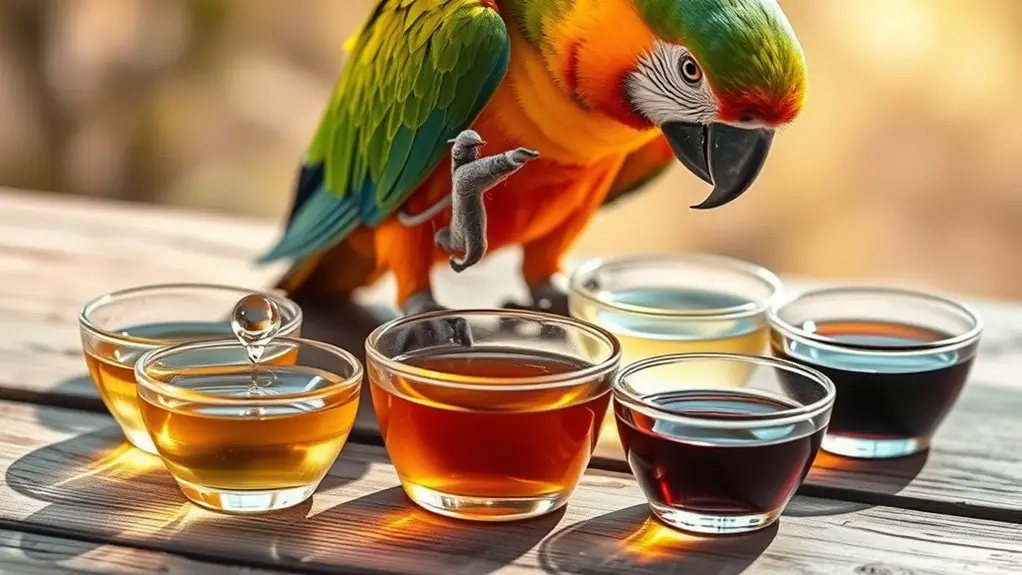
When picking vinegar for your parrot, it’s best to go with apple cider vinegar or balsamic vinegar made from natural grapes. These types are usually safe and even offer some nutritional benefits.
On the other hand, you’ll want to stay away from white distilled vinegar or cleaning vinegars because their strong smells and lack of nutrients can actually be harmful to your bird.
Also, make sure to choose organic, unfiltered vinegar that contains “the mother.”
And before you add any vinegar to your parrot’s diet, it’s a good idea to check with an avian veterinarian just to be safe.
Safe Vinegar Varieties
When selecting vinegar for parrots, it’s important to choose varieties that provide nutritional benefits without causing harm. Vinegars derived from natural vinegar fermentation, such as apple cider vinegar and balsamic vinegar made from grapes, are generally safe for parrots when given in small, diluted amounts.
These types contain beneficial nutrients that can complement parrot dietary supplements.
Avoid white distilled vinegar since it lacks these nutrients and might cause risks. Always use food-grade vinegar free of added fragrances or artificial flavors to keep things safe.
It’s best to incorporate vinegar cautiously by diluting it in water or food.
Before adding vinegar to your parrot’s diet, talk with an avian veterinarian.
This way, you’re sure to provide safe, beneficial supplementation without putting your bird’s health at risk.
Parrot-Friendly Vinegar Sources
Selecting the right type of vinegar plays a key role in ensuring the safety and health benefits for parrots. Apple cider vinegar and balsamic vinegar derived from grapes are generally safe when used in moderation. They contain beneficial enzymes and nutrients compatible with parrot dietary restrictions.
Avoid white distilled vinegar due to its lack of nutrients and potential to irritate through its stronger odor. Additionally, stay clear of fragranced or flavored vinegars, which can adversely affect sensitive avian respiratory systems.
Always choose food-grade vinegar from reputable, parrot-safe suppliers to minimize risks. Proper vinegar storage is essential to maintain its quality and prevent contamination, further safeguarding your parrot’s health.
How to Dilute Vinegar Safely for Bird Use
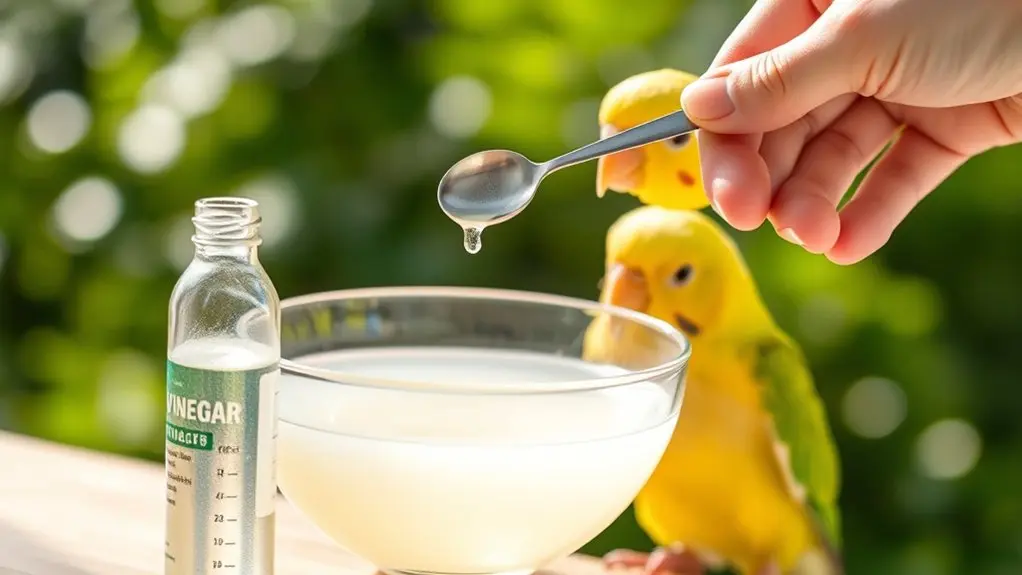
You should dilute vinegar by mixing one part organic apple cider vinegar with nine parts water. This creates a safe 10% solution for your bird.
Using this ratio helps prevent any harmful irritation that can come from using vinegar that’s too strong.
It’s always a good idea to test the mixture on a small area first, just to be sure it’s safe.
And don’t forget to replace the solution regularly to keep it effective and safe for your feathered friend.
Proper Vinegar Dilution Ratios
Although vinegar offers beneficial properties, you must dilute it properly to guarantee safety for birds. Vinegar, typically produced through vinegar fermentation, contains acetic acid that can irritate birds if undiluted. When using organic vinegar, a common safe dilution ratio is one part vinegar to at least 10 parts water.
This ratio minimizes irritation risks while retaining mild cleaning properties. For cleaning bird environments, a mixture of one part vinegar to four parts water is effective but requires thorough rinsing afterward to avoid residue.
If administering vinegar as a health aid, dilute 1/4 teaspoon per 1 cup of water and use sparingly. Avoid concentrated forms since they can harm birds’ eyes and skin.
Adhering to these precise dilution ratios ensures you safely leverage vinegar’s benefits without causing distress or injury. Just remember, a little goes a long way when it comes to vinegar and your feathered friends.
Safe Water And Vinegar Mix
Proper dilution is a key step in preparing a vinegar solution that’s safe for birds. To create a safe water and vinegar mix, dilute organic, unfiltered apple cider vinegar containing “the mother” at a ratio of 1 teaspoon vinegar to 1 cup water. This guarantees the vinegar fermentation byproducts remain beneficial while minimizing irritation risks.
Given bird dietary restrictions, avoid concentrations exceeding 1-2%, as higher levels can cause adverse reactions. Thoroughly mix the solution before use and test it on a small area or quantity initially.
Use this diluted mixture primarily as a rinse or cleaning aid, never administering undiluted vinegar directly to birds.
This approach balances vinegar’s potential benefits with the careful consideration necessary for avian health. So, always remember to keep it mild and safe for your feathered friends!
Avoiding Harmful Vinegar Concentrations
Since vinegar contains acetic acid, it must be carefully diluted to safe concentrations before use around birds. This helps prevent respiratory or skin irritation.
To manage vinegar acidity safely, mix one teaspoon of vinegar per one cup of water. This makes a mild solution that respects bird dietary restrictions and lowers the risk of toxicity.
Never apply concentrated or undiluted vinegar directly on or near birds.
When cleaning cages, be sure to rinse and dry surfaces thoroughly after using diluted vinegar. This avoids leaving harmful residues behind.
Use white or cleaning vinegar only in tested, properly diluted forms.
Always do a patch test with the diluted solution in a small, out-of-sight area first. This helps confirm it’s safe before you use it more widely.
This way, you balance your cleaning needs with the health and safety of your birds.
Why You Should Avoid Vinegars With Added Fragrances Around Birds
When you use vinegar that contains added fragrances around birds, you risk exposing them to chemical compounds that can irritate their highly sensitive respiratory systems. Parrots’ acute olfactory sensitivity makes any scented vinegar potentially harmful, even from another room.
To keep vinegar storage safe, always choose fragrance-free options and keep them sealed tightly to prevent vapor release. If you want to add scent, consider bird-safe fragrance alternatives that don’t emit volatile organic compounds.
| Factor | Fragrance-Added Vinegar | Fragrance-Free Vinegar |
|---|---|---|
| Respiratory Impact | High risk | Low risk |
| Usage Near Birds | Discouraged | Safer |
| Storage Requirement | Airtight, separate | Standard |
Avoid scented vinegars to protect your bird’s respiratory health. It’s just a simple step that makes a big difference!
How Do Vinegar Smells Affect Parrot Health and Behavior?
Although vinegar is commonly used in households, its strong smell can adversely affect your parrot’s health and behavior. The pungent vinegar odor irritates sensitive respiratory systems, potentially causing discomfort and inflammation. This irritation can trigger parrot stress, leading to behavioral changes such as avoidance or increased vocalization.
Fragranced vinegar or vinegar with added scents pose an even greater risk, as their volatile compounds can affect parrots even from another room. Exposure to these strong odors may result in respiratory distress, compromising your bird’s overall well-being.
To minimize negative effects, you should avoid using scented vinegar products around your parrot. Opting for parrot-safe, scent-free vinegar reduces the risk of parrot stress and respiratory issues.
This helps promote a healthier, calmer environment for your feathered companion.
How to Use Apple Cider Vinegar for Cleaning Cages
If you want to keep your bird’s environment clean and safe, using apple cider vinegar as a cleaning agent is a great idea. Just mix equal parts of organic, unfiltered vinegar that has the “mother” with water to make a disinfectant solution. You can apply it with a spray bottle or a cloth on cage materials like metal bars and wooden perches.
Try not to use it near bedding or food dishes, though, since that might cause ingestion risks. After you’ve cleaned, make sure to rinse everything thoroughly and let the surfaces air dry completely before putting your bird back in.
Here are a few tips to keep in mind: use the vinegar solution only on non-porous cage parts. Also, rinse well to get rid of any leftover vinegar. Store your vinegar in a cool, dark place so it stays potent longer.
And while it’s good to apply it regularly, don’t overdo it—you want to protect your cage materials.
Cost-Effective Vinegar Options Safe for Parrots
Because parrots need safe and non-toxic substances, picking cost-effective vinegar options is really important for both cleaning and minor health uses. Vinegar comes from different fermentation processes, but food-grade apple cider vinegar—especially if it’s organic, unfiltered, and has “the mother”—is a great match for your parrot’s diet.
Lots of inexpensive vinegars made from apples or grapes work just fine for cleaning cages and supporting mild health needs. There’s no need to spend extra on fancy types like balsamic or wine vinegars since they don’t offer any extra safety benefits.
Just make sure the vinegar you choose doesn’t contain harmful additives, fragrances, or chemicals that could put your parrot’s health at risk.
When Should You Consult an Avian Vet Before Using Vinegar?
Whenever you plan to use vinegar on or near your bird, consulting an avian vet is essential to guarantee safety and proper application. Birds have sensitive systems, and vinegar’s acidity may interact adversely with their bird diet or health status.
A vet evaluates if vinegar suits your bird’s species and condition, advising on dilution and frequency.
Proper vinegar storage also affects its efficacy and safety. So, it’s always good to get expert advice before you start using it around your feathered friend.
Consult your avian vet if:
- Your bird has pre-existing health issues or is under treatment
- You’re unsure about vinegar’s compatibility with your bird diet
- You need guidance on safe vinegar storage and handling
- You want to avoid toxicity or adverse reactions from vinegar use
Professional advice ensures vinegar benefits without compromising your bird’s health. It’s the best way to keep your bird safe and healthy while using vinegar.
Frequently Asked Questions
Can Vinegar Help Prevent Bacterial Infections in Birds?
Yes, you can use vinegar as a natural remedy to help prevent bacterial infections in birds. Its dietary benefits include antibacterial properties that, when properly diluted, reduce harmful bacteria and promote a healthier environment for your birds.
Just make sure to dilute it correctly before use. This way, it’s safe and effective. Vinegar can be a simple addition to your bird care routine to keep them feeling good.
Is Vinegar Safe for Baby Birds or Chicks?
You might think vinegar’s harmless, but it’s not safe for baby birds or chicks. Their sensitive bird diet can’t handle vinegar concentration acidity well.
Always consult an avian vet before adding vinegar to prevent harm or irritation. It’s better to be safe and keep those little ones healthy!
Can Vinegar Be Used to Treat Bird Feather Mites?
You can try diluted vinegar as a natural remedy for bird feather mites, but its effectiveness isn’t scientifically proven.
It might help a bit, but there’s no strong evidence to back it up.
Always keep your bird’s health as the top priority.
Consult an avian vet for safer, medically approved treatments instead of relying solely on vinegar.
How Does Vinegar Interact With Bird Medications?
Think of vinegar as a delicate key in your bird’s diet. Improper vinegar storage or combining it with medications can release harmful pH shifts. These shifts might disrupt how well the drugs are absorbed and how effective they are.
Are There Any Birds That Should Never Be Given Vinegar?
You should never give vinegar to birds with sensitive respiratory or digestive systems, like cockatoos and finches. These birds have a low tolerance for vinegar, which can cause irritation.
They also have strict dietary restrictions to keep them healthy. So, it’s best to avoid vinegar to prevent any health complications.
Conclusion
You might be surprised to learn that over 60% of bird owners use diluted apple cider vinegar safely for cage cleaning and minor health benefits.
However, always dilute vinegar properly and avoid those with added fragrances. Strong smells can stress your parrot and affect its respiratory health.
When in doubt, consult an avian vet before introducing vinegar into your bird’s environment to guarantee safety and well-being. Careful use keeps your feathered friend healthy and comfortable.