
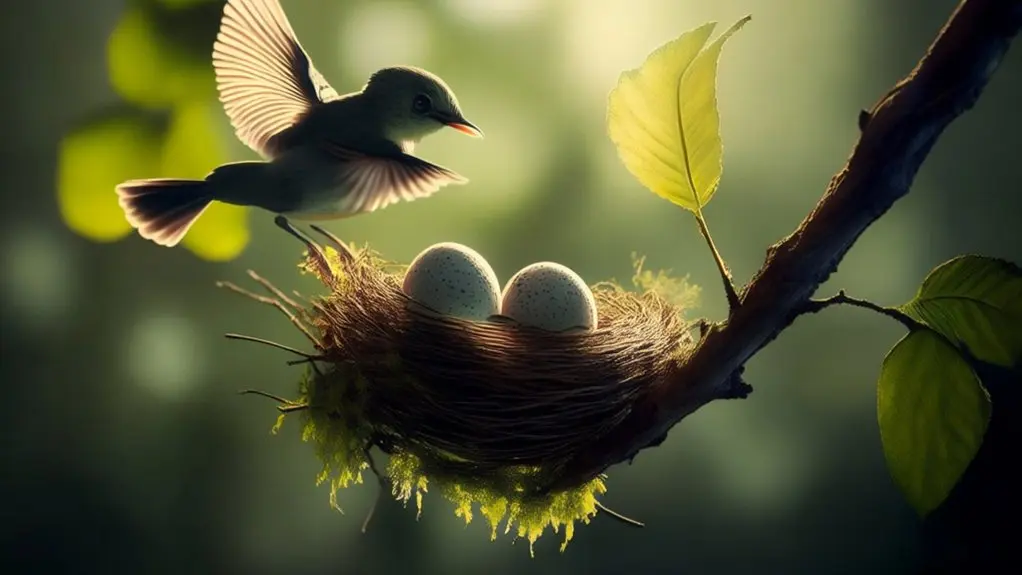
You might assume birds can have twins when you see multiple chicks in a nest, but that’s a misconception. Birds lay one egg per reproductive cycle, and each egg develops a single embryo. So, true twinning is nearly impossible.
Their egg structure and reproductive biology prevent multiple embryos in one egg. Multiple hatchlings come from several eggs rather than twins. When you understand clutch size, nesting behavior, and species differences, it’s clear why twins are a myth in birds.
These factors all shape the number of offspring birds have. So, next time you see a nest full of chicks, remember they’re from different eggs, not twins!
Why Do People Think Birds Can Have Twins?
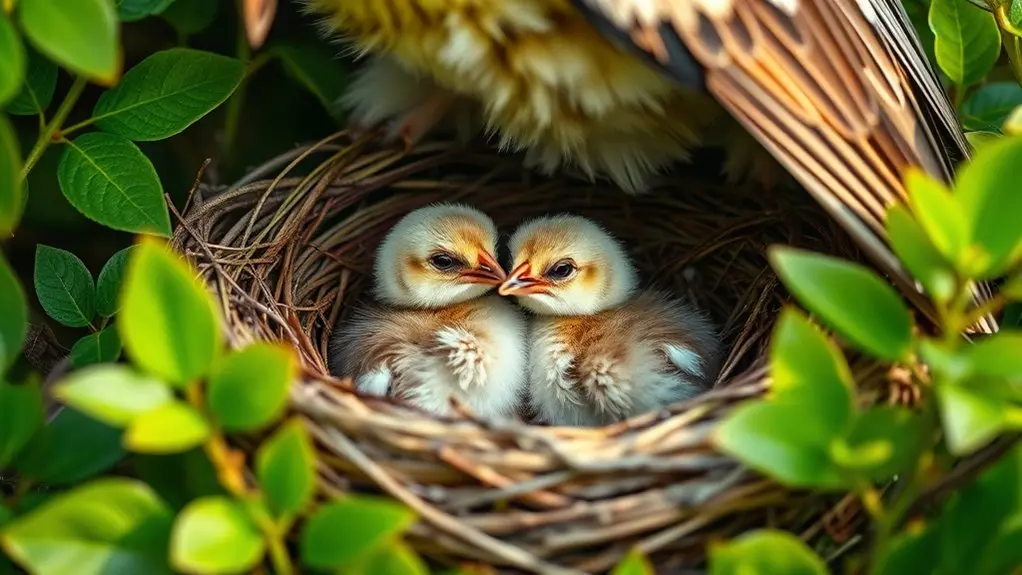
Although you might assume birds can have twins because you see multiple eggs or chicks in one nest, this observation often leads to a common misconception.
In reality, birds lay several eggs, each with distinct coloration and patterns. These help with species recognition and camouflage.
The eggs hatch around the same time, producing multiple chicks that look like twins but are actually genetically independent.
Unlike mammals, each bird egg has just one embryo, so true twinning is very rare or doesn’t happen at all.
Seeing several similarly colored eggs and chicks in one nest makes people think birds can have twins.
But really, what you’re seeing is just normal bird reproductive and nesting behavior.
Do Birds Ever Have Twins?
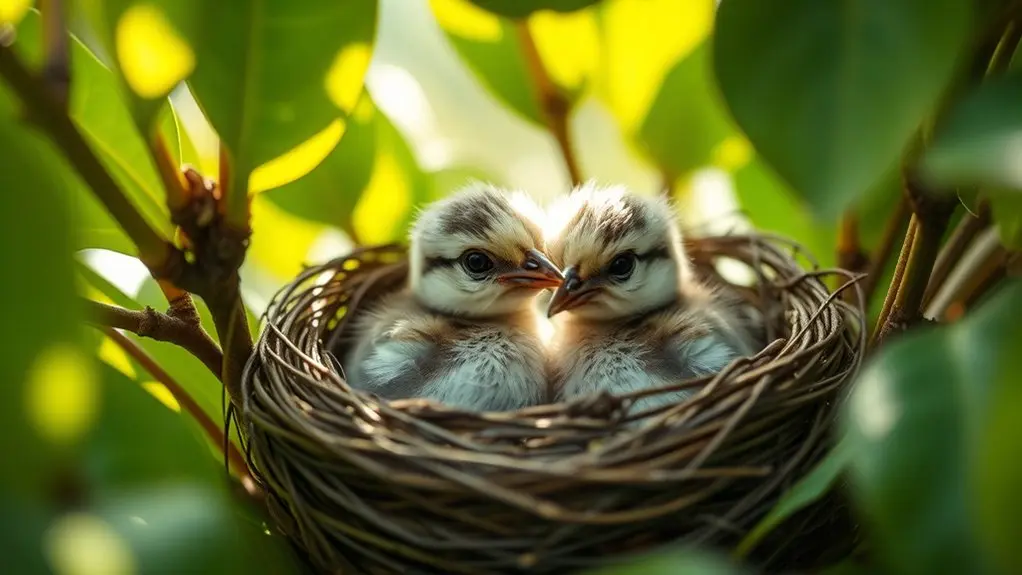
People often mistake multiple eggs or chicks in a nest for twins, but true twinning in birds is exceptionally rare. Birds typically lay a single egg per reproductive cycle, and their egg development process usually prevents the formation of twins.
Although rare cases of twin eggs have been documented, these eggs develop independently rather than as identical twins. Nesting behaviors can make things confusing, since multiple eggs laid over time might be mistaken for twins.
When twin eggs do occur, they often hatch at different times, and the chicks don’t show the genetic identicalness you’d expect from twins.
How Bird Reproduction Differs From Mammals
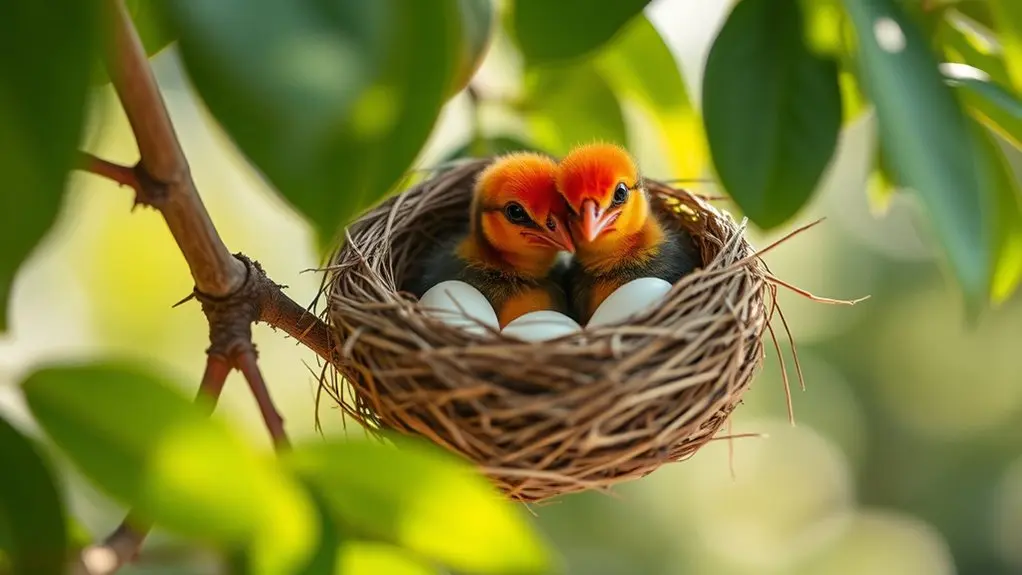
Because birds lay eggs that develop externally, their reproductive process is quite different from mammals, which gestate embryos internally. You’ll notice that birds usually produce just one embryo per egg. They don’t have internal mechanisms for multiple fertilizations like mammals do.
This means bird twins are almost nonexistent in natural conditions. Instead, each egg gets fertilized by the male externally and develops on its own.
This is a key evolutionary adaptation that ensures each embryo grows separately.
Genetic mutations that might cause multiple embryos in a single egg are very rare or don’t fully develop. These reproductive differences show how birds have evolved survival strategies that are quite different from mammals.
Understanding this helps explain why natural twin births in birds just don’t happen.
Can a Single Bird Egg Produce Multiple Chicks?
While bird eggs typically develop a single embryo, you might wonder if one egg can ever produce multiple chicks. In the egg development process, a single fertilized egg usually supports only one embryo. The fertilization process rarely results in embryo splitting, which would be necessary for twins to form.
Most bird eggs are structurally designed for a single chick, making multiple chicks from one egg extremely uncommon and largely considered a myth.
| Factor | Typical Outcome | Rare Exception |
|---|---|---|
| Number of embryos | One | Two (very rare) |
| Embryo development | Single chick formation | Possible twin formation |
| Egg structure | Supports one embryo | Not adapted for multiples |
| Fertilization process | Single embryo fertilized | Rare embryo splitting |
| Frequency | Common | Extremely rare |
How Many Eggs Do Birds Usually Lay at Once?
You’ll find that most bird species lay between one and seven eggs per clutch, usually around three to five. It really depends on the species, though. For example, the Black Swift typically lays just one egg, while the Barn Swallow can lay several at once.
There are a bunch of factors that come into play here, like the environment, how much food is around, and the bird’s own reproductive strategy. All of these things influence how many eggs a bird ends up laying at one time.
Typical Clutch Size
Although clutch sizes vary widely among bird species, most lay between one and seven eggs per nesting attempt. Typically, you’ll find an average clutch size of three to five eggs, influenced by factors like breeding habits and environmental conditions.
Larger birds, such as swans and eagles, usually produce fewer eggs, often two or three, compared to smaller species like house sparrows, which lay multiple eggs in a clutch. This number remains fairly consistent within a species but can fluctuate with the female’s health and age.
Understanding typical clutch size is vital for studying egg development and parental care strategies, as it affects how birds allocate resources to incubate and raise their offspring successfully.
This balance directly impacts survival rates and reproductive success.
Species Egg Variations
Bird species differ quite a bit in how many eggs they lay during a single reproductive cycle. This variation comes from their evolutionary strategies and the environmental pressures they face. Most birds lay between 1 and 7 eggs per clutch.
Small songbirds usually lay 2 to 4 eggs, while bigger birds, like eagles, tend to lay just 1 or 2. There are some exceptions though—like the eider duck, which can lay up to 12 eggs.
This difference in numbers helps balance the effort needed to incubate eggs and the risk that predators will find the nest.
Having more eggs can increase the chances that some offspring survive, but it also means the parents have to work harder and the nest might be easier for predators to spot.
When you look at these specific egg variations across species, it becomes clear why twin chicks from a single egg are almost unheard of.
Basically, clutch size is all about optimizing survival, not about producing multiple hatchlings from one egg.
Factors Affecting Quantity
When environmental conditions and resource availability align favorably, many bird species increase the number of eggs they lay in a single clutch. Egg development and nesting behaviors are tightly linked, as ideal conditions support larger clutch sizes.
Typically, birds lay between 1 to 12 eggs per clutch. This depends on species-specific reproductive strategies and environmental factors such as food availability and parental health.
| Species | Typical Clutch Size | Nesting Behavior |
|---|---|---|
| Swallows | 4-6 | Colonial, cup-shaped nests |
| Finches | 3-5 | Solitary, cup nests |
| Eagles | 1-3 | Large, sturdy platform nests |
| Songbirds | 2-7 | Varied, often cup nests |
Understanding these factors helps you grasp why clutch size varies and how it influences bird reproductive success. It’s pretty interesting to see how nature adjusts these strategies based on the environment.
Why Do Bird Nests Have Multiple Chicks?
You’ll notice that bird nests often have several chicks because birds lay multiple eggs at once, called a clutch.
The number of eggs in a clutch can be different depending on the species.
Having more chicks in a nest increases the chances that some will survive, especially if a few don’t develop properly or become prey to predators.
Clutch Size Variation
Why do nests often contain multiple eggs instead of just one? Clutch size variation reflects an evolutionary balance between egg development and parental investment. You’ll find that species adjust the number of eggs laid based on environmental conditions, available resources, and their ability to care for offspring.
This strategy enhances reproductive success by allowing simultaneous rearing of multiple chicks. It’s kind of like hedging their bets—more eggs mean a better chance some will survive.
| Species Type | Typical Clutch Size | Influencing Factor |
|---|---|---|
| Raptors | 2-4 | High parental care |
| Waterfowl | 5-12 | Food availability |
| Passerines | 1-5 | Predation risk |
| Tropical Birds | 1-2 | Stable environment |
| Temperate Birds | 3-7 | Seasonal food supply |
Survival Strategy Benefits
Although raising multiple chicks demands more energy from parent birds, it considerably boosts the chances that some offspring will reach adulthood despite threats like predation and environmental fluctuations.
When you observe nests with several chicks, you’re witnessing a survival strategy that maximizes reproductive success in unpredictable environments.
By having multiple chicks, parent birds enhance feeding strategies, distributing resources efficiently to promote competitive growth among siblings. This competition often results in stronger, more viable fledglings.
Additionally, multiple chicks intensify nest defense behaviors; parents become more vigilant and aggressive to protect the entire brood from predators. This collective protection reduces the risk of total brood loss, ensuring that at least some genetic material passes on.
Why Birds Don’t Have True Twins
Because birds lay eggs one at a time, the development of true twins, two embryos from a single fertilized egg, is extremely rare or nonexistent. During egg fertilization, a single sperm merges with the ovum, starting embryo development within an individual egg.
Birds don’t produce multiple embryos inside one egg like some mammals do.
When birds lay multiple eggs in a clutch, each egg is fertilized separately, so each embryo develops independently. This means what might look like twins are actually siblings from different eggs, not true twins.
The biological setup of bird reproductive anatomy and physiology stops two embryos from forming inside a single fertilized egg. So, true twinning just doesn’t really happen in birds.
How Birds’ Reproductive Habits Affect Baby Numbers
When you examine birds’ reproductive habits, you’ll find that their strategies directly influence the number of offspring produced. Most birds lay a single egg per reproductive cycle, which means twins are pretty rare. Sometimes genetic mutations can cause twin embryos, but that’s not typical for birds.
Evolutionary myths often blow up how common twins are, but really, clutch size and how much care the parents give mainly decide how many hatchlings there are. Species like raptors and waterfowl might’ve twin chicks once in a while, but usually, the eggs are incubated individually or in small groups.
This approach focuses more on survival than just producing a lot of babies. So, understanding these biological limits makes it clear why birds hardly ever have twins. It’s their reproductive habits, not random chance, that control how many baby birds they have.
Frequently Asked Questions
Can Bird Eggs Be Fertilized by Different Males?
Yes, during bird mating, you can experience egg fertilization by different males through superfecundation. This happens when a female mates multiple times, causing eggs within the same clutch to have varied paternal DNA.
It’s pretty fascinating because this process helps ensure genetic diversity among the offspring. So basically, not all eggs in a single clutch have to come from the same dad. It’s nature’s way of mixing things up a bit!
Do Bird Species Vary in Egg Incubation Times?
You’ll find egg incubation varies widely; albatrosses take over 80 days, while small songbirds hatch in about 10. These differences often link to bird migration patterns and environmental adaptations, ensuring ideal chick survival.
It’s pretty fascinating how different species have such different timelines. This variation really helps the chicks thrive in their specific habitats. So, the next time you see a bird, remember there’s a lot going on behind the scenes!
How Do Birds Care for Hatchlings Differently by Species?
You’ll notice bird species differ in hatchling care. Some migrate to guarantee food, while others prioritize nest security.
Monogamous birds share duties. On the other hand, megapodes rely on environmental heat. It just goes to show how diverse and species-specific parental strategies can be.
Are There Bird Species That Lay Eggs Year-Round?
You’ll find some birds lay eggs year-round, yet many don’t. This is influenced by bird migration patterns and bird song variations.
Tropical species take advantage of stable climates. Meanwhile, temperate birds breed seasonally. They adapt precisely to ecological cues and resource availability.
Can Environmental Factors Affect Egg Development in Birds?
Yes, environmental factors like climate influence can markedly affect egg development in birds. You’ll find that avian genetics interact with temperature, humidity, and pollutants, altering embryo viability and causing variations in hatching success rates.
It’s pretty interesting how these things all play together. For example, a slight change in temperature can make a big difference in whether an embryo thrives or not. Plus, things like pollution can introduce extra challenges for developing eggs.
Conclusion
You might have heard the phrase, “Birds of a feather flock together,” but when it comes to twins, birds don’t quite fit the bill. Unlike mammals, birds lay eggs singly or in clutches, with each egg typically housing one embryo.
While multiple chicks hatch together, they’re not true twins from one egg. Understanding these reproductive differences clarifies why birds don’t have twins. It really shows how nature’s strategies vary across species.