
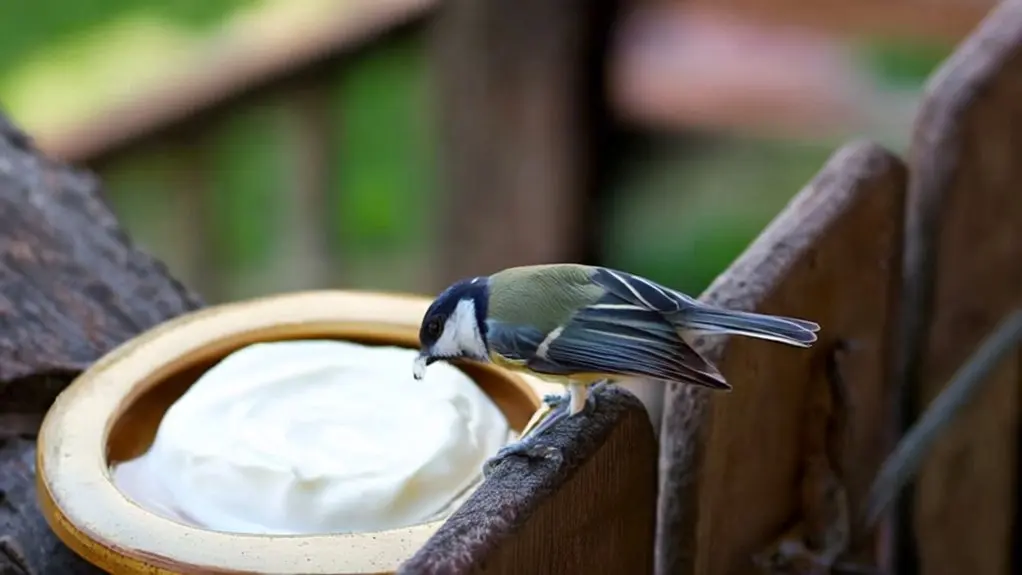
You can give birds small amounts of plain, unsweetened Greek yogurt cautiously, understanding most are lactose intolerant and may face digestive upset. Yogurt’s probiotics can support gut health, but additives and excess lactose pose risks, especially during illness or for young chicks. Always introduce it slowly and watch for adverse reactions.
Knowing when to avoid yogurt and exploring natural probiotic alternatives can help maintain your bird’s well-being and digestive balance. These details are essential for safe feeding.
Is Yogurt Safe for Birds?
Although yogurt can be a beneficial supplement for some birds, you should give it only in small amounts due to widespread lactose intolerance among avian species.
Yogurt may benefit some birds but should be given sparingly due to common lactose intolerance.
When considering bird dietary restrictions, you must prioritize yogurt ingredient safety by selecting plain Greek yogurt. It contains lower lactose levels and avoids added sugars or artificial additives.
The live probiotic cultures in yogurt may support gut health, especially in hand-raised or stressed birds. However, excessive or inappropriate dairy consumption can cause diarrhea and gastrointestinal upset.
It’s essential to observe each bird closely for adverse reactions.
Make sure to consult an avian veterinarian before introducing yogurt regularly. By respecting these precautions, you can safely explore yogurt as a supplement without compromising your bird’s digestive health or violating species-specific dietary restrictions.
Why Birds Can’t Handle Lactose Well
Because birds lack the enzyme lactase, they can’t properly digest lactose, the sugar found in dairy products like yogurt. Without lactase, lactose ferments in their digestive tract, causing gastrointestinal distress such as bloating or diarrhea.
Birds have evolved on diets without dairy, so lactose intolerance is typical across species, whether in pet birds or wild ones undertaking demanding activities like bird migration.
This intolerance can impair nutrient absorption, which is critical during energy-intensive periods such as migration when ideal digestion supports feather coloration and overall health.
Feeding birds yogurt disrupts their digestive efficiency, potentially compromising physiological functions linked to survival and reproduction.
Understanding this enzymatic limitation helps explain why lactose-containing foods are unsuitable for birds, emphasizing the need to respect their natural dietary adaptations.
Benefits of Yogurt for Bird Digestion
You’ll find that yogurt’s live probiotic cultures can really help your bird’s digestive health by balancing gut bacteria and making nutrient absorption easier.
That said, it’s important to keep in mind that not all birds handle dairy well because of lactose intolerance. So, it’s a good idea to consider natural, lactose-free probiotic options too.
These can support digestion without causing any discomfort.
Probiotic Effects on Digestion
How exactly does yogurt influence a bird’s digestion? Yogurt introduces live probiotic bacteria, like Lactobacillus and Bifidobacterium, that support the balance of beneficial gut flora. These probiotics interact with digestive enzymes, enhancing the breakdown and absorption of nutrients.
When you offer yogurt regularly in small amounts, it can stabilize gut flora, which is essential for maintaining digestive health. Consider these specific effects:
- Promotes a balanced gut flora, preventing harmful bacterial overgrowth
- Enhances digestive enzymes’ efficiency, aiding nutrient breakdown
- Supports recovery of gut flora after antibiotics or dietary shifts
- Improves energy utilization and results in healthier droppings
Lactose Intolerance Considerations
Although many birds lack the enzyme lactase necessary to digest lactose, small amounts of plain yogurt may still offer digestive benefits. The fermentation process reduces yogurt’s lactose content, making it more tolerable for birds that are generally lactose intolerant. You’ll want to avoid flavored or processed yogurts, as additives can upset your bird’s digestive system.
During bird migration, maintaining ideal digestion supports energy demands and feather coloration, both critical for survival and display. Monitor your bird closely, since individual lactase levels vary. Some birds tolerate small yogurt servings better than others.
Be careful not to overfeed, as that can lead to diarrhea and impair nutrient absorption.
Natural Alternatives for Birds
When you introduce small amounts of plain yogurt into a bird’s diet, you provide live probiotic cultures that help maintain a balanced gut microbiome. These beneficial bacteria support digestion and nutrient absorption, making yogurt a natural alternative to commercial supplements.
Prioritizing yogurt safety is essential. Always choose plain, unsweetened varieties free from additives to avoid harming your bird.
Incorporate yogurt carefully to monitor tolerance and effectiveness.
Key benefits of yogurt in a bird diet include:
- Restoring gut microbiome in hand-raised or stressed birds
- Enhancing immune response through probiotic activity
- Improving nutrient uptake and digestive efficiency
- Offering a natural, safe probiotic source compared to synthetic options
Using yogurt thoughtfully can optimize digestive health and overall well-being in many avian species. It’s a simple way to support your bird’s health naturally.
Risks of Feeding Yogurt to Birds
You should be careful when feeding yogurt to birds because many of them are lactose intolerant. This can lead to digestive upset and even diarrhea.
Also, keep in mind that commercial yogurts often have sugars and additives, which mightn’t be good for their health.
Lactose Intolerance Concerns
Because birds lack enough lactase enzymes, they usually can’t digest lactose well, which means they’re lactose intolerant. This makes it hard for them to process dairy products like yogurt. If they do eat these foods and feel uncomfortable, it can mess with important behaviors like migration and feather grooming.
You should know a few things about lactose intolerance in birds: lactose malabsorption often causes stomach problems like diarrhea and bloating. Also, sensitivity to lactose can vary between species. Some birds might handle small amounts, but there’s still a risk.
Adult birds aren’t built to digest dairy, so they’re more likely to be intolerant. Eating lactose-containing foods for a long time might also lead to nutritional imbalances.
Keeping these points in mind will help you avoid feeding yogurt to birds and keep them healthy and behaving naturally.
Potential Digestive Issues
How does feeding yogurt affect a bird’s digestive system? Birds lack sufficient lactase enzymes, so yogurt’s lactose often leads to digestive upset, including diarrhea.
If you notice changes in your bird’s behavior, like lethargy or discomfort after feeding yogurt, these could be signs of gastrointestinal distress.
Feeding frequency plays an important role. Offering yogurt too often can disrupt the gut’s microbial balance and increase the risk of prolonged digestive issues.
Some birds might even have allergic reactions or heightened sensitivity to dairy components, which can make their digestive health more complicated.
To keep your bird safe, introduce yogurt cautiously and watch their behavior closely. Avoid feeding yogurt regularly or in large amounts.
Repeated exposure can make digestive disturbances worse and harm your bird’s overall well-being, especially if they’re a sensitive species.
Risk of Additives
Beyond lactose intolerance, the ingredients added to many commercial yogurts pose additional risks to birds. You should consider additive toxicity and ingredient safety before offering yogurt to your feathered friend. Many additives commonly found in yogurt can harm avian health.
Be aware of these risks when feeding yogurt to birds: added sugars, artificial flavors, and preservatives may disrupt digestive balance or cause toxicity. Artificial sweeteners like xylitol are highly toxic and must be avoided. Stabilizers, thickeners, and dyes can irritate the digestive tract or trigger allergic responses.
Processed yogurts often contain chemicals unsuitable for birds, increasing the risk of gastrointestinal upset or chronic health issues.
When to Avoid Feeding Yogurt to Birds
While yogurt can offer nutritional benefits to many birds, you should avoid feeding it when they have active gastrointestinal infections or diarrhea. It may worsen digestive issues in these cases.
Similarly, birds with lactose intolerance, immunocompromised conditions, or those recovering from illness should not consume yogurt. It’s better to be cautious with them.
Also, avoid giving yogurt to young, unweaned chicks. Their digestive systems aren’t developed enough to handle dairy.
| Condition | Reason | Impact on Bird |
|---|---|---|
| Gastrointestinal Infection | Worsens digestive symptoms | Delays recovery |
| Immunocompromised | Risk of bacterial overgrowth | Increased infection risk |
| Young Chicks | Undeveloped digestion | Potential for digestive upset |
How to Introduce Yogurt to Your Bird’s Diet Safely
Before adding yogurt to your bird’s diet, start with small amounts to see how they handle it. It’s important to watch their reaction closely to make sure it doesn’t upset their digestion. Try giving just a teaspoon of plain, unsweetened Greek yogurt at first. Then, keep an eye on them for any signs of trouble over the next day or two.
To introduce yogurt safely, only use fresh, plain Greek yogurt without any additives or sweeteners. You can mix a little into your bird’s regular food or even place it on their perch.
Just remember, yogurt should be an occasional treat, not something you feed them every day.
Keep an eye out for any signs of lactose intolerance or digestive discomfort. If you notice anything unusual, it’s best to stop giving yogurt and check with your vet.
Taking it slow and watching carefully is the best way to keep your bird happy and healthy.
Natural Probiotic Alternatives to Yogurt for Birds
Although yogurt can provide beneficial probiotics for birds, there are several natural alternatives you can offer to support their gut health. Fermented vegetables like plain sauerkraut or kimchi (without harmful spices) introduce native beneficial bacteria that aid digestion and promote vibrant bird feathering.
Kefir water and diluted apple cider vinegar also boost probiotic populations, enhancing nutrient absorption essential for nesting behaviors.
Additionally, access to natural soil or clay supplies environmental microbes that replenish gut flora organically.
Prebiotic foods such as garlic, onion, wheat bran, and banana stimulate growth of existing beneficial bacteria, complementing probiotic intake.
Incorporating these natural options helps maintain a balanced microbiome, supporting overall health and behaviors indispensable for survival and reproduction in birds.
How to Tell if Your Bird Likes Yogurt
Understanding whether your bird enjoys yogurt involves careful observation of its behavior and physical responses. Watch for signs that indicate acceptance or preference, focusing on comfort and well-being. Key indicators include enthusiastic licking or eating without distress, showing interest in the yogurt.
Also, look for relaxed bird feathering and stable perch comfort during and after feeding. Your bird might even repeatedly return to the yogurt container, which is a good sign it enjoys the treat. Increased alertness and normal activity levels after eating yogurt are positive indicators too.
Avoid any signs of discomfort such as feather plucking, changes in droppings, or lethargy. Keep a close eye on your bird to make sure it’s responding well. These observations help you figure out if yogurt is a suitable and enjoyable treat, supporting your bird’s overall health and comfort.
What to Do If Your Bird Has a Bad Reaction to Yogurt
If your bird shows symptoms like diarrhea, vomiting, or lethargy after eating yogurt, stop giving it this treat right away. You should contact an avian veterinarian as soon as possible to check on your bird’s health and figure out the right treatment.
Make sure to keep a detailed record of the type of yogurt, how much your bird ate, and any reactions you see. This will help when making care decisions in the future.
Keep detailed records of yogurt type, amount eaten, and any reactions to aid future care decisions.
Keep a close eye on your bird for any worsening symptoms or signs of dehydration, like dry droppings or weakness. Always provide fresh water so your bird can flush out any toxins.
While your bird is recovering, try to maintain regular grooming and feather trimming. This helps reduce stress and prevents problems with mobility or hygiene.
Acting quickly and watching your bird carefully are key to keeping it safe and healthy after a bad reaction to yogurt.
Frequently Asked Questions
Can Baby Birds Be Given Yogurt Safely?
You can give baby birds yogurt safely by considering their bird dietary preferences and yogurt nutritional value. Use plain, low-lactose yogurt sparingly, and monitor reactions closely.
It’s a good idea to consult an avian vet to guarantee digestive safety and nutritional benefit. That way, you can be sure you’re doing what’s best for the little bird’s health.
Does Yogurt Affect a Bird’s Feather Health?
You’ll find yogurt can gently support feather health by enhancing gut balance. It helps with dietary balance within a bird’s natural diet.
However, moderation’s key. Too much yogurt can disrupt digestion and might dim those vibrant feathers you admire. So, it’s all about finding the right amount.
How Much Yogurt Is Too Much for a Bird?
You shouldn’t exceed a small spoonful of yogurt per feeding in your bird diet, especially if you’re using yogurt types low in lactose. Overfeeding can lead to digestive upset, so it’s best to keep yogurt treats to just a few times a week.
Make sure to watch for any signs that your bird might not be tolerating the yogurt well. If you notice anything unusual, it’s a good idea to cut back or stop giving it altogether. Keeping an eye on your bird’s reaction will help you avoid any problems.
Can Yogurt Help Treat Bird Digestive Infections?
You might think yogurt’s fermentation process makes it a miracle cure, but bird dietary supplements vary in effectiveness. While probiotics can aid gut balance, always consult an avian vet before using yogurt to treat digestive infections precisely.
It’s not a one-size-fits-all solution, so getting professional advice is key. Birds have unique digestive systems, and what works for one might not work for another. So, don’t just rely on yogurt alone to fix everything.
Is Flavored Yogurt Ever Safe for Birds?
You shouldn’t offer flavored yogurt to birds because the added sugars and additives can harm their nutrition.
Instead, go for plain yogurt or yogurt alternatives like unsweetened kefir. These options are probiotic-rich and much safer for supporting your bird’s digestion.
Conclusion
You can cautiously consider creamy cultures like yogurt for your bird’s diet, but remember, lactose limits their digestive design. While probiotics promote positive gut health, potential pitfalls persist. Prioritize proper portions and patience, preventing possible problems.
Watch for obvious signs of acceptance or adverse reactions. Always opt for natural alternatives when needed. By balancing benefits and barriers, you’ll support your bird’s balanced biology.
This way, you ensure safe, sound supplementation without sacrificing their sensitive system. It’s all about keeping things healthy and comfortable for your feathered friend.