
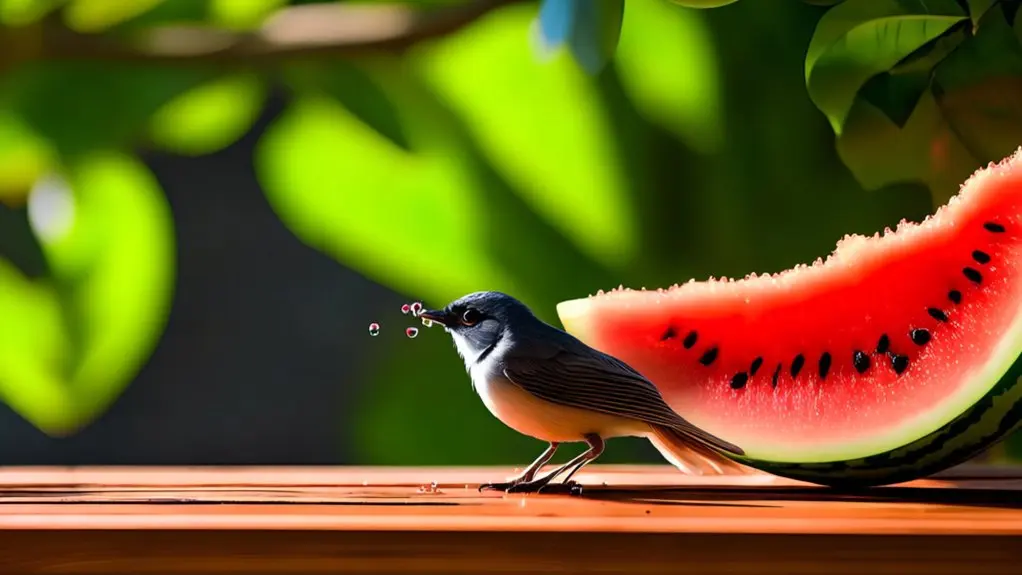
You can safely give birds watermelon by removing the rind, cutting it into small pieces, and serving it fresh without additives. Its high water content hydrates birds, while natural sugars and vitamins support their energy and health. Orioles, finches, and thrushes often enjoy it, especially in warm months.
Just watch for signs of interest or avoidance. Also, avoid mold or oversized chunks to prevent any risks.
It’s pretty interesting to explore how feeding strategies and bird behaviors reveal more about this tasty treat. Give it a try and see how your feathered friends respond!
How To Prepare Watermelon Safely For Birds
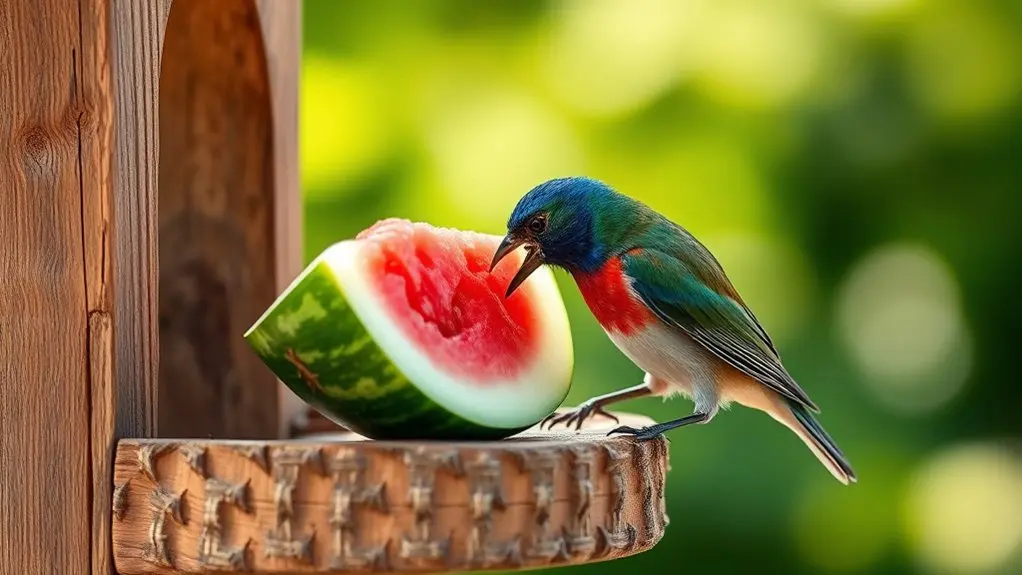
When preparing watermelon for birds, you should first remove the rind and cut the fruit into small, manageable pieces to prevent choking hazards.
Watermelon growth results in a juicy, nutrient-rich fruit that can complement a bird diet when served properly. Before feeding, wash the watermelon thoroughly to remove any pesticides or contaminants that could harm birds.
Watermelon is a juicy, nutrient-rich treat that benefits birds when cleaned and served correctly.
Serve the pieces at room temperature to avoid cold shock, which can disrupt their natural feeding behaviors.
Avoid adding sugar, salt, or seasoning, as these additives can be toxic or unhealthy for birds.
Finally, place the watermelon pieces on a clean, flat surface or bird feeder in a shaded area. This setup attracts birds while protecting them from direct sunlight and overheating during feeding.
It’s a simple way to keep your feathered friends healthy and happy!
Why Watermelon Is Good For Birds
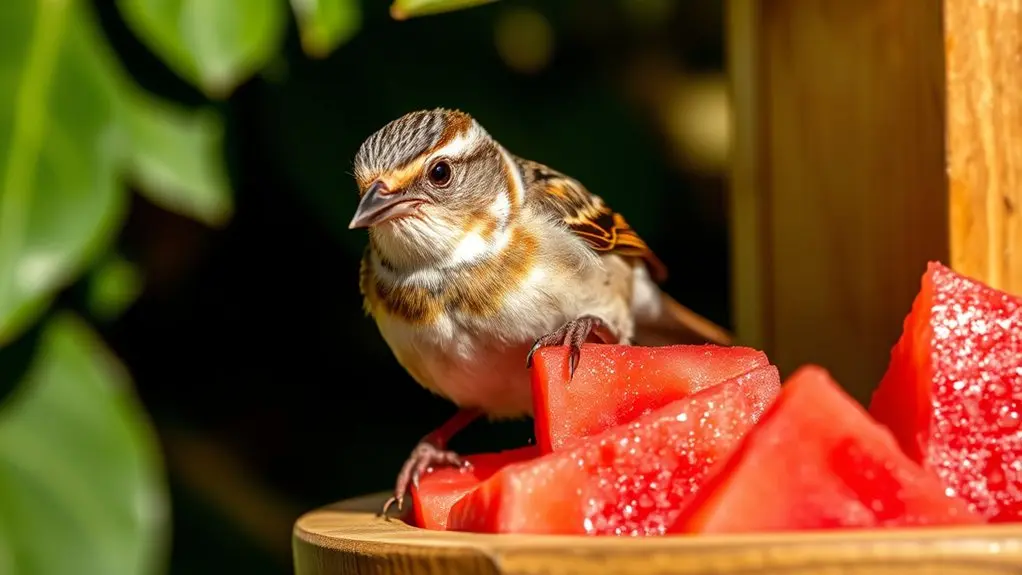
Because birds rely heavily on water sources for hydration, watermelon serves as an excellent supplement due to its exceptionally high water content. This fruit supports bird digestion by providing natural sugars and essential vitamins A and C, which aid metabolic functions.
Watermelon harvesting offers birds a nutrient-rich, easily digestible food source, especially beneficial in hot climates where water is scarce. The rind supplies fiber, enhancing digestion further. By feeding birds watermelon, you promote hydration and energy, both vital for their survival.
| Nutrient | Benefit for Birds | Role in Bird Digestion |
|---|---|---|
| Water | Hydration | Maintains fluid balance |
| Natural Sugars | Energy | Quick absorption in digestive tract |
| Vitamin A | Immune support | Aids cellular repair |
| Vitamin C | Antioxidant | Protects digestive tissues |
| Fiber (Rind) | Digestive health | Enhances gut motility |
Bird Species That Enjoy Watermelon
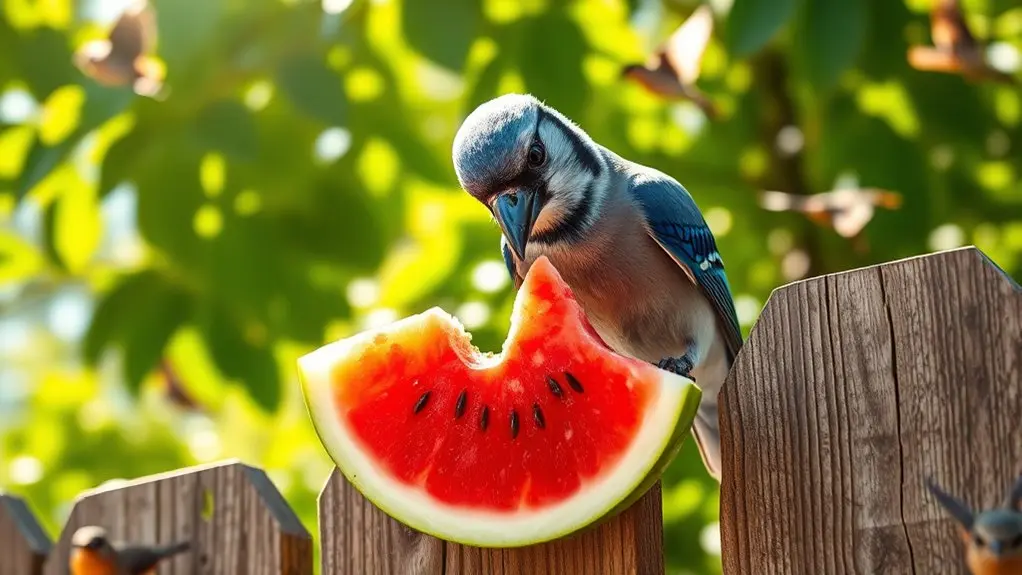
Although many birds consume a variety of fruits, you’ll find that species such as orioles, tanagers, and certain finches actively seek out watermelon for its hydration and natural sugars. These birds are particularly attracted to the watermelon flavor, which provides a sweet, revitalizing source of bird hydration.
Fruit-eating birds like robins and thrushes also favor watermelon’s juicy flesh. They benefit from its water content during warmer months. It’s kind of like a refreshing snack for them.
Additionally, grosbeaks and some parrots peck at both the rind and flesh, extracting nutrients and moisture.
Desert species such as doves and quail rely on watermelon for hydration in arid environments.
Even migratory songbirds like warblers and waxwings occasionally include watermelon in their diet. This just shows how broad the appeal of watermelon is across diverse bird species.
When And Where To Feed Watermelon To Birds
If you want to provide watermelon to birds effectively, timing and placement play essential roles in attracting them and ensuring their safety. Bird feeding timing aligns best with seasonal preferences, particularly from late spring through early fall when temperatures rise and birds seek hydration.
During these warmer months, you should offer small chunks of watermelon on feeders or on the ground in shaded areas to prevent rapid spoilage. Cut the rind into manageable pieces, removing any moldy parts promptly to maintain cleanliness and avoid health risks.
This method appeals especially to fruit-loving species like orioles, tanagers, and finches, which actively forage for moist, nutritious food in hot weather.
Common Risks Of Feeding Watermelon To Birds
When feeding watermelon to birds, you must consider several risks that can affect their health. Watermelon rinds may harbor toxic contaminants like pesticides or harmful chemicals if not thoroughly washed. Additionally, mold or bacteria can develop on watermelon that’s not fresh or properly stored, posing infection risks.
Watermelon rinds can contain harmful chemicals and mold, posing infection risks to birds if not properly cleaned or fresh.
Large pieces of watermelon or its rind present choking hazards, especially for smaller bird species. This can potentially cause digestive blockages.
Overfeeding watermelon leads to nutritional imbalances since it lacks essential nutrients birds need.
Also, because watermelon contains high water content, excessive consumption can cause overhydration. This can disrupt electrolyte balance and lead to health complications.
Alternatives To Watermelon As Bird Treats
You can offer birds a variety of nutritious fruit alternatives like grapes, apples, and berries to mix things up a bit in their diet.
Seeds and grains, such as sunflower seeds and corn, are great too because they provide essential energy.
And if you want to give them a protein boost, insect-based treats like mealworms work really well.
Trying out these options helps keep their nutrition balanced and supports the dietary needs of different bird species.
Nutritious Fruit Alternatives
Although watermelon offers hydration and some nutrients, you can provide birds with a variety of nutritious fruit alternatives that enhance their diet more effectively. When thinking about fruit preservation and feeding frequency, fresh or dried fruits keep essential vitamins and moisture. This supports birds year-round.
Here are some effective alternatives:
- Grapes, apples, and berries supply antioxidants and natural sugars, which promote energy.
- Nuts like walnuts, pecans, and almonds deliver high-energy fats and proteins that are crucial for muscle maintenance.
- Seeds from pumpkins, squashes, and melons attract diverse bird species without creating excess mess.
- Planting native fruiting shrubs offers continuous, natural food sources that align with birds’ evolutionary diets.
Seed And Grain Options
Since seeds and grains offer concentrated nutrients and energy, they serve as excellent alternatives to watermelon for bird treats. You’ll find seed varieties like sunflower, millet, and nyjer especially beneficial; they provide essential fats and proteins that support avian health.
Grain types such as cracked corn and wheat cater well to ground-feeding birds. But be mindful, they can attract unwanted species like pigeons and starlings.
Pumpkin and squash seeds also add a high-energy option, rich in fats and safe for many birds.
When selecting seeds and grains, avoid spoiled or moldy batches, as these pose health risks.
Commercial bird seed mixes often combine diverse grain types to accommodate varying bird preferences, ensuring a balanced nutritional profile that complements or replaces fruit-based treats effectively.
Insect-Based Bird Treats
How do insect-based treats enhance your bird-feeding routine? Incorporating mealworms or waxworms boosts bird diet diversity by providing a natural protein source crucial for many species. These insect treats benefit birds, especially insectivorous types like warblers, flycatchers, and nuthatches, by mimicking their wild diets.
You can offer mealworms live or dried, sourced easily online or locally. The insect treat benefits include enhanced health during breeding seasons and resilience in harsh weather without the sugars or preservatives found in processed foods.
Consider these key points: high protein content supports muscle development and energy, promotes natural foraging behaviors, improves nutritional balance in captive or backyard birds, and supports immune function during stressful periods.
Including insect-based treats effectively enriches your bird-feeding regimen with essential nutrients. It’s a simple way to help your feathered friends thrive!
How To Attract More Birds To Your Watermelon Feeder
Where should you place your watermelon feeder to maximize bird visits? Position it near natural bird habitats or native plants, aligning with local bird migration patterns and nesting behaviors. This strategic location attracts a broader variety of species during seasonal movements and breeding periods.
Place watermelon rinds on fences or flat surfaces for easy access and visibility. Offer a variety of ripe watermelon pieces to appeal to different species, encouraging frequent visits. Keep the fruit fresh and avoid overcrowding feeders to reduce aggressive competition.
Rotating feeder locations periodically can maintain interest and attract new birds, as shifting resources mimic natural food availability changes observed during migration.
Behavioral Signs Birds Enjoy Or Avoid Watermelon
After positioning your watermelon feeder strategically to attract a variety of birds, the next step is to observe their reactions closely. Understanding bird behavior helps you figure out their watermelon preferences accurately.
Birds that enjoy watermelon often sit firmly on the rind’s center to feed and return frequently to the same spot. They also tend to gather in groups, showing some competition for access. You might notice focused feeding behavior with minimal distraction. Plus, these birds usually approach the feeder confidently without hesitation.
On the flip side, birds that avoid watermelon show quick disinterest or refuse to land near the fruit. They mightn’t feed at all or display aggressive behavior around the rinds. Some species unfamiliar with watermelon may stay distant or just briefly check out the food without really engaging.
Frequently Asked Questions
Can Birds Digest Watermelon Seeds Safely?
You can trust many birds to digest watermelon seeds safely, as their seed digestion processes handle small, hard seeds well. These seeds offer nutritional benefits like healthy fats and proteins when fed in moderation.
Just be sure not to overdo it, though. A little goes a long way! Birds typically do just fine with these seeds in their diet.
Does Watermelon Cause Any Allergic Reactions in Birds?
You won’t find evidence that watermelon causes allergic reactions in birds. Its fruit variety supports bird hydration and energy, making it safe.
That said, always watch for distress signs just to be sure. Allergies from watermelon remain extremely rare in birds. So, overall, it’s a bird-friendly treat!
How Often Can Birds Eat Watermelon Without Health Issues?
You should limit watermelon feeding frequency to a few times weekly. Make sure it complements a balanced fruit variety. This way, you keep things interesting and healthy for your bird.
Doing this helps prevent digestive issues while still providing hydration and nutrients. It supports your bird’s overall health without relying too much on one fruit. Keeping a good mix is always the best bet!
Can Feeding Watermelon Affect Birds’ Migration Patterns?
Feeding frequency of watermelon aligns with birds’ seasonal preferences but doesn’t affect migration patterns. You’ll observe that environmental cues, not food intake, guide migration.
Though occasional feeding supports energy, it doesn’t alter timing or routes considerably. So, while giving birds some watermelon can help them refuel, it won’t change their natural journey.
Is Watermelon Safe for Baby Birds or Only Adults?
You’ll want to tread carefully. Watermelon varieties offer nutritional benefits, but only fully fledged baby birds can safely eat small, seedless pieces.
For young birds, watermelon’s high water content won’t replace proper diets or development. So, it’s best to stick to what they really need to grow strong.
Conclusion
You might think feeding birds watermelon is just a sweet treat, but coincidentally, it’s a scientifically sound choice packed with hydration and nutrients. By preparing it safely and offering it at the right time, you’ll observe specific species enthusiastically pecking, while others may hesitate. This reveals their preferences through behavior.
So, next time you slice a watermelon, remember you’re not just sharing fruit. You’re fostering a subtle ecological exchange that benefits both you and the birds. It’s a simple way to connect with nature that’s both fun and rewarding.