
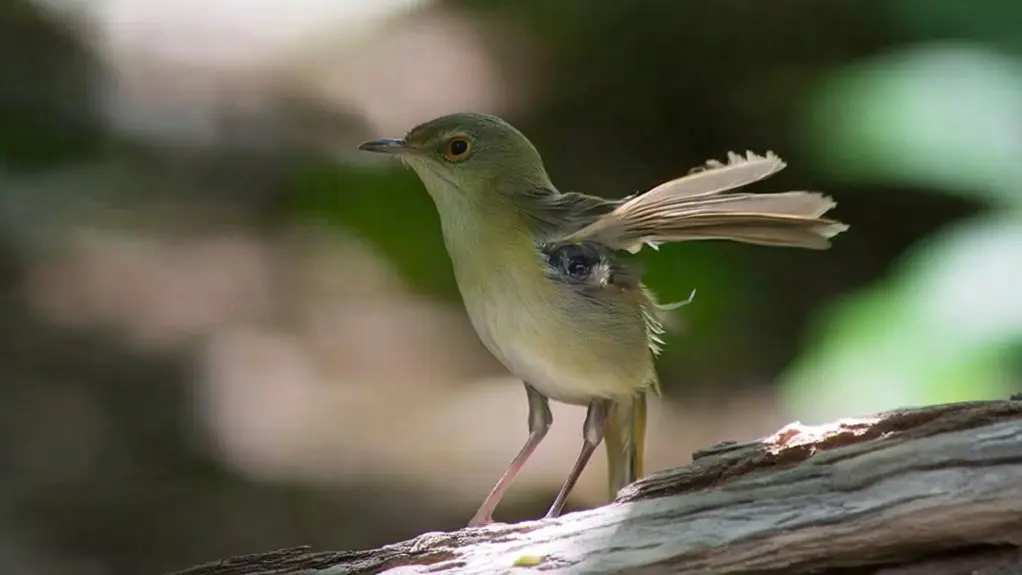
You can’t rely on birds to heal broken wings on their own, as fractures often require precise veterinary diagnosis and treatment, including surgery and stabilization.
Healing involves more than just bone repair. Supportive care, nutrient-rich diets, and physical therapy are essential to restore flight.
Recovery depends on the injury type, age, and overall health. Some fractures might not heal fully.
Understanding these factors will help you see what really happens during a bird’s wing recovery process.
How To Tell If a Bird’s Wing Is Truly Broken
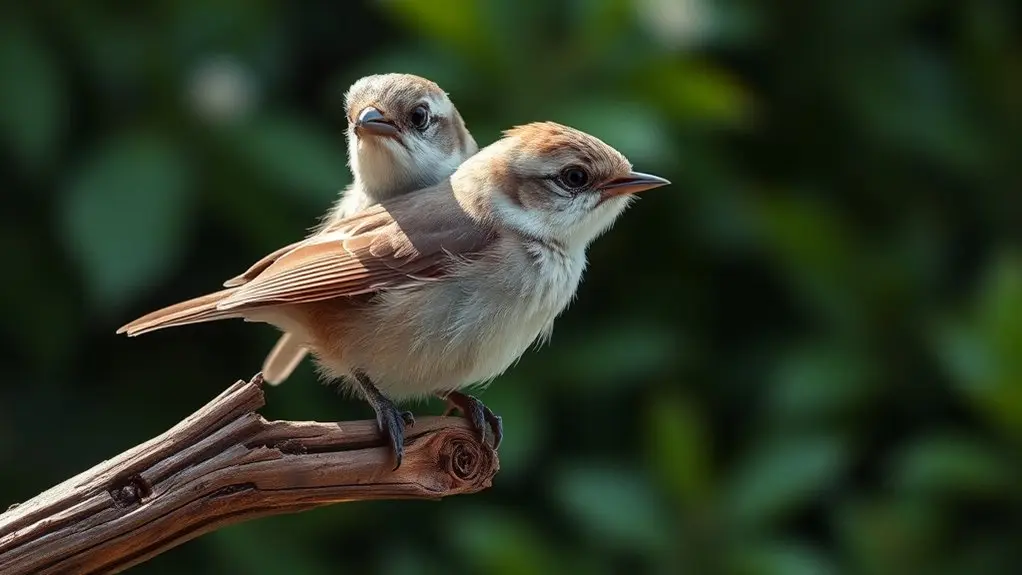
Although it can be challenging to assess, you can often tell if a bird’s wing is truly broken by carefully observing its position and movement. A broken wing typically hangs limply, limiting flight capability, unlike a wing held close to the body with normal bird feather coloration. Swelling, deformity, or bleeding near the wing strongly suggest a fracture.
However, if the bird struggles to fly but shows no visible injury, consider muscle damage or fatigue. Nesting behaviors provide context; adult birds failing to fly during critical nesting periods may indicate underlying wing damage.
Observing these signs alongside the bird’s natural activity helps you distinguish between a true break and other impairments, enabling accurate assessment without immediate invasive measures.
Types of Broken Wing Injuries Explained
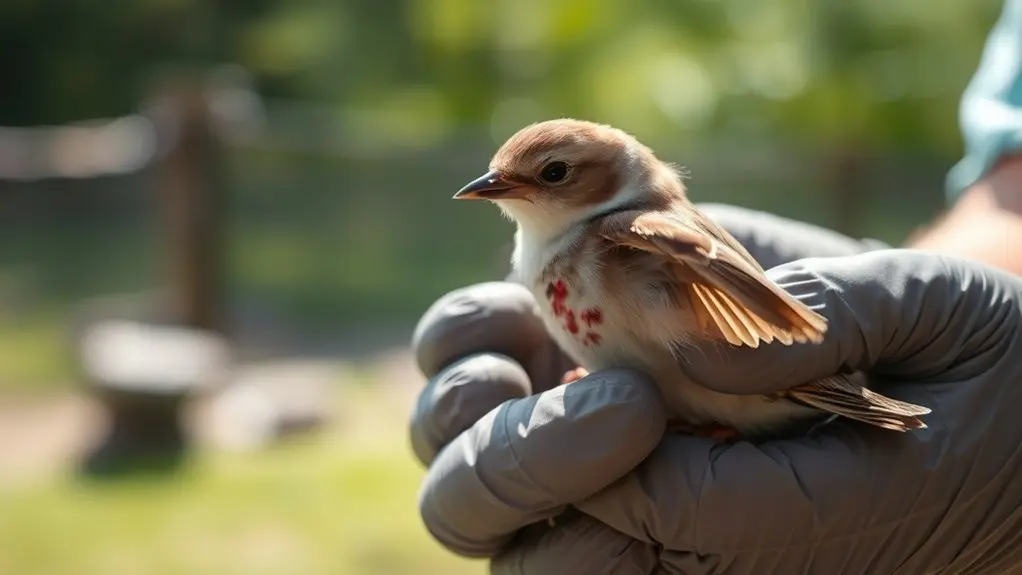
How do broken wing injuries vary in birds, and why does understanding these differences matter? Knowing the fracture type helps guide treatment, which impacts feather replacement and flight restoration outcomes.
Injuries can range from simple humerus fractures to complex comminuted breaks that involve multiple bones and soft tissue damage.
| Injury Type | Description | Impact on Healing |
|---|---|---|
| Humerus Fracture | Single clean break | Easier surgical repair |
| Radius/Ulna Break | May involve one or both bones | Affects wing stability |
| Comminuted Break | Shattered bone fragments | Challenging to treat |
| Dislocation | Bones are misaligned | Requires precise realignment |
| Soft Tissue Damage | Torn ligaments or muscles | Delays healing, complicates flight restoration |
Radiographs confirm fracture details and help guide care. This way, treatment can be optimized to support feather replacement and ensure successful flight restoration.
How To Safely Handle a Bird With a Broken Wing
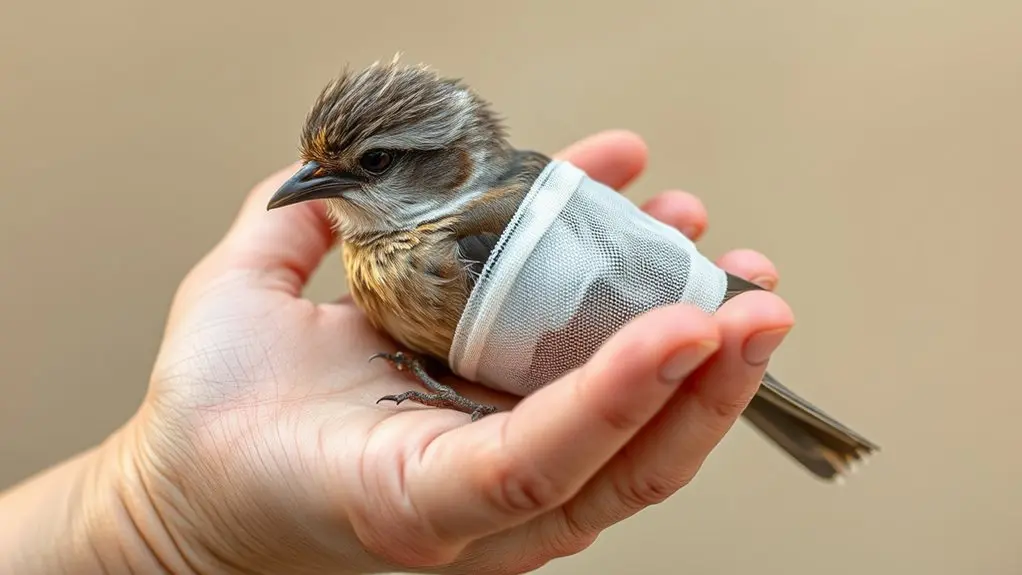
Recognizing the specific type of wing injury helps you understand the bird’s fragility and the care it requires during handling. When you encounter a bird with a broken wing, minimize handling to reduce stress and avoid making the injury worse.
Gently place the bird in a small, ventilated box to limit movement. This is important because uncontrolled flapping during bird migration can cause more damage.
Keep the container in a dark, quiet environment to help calm the bird. This also stops the bird from excessive feather grooming, which might lead to further harm.
Avoid trying to examine or treat the bird yourself. Doing so can interfere with the natural healing process.
Don’t feed or give water to the bird until a licensed wildlife rehabilitator or veterinarian has checked it out. This way, the bird gets the right professional care without risking additional problems.
It’s always best to let experts handle the situation.
When To Seek Professional Help for Broken Wings
If you notice a bird’s wing hanging limply, refusing to move, or showing visible deformities, you should seek professional help right away. These signs often point to fractures or serious trauma that need expert assessment.
Adult birds that can’t fly or have abnormal wing positions can’t perform essential behaviors like nesting. This can affect their survival and chances of reproducing.
Feather replacement, which is part of natural healing, won’t fix bone damage.
Licensed wildlife rehabilitators or veterinarians use radiographs to diagnose fractures accurately. This helps them provide the right treatment.
Trying to handle or treat the bird without experience can make injuries worse or cause more suffering.
Getting prompt help supports proper healing and keeps critical functions intact. Always prioritize professional evaluation if you see severe injury signs or if the bird can’t stand or move properly.
How Veterinarians Diagnose and Treat Broken Wings
When you bring a bird in with a suspected broken wing, the veterinarian will start with a thorough physical exam. They’ll focus on key signs and the specific areas where the injury might be.
To get a clear picture, they’ll usually sedate the bird so they can take precise X-rays. These radiographs help reveal the details of the fracture and decide if surgery is necessary.
Once the diagnosis is made, the vet will guide you through careful postoperative care and therapy. This part is really important to make sure the wing heals properly and the bird regains full function.
Initial Injury Examination
How do veterinarians accurately diagnose and treat broken wings in birds? They begin with a thorough exam, evaluating overall health by listening to the heart and lungs. This is essential since injuries can impact critical functions.
You’ll notice they carefully inspect the eyes, wings, and legs for fractures, swelling, or deformities. Proper bird feather maintenance is important during this process, as feathers can mask or complicate injury assessment.
Plus, understanding nesting behavior helps vets anticipate stress responses in injured birds.
Pain medications and fluids are promptly given to reduce discomfort and dehydration. Wounds get cleaned and bandaged to prevent infection before any further diagnostics.
This initial, detailed examination lays the foundation for effective treatment, making sure the bird’s injuries, especially broken wings, are properly managed for recovery.
Radiographs And Surgery
A critical step in diagnosing broken wings involves obtaining radiographs to pinpoint the exact location, type, and severity of fractures. Sedation guarantees the bird remains still, allowing clear imaging of the wingspan and feather alignment.
These images guide your veterinarian’s surgical plan, determining whether pins or K-wires are needed for fixation.
Radiographs help confirm if surgery is essential, especially with displaced or complex fractures. They provide key diagnostic and surgical insights like precise fracture mapping along the wingspan and evaluation of feather alignment to assess soft tissue involvement.
They also help with the selection of fixation devices based on the fracture type. Radiographs not only assist during surgery but also serve as baseline references for postoperative assessments.
This way, you can ensure healing progresses correctly.
Postoperative Care And Therapy
Following surgical intervention guided by radiographic imaging, veterinarians focus on postoperative care to support ideal healing of the fractured wing. They stabilize fractures using external fixation devices like pins and acrylic bars.
Then, they administer pain medications, antibiotics, and fluids to manage discomfort and prevent infection.
You’ll notice bone healing in birds occurs rapidly, typically within 3-4 weeks. During recovery, physical therapy involving joint extension exercises and passive range of motion helps prevent stiffness and promotes mobility.
It’s essential to monitor feather grooming closely, as compromised wing function may alter this behavior. This can impact preening and overall hygiene.
Additionally, disruptions in nesting behaviors can signal stress or discomfort. Observing these patterns helps you assess healing progress.
This detailed care ensures the bird regains maximum wing function for survival.
How Birds Recover: Healing Time and Care You Should Know About
Although bird bones heal faster than those of mammals, often within three to four weeks because of their high metabolic rate, the recovery process still demands meticulous care. You’ll need to make sure the bone is properly stabilized with surgical fixation devices like IM pins or external fixators to keep everything aligned while it heals.
Feather restoration is important too, since damaged feathers can affect flight and insulation. Adding dietary supplements rich in calcium and vitamins can really help speed up tissue repair.
During recovery, keep the bird in a controlled environment with limited movement to avoid any further injury. Key care points include providing a nutrient-dense diet with targeted supplements, monitoring feather regrowth to make sure it’s on track, and restricting activity to promote stable bone healing.
How Physical Therapy Helps Birds Heal Broken Wings
You’ll use joint mobility exercises to help extend the wing’s range of motion and keep stiffness at bay while it heals.
Alongside that, stimulating techniques like cold laser therapy can encourage tissue repair and ease pain, which helps speed up the recovery process.
When combined, these targeted therapies work hand in hand to bring back strength and function, making sure the wing heals properly.
Joint Mobility Exercises
When you engage in joint mobility exercises like passive range of motion (PROM), you help maintain flexibility and prevent stiffness in a bird’s injured wing throughout the healing process. These exercises are crucial alongside feather replacement and wing wrapping techniques to ensure comprehensive recovery.
By gently stretching the wing joints, you promote blood flow, which accelerates bone and tissue repair.
It’s also helpful to monitor progress with tools such as a goniometer. This gives you precise measurements of joint movement and helps guide any necessary adjustments to the therapy.
Key benefits include preventing joint stiffness and loss of flexibility, enhancing circulation to speed tissue regeneration, and supporting functional recovery for flight.
Consistent, carefully administered joint exercises are essential to restore a bird’s wing function after fractures. This helps enable successful rehabilitation without compromising feather regrowth or wing stability.
Healing Stimulation Techniques
How does physical therapy actively support the healing of a bird’s broken wing? By applying healing stimulation techniques such as cold laser therapy, you stimulate tissue repair, reduce inflammation, and alleviate pain in injured wing tissues.
Passive range of motion exercises, measured with a goniometer, prevent joint stiffness and promote proper alignment during healing. These interventions accelerate bone healing, which in birds occurs in about 3-4 weeks.
As the wing regains strength, you facilitate feather replacement and initiate carefully monitored flight training to restore functionality. This thorough approach ensures the wing recovers mobility and strength, which are essential for natural flight.
Through consistent physical therapy, you help the bird regain peak wing performance. Ultimately, this increases its chances for successful release back into the wild.
What Affects Healing and Flight After a Broken Wing?
Although several factors influence recovery, the type and location of the fracture play a vital role in determining how well a bird heals and regains flight. Proper surgical alignment and stabilization are essential to restore bone integrity and function.
Additionally, you should consider the bird’s age and species, as younger birds heal faster due to rapid bone regeneration. Feather replacement timing also matters because it affects aerodynamics and flight capability.
Post-healing flight training and physical therapy are essential for restoring muscle strength and joint mobility.
Overall health status impacts healing speed and quality too. You’ll notice that integrating joint exercises and laser therapy during recovery promotes tissue repair and enhances flight restoration.
Understanding these factors helps you appreciate why some birds recover fully while others face lasting challenges after a broken wing.
Options When Broken Wings Don’t Heal: Sanctuary or Humane Choices
Not all broken wings fully recover despite ideal treatment and rehabilitation efforts. When wing rehabilitation fails to restore proper function, you must consider captivity considerations carefully.
Some birds with severe or non-healing fractures become non-releasable and may require sanctuary placement, where they can live safely with appropriate care.
However, species-specific behavior and environmental needs might make captivity unsuitable, complicating your decision.
Ethical protocols prioritize the bird’s quality of life, weighing long-term sanctuary care against humane euthanasia if suffering persists or survival in captivity is unlikely.
Ultimately, your choice hinges on injury severity, species traits, and the bird’s potential to thrive outside the wild.
Providing a secure sanctuary or opting for humane euthanasia ensures responsible management of birds with irreparable wing injuries.
It’s all about making the best decision for the bird’s well-being.
Frequently Asked Questions
Can a Bird Live Normally With a Partially Healed Wing?
You can help a bird live normally with a partially healed wing by supporting feather regrowth and flight rehabilitation. But expect reduced range and agility. The bird might also show some behavioral changes because of its lingering physical limitations.
It’s all about giving the bird time and care to adjust. With patience, many birds can still enjoy a good quality of life even if their wing isn’t fully healed. Just remember, their abilities might not be exactly the same as before.
Do Different Bird Species Heal Broken Wings Differently?
You’ll notice different bird species heal broken wings differently, affecting feather regeneration and flight impairment levels. Smaller birds regenerate feathers faster, which helps reduce how much their flying is affected.
On the other hand, larger or specialized species often face a longer recovery time. This means they deal with more significant challenges when it comes to flying again. It’s pretty interesting how size and species really change the healing process.
How Do Environmental Factors Impact Wing Healing?
Oh sure, just ignore migration patterns and nesting behaviors. Your bird’s wing won’t heal itself!
You’ll need stable temperature, humidity, and clean water to support tissue repair and bone regeneration.
It’s important to keep the environment stress-free and infection-free for proper healing.
Can Nutrition Affect a Bird’s Wing Recovery?
Yes, nutritional deficiencies can delay your bird’s wing recovery by impairing bone healing. Using dietary supplements rich in calcium and vitamin D supports bone regeneration. It also strengthens the immune system and promotes faster, more effective recovery.
Are There Natural Remedies to Support Wing Healing?
You won’t find herbal remedies or alternative therapies that magically fix broken wings, but they can support overall health.
Use them alongside proper nutrition and veterinary care to help your bird’s healing process stay on track.
Conclusion
While some believe birds can naturally heal broken wings, the reality is more complex. Without proper alignment and care, fractures often worsen and impair flight. You’ll see that timely veterinary intervention, including diagnosis, treatment, and possibly physical therapy, markedly improves recovery chances.
Observing a bird’s wing closely and acting quickly can mean the difference between permanent damage and restored mobility. So, understanding the science behind healing helps you make informed, compassionate choices. It’s really about knowing when and how to step in to help.