
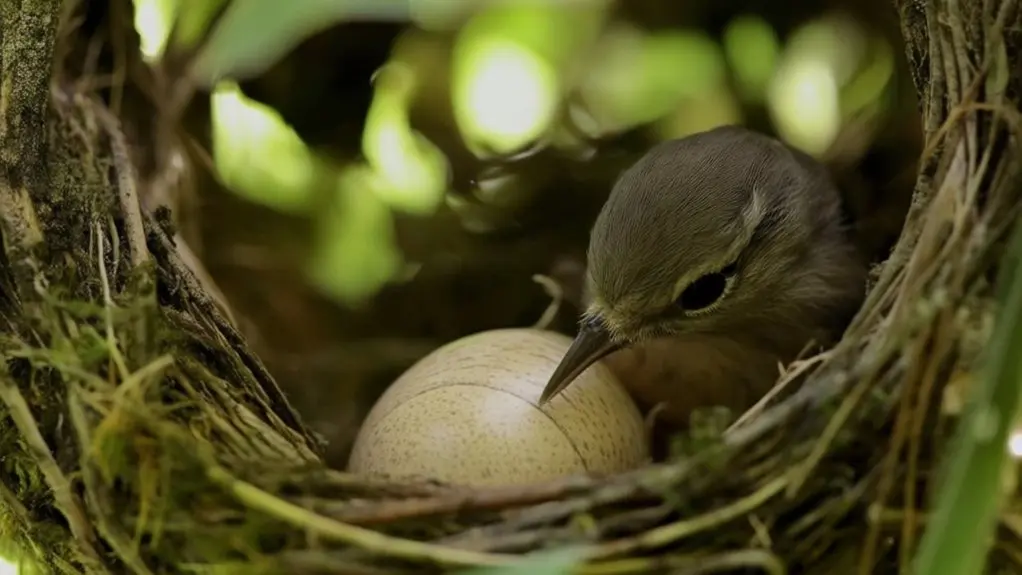
You might think birds often move eggs to another nest, but they rarely do because eggs are fragile and need stable temperatures and humidity to develop properly. When birds do relocate eggs, it’s usually within the same nesting area. This helps avoid damage or exposure to predators.
Some species have special behaviors and parental teamwork to carefully shift eggs for safety. It’s pretty fascinating how they manage this delicate balance between protecting their eggs and surviving in tough environments. Understanding these details shows just how clever birds can be when it comes to caring for their young.
Why Birds Can’t Move Their Eggs
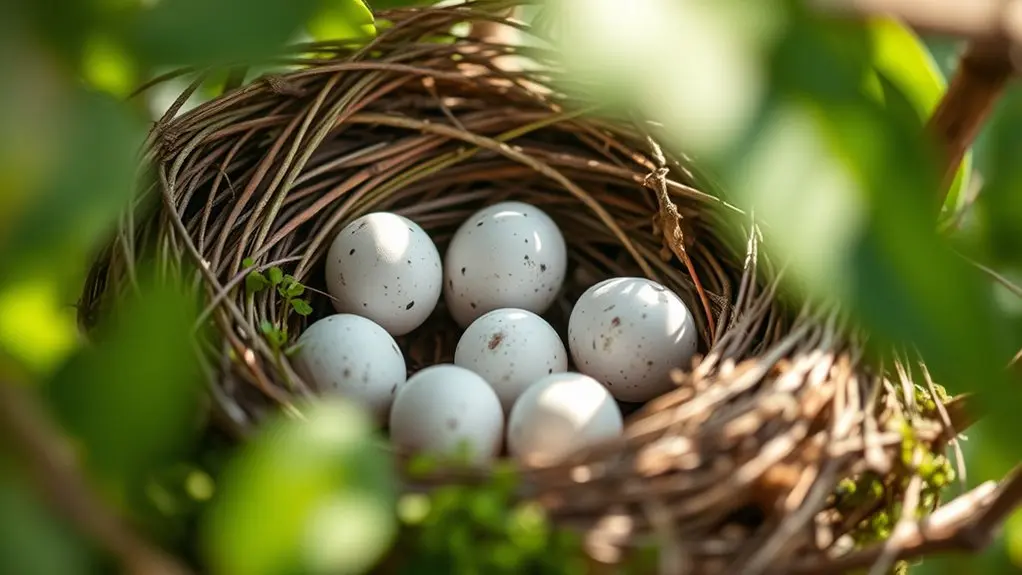
Although it might seem practical for birds to move their eggs, they usually can’t because eggs are extremely fragile and easily damaged during handling. The eggshell composition is specifically adapted to protect the developing embryo while allowing gas exchange, but it remains susceptible to cracks under pressure.
When you consider incubation temperature, it becomes clear why relocation is problematic. Maintaining a consistent thermal environment is essential for embryo development. Moving eggs disrupts this balance, exposing them to temperature fluctuations that can halt or harm embryonic growth.
Also, the delicate balance of humidity and temperature in the original nest is difficult to replicate elsewhere. Because of this, most birds avoid moving eggs. They usually abandon and rebuild nests instead, since the risks of damage and disrupted incubation outweigh any potential benefits.
Bird Species That Relocate Eggs
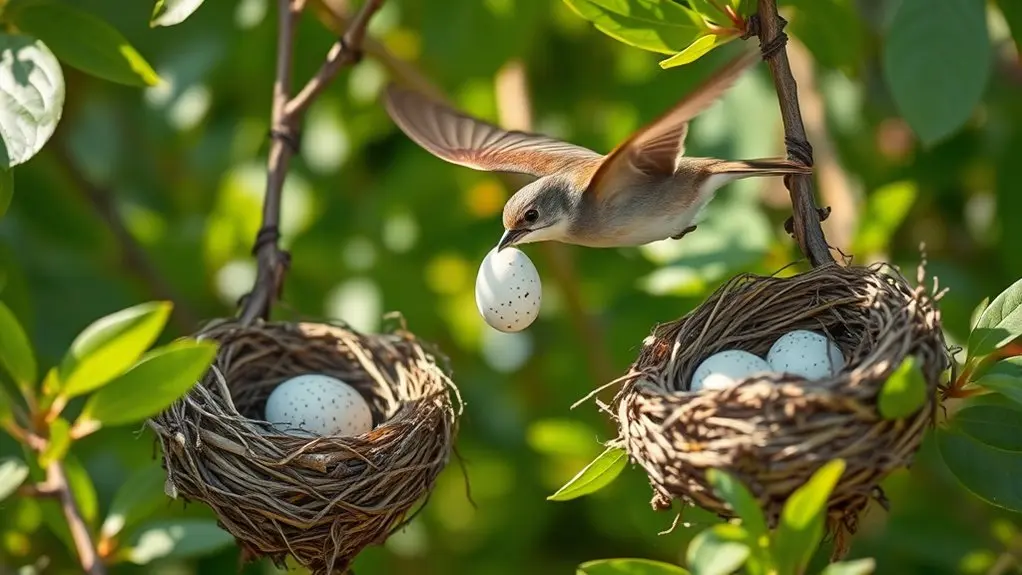
When environmental threats or nest instability arise, certain bird species actively relocate their eggs to enhance survival chances. You’ll observe that species like the American Oystercatcher and Killdeer move eggs to safer locations, balancing egg incubation with nest camouflage.
African Jacanas shift eggs on floating vegetation when water levels fluctuate, while Australian Brush Turkeys adjust mound positions for ideal incubation temperature. In species such as Eastern Bluebirds and Common Terns, both parents cooperate to relocate eggs, making sure the eggs stay protected against predators and environmental challenges.
| Bird Species | Egg Relocation Behavior |
|---|---|
| American Oystercatcher | Moves eggs to safer nest sites |
| African Jacana | Relocates eggs on floating plants |
| Australian Brush Turkey | Adjusts mound eggs for incubation |
| Eastern Bluebird | Parental cooperation in movement |
These behaviors help improve nest camouflage and increase the chances of successful egg incubation.
How Birds Actually Move Their Eggs
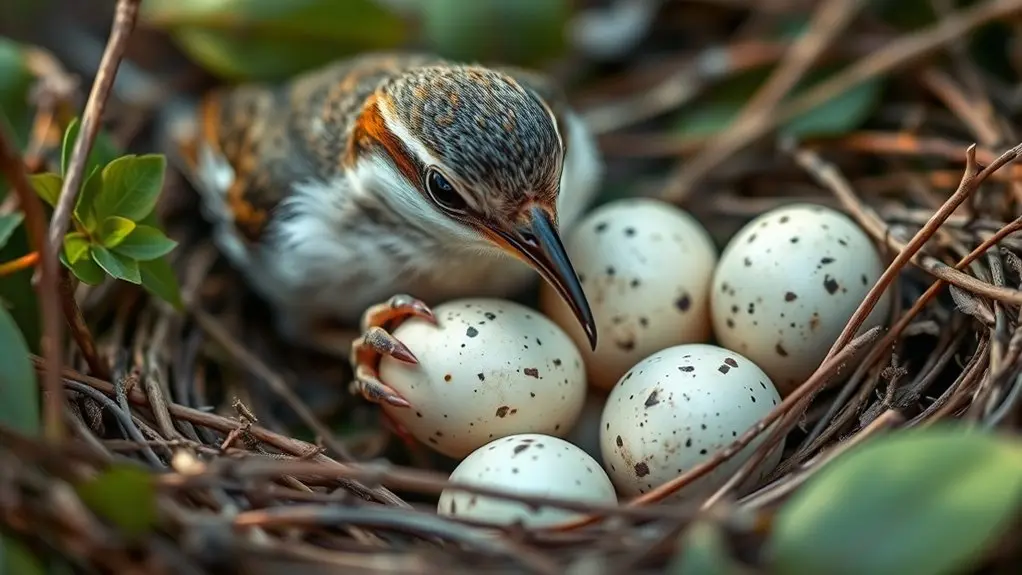
Because birds must handle their eggs with extreme care, they move them gently within or near the nest to avoid damage. During egg incubation, maintaining the eggs’ integrity is critical, so birds rarely transfer eggs between distinct nests.
Instead, if environmental threats arise, like predators or weather hazards, they may carefully relocate eggs to a safer spot within the same nesting site.
This process usually involves both parents cooperating to carry eggs delicately, making sure there’s minimal disturbance. Before moving eggs, birds often test potential new locations to confirm safety and stability, which is a big part of effective nest building.
This precise behavior supports successful incubation and hatchling survival.
Choosing New Nest Sites for Egg Relocation
Selecting a new nest site requires birds to evaluate safety, environmental stability, and proximity to essential resources like food and water.
When relocating eggs, you’ll notice that birds test several locations, checking out nest concealment and microclimate conditions. This helps minimize predation risk and temperature fluctuations.
They often go for concealed spots such as dense foliage, low shrubs, or cavities. These choices boost the chances their offspring will survive.
Being close to resources is important too, making it easier to find food and water during incubation.
Birds use environmental cues, past experiences, and social signals to help make their decisions.
This behavior shows a smart balance between protection and accessibility.
Basically, birds pick nest sites that offer both shelter and the essentials their eggs need to thrive.
Challenges of Moving Eggs
When you move eggs, you have to be really careful because their shells are so fragile—they can break easily.
On top of that, you’ve got to think about things like temperature changes, which can affect how well the eggs stay viable.
Fragility And Breakage Risks
Although eggs seem sturdy, their fragile structure demands careful handling during any relocation. Maintaining eggshell integrity is vital, as even minor mishandling leads to cracks or breakage. When you move eggs, you must apply precise handling techniques to prevent damage.
Consider these factors: eggs can break easily under rough handling or jostling. External forces, such as temperature changes, can make their fragility worse. Long-distance transport also increases the likelihood of shell compromise.
Even minor impacts are enough to render eggs unviable. So, minimizing disturbance during movement really helps preserve egg viability.
You have to recognize that the delicate nature of eggshells creates significant challenges. Careful and minimal handling is essential to reduce breakage risks and guarantee successful relocation. Just take it slow and steady!
Environmental Exposure Challenges
Because eggs are highly susceptible to environmental factors, moving them exposes the developing embryos to risks such as rain, wind, and temperature fluctuations. You have to think about how relocating eggs messes with their temperature regulation. Exposure to direct sunlight or cold can really hurt embryo viability.
Also, the choice of nest material is super important in protecting eggs from these environmental stressors. If the protective layer around the eggs gets disturbed, they become way more vulnerable.
The table below breaks down the main environmental challenges faced during egg movement:
| Environmental Factor | Impact on Eggs | Protective Role of Nest Material |
|---|---|---|
| Rain | Embryo drowning risk | Water-resistant materials needed |
| Temperature Fluctuations | Impaired temperature regulation | Insulating materials essential |
| Wind | Physical displacement | Dense nesting aids stability |
See, these challenges can seriously cut down reproductive success if they’re not handled right.
Male Birds’ Roles in Egg Relocation
While egg relocation often demands swift action, male birds frequently take an active role in protecting and moving eggs to safer sites. Male involvement is critical, as it directly impacts offspring survival. You’ll notice that males often assist in physically carrying or transferring eggs.
They also evaluate potential new nesting sites for safety and suitability. Plus, they collaborate with females to select ideal locations. Male birds respond quickly to environmental threats or predator presence.
This kind of teamwork enhances parental cooperation during the relocation process. It ensures eggs aren’t only moved but also placed in environments that maximize their chances of development.
Benefits of Egg Relocation for Birds
When you watch birds moving their eggs, you can clearly see their strategy to boost the chances of their babies surviving. They do this by avoiding predators and dangerous places.
Plus, when they move their eggs to better spots, the conditions for keeping the eggs warm and safe get a lot better. It’s really interesting how these behaviors show that birds are smart about handling threats to keep their future generations safe.
Increased Offspring Survival
Although egg relocation demands energy and care, it markedly boosts offspring survival by moving eggs away from predators and hazardous conditions. You’ll see that birds adaptively shift eggs to optimize survival chances despite challenges related to eggshell composition and incubation temperature.
Consider these survival benefits: it reduces predation risk by distancing eggs from vulnerable nests, and it minimizes exposure to environmental hazards such as flooding or extreme heat.
It also allows quick response to habitat disturbances that threaten nest integrity and enhances protection against adverse weather by choosing safer sites. All these factors increase overall reproductive success, supporting population stability.
Enhanced Incubation Conditions
Beyond increasing offspring survival by reducing predation and environmental risks, egg relocation plays an essential role in optimizing incubation conditions. When you observe birds moving eggs, they often select nest sites that promote effective egg temperature regulation, ensuring consistent warmth and appropriate humidity.
By relocating eggs to locations with better airflow and shelter from harsh weather, birds enhance the microenvironment essential for embryonic development. This nest site selection shows how birds adaptively respond to disturbances, maintaining ideal incubation conditions despite environmental fluctuations.
Such precise adjustments improve hatch rates and promote healthier offspring development. So, egg relocation isn’t just a protective measure; it’s a strategic behavior that fine-tunes incubation parameters critical for reproductive success in variable habitats.
Predator Avoidance Strategies
Because predators pose a constant threat to nests, birds often relocate eggs to reduce the risk of discovery and predation. This behavior directly enhances egg incubation success by ensuring a safer environment.
During nest construction, birds may select or create sites that make it easier to move eggs quickly when needed.
Think about these predator avoidance strategies: detecting predator activity early to start moving eggs, carefully handling eggs to avoid damage, and moving them to concealed or protected spots. Birds also reduce visual and scent cues that predators use to find nests. All of this helps increase the chances that their offspring survive by minimizing predation risk.
Frequently Asked Questions
How Do Birds Recognize Their Own Eggs?
You recognize your eggs through egg recognition, relying on visual patterns, size, and sometimes scent. You reinforce nest security by noting their position and laying sequence.
This helps ensure precise identification and care within your nesting environment. It’s a pretty clever way to keep track of your own eggs, don’t you think?
Can Weather Affect Egg Survival in Nests?
Yes, climate change alters weather patterns, affecting egg survival in nesting sites. You’ll observe increased temperature fluctuations and extreme events, forcing birds to adapt or relocate eggs to protect developing embryos from overheating or cooling.
It’s a big challenge for them because sudden changes in weather can really impact the delicate balance needed for the eggs to develop properly. Birds might have to get creative or even move their nests to safer spots. Nature’s way of coping with these shifts is pretty fascinating to watch.
Do Birds Ever Reuse Old Nests?
You’ll find that over 60% of songbirds reuse old nests, combining nest building materials carefully. Their egg incubation techniques adapt to these structures, optimizing warmth and protection. This saves energy and enhances breeding efficiency annually.
It’s pretty clever how they do this, right? By reusing nests, they don’t have to start from scratch every season, which makes life a bit easier for them. Plus, it helps keep their eggs safe and cozy.
How Long Do Bird Eggs Typically Take to Hatch?
You’ll find bird egg incubation typically lasts 10 to 14 days, depending on the species. Maintaining nest security during this period guarantees consistent warmth. This warmth is essential for proper development and successful hatching within the expected timeframe.
What Predators Commonly Threaten Bird Eggs?
You’ll find predators like snakes, raccoons, crows, magpies, and domestic cats threaten bird eggs. Egg camouflage helps reduce detection, which is pretty clever.
Nest parasitism complicates survival by introducing foreign eggs into nests. This increases predation risks and makes things even tougher for the birds.
Conclusion
You might imagine a bird trying to carry fragile eggs like a delicate glass ornament. It seems nearly impossible without breakage. While most birds can’t physically move eggs, some species carefully roll or nudge them short distances, showcasing remarkable precision.
This behavior highlights their adaptability despite challenges. Understanding these subtle strategies helps you appreciate how birds balance risks and benefits in egg relocation. It’s all about ensuring their offspring’s survival against the odds.