

Yes, birds do move their eggs intentionally within the nest, mainly to regulate temperature and guarantee even warmth essential for embryo development. They use their feet to gently shuffle eggs side to side, which helps maintain camouflage and reduces risk from predators.
This behavior is deliberate, not accidental, and differs from relocating chicks, which is rare and risky. If you want to understand more about how birds protect their young and respond to nest disturbances, you’ll find valuable insights ahead.
Bird Egg Movement: How and Why It Happens
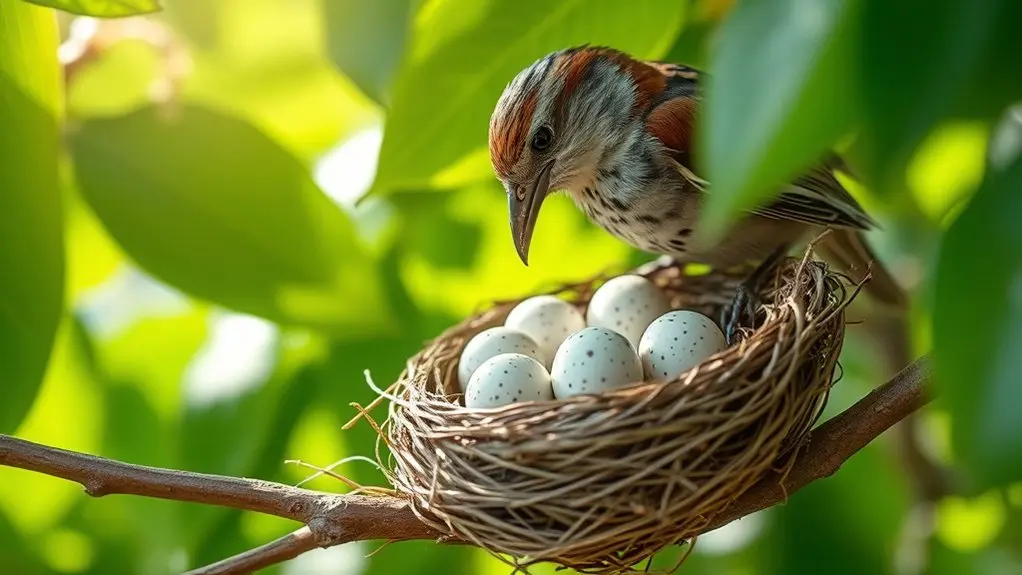
Although birds usually leave their eggs where they lay them, you might notice some species gently shifting or turning eggs within the nest. This movement primarily serves to regulate egg temperature, ensuring even warmth critical for embryo development.
Some birds gently turn eggs to maintain even warmth essential for healthy embryo growth.
Parent birds, like albatrosses, often use their feet to shuffle eggs side to side, a behavior confirmed by sensor studies.
This controlled adjustment also helps maintain the nest’s camouflage by preventing eggs from becoming exposed or displaced, reducing predation risk.
Occasionally, environmental disturbances or predators may inadvertently move eggs, but deliberate egg movement is a precise, adaptive action by parents.
How to Recognize When Birds Move Eggs or Chicks
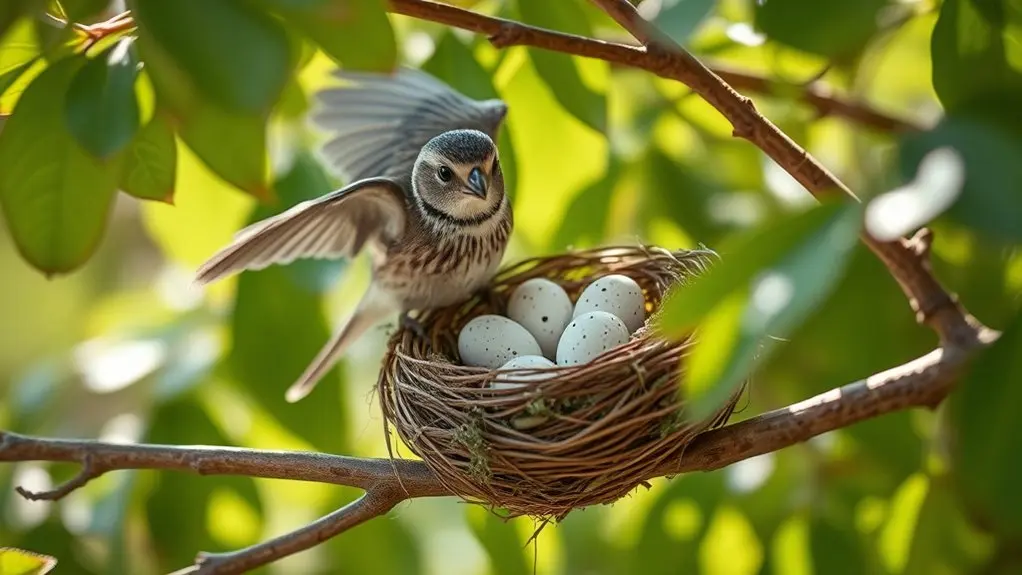
When you notice eggs or chicks missing or moved from their original nest location, it rarely means the parent birds intentionally relocated them. Birds usually avoid moving their young because it can attract predators, especially during sensitive times like bird migration.
Most of the time, missing eggs or chicks are actually the result of predators or environmental disturbances. You can tell if there’s been real movement by spotting things like nests that are still intact but suddenly have eggs or chicks gone or scattered around.
Parent birds depend a lot on their nests being camouflaged to keep their babies safe. They rarely abandon or move their young unless the nest is badly damaged or seriously threatened.
When parent birds leave the nest temporarily, it’s usually to avoid predators, not to move the eggs or chicks somewhere else.
How Disturbing Nests Affects Eggs and Chicks

When you disturb a nest, you run the risk of causing the parents to abandon their eggs or chicks. This can really increase the chances that the young won’t survive.
Handling the eggs yourself can also cause damage, which messes with the embryo’s development and makes it less likely the eggs will hatch.
On top of that, if birds are disturbed repeatedly, they might decide to move their nests. This means the parents mightn’t be able to care for their young as well, and it also makes the chicks more vulnerable to predators.
Nest Disturbance Consequences
Since bird parents rely on undisturbed conditions to successfully incubate their eggs, any disturbance to the nest can cause them to abandon the clutch entirely. Interrupting egg incubation halts proper temperature regulation, reducing embryo viability.
When you disturb a nest, parent birds may leave temporarily to avoid perceived threats, exposing eggs and chicks to environmental stressors and increasing vulnerability to nest predation. Handling or moving eggs can damage fragile shells, further impeding development.
Repeated disturbances escalate the risk, as predators detect and exploit accessible nests more easily. Because of this, birds often forgo the current nesting attempt, either starting anew or abandoning breeding efforts for the season.
Understanding these consequences highlights why it’s so important to minimize interference with nesting sites to support successful reproduction and species survival.
Parental Response To Threats
Disturbing a bird’s nest triggers a range of parental responses aimed at protecting eggs and chicks from perceived threats. Most species rarely move eggs or young, but they may abandon nests entirely if disturbance persists. You’ll notice altered song patterns signaling alarm, while changes in feather colors can indicate stress or readiness to defend.
Temporary nest desertion is common during predator attacks or human interference. Sometimes, birds follow this by building new nests nearby.
| Response Type | Behavioral Change | Visual/Auditory Cue |
|---|---|---|
| Nest Abandonment | Leaving eggs/chicks | Dull feather colors |
| Temporary Desertion | Brief nest absence | Altered song patterns |
| Nest Relocation | Building nearby nests | Bright defensive plumage |
Understanding these responses helps you appreciate the delicate balance birds maintain under threat.
How Parent Birds Protect and Rearrange Eggs and Chicks
Although parent birds rarely move their eggs or chicks once laid or hatched, they use different ways to keep their offspring safe. You’ll notice that egg incubation happens right at the original nest site. Here, the parents keep the temperature and humidity just right by staying in close contact with the eggs.
Parental vigilance is super important. Birds keep a close eye on their surroundings and defend against predators and other threats. Instead of moving their eggs or chicks, they count on camouflage and hiding the nest to avoid being spotted.
If the nest gets seriously disturbed, parents might just abandon it and start over somewhere else rather than moving their young. This way, they save energy and focus on caring for one stable spot.
When Can You Safely Intervene With Bird Eggs or Nestlings?
You can safely return eggs or nestlings to their original nest as long as it’s easy to get to and hasn’t been disturbed. Don’t worry—parent birds won’t abandon their babies just because you touched them. That’s a common myth.
But here’s the catch: moving eggs to a different nest or handling them without the right permission can actually be illegal and might reduce their chances of survival. So, it’s really important to know the laws and how to handle things safely.
In the end, understanding when it’s okay to step in and when it’s better to leave things alone can make all the difference for those little birds.
Legal Protections Overview
When can you safely intervene with bird eggs or nestlings? Under conservation laws like the Migratory Bird Treaty Act of 1918, you must avoid destroying, possessing, or moving eggs or nests of native or migrating birds without a permit. Bird migration patterns require protection to ensure species survival, so interference is tightly regulated.
Returning a fallen nestling is generally safe since parent birds don’t identify their young by smell and will typically continue care. However, fostering eggs into another nest or incubating them yourself is illegal and disrupts natural processes.
Parent birds rarely relocate hatched young, so intervention is only justified if the nest faces immediate danger or abandonment. Monitoring habitat preservation is preferred, and licensed wildlife rehabilitators should handle any legal interventions.
Safe Handling Practices
How should you handle bird eggs or nestlings if you find them displaced? If the nest is intact and accessible, you can gently return them, taking care to minimize handling. Use clean hands or gloves to avoid transferring bacteria or parasites that could harm the developing embryo or nestlings.
Parent birds rely on visual cues like feather coloration and nest construction rather than scent, so they typically won’t reject returned young. However, intervention is only advisable in urgent situations, such as nest destruction or immediate danger.
For both safety and legal reasons, it’s best to contact a wildlife rehabilitator before moving or touching wild eggs or nestlings. Remember, minimal disturbance guarantees better survival chances and preserves natural parental care.
When Not To Intervene
Although it may be tempting to intervene with bird eggs or nestlings, it’s safest to leave them undisturbed unless their nest faces immediate threats such as predators or human activity. Handling eggs or nestlings unnecessarily can cause stress, injury, or abandonment.
Parent birds recognize their young primarily by feather coloration and visual cues rather than smell, so they usually continue care if the young are returned promptly and gently.
Temporary disturbances at the nesting site rarely require intervention, as most birds resume incubation once the threat passes.
You should only intervene if the nesting site is destroyed or in a hazardous location, and always consider legal protections.
Intervening with knowledge and caution ensures you don’t disrupt natural parental behavior or survival chances.
Myths About Birds Moving Their Chicks
Why would birds move their chicks after they hatch? In reality, most bird species don’t relocate their young once they’ve hatched. Unlike bird migration, which involves long-distance travel for survival, parents usually stay close to their nests to protect and care for their hatchlings.
Nest building is done carefully to provide a safe, stationary environment rather than a temporary shelter meant for moving offspring.
Scientific observations show that moving chicks is actually rare and risky. It exposes them to predators and other environmental dangers.
When threatened, parents usually defend their nest or sometimes abandon it rather than move their young. The idea that birds often move their chicks probably comes from misunderstood behaviors.
In truth, relocating chicks is an exception, not the rule, in how birds raise their young.
Frequently Asked Questions
Do All Bird Species Move Their Eggs?
No, you won’t see all bird species move their eggs during egg incubation. You’ll notice nest security varies; some species adjust eggs minimally, while others keep them stationary. They focus on camouflage and protection instead of frequent movement.
It really depends on the bird and their strategy for keeping eggs safe. Some birds gently turn their eggs to help development, while others believe staying still is best. So, moving eggs isn’t a universal behavior among birds.
Can Birds Move Eggs Between Different Nests?
You might think birds often move eggs between nests, but they rarely do. This is because their egg relocation strategies prioritize keeping the nest clean.
Moving eggs can be risky—it might cause damage to the eggs or attract predators. Plus, parents might reject eggs that seem out of place. So, moving eggs between nests is uncommon and generally avoided.
How Do Birds Know Which Eggs Are Theirs?
You recognize eggs through egg recognition, relying on visual cues like size, shape, and color patterns. Your nesting behavior helps form a mental template, allowing you to identify and care specifically for your own eggs accurately.
It’s pretty clever how this works. Birds get familiar with their eggs early on, so they know which ones belong in their nest. This way, they avoid wasting time and energy on eggs that aren’t theirs.
What Materials Do Birds Use to Cushion Eggs?
Imagine a knight’s armor replaced by nest insulation! You’ll find birds use moss, feathers, grass, and plant fibers to cushion eggs. This helps provide egg camouflage, shock absorption, and thermal regulation.
It’s all about making sure the eggs stay safe, hidden, and warm. Birds really know how to create the perfect little nest cozy spot!
Do Environmental Changes Influence Egg Movement Behavior?
Yes, environmental changes influence egg movement behavior. You’ll see birds adjust eggs for egg temperature regulation and predation risk management. They shift positions to optimize incubation conditions and protect against threats.
This helps enhance the chances of embryo survival. It’s really about making sure the eggs stay safe and warm in changing surroundings. Birds are quite attentive to these details!
Conclusion
Now that you know birds do move their eggs and sometimes chicks, you can really appreciate this delicate dance of survival. Like tiny architects, parent birds rearrange their fragile treasures to keep them safe and warm.
But remember, disturbing a nest can do more harm than good. So, watch quietly and let nature work its magic. Sometimes the best intervention is simply knowing when not to interfere.
After all, nature’s precision often beats human hands.