
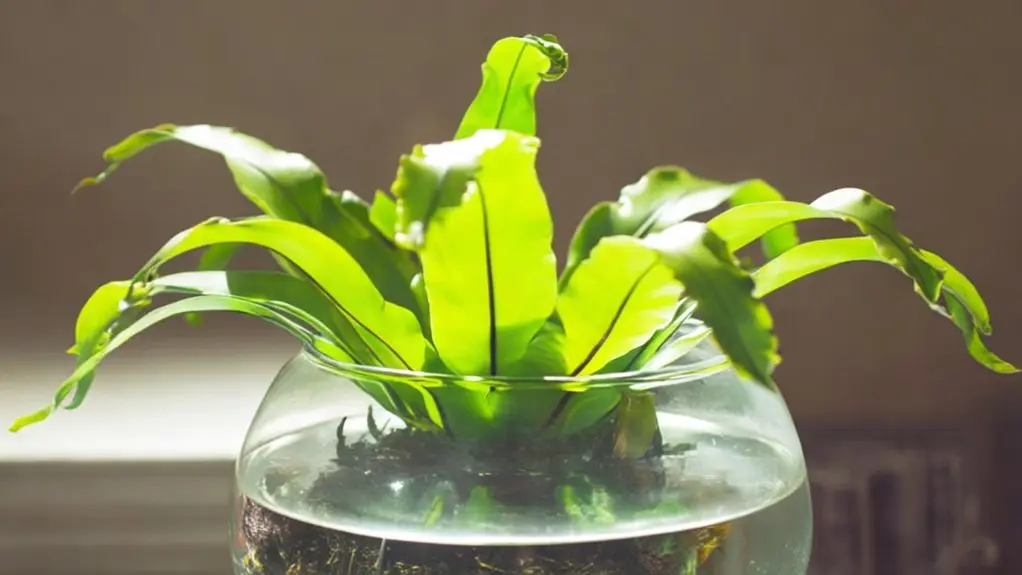
You can grow Bird’s Nest Fern in water temporarily, but it requires careful care. These ferns naturally grow on trees with fibrous roots adapted to air, not standing water. Prolonged root submersion causes oxygen deprivation, fungal infections, and root rot.
Use clean distilled water, change it weekly, and keep the fern’s crown above water to avoid problems. While water growth is possible short-term, soil offers better aeration and nutrients for long-term health.
Learn the best practices to balance their needs. It’s all about finding the right balance to keep your fern happy and healthy.
Can Bird’s Nest Fern Grow in Water?
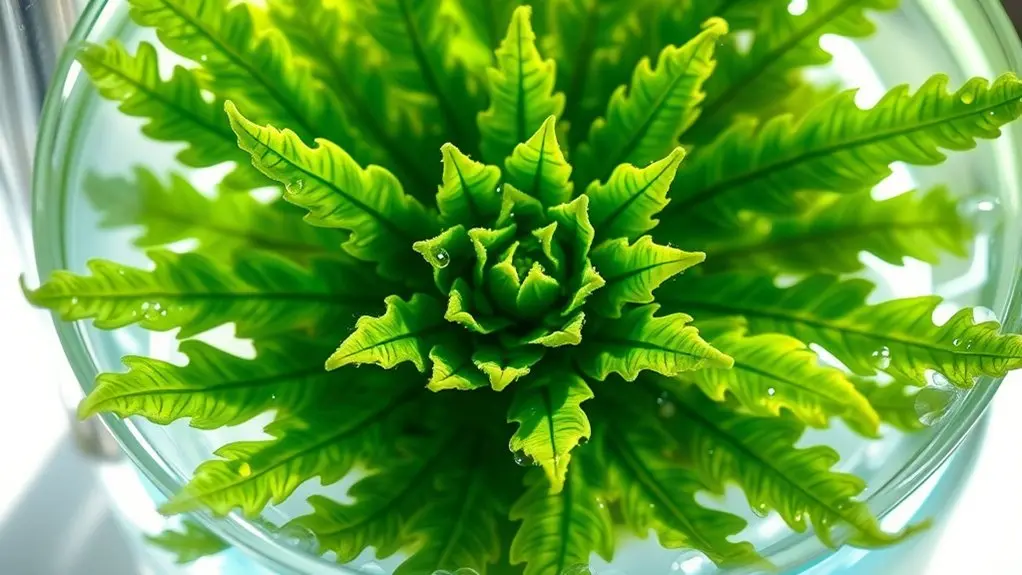
Although Bird’s Nest Ferns naturally grow as epiphytes on trees without soil, they don’t thrive when placed in standing water. Their fern adaptations include fibrous roots designed to absorb moisture from air and organic debris, not from submerged conditions.
When you root the fern in water, you risk water stress due to waterlogging, which impairs oxygen availability to the roots and promotes fungal infections like root rot. This environment disrupts nutrient uptake and damages the root system.
To prevent these issues, maintain the fern in well-draining soil or mount it on substrates that simulate its natural habitat. Instead of submerging the plant, provide humidity through misting or humidifiers to support its physiological needs without causing water stress.
Bird’s Nest Fern Basics: What It Is and How It Grows
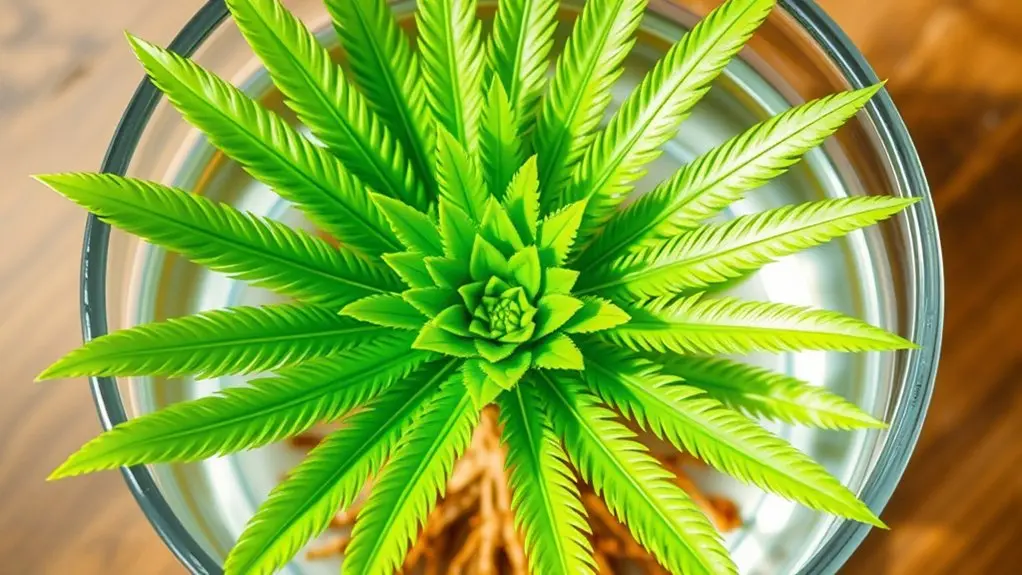
When you examine Bird’s Nest Fern (Asplenium nidus), you’ll notice its distinctive wide, strap-like fronds that radiate from a central rosette, resembling a bird’s nest. This tropical epiphyte naturally grows on trees or rocks, collecting moisture and organic debris in its central cup, which is essential for nutrient uptake.
Indoors, fronds reach 18 to 24 inches, while outdoor specimens can grow up to 5 feet. The fern thrives in bright, indirect light with high humidity, replicating its warm, tropical habitat.
To keep it healthy, you need to watch out for pests like scale insects and mealybugs, as they can infest the plant. Also, preventing fungal infections means making sure there’s good airflow and avoiding water buildup in the rosette.
Knowing these basics will help you provide ideal care without forcing unsuitable conditions like direct water growth. It’s all about creating a comfy environment that mimics where it naturally thrives.
How to Start Growing Bird’s Nest Fern in Water
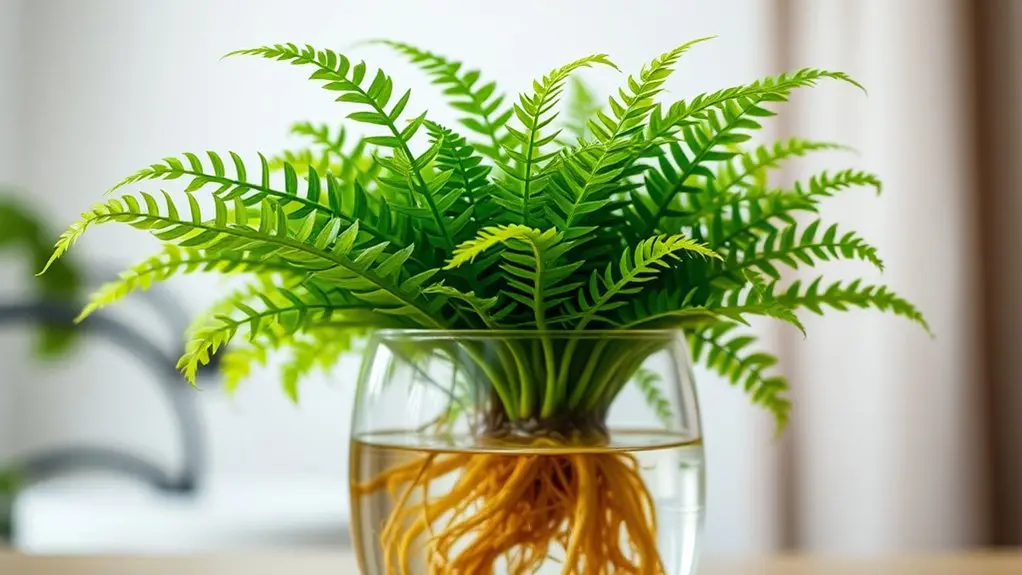
To start growing your Bird’s Nest Fern in water, you’ll want to begin with a healthy cutting that has an intact root ball or rhizome.
It’s important to choose a clean container that’s the right size—one that lets the roots stay submerged but keeps the fronds dry.
Make sure to use distilled or rainwater to keep the water quality good.
And don’t forget to change the water every week. This helps prevent stagnation and keeps the roots happy and growing strong.
Preparing The Fern Cutting
Before you start growing a Bird’s Nest Fern in water, select a healthy, mature frond that features a well-developed root system or rhizome. Proper preparation guarantees successful propagation and growth.
Begin by removing any damaged or yellowing leaves to reduce pest management challenges.
Gently wash the roots to remove soil and potential pests. Then, place the rhizome in filtered or distilled water, fully submerging the roots to promote nutrient absorption.
To maintain ideal conditions, change the water regularly to prevent fungal growth.
Key preparation steps include: selecting a mature frond with robust roots, removing unhealthy foliage, washing roots thoroughly to eliminate pests, and maintaining water quality with frequent changes.
This process supports fertilizer requirements and creates an environment conducive to healthy root development. It really sets your fern up for success right from the start.
Selecting Suitable Water Container
Selecting the right water container plays a significant role in supporting the Bird’s Nest Fern’s development after preparing the cutting. Choose a clear container with a wide opening to accommodate root expansion and allow light penetration.
Incorporate aquarium decor carefully to provide structural support without obstructing root growth.
Make sure the container enables proper drainage or has a system to prevent water stagnation, which can cause root rot. Fill it with clean, filtered water to maintain ideal conditions.
Water filtration is essential for removing impurities and preventing algae buildup.
Submerge only the roots, keeping the rhizome and crown above water to allow air circulation. This helps reduce fungal risks.
This setup creates a stable aquatic environment, promoting healthy root development and overall plant vitality.
Maintaining Water Quality
While propagating Bird’s Nest Ferns in water, maintaining ideal water quality is essential for preventing root diseases and supporting healthy growth. You should use filtered or distilled water to avoid damaging chemicals found in tap water. Change the water at least once a week to prevent bacterial and mold buildup.
Keep the water level just enough to cover the roots, avoiding submerging the entire plant to reduce rot risk. Incorporate a diluted, balanced liquid fertilizer every few weeks to meet nutrient demands during water propagation.
Also, make sure to monitor regularly for pests to catch any issues early and keep your plant healthy.
Use clean, transparent containers so you can easily check the water and roots. Replace the water weekly to prevent stagnation. Add diluted fertilizer periodically to give your plant the nutrients it needs.
And don’t forget to inspect roots and leaves frequently for pests.
Ideal Water Conditions for Bird’s Nest Fern in Water
Although Bird’s Nest Ferns aren’t naturally adapted to grow fully submerged, you can keep them healthy in water by carefully controlling moisture levels and water quality. Avoid waterlogging to protect the roots by limiting how often you water and making sure the water is fresh and oxygen-rich.
Change the water regularly to prevent it from getting stagnant and to stop bacterial growth, which can harm the roots. Think of mimicking its natural humid environment rather than soaking it completely, so keep indirect moisture contact.
| Factor | Ideal Condition | Impact on Fern |
|---|---|---|
| Watering Frequency | Moderate; avoid constant | Prevents root rot |
| Water Quality | Fresh, oxygenated | Supports root respiration |
| Moisture Level | High humidity, not submerged | Mimics natural habitat |
| Water Change | Every 3-4 days | Reduces bacterial buildup |
Signs Your Bird’s Nest Fern Is Thriving or Struggling in Water
Monitoring your Bird’s Nest Fern’s appearance and root condition offers clear indicators of how well it adapts to water care. When thriving, the fern shows vibrant, deep green fronds with a firm texture. This reflects ideal nutrition in a well-filtered aquatic environment.
On the other hand, struggling plants display yellowing or browning fronds. These are signs of overwatering or root rot caused by poor water filtration.
Key signs to watch for include:
- White or light-colored, firm roots indicating healthy water absorption
- Brown or mushy roots signaling root decay and poor oxygenation
- New fronds unfurling consistently, showing effective nutrient uptake
- No algae or slimy buildup, which means proper water filtration and minimal microbial stress
Keeping an eye on these things helps you figure out how well your fern is adapting to hydroponic conditions. It’s all about catching problems early and making sure your plant gets what it needs.
How Long Can You Keep Bird’s Nest Fern Roots Underwater?
Since Bird’s Nest Fern roots need oxygen to work properly, you shouldn’t keep them underwater for long periods. If the roots stay waterlogged, they can’t get enough air, which can suffocate them. This lack of oxygen can lead to fungal infections and root rot, seriously harming your plant’s health.
Bird’s Nest Fern roots need oxygen; prolonged waterlogging causes suffocation, fungal infections, and root rot.
A little bit of water around the roots for a few hours, like when you water the plant, is usually okay. But if the roots stay submerged for more than 24 to 48 hours, the risks go up a lot. So, it’s best to avoid keeping the roots constantly covered with water.
To keep your fern happy, make sure its roots get enough oxygen by not letting them sit in water all the time. Instead, give moisture through well-draining soil or by misting the plant.
Knowing this balance helps prevent waterlogging and keeps your Bird’s Nest Fern growing strong and healthy.
Soil vs. Water: Which Is Better for Bird’s Nest Fern?
You’ll find that soil enriched with organic matter is great for Bird’s Nest Fern roots because it mimics their natural epiphytic environment and helps prevent waterlogging.
On the other hand, growing them in water can be tricky. It often leads to problems like root rot and fungal infections since the roots stay constantly wet.
So, to help your fern thrive, it’s best to keep the soil moist but well-drained. Plus, maintaining high humidity around the plant is key.
Relying on water alone just won’t cut it for their optimal growth.
Soil Benefits Explained
How does soil compare to water when it comes to growing Bird’s Nest Ferns? Soil provides a complex, organic-rich environment that supports ideal root development and nutrient uptake, unlike water cultivation. It retains moisture efficiently while ensuring adequate aeration, which is essential for preventing root rot.
Fertilizer application is more effective in soil because nutrients bind to organic particles, making them easier for roots to access. Plus, growing in soil better mimics the fern’s natural epiphytic habitat. This helps align with its light requirements by providing stable positioning without causing water stress.
- Enhances root stability and growth
- Improves moisture retention with aeration
- Supports efficient fertilizer application
- Accommodates natural light needs through stable placement
Challenges Of Water Growth
Although Bird’s Nest Ferns can survive temporarily in water, growing them fully submerged or hydroponically presents significant challenges. These ferns naturally develop aerial roots that absorb moisture and nutrients from air and organic matter. Because of this, they don’t adapt well to saturated environments.
Water lacks the aeration and essential nutrients that soil provides, which increases the risk of root rot and fungal infections. Maintaining water quality also requires rigorous filtration and frequent changes to prevent stagnation and bacterial buildup.
Without proper oxygenation, the fern’s roots suffocate, which undermines their growth and health. So, relying solely on water pretty much ignores the plant’s natural adaptations.
That’s why soil or well-draining substrates are far superior for growing Bird’s Nest Ferns. While water growth is possible in the short term, the challenges of keeping conditions oxygenated and nutrient-rich make sustainable cultivation pretty difficult.
Optimal Growing Medium
Where does Bird’s Nest Fern truly thrive when deciding between soil and water? Although these ferns can survive temporarily in water, they do much better in a well-draining, organic-rich soil that mimics their natural epiphytic environment.
Water-only growth often leads to fungal infections and root rot because of too much moisture and poor oxygen availability.
Plus, nutrient deficiencies can happen in water since the roots can’t absorb minerals properly.
Think about these factors for the best growth: use lightweight, organic soil that holds moisture but still drains well. Avoid standing water to keep fungal infections and root rot at bay.
Also, remember soil supports better nutrient uptake than water alone. It’s best to keep water propagation short — never for long-term growth.
Choosing soil over water means healthier roots, fewer fungal problems, and the nutrients Bird’s Nest Fern needs to thrive.
Preventing Root Rot When Growing Bird’s Nest Fern in Water
Since Bird’s Nest Ferns are prone to root rot when grown in water, you need to carefully manage their water environment. Keep the water level below the crown to prevent waterlogging and root suffocation.
Change the water every 1-2 weeks to avoid water stagnation, which fosters bacterial and fungal growth.
Use distilled or filtered water, as tap water’s minerals and chemicals can accelerate root decay.
For fungal prevention, add a small dose of fungicide or a natural antifungal solution to inhibit harmful fungal pathogens.
Make sure the roots aren’t constantly submerged by maintaining good drainage within your container.
This helps promote oxygen exchange, which is critical for healthy root development.
With this precise management, you’ll reduce the risk of root rot and support your Bird’s Nest Fern’s vigorous growth in a hydroponic setting.
It’s all about finding that perfect balance to keep your fern happy!
How to Transition Bird’s Nest Fern Between Water and Soil
If you’re looking to transition your Bird’s Nest Fern from water to soil, start by giving the roots a gentle rinse to get rid of any extra moisture. This helps prepare the plant for the change.
Next, move the fern into a well-draining potting mix that’s rich in organic matter.
Doing this gradually will help the roots adjust without too much shock.
Once it’s in the soil, keep the moisture consistent but be careful not to overwater.
You want to support healthy root growth without causing waterlogging.
Preparing The Fern
Although shifting a Bird’s Nest Fern between soil and water requires careful handling, following precise steps can minimize stress on the plant. Successful fern propagation hinges on understanding its water compatibility and root sensitivity.
Before switching, prepare the fern by gently removing it from soil and rinsing the roots to eliminate dirt without damaging them. Make sure the crown stays above water to prevent rot when placed in filtered water.
Keep the fern at room temperature and provide bright, indirect light for ideal root health. Also, change the water weekly to inhibit bacterial growth and support root viability.
These steps help your fern adapt during transitions, promoting healthy root development and minimizing shock. Taking it slow and steady really makes a difference!
Gradual Environment Shift
When you shift a Bird’s Nest Fern from water to soil, you’ll need to gradually reduce its water exposure while increasing soil moisture over several weeks. Begin by placing the roots in well-draining, organic-rich soil that remains moist, yet not waterlogged. Maintain partial water contact initially to ease the fern’s adjustment to terrestrial conditions.
Slowly decrease watering frequency, allowing soil moisture to become the primary hydration source. Use balanced fertilizer techniques, applying diluted liquid fertilizer every 4 to 6 weeks to support nutrient uptake during changeover.
Closely monitor for stress indicators like yellowing fronds or wilting and adjust humidity accordingly. Also, keep an eye out for pests by inspecting leaves and roots regularly, since the shift can make the fern more vulnerable.
This systematic approach helps the fern adapt effectively from aquatic to soil environments.
Common Water-Growing Mistakes for Bird’s Nest Fern and Fixes
Since Bird’s Nest Ferns aren’t naturally adapted to aquatic environments, keeping their roots submerged for long periods often causes root rot and fungal infections. These root diseases happen because of water toxicity from stagnant, oxygen-poor water.
To prevent this, avoid these common mistakes: overwatering or placing roots in standing water, which promotes fungal growth. Also, don’t use water alone as a growing medium since it deprives roots of nutrients.
Neglecting proper drainage is another problem because it leads to waterlogged soil and root suffocation. Plus, ignoring humidity needs can stress the plant and cause yellowing fronds.
Instead, keep roots moist but never waterlogged. Use well-draining soil or a humidity tray to maintain moisture without saturation.
This balance helps prevent root diseases and water toxicity. That way, your Bird’s Nest Fern will thrive with healthy growth and vibrant foliage.
Frequently Asked Questions
Can Bird’s Nest Fern Survive Low Humidity Environments?
You can’t expect your Bird’s Nest Fern to thrive in low humidity environments; maintaining humidity levels above 60% is essential.
Poor water quality and insufficient moisture cause fronds to brown and stunt growth. This kind of stress isn’t good for the plant at all. So, keeping things moist and humid really helps your fern stay happy and healthy.
What Pests Commonly Affect Bird’s Nest Fern in Water?
Pests like spider mites, scale insects, and mealybugs can sneak onto your Bird’s Nest Fern like uninvited guests. You’ll spot them by noticing tiny dots or cottony masses on the leaves.
How Often Should You Change the Water for Bird’s Nest Fern?
You should change the water for your Bird’s Nest Fern every 1 to 2 weeks to keep it healthy and looking great. Doing this helps prevent the water from becoming stagnant and stops bacteria from growing.
It also makes sure the nutrients in the water don’t get used up too quickly. Changing the water regularly is a simple step that really makes a difference for your plant’s well-being. Just remember to keep an eye on the water quality and refresh it as needed.
Can Bird’s Nest Fern Be Propagated in Water?
Like steering through uncharted waters, you can propagate Bird’s Nest Fern in water, but it’s tricky. Use careful propagation methods and adjust watering frequency to prevent rot.
It’s better to favor soil or moss for more reliable growth success. That way, you’re giving your fern the best chance to thrive.
Does Bird’s Nest Fern Require Fertilization When Grown in Water?
You don’t require frequent fertilization for Bird’s Nest Fern in water, but occasional nutrient supplementation helps. Maintaining ideal water quality guarantees the plant absorbs essential elements without risking salt buildup that damages roots.
It’s really about balance. You want to give the plant what it needs without overdoing it. Just keep an eye on the water and nutrients, and your fern will thrive.
Conclusion
Imagine your Bird’s Nest Fern’s vibrant fronds unfurling gracefully above clear, shimmering water. While it can grow hydroponically, maintaining ideal water quality and oxygen levels is essential to avoid root rot.
Though soil offers natural nutrients, careful water management lets you explore a unique, elegant growth method. By observing its health closely and adjusting conditions precisely, you can successfully nurture this fern’s lush beauty, whether anchored in soil or drifting in water.