
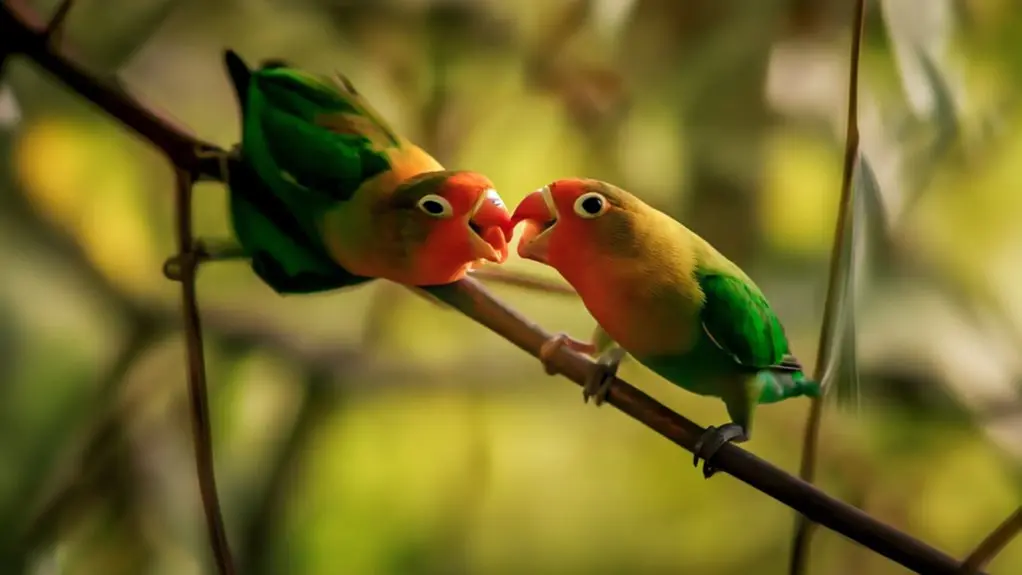
Yes, birds do engage in behaviors that look like kissing, but these actions are social signals showing trust, bonding, and flock cohesion rather than romantic affection. You’ll see them gently touching beaks, preening, or grooming each other, all of which strengthen their emotional connections.
Different species express this affection in varied ways, and body language plays a key role in understanding their intent. Keep exploring, and you’ll uncover how these interactions build trust and deepen bonds between birds.
What Bird “Kisses” Really Mean
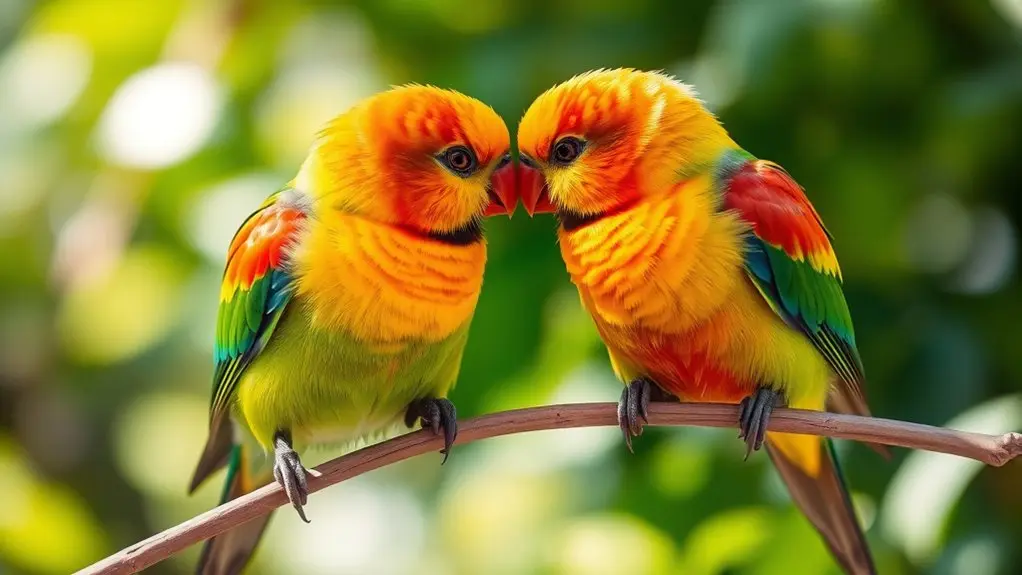
Although bird “kisses” might look like romantic gestures to us, they actually serve as important social signals that indicate bonding, trust, and affiliation between individuals.
Bird “kisses” are social signals of bonding, trust, and affiliation, not romantic gestures.
In bird communication, these gentle beak touches, preening, and mutual grooming aren’t expressions of romantic love but essential behaviors promoting social bonding.
When birds engage in these actions, they reinforce pair bonds, maintain flock cohesion, and facilitate cooperative interactions.
You should understand that the meaning of these “kisses” can vary widely depending on species, individual temperament, and social context.
Recognizing these behaviors as signs of positive social relationships and emotional attachment helps clarify their role in avian social dynamics rather than misinterpreting them as romantic gestures.
How to Recognize When Your Bird Is Kissing You
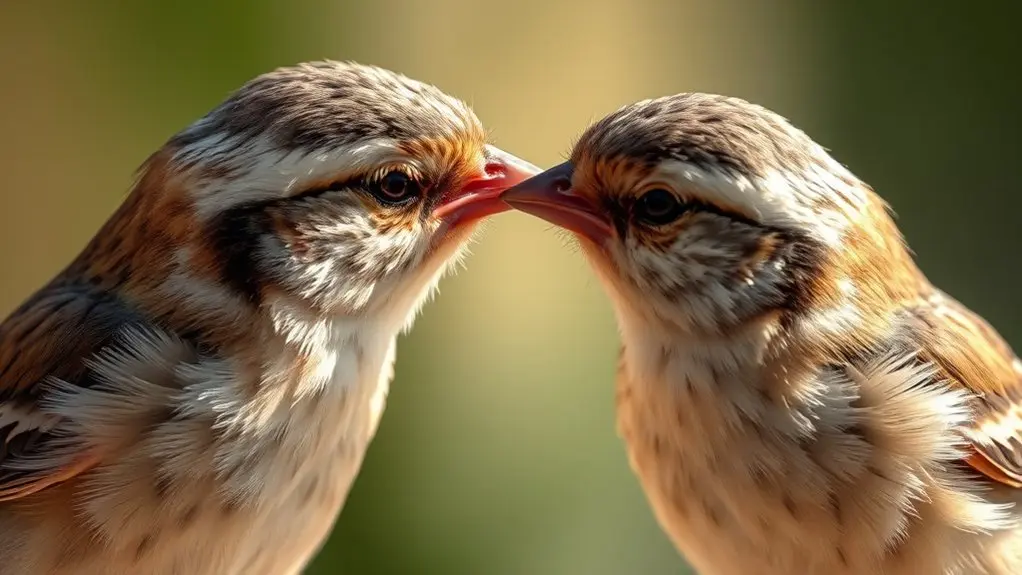
You can tell your bird is kissing you when it gently touches your skin with its beak and seems relaxed. Look for signs like soft cooing sounds, calm body language, and eyes that might appear slightly pinned.
Also, if your bird starts preening you or leans in closer, that’s a good sign it feels comfortable and affectionate. The context is important too—if the beak contact is steady and calm without any signs of irritation, it usually means your bird is showing genuine affection.
Affectionate Beak Touches
When a bird gently touches its beak to yours, it often signals a form of affectionate bonding rather than aggression. This behavior mimics natural social interactions like feather grooming and vocal communication, reinforcing trust. You’ll notice slow, rhythmic beak movements paired with relaxed posture. These are key indicators of comfort.
Unlike aggressive pecking, these touches are soft and deliberate. They often happen after mutual preening or during calm moments. Recognizing these subtle cues helps you understand when your bird is “kissing” you in its own way.
| Behavior | What It Signals |
|---|---|
| Slow, gentle beak taps | Affection and bonding |
| Feather grooming | Mutual care and comfort |
| Soft vocalizations | Positive vocal communication |
| Relaxed body posture | Trust and relaxation |
| Repeated contact | Seeking connection |
Accompanying Body Language
Since birds communicate affection through subtle physical cues, recognizing their accompanying body language is essential to interpreting their kissing-like behaviors accurately. When your bird exhibits gentle beak touches or soft vocalizations, observe these signs to confirm affectionate intent.
- Relaxed posture with fluffed feathers around the face and head, indicating comfort influenced by environmental factors such as lighting and temperature.
- Slow head bobbing or tilting combined with a slightly parted beak and eye contact, signaling trust and willingness to engage.
- Open wings and closed eyes during beak nuzzling, reflecting emotional connection often affected by dietary influences that impact mood and energy levels.
Understanding these cues helps you differentiate genuine affection from other behaviors. This way, you can be sure you’re interpreting your bird’s kissing gestures just right.
Contextual Behavioral Cues
Although birds don’t kiss in the human sense, they express affection through specific behaviors that you can learn to recognize. When your bird engages in gentle beak touches or feather grooming, it signals bonding rather than romantic affection.
Pay attention to relaxed body language, soft vocal communication, and mutual beak or head contact during calm interactions.
Beak rubbing or gentle nibbling, often accompanied by purring sounds or slow blinking, indicates trust and comfort. Your bird leaning into your touch or maintaining close proximity with a relaxed posture further confirms affectionate intent.
However, differentiate these cues from overstimulation. Frequent or intense beak contact paired with stress signs suggests you should pause the interaction to maintain a positive bond.
Differences in Bird Kissing Behavior by Species
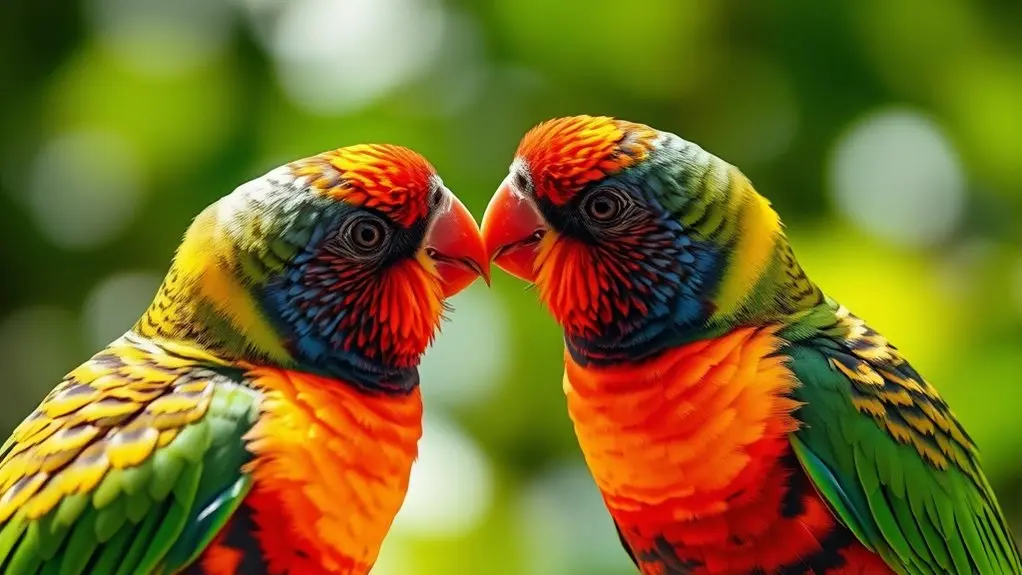
Because bird species vary widely in their social behaviors, the ways they show actions that look like kissing differ a lot. You’ll notice these behaviors often serve purposes like feather grooming and mate bonding, but they show up differently depending on the species.
Consider these differences: Parrots and cockatoos often make direct, sometimes open-beak contact. This kind of interaction looks like kissing and helps strengthen their social bonds.
Smaller birds, like lovebirds and budgerigars, tend to rely more on mutual feather grooming and close body contact rather than actual beak-to-beak kissing.
Then there are species like finches and canaries, which rarely engage in kissing-like behavior at all. They usually stick to more subtle social interactions instead.
These variations reflect differences in temperament, social environment, and species-specific communication styles. So, what looks like kissing in one species might actually mean something totally different in another.
How to Respond When Your Bird Kisses You
When your bird offers a kiss, responding with calm, gentle praise or soft words helps reinforce the positive interaction and strengthens your bond. Use vocal communication that soothes and reassures, signaling acceptance.
If both of you’re comfortable, gently reciprocate the kiss, making sure your touch respects their boundaries.
Feather grooming behavior often comes with affectionate gestures, so you might notice your bird preening near you. This is a sign of trust.
Just avoid encouraging kissing inside the mouth to reduce the risk of bacterial transfer.
Pay close attention to your bird’s body language. If they show signs of overstimulation or discomfort, calmly end the interaction to prevent stress.
Why Bird Kisses Bring You Closer
Since bird kisses involve gentle beak touches or nuzzles, they work as important social bonding behaviors that help build trust and affection. When you see these interactions, you’re actually witnessing bird communication that promotes social bonding. This helps create stronger emotional connections.
Bird kisses bring you closer by encouraging trust through consistent, positive physical contact. It’s kind of like when humans show affection with gentle touches.
Plus, these beak-to-beak moments allow birds to exchange scents and sounds, which deepens their communication and helps them recognize each other better.
Another cool thing is that bird kisses reduce stress hormones in birds. This makes flock or pair relationships stronger and creates a more harmonious environment overall.
Tips for Building Trust Through Bird Kisses
Understanding how bird kisses foster social bonds sets the stage for strengthening trust through these behaviors. To build trust through bird kisses, engage in consistent, gentle interactions that encourage positive associations. Respond calmly to your bird’s affectionate gestures to create a secure environment promoting mutual trust.
Incorporate bird grooming and feather preening sessions, as these natural behaviors reinforce emotional bonds and signal comfort. Offer treats and praise during or after kisses to deepen the relationship by reinforcing positive feelings.
Respect your bird’s boundaries by observing communication cues, ensuring kisses remain voluntary. Regular, calm bonding sessions with gentle touches and verbal reassurance establish a strong foundation for affectionate behaviors like kissing.
This ultimately fosters a trusting, reciprocal connection between you and your bird.
Frequently Asked Questions
Can Birds Kiss Other Animals Besides Their Own Species?
You won’t often see birds kissing other animals besides their own species, as feather grooming and mating rituals mainly target their kind.
Occasionally, domesticated birds mimic these behaviors, but cross-species affection remains rare and mostly learned. It’s pretty interesting how some birds pick up on these actions, though!
Do Baby Birds Kiss Their Parents?
Don’t count your chickens before they hatch. Baby birds don’t kiss their parents. Instead, their care focuses on feeding and keeping warm to stay healthy.
Kissing mainly happens during adult mating rituals, not when interacting with their chicks. So, it’s all about survival and care rather than smooching.
Is Bird Kissing Behavior Different in Wild Versus Pet Birds?
You’ll notice bird bonding differs. Wild birds focus on feather preening and vocal communication, which are natural ways they connect with each other.
Pet birds, on the other hand, often mimic kissing behaviors that humans reinforce. This means their affectionate actions can feel less natural and more influenced by captivity and human interaction. It’s pretty interesting how their environment shapes the way they show affection!
Can Birds Kiss Through a Cage or Glass?
Like shadows meeting through a window, birds can’t truly kiss through a cage or glass. But their beak touching serves as bird bonding, signaling affection or social connection. It happens without actual physical contact or genuine kissing behavior.
Do Birds Ever Kiss to Show Aggression or Dominance?
Yes, birds sometimes use beak touching during mating rituals or grooming behaviors. But you should know this can also serve as aggressive dominance displays. Recognizing context helps you distinguish affectionate acts from territorial or hierarchical aggression.
It’s not always about love or care—sometimes, it’s about showing who’s boss. Paying attention to the situation makes all the difference in understanding what’s really going on.
Conclusion
When your bird “kisses” you, it’s more than a simple peck. It’s a nuanced language of trust and affection, woven through beak and feather. These gentle gestures act like biological Morse code, signaling bonding and comfort.
By recognizing and responding thoughtfully, you nurture a deeper connection. This transforms routine interactions into a dance of mutual understanding.
Embrace these moments as essential threads in the intricate tapestry of your avian relationship, grounded in instinct and emotion.