
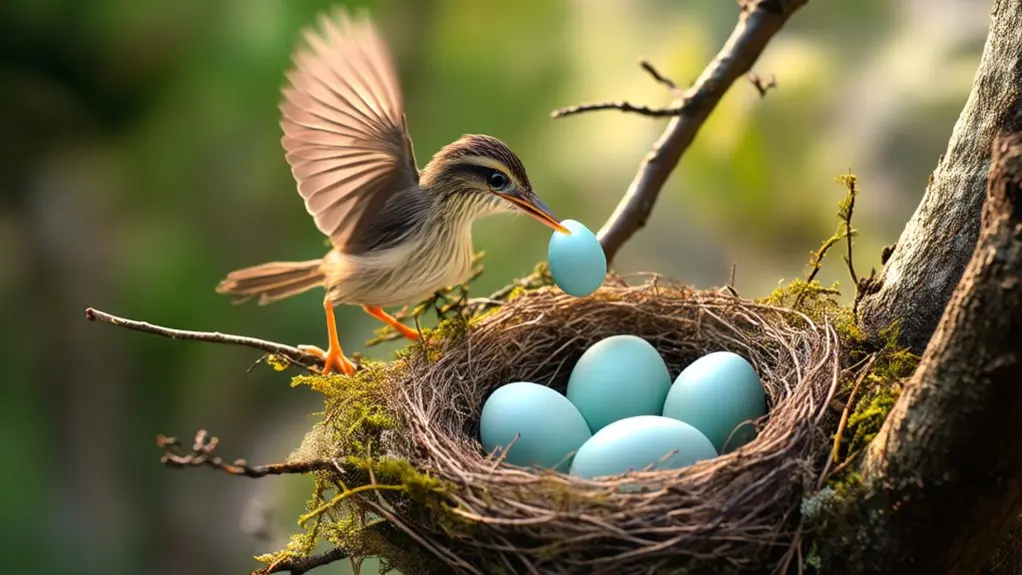
You might expect birds to pick up their eggs, but most can’t because eggshells are too fragile to lift without damage. Instead, birds gently roll or shift eggs within the nest to keep them warm and safe during incubation.
Only a few species occasionally move eggs for protection or better temperature regulation. Birds rely on body heat and nest placement rather than transporting eggs.
You’ll find details on which birds do move eggs and how they protect them next.
Can Birds Pick Up or Move Their Eggs?
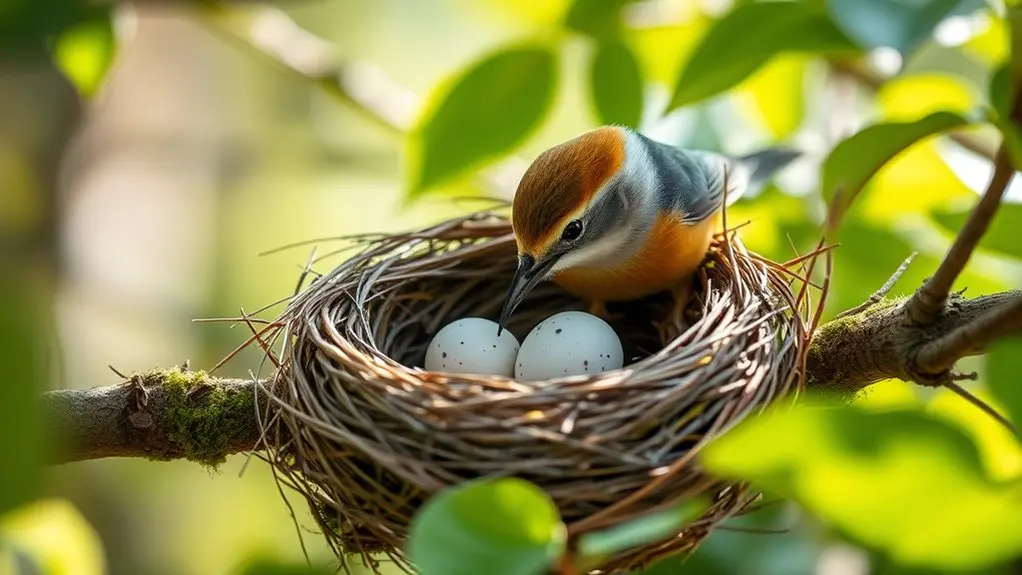
Although you might assume birds can pick up their eggs, most species actually can’t move them intentionally beyond slight adjustments within the nest. Eggshell fragility limits a bird’s ability to lift or transport eggs without causing damage.
Instead, birds may carefully reposition eggs to maintain ideal nest temperature, ensuring proper incubation. This limited movement helps regulate warmth and prevents eggs from rolling out of the nest.
While some species, like herons and egrets, redistribute eggs within the nest during incubation, they don’t carry them away. If environmental disturbances displace eggs, parent birds try to reposition them gently but don’t pick them up for transport.
How Birds Usually Handle Bird Eggs During Incubation
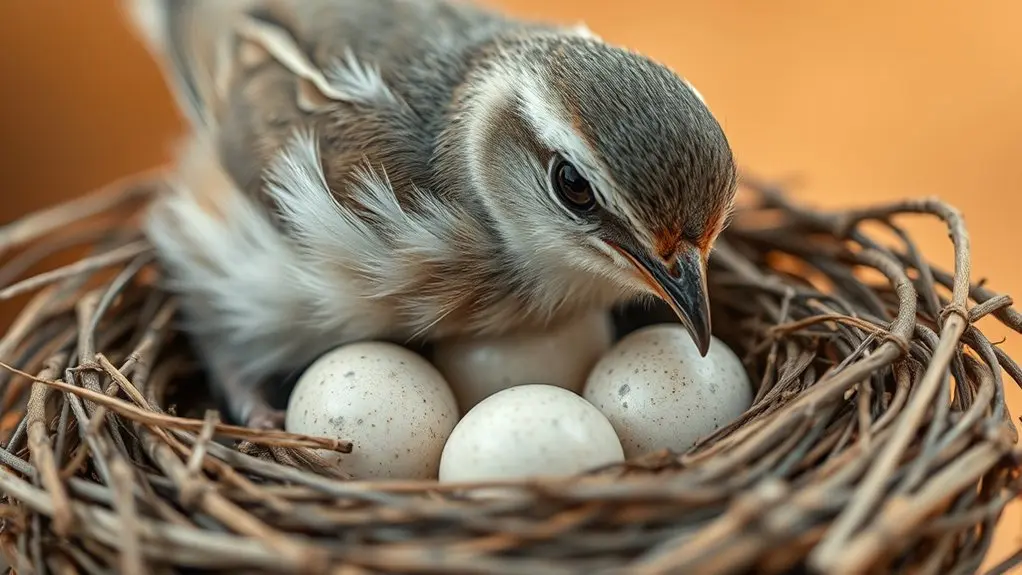
While birds rarely lift or carry their eggs, they actively manage them during incubation to keep the conditions just right for development. You’ll notice that birds use their body heat and parts like their beak or belly to turn the eggs. This helps make sure the temperature is even, which is super important for the embryos to grow.
During nest maintenance, birds gently roll or shift eggs right where they’re instead of moving them around. This way, they keep the eggs warm and avoid any damage.
Some species, like waterfowl, might nudge their eggs slightly with their beak to improve heat transfer, but carrying eggs away from the nest doesn’t really happen.
This careful, minimal handling is part of an evolutionary strategy that focuses on controlling temperature and keeping the eggs safe. It really shows how birds balance the needs of incubation with keeping their nest stable.
Common Myths About Birds Moving Eggs
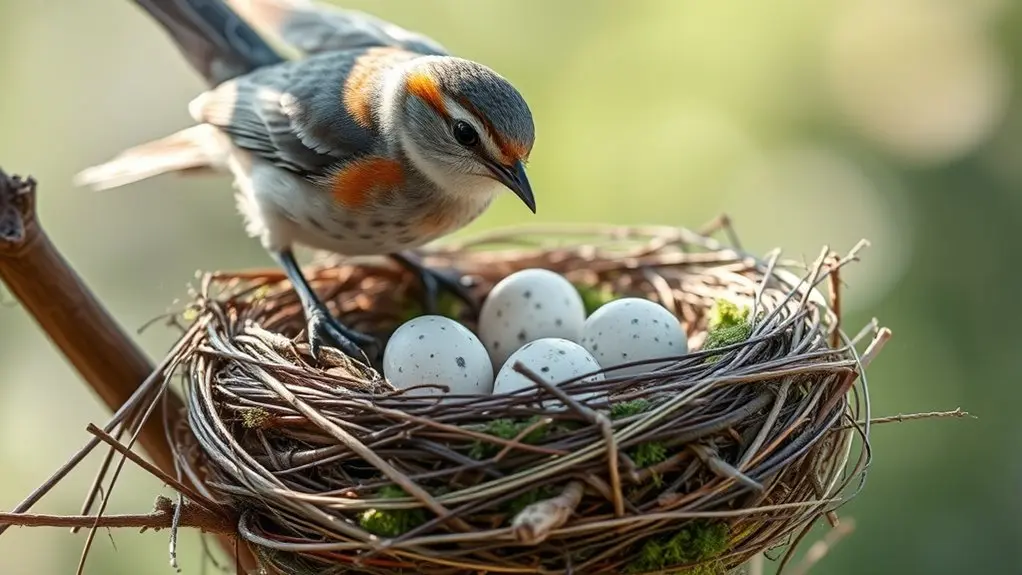
Even though it might seem natural to imagine birds picking up and moving their eggs, this behavior is largely a myth. Most birds maintain a consistent nest location, incubating their eggs there without frequent relocation. They’re highly protective of their nesting site and rarely move eggs once laid.
The idea that birds frequently transport eggs is unfounded, as moving eggs can risk abandonment, which birds generally avoid. Birds often recognize their eggs by egg color and appearance, reinforcing their attachment to a specific nest location.
Rather than moving eggs, they prefer to maintain a stable environment for incubation. Understanding these facts helps dispel common misconceptions about avian egg-handling behaviors and emphasizes their reliance on nest stability and egg identification cues.
Why You Should Avoid Moving Bird Eggs
Understanding that birds rarely move their eggs helps clarify why you should avoid handling or relocating them yourself. Disturbing eggs can disrupt egg temperature, causing them to cool and jeopardize embryo development. Parents depend on the eggs’ original location for consistent warmth and nest security.
Moving eggs may prevent the parents from recognizing their clutch, reducing incubation efficiency and increasing abandonment risk. Also, physical handling risks damaging fragile eggshells, which can decrease hatching success.
The placement of eggs is deliberate, optimized for microclimate and protection. Altering this balance compromises developmental conditions.
Plus, many bird species are legally protected, making unauthorized egg movement prohibited. For these scientific and legal reasons, it’s essential to refrain from interfering with bird eggs to support natural incubation and maintain nest security.
Which Birds Sometimes Move Their Eggs : And Why
You might’ve noticed that some birds, like starlings and cowbirds, actually move their eggs around within the nest. They do this to make sure the eggs stay warm enough or to keep them safe from potential dangers.
Then there are birds like sandpipers and plovers who might go a step further and move their eggs to a new spot altogether if their original nesting area starts to feel risky.
All these little moves help keep the eggs at the right temperature, protect them from getting damaged, and boost the chances that the baby birds will hatch safely.
Birds That Relocate Eggs
Although many birds leave their eggs untouched once laid, certain species actively relocate them within the nest to enhance incubation conditions or safeguard against threats. For example, American Robins and European Starlings adjust egg placement to maintain ideal temperature and improve egg camouflage, helping to blend eggs with nest surroundings.
This relocation also supports nest concealment, reducing visibility to predators.
Additionally, species like the Common Cuckoo move or replace eggs to better mimic host eggs, ensuring brood parasitism success. You’ll notice these birds instinctively respond to environmental changes or disturbances by repositioning eggs, which helps protect them from hazards and increases hatching success.
Reasons For Egg Movement
When environmental factors like temperature changes or predator threats come up, some bird species move their eggs around to boost their chances of survival. You’ll notice birds adjusting where their eggs sit to keep the temperature just right and protect them from predators.
Here are some common reasons why birds move their eggs:
Doves and waterfowl shift their eggs inside the nest to keep them from getting too hot or too cold. Female birds also reposition eggs during incubation to make sure heat is spread evenly.
Some birds even move eggs between nests to avoid parasitism or hide them from predators. When the nest gets too crowded or conditions aren’t great, eggs get rearranged to help with incubation.
If a nest is disturbed or feels unsafe, birds will move their eggs to safer spots to keep them protected. Understanding these behaviors helps us see how birds make sure their babies develop well and stay safe.
How Birds Keep Eggs Safe and Warm Without Moving Them
Because eggs require constant warmth and protection, birds rely on their body heat and careful nest selection to keep them safe without frequently moving them. By sitting on their eggs for extended periods, birds maintain a stable egg temperature essential for embryo development.
Feather insulation plays a critical role here. The parent’s body feathers create a thermal barrier that minimizes heat loss. Many species choose nest sites that provide natural insulation and shelter from wind, rain, and temperature fluctuations. This helps keep the environment more stable.
While some birds rarely leave their nests, others take turns to ensure continuous warmth. This strategy prevents excessive egg movement while maintaining ideal conditions for incubation. It’s a smart way birds protect their eggs through behavioral and environmental adaptations without needing to pick them up.
What to Do If You Find a Bird Nest With Eggs Nearby
If you come across a bird nest with eggs nearby, it’s important to keep a respectful distance and avoid touching or moving the nest. Birds put a lot of effort into building their nests, and disturbing them can mess with incubation. Even though most parent birds don’t abandon their eggs, it’s best not to take any chances.
Listen for bird songs around the area—that’s usually a good sign that the parents are close by and taking care of things.
Here’s what you should do:
- Observe quietly without getting too close to the nest.
- Avoid handling the eggs or any nest materials.
- Don’t try to move or fix the nest yourself.
- Keep noise and movement to a minimum so you don’t stress the birds out.
- If the nest looks damaged, reach out to local wildlife authorities for help.
Following these simple steps helps the birds incubate and hatch their eggs naturally.
Plus, you won’t interfere with their behavior or accidentally break any laws protecting them.
When Is It Safe to Intervene With Bird Eggs or Baby Birds?
Although you should generally avoid disturbing bird eggs or nestlings, it becomes appropriate to intervene when they’ve fallen from the nest or face immediate threats from predators or harsh weather.
You can safely return eggs or young birds to the nest during egg incubation because parent birds rely on sight, not scent, to recognize their offspring.
Intervene only when necessary to prevent nest predation or environmental harm. If a nest is destroyed, carefully constructing a new nest nearby and placing eggs or nestlings inside may aid survival.
Just be mindful of legal protections.
Avoid interfering with fledglings capable of hopping since parents usually continue care. Always prioritize minimal disturbance to natural behaviors while safeguarding vulnerable eggs and nestlings.
It’s all about helping when truly needed without causing extra stress.
Who to Contact for Abandoned Eggs or Injured Baby Birds
If you find abandoned eggs or injured baby birds, the best thing to do is reach out to a licensed wildlife rehabilitator or your local wildlife agency right away. They’ve the expertise to help these little creatures.
Places like Willowbrook and Fox Valley are great examples—they specialize in emergency bird care and can give the treatment that’s needed. It’s really important to get the birds to people who know what they’re doing.
You can also check out online resources like Wildlife Illinois to find authorized centers nearby.
Just remember, it’s best not to handle wildlife yourself unless you have the proper permits. That way, you’re keeping both yourself and the animals safe.
Finding Wildlife Rehabilitators
When you find abandoned eggs or injured baby birds, it’s really important to contact a licensed wildlife rehabilitator. These experts know all about the delicate process of egg incubation and nest building, so they can give the best care and help the birds grow naturally.
Plus, handling wild eggs or young birds without a permit is actually illegal, so professionals are the safest bet.
To find a rehabilitator, try a few different things. You can use online directories like Wildlife Illinois to find licensed contacts.
Another option is to reach out to government or nonprofit wildlife agencies—they often have hotlines you can call.
It’s best to avoid touching the eggs or birds yourself because that can mess up the natural incubation or damage the nest.
Look for rehabilitators who’ve training in avian biology and emergency care. And always double-check their credentials to make sure they’re following wildlife protection laws.
Contacting Local Wildlife Centers
Because abandoned eggs and injured baby birds need specialized care, contacting local wildlife centers is super important for their survival. These centers have licensed rehabilitators who know exactly what to do. They provide critical services like feather grooming and supplying the right nesting materials to help the birds grow healthy and strong.
You can use resources like Wildlife Illinois to find nearby professionals such as Willowbrook or Fox Valley.
| Center Name | Services Provided | Contact Method |
|---|---|---|
| Willowbrook | Feather grooming | Phone, Website |
| Fox Valley | Nesting materials | Phone, Email |
| Wildlife Illinois | Directory of rehabilitators | Online search |
When you call, be sure to give detailed info about the bird’s condition, species, and location. Try not to handle the birds yourself—that can cause harm and might even get you into legal trouble. It’s always best to follow expert advice exactly.
Emergency Bird Care Resources
Although encountering abandoned or injured bird eggs and chicks can be distressing, you should immediately contact a licensed wildlife rehabilitator or local wildlife agency to guarantee they receive proper care.
Understanding eggshell composition is vital, as improper handling may damage fragile eggs or disrupt developmental processes.
Bird migration periods often increase the likelihood of finding vulnerable young birds. So, it’s good to stay aware of those times.
For emergency bird care resources, consider:
- Contacting specialized centers like Willowbrook Wildlife Center or Fox Valley Wildlife Center
- Reporting sightings to Wildlife Illinois or similar authorized agencies
- Avoiding direct care unless trained, to prevent harm and legal issues
- Following guidelines for safe transport of injured or orphaned birds
- Monitoring bird migration patterns to anticipate potential rescue needs
These steps help ensure proper intervention for abandoned eggs and injured chicks. Taking the right actions can make all the difference.
Frequently Asked Questions
How Long Does Bird Egg Incubation Typically Last?
You’ll find bird egg incubation typically lasts 10 to 21 days, depending on the species. Eggshell composition influences protection, while incubation behavior, like consistent warmth, guarantees proper development and synchronized hatching within this timeframe.
It’s pretty fascinating how different birds manage this process. Keeping the eggs warm and safe is key to making sure the babies hatch healthy and on time.
What Materials Do Birds Use to Build Their Nests?
Don’t think bird construction relies only on natural items; nest materials include twigs, grass, leaves, feathers, and even human-made objects like string or plastic. You’ll see they choose these for camouflage, warmth, and structural stability.
Birds are pretty clever about what they use. Sometimes they pick things that blend in with their surroundings to keep their nests hidden. Other times, they focus on materials that help keep the nest cozy or strong enough to hold everything together.
Can Birds Recognize Their Own Eggs by Sight or Smell?
You recognize that birds rely on egg recognition primarily through visual sensory cues, not smell, since their olfactory senses are weak. They use unique patterns and colors on eggshells to identify their own eggs accurately.
It’s pretty fascinating how they do this. Birds can spot the differences in markings and hues that help them tell their eggs apart from others. So, it’s mostly about what they see rather than what they smell.
How Do Temperature Changes Affect Bird Egg Development?
You might think temperature changes don’t matter, but they critically affect bird egg development. Eggshell permeability allows heat exchange, so improper temperature regulation can delay growth or cause embryo death.
This impacts hatching success and chick viability. So, keeping the temperature just right is really important for birds.
What Predators Commonly Threaten Bird Eggs in Nests?
You’ll find snakes, raccoons, squirrels, crows, and hawks as common nest predators. They challenge eggshell protection, so birds use nest predator strategies like concealed placement and robust eggshells to enhance survival chances amid such threats.
Birds really have to get creative because these predators are pretty persistent. Hiding the nest well and having tougher eggshells are just a couple of ways they try to keep their eggs safe. It’s like a constant battle out there in nature!
Conclusion
You might think birds can pick up their eggs like tiny treasures, but in reality, they rarely move them. Understanding this helps you avoid disrupting fragile nests. If you find eggs or chicks nearby, resist the urge to intervene unless absolutely necessary. Nature’s delicate balance depends on it.
When in doubt, contact wildlife experts who know how to protect these vulnerable lives. Remember, sometimes the best help is knowing when to simply watch and wait.