
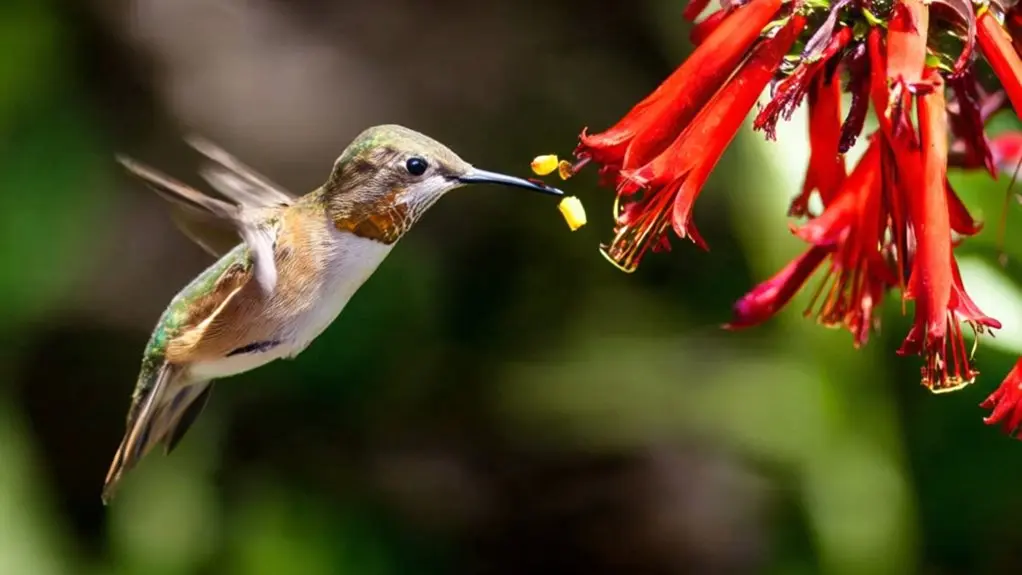
Yes, birds can pollinate flowers and play a vital role in plant reproduction. When you watch them feed on nectar, they transfer pollen by brushing against flower parts, especially in brightly colored, tubular blooms. Species like hummingbirds and sunbirds excel at this.
They cover larger distances than insects, which helps enhance genetic diversity. Their precise pollination supports biodiversity and ecosystem health. It’s pretty amazing how important they are for nature.
If you want to understand which birds do this, where it happens, and how it compares to insect pollination, there’s much more to explore. So, keep reading to find out all about these fascinating pollinators!
How Do Birds Pollinate Flowers And Why Does It Matter?
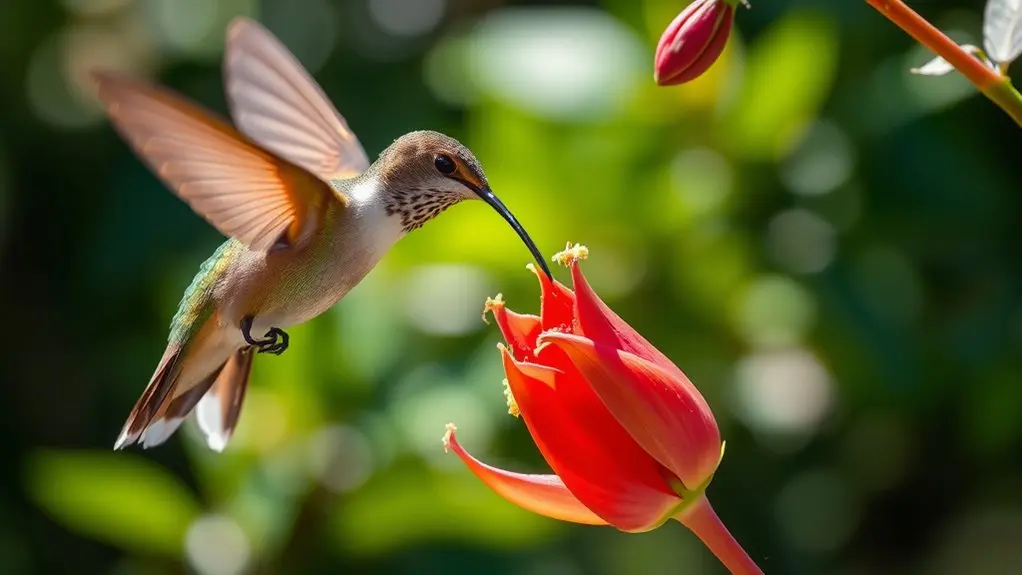
Although you might typically associate pollination with bees and butterflies, birds play an essential role in transferring pollen as they feed on nectar. Their pollination mechanisms involve brushing against anthers and stigmas, allowing pollen to stick to their feathers and be transported to other flowers.
Many bird-pollinated plants feature tubular shapes and vivid colors that specifically attract these avian pollinators. Because birds can travel greater distances than insects, they help gene flow happen across wider areas, which supports plant reproduction and biodiversity.
Bird-pollinated plants often have bright, tubular flowers, aiding gene flow over wide areas and boosting biodiversity.
This makes bird habitat preservation critical. Protecting their natural environments ensures these essential pollination processes continue.
In ecosystems where insect pollinators are scarce or less effective, bird pollination becomes especially important for keeping ecological balance and species survival.
Which Bird Species Are The Main Pollinators?
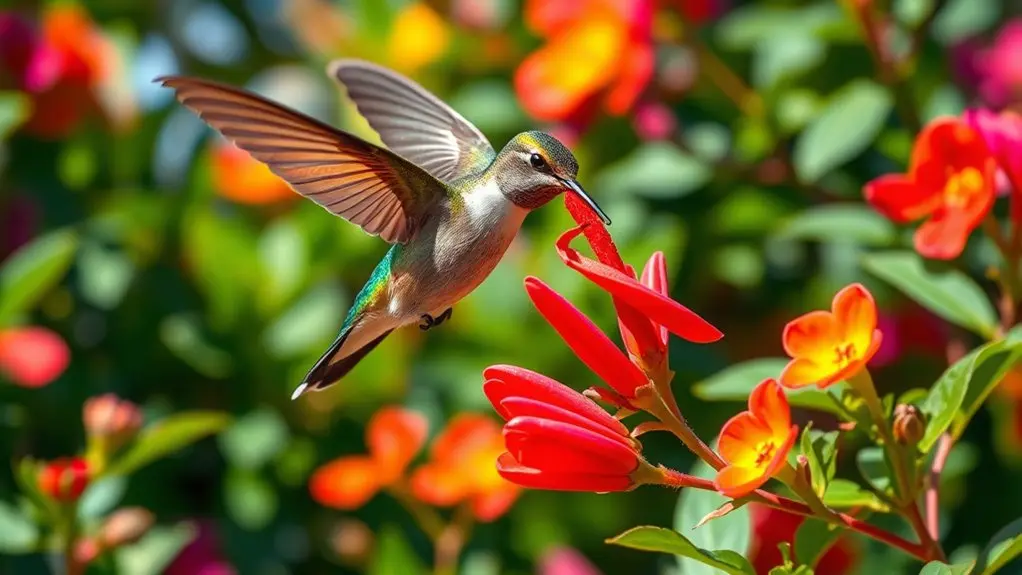
When you observe bird species that serve as pollinators, hummingbirds stand out due to their exceptional ability to hover and access nectar from deep tubular flowers, primarily throughout the Americas. Their rapid wing beats and precise flight enable effective pollen transfer during feeding.
In Africa and Asia, sunbirds perform a similar role, using their slender bills to reach nectar while facilitating cross-pollination. Both species’ bird migration patterns influence their pollination timing and plant interactions seasonally.
Nesting behaviors also affect pollination; birds often establish nests near abundant floral resources, ensuring consistent nectar access.
Although honeycreepers and some bats contribute, hummingbirds and sunbirds remain the main avian pollinators globally, especially in ecosystems where insect pollinators are scarce or ineffective. This really emphasizes their vital ecological role.
What Types Of Flowers Rely On Bird Pollination?
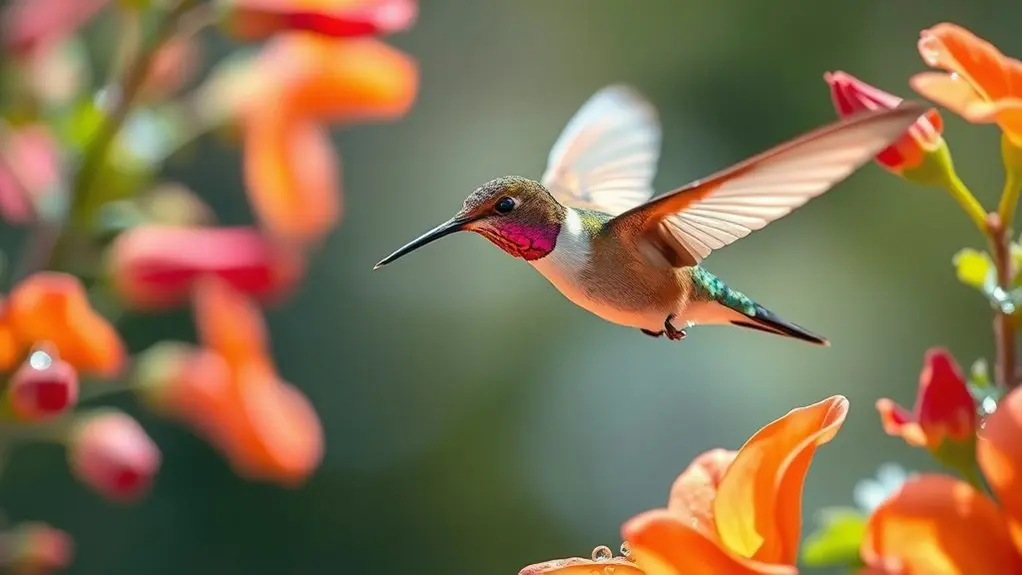
Bird-pollinating birds like hummingbirds and sunbirds are attracted to specific floral traits that suit their feeding behaviors and sensory preferences. You’ll notice these flowers often exhibit vivid flower coloration, especially bright reds and oranges, which align well with bird vision.
The flowers usually have tubular shapes that fit the birds’ slender bills, making nectar access efficient.
Since birds rely more on sight than smell, these flowers tend to be odorless or faintly scented. To reward their avian visitors, they produce abundant nectar rewards, ensuring repeated visits that enhance pollination.
Structurally, these flowers are sturdy enough to withstand the physical contact during feeding.
Examples include heliconias and some orchids, which have evolved these features specifically to attract and accommodate bird pollinators. It’s pretty cool how these plants and birds have adapted together, isn’t it?
Where Is Bird Pollination Most Common Worldwide?
You’ll find bird pollination most common in tropical and subtropical regions like Central and South America, Africa, and Southeast Asia. In these areas, specialized birds such as hummingbirds, sunbirds, and honeyeaters play key roles in transferring pollen.
It’s pretty interesting because understanding these regional pollinators helps explain why many flowers have evolved bright colors and tubular shapes to attract them.
Bird Pollination Hotspots
Where do birds most frequently contribute to pollination? You’ll find bird pollination hotspots primarily in tropical and subtropical regions like Central and South America, Southeast Asia, and Africa. These areas offer abundant, nectar-rich flowers that attract birds such as hummingbirds and sunbirds.
Migration patterns heavily influence pollination. Many hummingbirds travel seasonally to exploit flowering peaks, while nesting behaviors ensure local populations remain near reliable nectar sources.
Islands like Hawaii and the Galápagos stand out because native plants have evolved distinct traits to attract bird pollinators, maximizing reproductive success.
In Africa, sunbirds prefer brightly colored, tubular flowers, while in the Americas, trumpet-shaped blossoms are favored.
Understanding these hotspots requires observing how bird ecology, including migration, nesting, and feeding habits, aligns with floral availability across diverse ecosystems.
Regional Bird Pollinators
How do birds contribute to pollination across different regions worldwide? Bird pollination thrives mainly in tropical and subtropical zones like Central and South America, Africa, and Southeast Asia. You’ll find hummingbirds in North and Central America efficiently pollinating tubular flowers, while sunbirds in African savannas target nectar-rich plants.
In Australia and New Guinea, honeyeaters play a crucial role in sustaining native flora. Bird migration patterns influence the seasonal availability of pollinators, enabling cross-regional gene flow in flowering plants.
Plus, nesting behaviors often bring birds close to specific plants, enhancing pollination efficiency in localized areas.
In contrast, temperate regions rely less on birds, since wind and insects dominate pollination. Understanding these regional dynamics helps you appreciate how birds shape ecosystems globally.
It’s pretty amazing how these feathered pollinators make such a difference depending on where they live!
How Does Bird Pollination Compare To Insect Pollination?
Although both birds and insects serve as pollinators, their methods and efficiencies differ quite a bit. Birds, like hummingbirds, feed on nectar by sticking their beaks deep into larger, tubular flowers that are made just for them. These flowers usually have bright colors and lots of nectar to attract the birds.
Unlike insects that actively gather pollen, birds mostly just drink nectar. This means they visit fewer flowers, but those visits are more targeted. Their heads and necks pick up pollen and carry it, often over longer distances, which can make pollination more efficient.
On the other hand, insects like bees collect pollen as a protein source. They visit lots of flowers, spreading pollen more widely but sometimes less precisely.
Knowing these differences helps you see how both birds and insects play unique roles in pollination within ecosystems.
How Can You Support Bird Pollinators In Your Garden?
Since bird pollinators rely heavily on nectar, you can support them by planting native flowers that bloom at different times throughout the growing season. This ensures a continuous food source, which is super important during bird migration when their energy needs peak.
Plant native flowers that bloom throughout the season to provide continuous nectar for migrating bird pollinators.
Providing clean water sources and nectar feeders is a great way to attract species like hummingbirds and honeycreepers.
You might also want to create tall perching spots and safe nesting sites in your garden. These offer shelter and breeding areas, helping sustain local pollinator populations.
Try to avoid pesticides and chemicals because they harm birds and reduce pollination efficiency.
By fostering a bird-friendly habitat that fits their migratory patterns and nesting needs, you’re actively promoting effective pollination.
Plus, you’re doing a solid favor for the overall ecosystem health in your garden.
Frequently Asked Questions
Do All Bird Species Contribute to Flower Pollination?
You won’t see all bird species pollinating flowers. Only those with feather adaptations suited for nectar feeding and specific nesting behaviors actively transfer pollen.
Many others focus on seed dispersal, not pollination. So, it really depends on the bird’s role and habits. Not every bird is built for the flower pollination job.
Can Bird Pollination Affect Fruit Taste or Quality?
You won’t find bird pollination directly altering fruit taste or quality. Instead, flower attraction and nectar consumption guide birds, supporting pollen transfer. This process influences fruit size and uniformity but not the intrinsic flavor or overall quality of the fruit.
How Do Birds Avoid Pollen Allergies When Pollinating?
You see delicate pollen transfer on feathers, not skin, so birds avoid allergic reactions by grooming rigorously and visiting sturdy flowers that deposit pollen away from respiratory areas.
This way, they minimize exposure and immune response effectively. It’s pretty clever how nature works, right? Birds keep themselves clean and choose flowers that don’t mess with their breathing.
Are Nocturnal Birds Involved in Pollination?
Nocturnal birds, relying on nocturnal vision for nighttime activity, rarely pollinate flowers. Their feeding habits focus on insects or small animals, so you won’t see them transferring pollen like diurnal pollinators do.
Basically, they’re not the flower’s go-to helpers when it comes to pollination. Instead, they’re more into hunting or foraging in the dark. So, if you’re thinking about which birds help plants reproduce at night, nocturnal birds aren’t usually the ones.
What Role Do Migratory Birds Play in Pollination?
You’ll find migratory birds play a vital role in pollination by syncing bird migration with pollination timing. They transfer pollen across regions, which is pretty amazing when you think about it. This helps enhance genetic diversity among plants.
Plus, these birds support plant reproduction during their seasonal nectar feeding. So, their journey isn’t just about moving from one place to another—it’s a key part of nature’s pollination process. Cool, right?
Conclusion
Now that you know birds play an essential role in pollination, it’s clear they’re more than just pretty visitors. Their unique behaviors and adaptations make them indispensable for many flowering plants, especially in certain ecosystems.
If you want to support this natural process, providing native plants and water sources can make all the difference. Remember, when it comes to pollination, birds aren’t just a piece of the puzzle, they’re the whole ball of wax.