
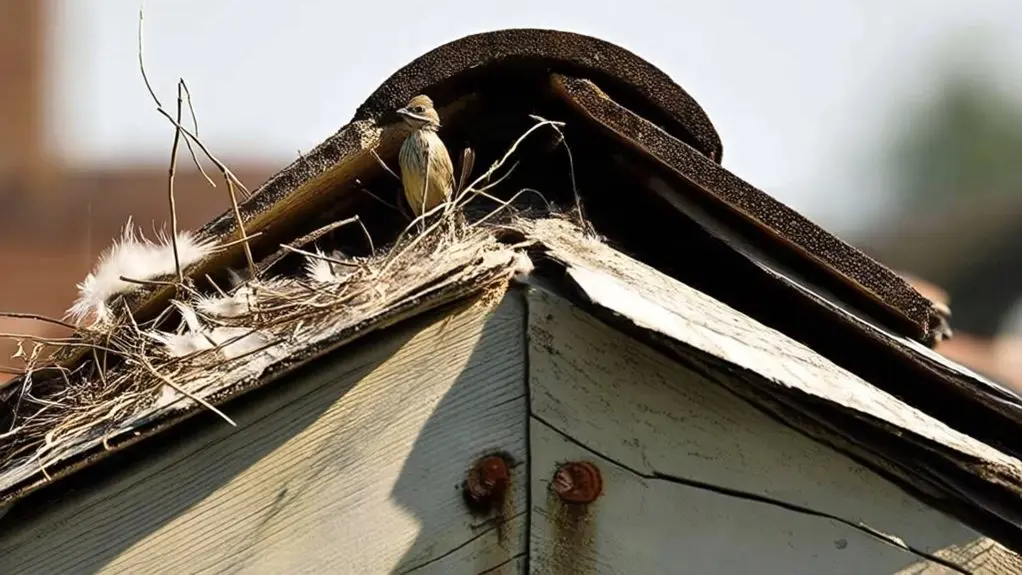
Yes, birds nesting in your roof can cause significant damage. Their nests block gutters and drains, which leads to water buildup, leaks, and structural rot. Nest materials also add weight and moisture, weakening roofing components.
Plus, acidic droppings speed up material erosion and can corrode electrical parts. Nests can create fire and health hazards by blocking vents or igniting near wiring.
Knowing where birds like to nest and understanding these risks helps you protect your property. You can learn how to inspect, prevent, and deal with bird nesting safely.
Why Birds Nest on Roofs and What It Means for You
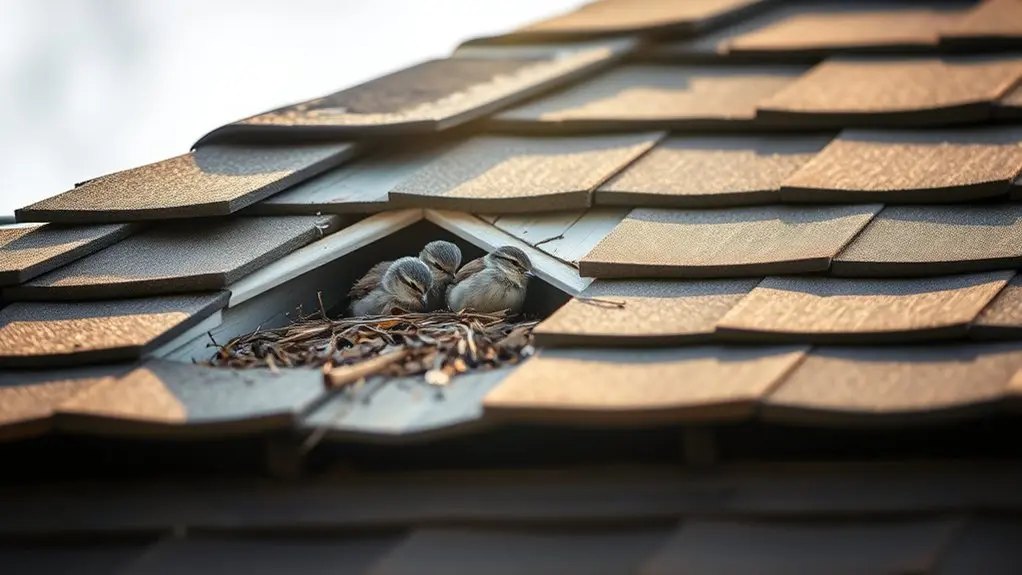
Because urban environments often lack natural nesting sites like trees, birds have adapted by choosing roofs as their preferred nesting locations. Various bird species exhibit nesting behavior that favors rooftops due to their warmth, safety, and vantage points for predator detection.
Roofs provide increased sunlight exposure, especially in spring and summer, which helps maintain ideal temperatures for egg incubation and chick development.
Additionally, accessible entry points created by roof decay or damage allow birds to nest without expending energy on tunneling. This nesting behavior represents a survival adaptation in response to diminished natural habitats.
Understanding why birds select roofs helps you recognize that their presence is driven by environmental necessity rather than preference.
This highlights the importance of managing urban spaces to accommodate or control bird nesting effectively. It’s not just about birds choosing roofs because they want to—it’s about them making the best of what’s available.
Structural and Material Damage From Bird Nests
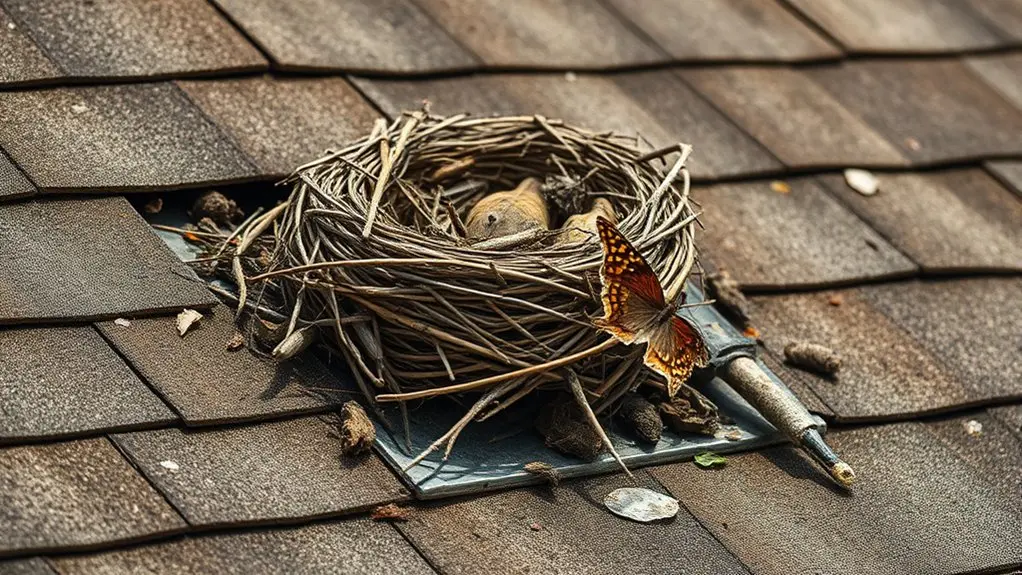
While birds nesting on your roof may seem harmless, their presence can cause significant structural and material damage over time. Nesting materials like twigs and straw often block gutters and drains, leading to water accumulation. This buildup promotes roof leaks and speeds up material deterioration.
Accumulated nests also add weight and hold moisture, which weakens the structure and increases the chances of roof rot and mold growth. The constant moisture makes damage to shingles and wooden parts even worse, putting your roof’s integrity at risk.
On top of that, nests on electrical equipment can be a fire hazard and might cause electrical failures. Knowing these risks makes it clear why it’s important to deal with bird nests quickly.
Taking action helps prevent ongoing damage and keeps your roof stable for the long haul.
How Bird Droppings Harm Your Roofing Materials
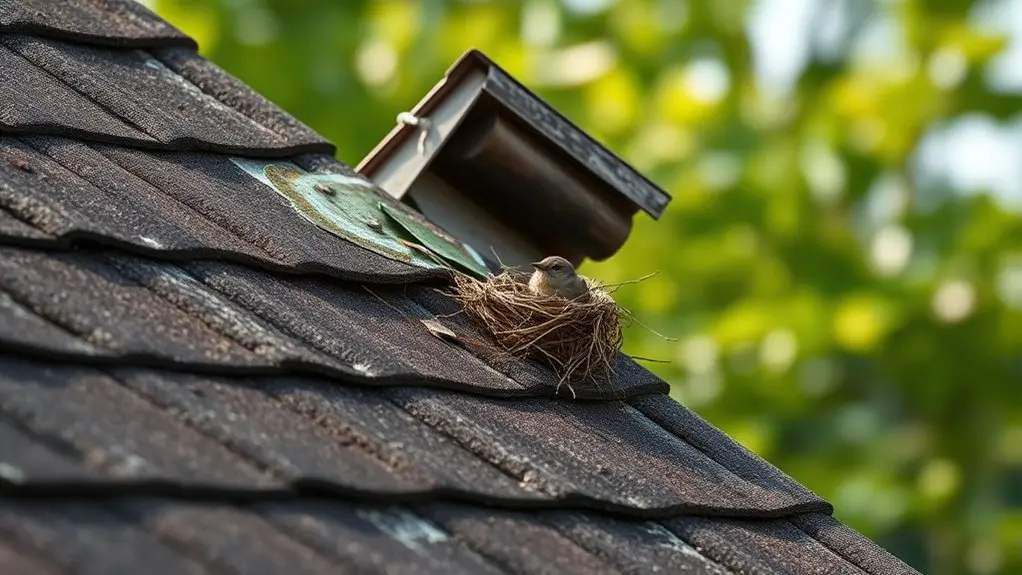
Although bird droppings might seem like a minor nuisance, their high uric acid content can cause serious damage to your roofing materials over time. The acidity in bird droppings accelerates roofing deterioration by eroding shingles, metal, and concrete surfaces. This leads to cracks, holes, and weakened structural integrity.
Additionally, accumulated droppings can block gutters and drains, causing water to pool and increasing the risk of leaks. You’ll also notice persistent staining and surface damage that reduce your roof’s lifespan. It’s definitely not something you want to ignore.
Beyond roofing materials, the corrosive nature of bird droppings can harm rooftop equipment like air conditioning units and electrical fixtures, which can drive up repair costs.
Fire and Health Hazards From Bird Nests on Roofs
When bird nests block ventilation shafts and chimneys, they can cause dangerous carbon monoxide buildup by restricting proper airflow. This blockage not only threatens your safety but also affects the health of the birds. Poor air circulation is harmful to both birds and humans.
The materials in nests like twigs, straw, and feathers are flammable and increase fire risks, especially near electrical wiring. Nests that block HVAC systems can cause equipment failures and help spread airborne diseases, which is a real health concern.
Plus, bird droppings produce uric acid that corrodes electrical components and structural materials, making the damage worse. If nests aren’t maintained, they can block drainage, leading to leaks and weakening the structure. This, in turn, raises the chances of fires even more.
Where Birds Commonly Nest on Your Roof
You’ll often find birds nesting in roof ridges, peaks, chimneys, and attic vents—places where shelter and elevation come together. They like these spots because they offer safety and a good vantage point.
Gutter systems, downspouts, and gaps around roof penetrations are also popular entry points for nests. Birds can easily slip into these small openings to build their homes.
Knowing where birds commonly nest helps you spot potential damage early on. Plus, it’s a big help if you want to prevent them from moving in and causing more trouble.
Typical Nesting Locations
Because birds seek elevated and sheltered sites for nesting, roof ridges, peaks, and chimneys serve as common locations where they establish their nests. Bird species such as house sparrows and starlings exhibit nesting behaviors that favor open, accessible rooftop areas. Attic vents, skylight curbs, and soffits also attract birds due to their protective structure.
Additionally, gutters and downspouts provide concealment and easy access, making them frequent nesting spots. Flat or low-slope roofs with damaged flashing or shingles further facilitate nesting by creating entry points.
Understanding these typical nesting locations helps you identify potential problem areas and anticipate where bird activity might cause structural damage or block ventilation. This way, you can step in early to prevent bigger issues before they start. It’s all about knowing where birds like to settle so you can keep your property safe and sound.
Roof Entry Points
Identifying where birds gain access to your roof is key to preventing nesting-related damage. Birds rarely tunnel through solid materials. Instead, they exploit decayed shingles, vents, and gaps in flashing created by deterioration or loose components.
Common entry points include roof ridges, chimneys, soffits, and attic vents. These small openings allow species like house sparrows, starlings, and pigeons to deposit nesting materials.
These vulnerable spots increase during the nesting season from February to August, especially if roofing components are damaged or neglected.
Implementing effective bird deterrent measures at these entry sites is essential to block access and prevent nests from forming inside your roof or ventilation system.
Regular inspection and maintenance can help you identify and seal these gaps. This way, you minimize potential structural damage caused by nesting birds.
How to Inspect Your Roof Safely for Bird Nests and Entry Points
You should start by checking common nesting spots like roof ridges, eaves, and vents. It’s best to use binoculars or a camera with zoom so you don’t have to climb up and take unnecessary risks.
As you look around, keep an eye out for any roof damage or signs that birds might be getting in, like worn edges or nesting materials near openings. Catching these signs early on can really help you avoid bigger structural problems caused by nesting birds.
Inspect Common Nesting Areas
Although inspecting your roof for bird nests and entry points can seem challenging, focusing on common areas like ridges, chimneys, and flashing from the ground makes it easier to spot signs of bird activity.
Different bird species have unique nesting behaviors, often choosing sheltered spots such as soffits, fascia, and attic vents.
To do a thorough inspection, pay close attention to these typical nesting locations.
Check gutters and downspouts for debris buildup caused by nesting materials.
Look for bird droppings or nesting remnants near roof peaks and flashing.
Also, inspect attic vents and eaves for entry holes or damage that might indicate access points.
Keep an eye out for repeated signs of bird presence to pinpoint vulnerable areas.
This step-by-step approach helps you detect nesting activity early and prevents potential roof infestations.
Identify Roof Damage
After pinpointing common nesting areas, the next step involves closely examining your roof for signs of damage that birds exploit to gain entry. Use binoculars to inspect roof ridges, peaks, and chimneys for nesting materials or bird species typical to your region.
Pay special attention to soffits, fascia, and attic vents, looking for holes or deterioration that align with the nesting habits of cavity-nesting birds.
Check gutters, downspouts, and flat-roof drains for nests, droppings, or blockages from accumulated debris. Repeated marks around flashing and damaged shingles often indicate frequent bird activity.
For safety, avoid climbing steep or compromised roofs; instead, consider professional inspections for difficult areas.
This thorough approach helps you detect structural vulnerabilities linked to bird nesting before they escalate into costly damage. Taking the time now can save you from bigger headaches later on.
Recognize Bird Entry
When inspecting your roof for bird nests and entry points, prioritize safety by doing as much of the examination as you can from the ground. Use binoculars to spot signs of bird activity. Look out for feather patterns and listen for bird calls that might mean there’s active nesting nearby.
Focus on areas where birds might get in or find shelter. Check roof ridges, peaks, and chimneys for any buildup of nesting material.
Also, take a close look at soffits, fascia, and eaves to find cracks or gaps.
Don’t forget to inspect attic vents, skylight curbs, and roof penetrations for nests or droppings. It’s also a good idea to see if gutters and downspouts are blocked by debris left by birds.
These steps help you spot potential entry points without putting yourself at risk.
Plus, it makes sure you get a thorough look at any bird presence around your roof.
Safe and Legal Ways to Prevent Bird Nesting on Roofs
Since birds often seek shelter in roof openings, you should first guarantee these areas are unoccupied before making repairs to avoid harming active nests. Employ bird species identification and nesting season timing to determine when nests are inactive, complying with wildlife protection laws.
After confirming emptiness, repair and reinforce soffits, flashing, and other entry points, addressing structural decay promptly to eliminate access.
Use humane exclusion methods like bird-safe netting and wires that prevent nesting without damaging roofing materials or creating leak risks. Additionally, install artificial nesting boxes nearby to provide alternative, safe sites, reducing the chance of birds nesting directly on your roof.
Avoid lethal or harmful deterrents, favoring non-invasive, legal measures that protect both your property and local avian populations.
How to Maintain Gutters and Drains to Reduce Bird Damage
Preventing birds from nesting on your roof involves more than just sealing entry points. Maintaining gutters and drains plays a big role in cutting down bird activity. When you keep gutters clean and check drains regularly, you reduce spots where birds like to nest and hang out.
Effective bird prevention starts with clean gutters and drains to eliminate their favorite nesting spots.
Here are some key things to focus on:
Regularly clear debris from gutters, drains, and scuppers to stop blockages. Installing gutter guards or covers can help keep birds out. It’s also important to inspect and repair any damaged flashing and soffit panels so you close off possible entry points.
Make sure your drainage is working well by keeping slopes intact and pathways clear. This way, water won’t pool and attract birds looking for a cozy spot. Taking these steps keeps your roof less inviting to unwanted feathered guests.
When You Should Call a Professional for Bird Nest Removal
If you discover bird nests in roof vents, chimneys, or near electrical equipment, you should call a professional immediately to minimize fire risks and prevent electrical damage.
Professionals use bird species identification to determine if legal protections apply, guaranteeing compliance with wildlife laws. They also analyze nesting material types, which vary from twigs to synthetic fibers, to assess removal difficulty and potential hazards.
You should seek expert help when nests are inside inaccessible areas like attics or behind roofing materials to avoid disturbing protected species. Additionally, professionals address nests causing gutter blockages that lead to leaks or structural damage.
Before sealing or repairing roof openings, trained wildlife experts ensure humane management and prevent re-infestation. This way, they safeguard both your property and local bird populations.
It’s always better to let the pros handle it, especially when safety and legal issues come into play. That way, everyone stays protected and happy.
Frequently Asked Questions
What Types of Birds Are Most Likely to Nest on Roofs?
You’ll find bird species like house sparrows, European starlings, and feral pigeons most likely nesting on roofs due to their adaptable nesting habits. Swifts, swallows, jackdaws, and barn owls also exploit roof cavities and crevices.
These birds are pretty clever about finding snug spots in our buildings. It’s like they’ve figured out how to make the most of our roofs for their homes. So, if you spot birds hanging around your roof, it’s probably one of these guys!
Can Bird Nests Attract Other Wildlife to My Property?
Like a beacon during bird migration, your roof’s nests can signal urban bird habitats, attracting predators and parasites. This ripple effect increases local wildlife activity, drawing unwanted mammals and insects seeking shelter or food near your home.
It’s kind of like setting up a little neighborhood that other animals want to check out. So, while it’s great to have birds around, be prepared for some extra visitors you might not expect.
Do Bird Nests on Roofs Affect Home Insurance Policies?
Yes, bird nests on roofs can affect your home insurance policies. Insurers usually require bird safety measures and proper nest removal techniques to prevent damage claims.
If you neglect these, it might lead to denied coverage or even increased premiums. So, it’s a good idea to stay on top of this to avoid any surprises with your insurance.
How Quickly Can Bird Nests Cause Visible Roof Damage?
You can see visible roof damage from bird nests within a few months. Bird droppings corrode materials, and nests disrupt roof insulation. This kind of damage doesn’t take long to show up.
It actually speeds up the deterioration process, especially if birds keep nesting regularly. Plus, all the debris they bring can pile up and cause even more issues. So, it’s definitely something to watch out for sooner rather than later.
Are There Any Eco-Friendly Materials to Discourage Birds From Nesting?
Yes, you can use eco-friendly deterrents like natural repellents such as citronella, peppermint oil, and garlic sprays. These are scientifically proven to discourage birds.
Combining these with biodegradable netting or textured surfaces makes them more effective. Plus, this approach minimizes environmental impact and reduces the risk of roof damage.
It’s a simple way to keep birds away without harming them or the planet.
Conclusion
Just like a tiny leak can sink a great ship, bird nests on your roof may seem harmless but can cause serious damage over time. By understanding the risks, from structural harm to health hazards, you’ll be better equipped to protect your home.
Inspect regularly, maintain gutters, and use safe prevention methods. When in doubt, calling a professional guarantees you avoid costly repairs and keep your roof as sturdy as a fortress against nature’s smallest invaders.