
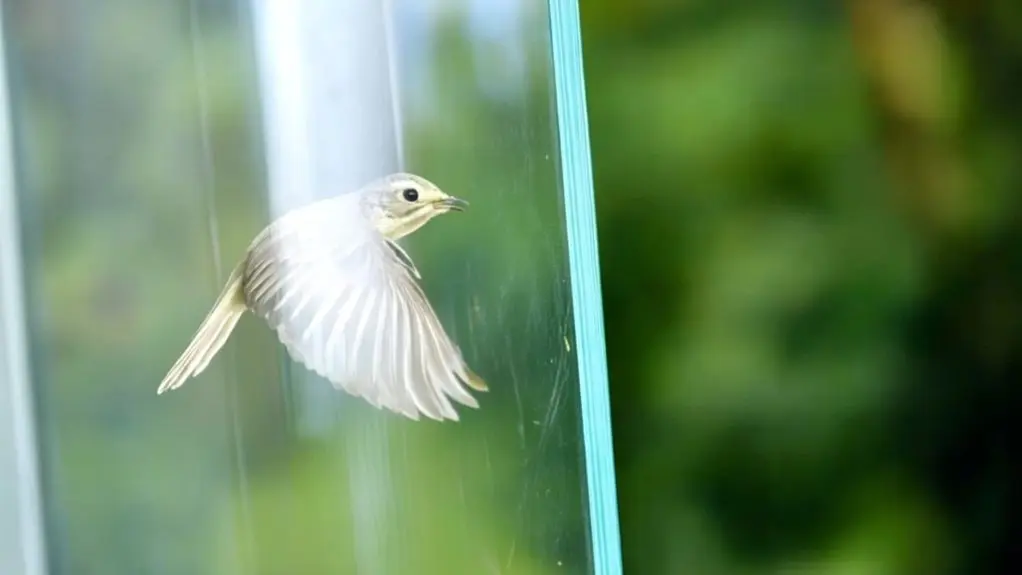
You might be surprised to learn that birds don’t see glass as a solid barrier. Their vision interprets reflections of sky and vegetation as open space, making glass appear invisible or inviting. They miss window frames and can’t detect many glass surfaces, especially when reflections mimic natural habitats.
This causes frequent, often high-speed collisions. Environmental light and time of day also influence these impacts. Understanding these factors reveals why bird-window collisions happen so often and how you can help reduce them.
Why Birds Don’t Recognize Glass as a Barrier to Avoid Collisions
Although glass appears solid to us, birds don’t recognize it as a barrier because they perceive reflections and transparency instead of an obstacle. Your feather coloration, essential for communication and camouflage, doesn’t help birds identify glass since reflections mimic natural surroundings.
Nesting behaviors also rely on visual cues, yet glass can deceive birds by reflecting trees or sky, making them believe they’re approaching safe habitat. Unlike humans, birds can’t detect window frames or mullions, which would signal a physical boundary.
Many species lack the ability to see ultraviolet light, which might otherwise highlight glass surfaces. Consequently, birds interpret reflections as open space, leading to collisions.
This inability to recognize glass as a solid barrier results in frequent, high-speed impacts, causing injury or death.
How Reflections Cause Bird-Window Collisions
When you see glass reflecting the sky or nearby trees, birds interpret these images as open, navigable space rather than solid barriers. Mirror illusions created by reflection effects on windows trick birds into thinking there’s a safe flight path. Because of this, birds don’t realize the glass is actually a threat, which leads to collisions.
Birds mistake glass reflections of sky and trees for open space, leading to dangerous collisions.
The strength of these reflections can change depending on the environment. For example, glass surfaces reflecting dense vegetation make the mirror illusions even stronger. Bright, clear skies reflected on glass make it look like open air.
Large, uninterrupted reflective panes give birds no hints that there’s a barrier ahead. Since birds rely a lot on what they see when they fly, these reflections confuse them. They end up flying fast right into the glass, mistaking the reflections for real, open habitat.
It’s a tricky problem because what looks like safe space to us is actually dangerous for birds.
Do Birds See Glass, or Is It Invisible to Them?
Because birds process visual information differently than humans, they often fail to recognize glass as a solid barrier. You’ll notice that birds rely heavily on their perception of feather patterns and environmental cues, but glass disrupts this process by showing reflections or transparency that mimic open space.
Unlike humans, birds don’t associate window frames or glass surfaces with obstacles, so the reflections of vegetation or sky trick them. Even during migration routes, when birds are highly focused, many species don’t perceive glass as a visible threat.
Some birds can see ultraviolet light, yet this ability rarely helps them detect glass. As a result, glass often appears invisible, causing birds to collide with it. Their visual processing just doesn’t interpret it as a barrier in their natural environment.
When and Where Do Bird-Window Collisions Happen Most?
You’ll notice that bird-window collisions tend to peak during spring and fall migrations. This is especially true at dawn and dusk when birds are most active and traveling.
Almost half of these strikes happen at residential windows that face vegetation or reflect the surroundings. These collisions often occur on low-rise buildings.
But it’s not just during migration seasons—collisions happen year-round near feeders and baths. Juvenile and resident birds are often involved in these incidents too.
Seasonal Collision Peaks
Although bird-window collisions happen year-round, they peak sharply during the spring and fall migration seasons. That’s when many species undertake long-distance travel. These migration patterns drive increased collision risks, especially as birds navigate urban landscaping that often confuses reflections for habitat.
The fall migration is particularly hazardous because both adult and juvenile birds, inexperienced in local environments, concentrate in urban areas.
You’ll notice:
- Spring and fall see the highest collision rates due to mass migration.
- Juvenile and resident birds cause summer collisions while exploring territories.
- Low-rise buildings dominate daytime collisions, influenced by surrounding vegetation.
Understanding these seasonal peaks helps you recognize when and why birds are most vulnerable. It also highlights the role urban landscaping plays in their navigation challenges during migration.
High-Risk Locations
Bird-window collisions happen most frequently during the spring and fall migration periods. That’s when birds are focused on long-distance navigation and become less cautious.
You’ll find high-risk locations often involve urban architecture featuring large, reflective glass surfaces, like office towers and apartment complexes, especially on lower floors. Nearly half of all collisions occur at residential homes.
Lower-story windows near vegetation or feeders create dangerous reflections.
Collisions peak during daylight hours on sunny days when reflections intensify and mislead birds. Also, resident and juvenile birds exploring year-round remain vulnerable regardless of the season.
Understanding how window design interacts with surrounding environments is essential for reducing strikes. By recognizing these high-risk settings, you can better appreciate what makes certain urban and residential spaces particularly hazardous for birds.
How Light and Surroundings Affect Bird Collisions
When light interacts with glass surfaces, it really changes how birds see their surroundings and the chances they might crash into the glass. Lighting conditions can seriously affect a bird’s ability to spot glass, especially since UV light visibility changes throughout the day.
Reflections from nearby things often trick birds into thinking there’s open space or plants where there aren’t any. You’ll notice these effects most with shaded windows or those lit up during dawn and dusk. These times reduce UV clues and make collisions more likely.
Artificial lights at night can attract migrating birds toward lit-up glass. Also, reflections of landscapes that look like natural habitats encourage birds to fly right at glass surfaces.
When you understand these factors, it’s easier to see why birds have a hard time recognizing glass as a barrier in different environments.
How Bird Vision Differences Increase Window Strikes
How do differences in bird vision contribute to their frequent collisions with windows? Many birds can see ultraviolet (UV) light, which helps them tell reflections apart from real objects. But some species, like pigeons and raptors, don’t see much UV light. This makes it harder for them to recognize glass as a solid barrier.
Because of this, reflections of trees and sky on windows look like real places to these birds. They rely a lot on movement and visual hints from feather colors and sounds to find their way. Glass doesn’t give off those signals, so it’s tough for birds to notice it.
That’s why birds often mistake transparent or reflective surfaces for open space or habitat. They end up flying into windows a lot.
Knowing how their vision works helps explain why windows can be so dangerous for birds, even though they seem harmless to us.
Simple Ways to Prevent Bird-Window Collisions
Understanding the visual challenges birds face with glass surfaces highlights why taking proactive measures can be highly effective in preventing collisions. During bird migration, many species misinterpret reflective or transparent windows as open sky or habitat.
Urban planning plays a vital role in reducing these hazards.
You can implement simple, scientifically supported strategies to protect birds. Apply closely spaced decals or patterned films to disrupt reflections and signal a barrier. Installing external screens or netting provides a physical obstacle that prevents impact.
Position bird deflectors strategically on window exteriors to enhance visibility.
These interventions break up reflections and make windows perceptible, decreasing collision risk. Incorporating such measures in urban environments, especially along migratory pathways, greatly mitigates bird-window strikes and supports avian conservation.
It’s a straightforward way to help keep our feathered friends safe.
What to Do If a Bird Hits a Window
If a bird collides with a window, you should immediately approach it with caution to evaluate its condition. Bird migration patterns increase collision risks, especially with reflective or transparent window design.
Place the bird in a dark, quiet, warm container like a ventilated cardboard box, away from pets. Observe it for 30 minutes to an hour to see if it regains flight ability.
Release it outside when alert and active, far from windows and predators. Seek professional help if injuries appear severe or the bird remains unresponsive.
| Step | Action |
|---|---|
| 1 | Approach carefully |
| 2 | Place bird in dark, warm container |
| 3 | Observe for 30-60 minutes |
| 4 | Release when alert and active |
| 5 | Seek professional help if needed |
Frequently Asked Questions
Do Certain Bird Species Collide With Glass More Than Others?
You’ll notice certain bird species collide with glass more due to their bird behavior, like active foraging near windows. Glass reflection confuses songbirds using UV vision less, increasing collisions compared to raptors or pigeons with different visual abilities.
It’s interesting how their behavior plays a big role here. Songbirds, for example, are more prone to these accidents because they don’t see glass as a barrier. Raptors and pigeons, on the other hand, have different ways of perceiving their surroundings, which helps them avoid these collisions more often.
Can Window Tinting Reduce Bird Strikes Effectively?
You can think of window tinting as a gentle nudge for bird behavior, disrupting glass reflection that confuses them.
This subtle change effectively reduces collisions by making glass more noticeable. It supports safer flight patterns around buildings.
Are Bird Collisions With Glass More Common During the Day or Night?
You’ll find bird collisions with glass are more common during the day. Urban architecture’s glass reflectivity confuses birds’ visual cues. They often mistake reflections for open sky or habitat.
This mix-up increases collision risks considerably. Birds just can’t tell the difference, which makes daytime especially risky for them. So yeah, daytime is when these accidents happen most.
How Do Migratory Patterns Influence Window Collision Rates?
Like moths drawn to a flame, migratory birds face heightened reflection hazards during peak movement times. You’ll notice urban lighting disorients them, increasing window collisions as they navigate unfamiliar routes and glass surfaces under low visibility.
It’s kind of like they’re flying through a maze they didn’t expect. When the light is low, reflections get tricky, and birds can’t always tell what’s glass and what’s open sky. This confusion makes collisions more common during migration seasons.
What Materials Besides Glass Pose Similar Risks to Birds?
You’ll find that acrylic, polycarbonate, reflective plastics, and coated metals pose risks to birds. Their feather coloration and nesting habits increase vulnerability, as shiny surfaces confuse them, leading to dangerous collisions during flight or territory defense.
These materials can reflect light or the surrounding environment in ways that birds mistake for open sky or safe habitat. So, when birds see these reflections, they might fly right into them without realizing the danger.
It’s pretty surprising how much these non-glass materials can trick birds. Keeping this in mind can help when choosing materials for windows, signs, or other outdoor installations to protect our feathered friends.
Conclusion
You might think glass is invisible to birds, but it’s more like a clever illusion they can’t quite decipher. Their unique vision, combined with reflective surfaces, tricks them into perceiving open skies or safe passage.
By understanding these subtle visual deceptions and adjusting our environments thoughtfully, you can help turn these hidden hazards into gentle reminders. This gives birds a safer journey and helps preserve the delicate balance between nature and our built world.