
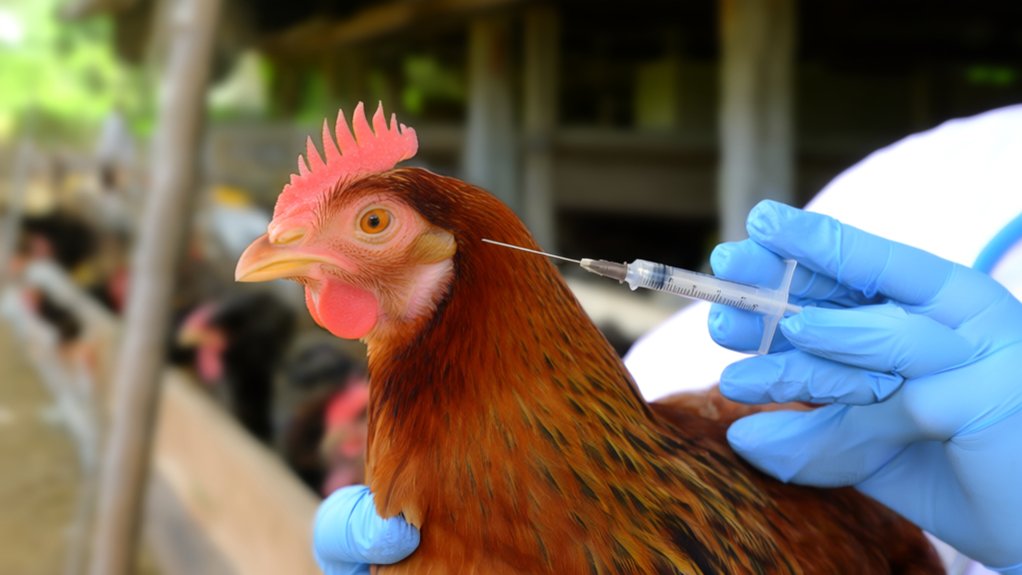
You can vaccinate certain bird species, mainly commercial poultry, against avian flu to reduce disease severity and viral shedding. This helps improve outbreak control. But keep in mind, vaccines don’t fully prevent infection or transmission.
So, strict biosecurity is still essential. Safety depends on proper administration and following regulations. It’s also important to manage the environment carefully to avoid contamination.
One thing to watch out for is that vaccination may mask infections, which can make detection harder. Knowing these factors can help you manage avian flu risks better. It also lets you explore more comprehensive control strategies.
How Bird Flu Vaccines Protect Birds
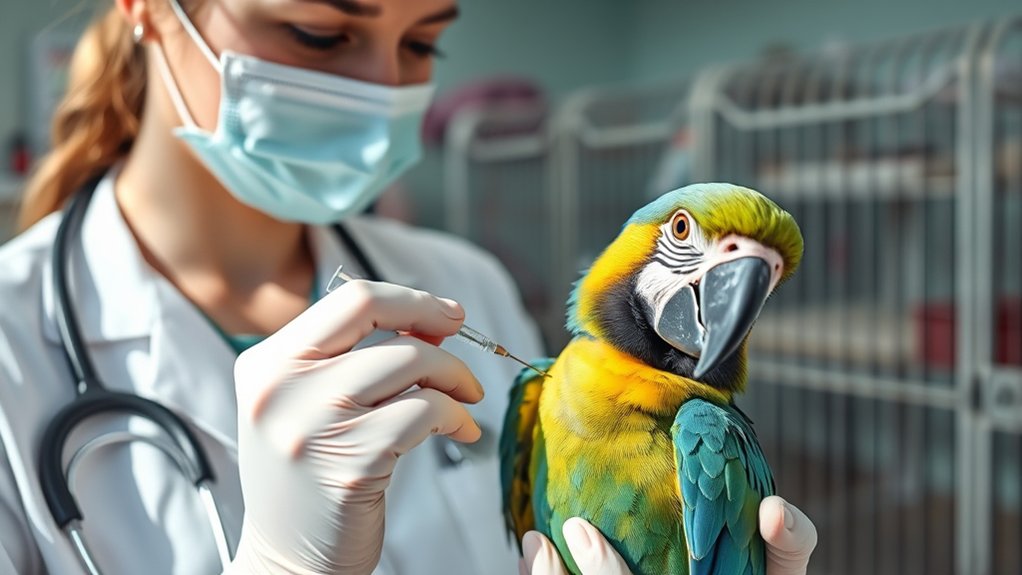
How exactly do bird flu vaccines protect birds from infection? When you vaccinate a bird, its immune system responds by producing antibodies targeted at specific avian influenza virus strains included in the vaccine. This protective immunity reduces the severity of illness if the bird encounters the virus and limits virus shedding, which decreases transmission risk.
You must confirm the vaccine strain matches the circulating virus strains, as mismatches can reduce effectiveness. Proper administration is also critical to achieve an ideal immune response.
In many countries, vaccinations form part of all-encompassing disease control programs, aiming to protect both commercial and backyard poultry populations.
By reducing infection likelihood and virus spread, bird flu vaccines help prevent outbreaks on poultry farms. This safeguards animal health and agricultural productivity.
Which Bird Species Can Receive Avian Flu Vaccines?
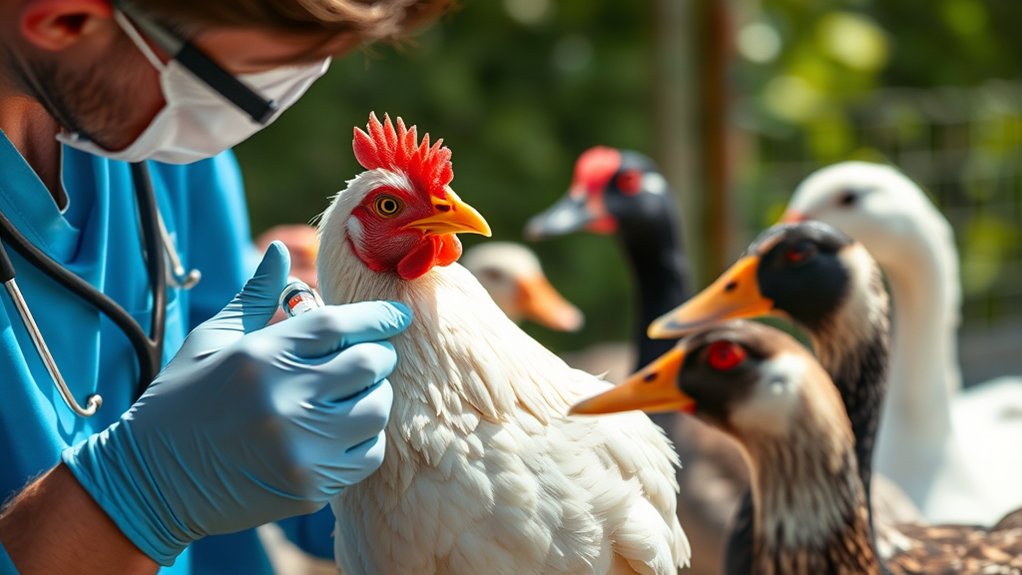
You’ll find that avian flu vaccines are mostly given to commercial poultry like chickens and turkeys. They’re also used for backyard flocks and some captive endangered species.
Vaccinating wild birds, on the other hand, is much trickier. There are lots of logistical challenges, plus concerns about how it might affect the environment and whether the vaccine would even be effective.
As for pet birds, they usually only get vaccinated in specific situations. This might be during an outbreak or as part of conservation efforts.
Poultry Vaccination Eligibility
Which bird species qualify for avian flu vaccination depends largely on their role in poultry production and risk exposure. Primarily, commercial poultry such as chickens and turkeys are eligible for vaccination in certain countries where avian influenza poses a significant threat.
You’ll also find that backyard and hobby flocks may receive vaccines based on regional risk assessments and veterinary guidelines. Additionally, some captive exotic or ornamental birds at high risk can be considered for vaccination.
Veterinary authorities determine eligibility, focusing on species critical to agriculture and those under controlled care.
- Commercial poultry (chickens, turkeys) are primary candidates
- Backyard and hobby flocks may be vaccinated depending on local policies
- Captive exotic or ornamental birds at elevated risk might qualify
This targeted approach really helps optimize vaccine use and disease control efforts.
Wild Bird Vaccination Challenges
Why is vaccinating wild birds against avian flu so challenging? You face significant obstacles due to the free-ranging, migratory nature of wild bird populations, which makes vaccine administration really difficult. Only certain small, targeted species, usually those held in captivity or controlled environments, are actually feasible candidates for vaccination.
Vaccines are mainly developed for domestic poultry and don’t have broad approval for wild birds. Delivering vaccines to wild populations often depends on oral baiting methods, but these have limited effectiveness and come with logistical headaches.
Plus, the huge diversity and constant movement of wild birds make widespread vaccination pretty impractical and hard to pull off. So, while some controlled wild bird species can get vaccines, large-scale immunization of wild bird populations just isn’t doable right now.
Pet Bird Vaccine Use
While vaccinating wild birds against avian flu presents substantial logistical challenges, the approach to pet birds is quite different. Right now, there are no vaccines specifically licensed for pet bird species against avian influenza. Most experimental vaccines are designed for commercial poultry, and their use in pet birds is very limited.
So, instead of focusing on vaccines, it’s best to concentrate on strict biosecurity measures to keep your pet birds safe. Some wild and zoo birds might get experimental vaccines under controlled research conditions. But routine vaccination for pet birds isn’t common yet, mainly because safety and efficacy studies are still underway.
Here are a few key points to keep in mind: there are no licensed avian flu vaccines for common pet bird species. Biosecurity is really your best defense for pet birds right now. Experimental vaccines are mostly limited to research or emergency use in non-pet species.
It’s a good idea to prioritize prevention over vaccination until more data becomes available.
Safety Measures in Avian Flu Vaccination
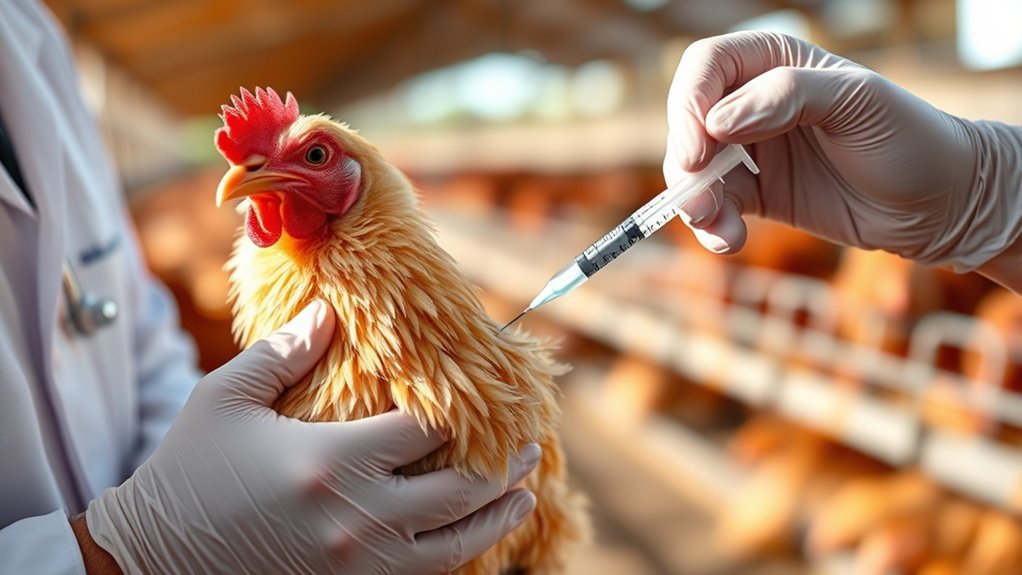
How can you guarantee the safety and effectiveness of avian flu vaccination in poultry? You need to focus on proper vaccine administration, timing, and maintaining strict biosecurity. Vaccines help reduce disease severity and virus spread, but they don’t replace infection monitoring.
Keep in mind, these vaccines are mainly approved for commercial poultry, not all bird species or backyard flocks. So, it’s important to use them in the right population.
| Safety Measure | Purpose | Key Considerations |
|---|---|---|
| Vaccine Administration | Ensure correct dosage delivery | Follow manufacturer’s instructions |
| Timing of Vaccination | Maximize immune response | Vaccinate before outbreak peaks |
| Biosecurity Measures | Prevent virus introduction | Maintain hygiene and restrict access |
| Infection Monitoring | Detect breakthrough infections | Regular testing post-vaccination |
| Target Population | Appropriate species selection | Use in commercial poultry only |
Strictly sticking to these measures helps guarantee that the vaccination is both safe and effective.
Environmental Safety of Bird Flu Vaccines
Beyond guaranteeing safe and effective vaccination practices, it’s important to take into account the environmental safety of bird flu vaccines. You need to consider how vaccines reduce viral shedding, thereby limiting environmental contamination and the spread of avian influenza among wild and domestic birds.
Proper handling and disposal of vaccine waste are vital to prevent accidental contamination. Live attenuated vaccines demand careful evaluation to avoid reversion to virulent forms or persistence in ecosystems.
Regulatory bodies conduct rigorous environmental impact assessments to protect non-target species and maintain ecosystem balance.
Key points include:
- Vaccines that lower virus excretion help reduce environmental viral load.
- Safe waste management prevents unintended environmental exposure.
- Environmental impact studies ensure ecosystem and species safety.
Benefits and Limits of Avian Flu Vaccination
You’ll see that avian flu vaccines can reduce how severe the disease gets and cut down on virus shedding in targeted poultry populations. This really helps in controlling outbreaks.
But, it’s important to remember that vaccination doesn’t completely stop infection or transmission. Plus, it can hide clinical signs, which makes surveillance a bit trickier.
Vaccine Effectiveness Overview
Why does avian flu vaccination remain a critical yet complex tool in poultry health management? Vaccination can markedly reduce disease severity and slow virus spread, but it doesn’t guarantee full protection, especially against highly pathogenic strains like H5N1.
In practice, vaccinated birds may still become infected and shed the virus. So, vaccination is only one layer of defense.
When you consider vaccine effectiveness, keep in mind:
- Vaccines lower clinical impact but don’t fully prevent infection or viral shedding.
- Surveillance and strict biosecurity remain essential alongside vaccination.
- Vaccination doesn’t address risks from wild birds or viral mutations, so it must fit into broader control strategies.
Understanding these points helps you see vaccination as a valuable yet partial measure in managing avian influenza.
Vaccination Limitations Explained
While vaccination plays a key role in reducing the severity of avian influenza, it comes with significant limitations that affect its overall effectiveness. You should know that vaccines don’t fully prevent infection or virus shedding, which means birds can still spread the virus. Also, vaccinated birds may complicate diagnostic testing by masking infections and making outbreak control harder.
Currently, no widely approved avian flu vaccine exists for poultry or wild birds in the U.S. And it’s important to remember that vaccination doesn’t replace strict biosecurity or other control measures.
| Limitation | Impact |
|---|---|
| Incomplete infection prevention | Virus can still spread through shedding |
| Diagnostic interference | Makes identifying infected birds difficult |
| Regulatory constraints | Limits widespread vaccine use globally |
Target Groups Benefits
Although avian flu vaccines don’t fully prevent infection or virus shedding, they provide significant benefits for specific target groups such as commercial poultry, backyard flocks, and pet birds by reducing disease severity and mortality.
You’ll find that vaccination helps control outbreaks by lessening clinical signs and death rates. This is critical in high-density commercial operations and small-scale settings alike.
However, vaccines don’t replace the need for strict biosecurity and surveillance because vaccinated birds can still shed the virus.
Key benefits for target groups include:
- Commercial poultry: Reduced mortality and outbreak control despite regulatory restrictions in some countries.
- Backyard flocks: Enhanced protection, lowering disease impact in small-scale bird populations.
- Pet birds: Decreased severity of infection, improving individual bird welfare.
Challenges Detecting Avian Flu After Vaccination
Detecting avian flu after vaccination poses significant challenges because vaccination can mask clinical signs and interfere with standard diagnostic tests. You’ll find that vaccine-induced antibodies complicate serological assays, causing false positives or negatives and hindering accurate outbreak identification.
Since vaccinated birds may carry and shed the virus without showing symptoms, relying on clinical observation alone won’t cut it. To tell vaccinated birds apart from those naturally infected, you need to use DIVA (Differentiating Infected from Vaccinated Animals) strategies. These involve specialized tests that target unique viral markers missing in vaccines.
Because of these complexities, strong surveillance systems and advanced diagnostics are a must. This includes molecular assays and targeted serology to keep a close eye on infection status in vaccinated populations. Without these tools, silent viral spread could go unnoticed, which would seriously undermine efforts to control the disease.
Role of Vaccination in Avian Flu Control
Because avian flu vaccines don’t provide complete immunity, you’ll need to combine vaccination with strict biosecurity measures to control outbreaks effectively. Vaccination helps by reducing disease severity and virus shedding. This, in turn, limits the spread within both commercial and backyard flocks.
But remember, the success of vaccination depends on coordinated efforts and following regulations closely. You also have to manage vaccinated populations carefully to tell the difference between infected and vaccinated birds (DIVA). This step is crucial for accurate surveillance.
Here are some key components for effective avian flu control:
- Combine vaccination with rigorous biosecurity protocols to prevent virus introduction and spread.
- Use approved vaccines according to national regulations during active outbreaks.
- Implement DIVA strategies to maintain disease monitoring and response capabilities.
What Bird Owners and Farmers Need to Know Before Vaccinating
Before vaccinating your birds against avian flu, you need to understand the specific risks and benefits associated with the vaccine, as well as the regulatory requirements in your area.
Vaccines are primarily used for high-risk commercial poultry or during outbreaks, and they’ve undergone rigorous testing to guarantee safety when properly administered.
Vaccines are tested extensively and used mainly for high-risk poultry or during avian flu outbreaks.
However, vaccination can mask infection signs, which makes surveillance and disease tracking more complicated.
You should coordinate with veterinary authorities to plan the vaccination, monitor for any potential side effects, and ensure you’re following local regulations.
It’s not a good idea to vaccinate all birds indiscriminately. Instead, focus on populations at elevated risk.
When done properly, vaccination helps reduce disease spread but requires careful management to keep your flock healthy and maintain effective monitoring of avian influenza in your region.
Frequently Asked Questions
How Long Does Avian Flu Vaccine Immunity Last in Birds?
You’ll find avian flu vaccine immunity in birds lasts about 6 to 12 months, though it varies by vaccine type, species, and health. Protective antibodies develop within weeks but may require boosters to maintain effectiveness over time.
It’s kind of like how we sometimes need a booster shot to keep our protection strong. So, depending on the bird and the vaccine, staying on top of boosters is important. That way, birds stay safe for longer.
Can Vaccinated Birds Still Transmit Avian Flu to Humans?
Yes, vaccinated birds can still transmit avian flu to humans. You should know vaccines reduce symptoms but don’t fully prevent infection or virus shedding.
Are Avian Flu Vaccines Effective Against All Virus Strains?
You’d love a one-size-fits-all vaccine, but avian flu strains evolve too fast. So, vaccines only target specific strains, making them effective only when matched precisely. This means they require constant updates to keep up with viral changes.
It’s a bit like trying to hit a moving target. Scientists have to keep an eye on the virus and tweak vaccines regularly to stay ahead. Otherwise, the vaccine might not work as well against new strains.
What Is the Cost of Vaccinating Birds Against Avian Flu?
You’ll pay anywhere from cents to several dollars per bird, depending on vaccine type, flock size, and region.
Remember to factor in labor, storage, administration, and booster costs. These can really add up and increase your total vaccination expenses.
It’s a good idea to plan for all these extras so you’re not caught off guard by unexpected costs.
How Soon After Vaccination Are Birds Protected From Avian Flu?
Just like a clock ticking, birds gain protection around 7 to 14 days post-vaccination. You’ll often need booster doses 2 to 4 weeks later, ensuring their immune system fully activates against avian flu threats.
It’s kind of like giving their body a little extra nudge to stay ready and strong. So, patience is key after the first shot before they’re really protected.
Conclusion
Vaccinating birds against avian flu acts like a shield, reducing the risk of outbreaks and protecting both wild and domestic populations. While vaccines offer significant benefits, they come with challenges such as monitoring and environmental considerations.
Before vaccinating, you need to understand the safety protocols, species suitability, and limits of these vaccines. By staying informed, you can play an essential role in controlling avian flu and safeguarding avian health effectively.