
Yes, birds can burn their feet if they walk on hot surfaces like asphalt, metal, or sand during high temperatures. Their feet have thin skin with minimal protection, making them especially vulnerable to burns. These burns can cause redness, blistering, or even open wounds.
Such injuries often lead to pain, limping, or refusal to perch. Immediate care and a safe environment are essential to help them recover. It’s important to know how to prevent these burns and what treatment options are available.
By learning more about prevention and treatment, you can protect your bird effectively and keep their feet safe and healthy.
How Do Birds Get Burns on Their Feet?
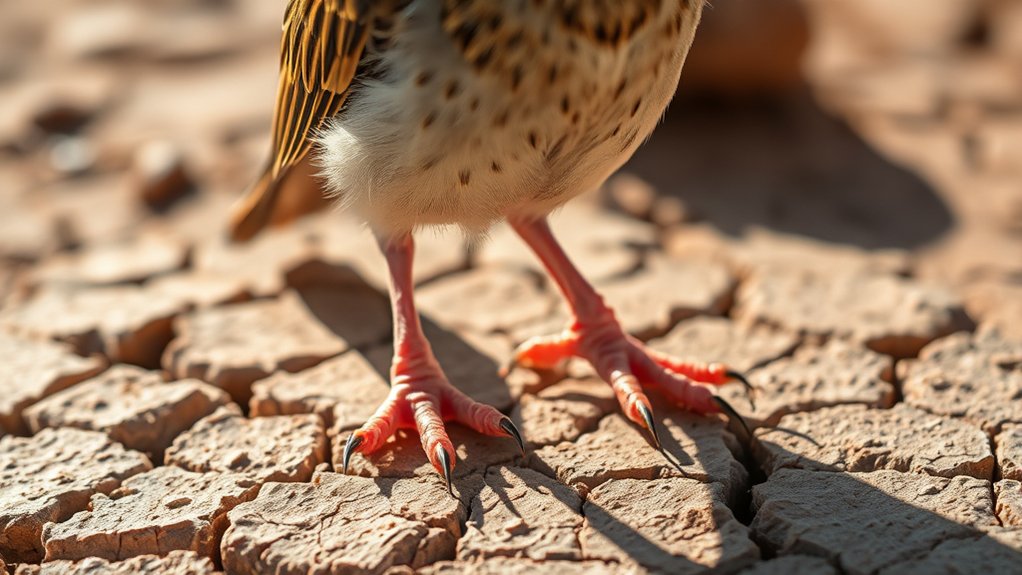
Although birds naturally seek out various surfaces to perch on or walk across, they can suffer burns on their feet when these surfaces become excessively hot. You must recognize that walking on heated asphalt, sand, or metal during high temperatures poses a significant risk.
Birds face serious foot burn risks when walking on hot asphalt, sand, or metal surfaces.
Also, contact with heated objects like lamps, heating pads, or electrical sources can cause thermal burns. Burns may even result from stepping on chemicals or hot liquids that damage tissue.
Prolonged exposure to these hot surfaces without protection can lead to partial or full-thickness burns. If a bird has impaired mobility or neurological issues, you should be particularly cautious.
These conditions increase the likelihood of accidental contact with dangerous hot areas, raising the risk of foot burns.
Why Bird Feet Are So Prone to Burns
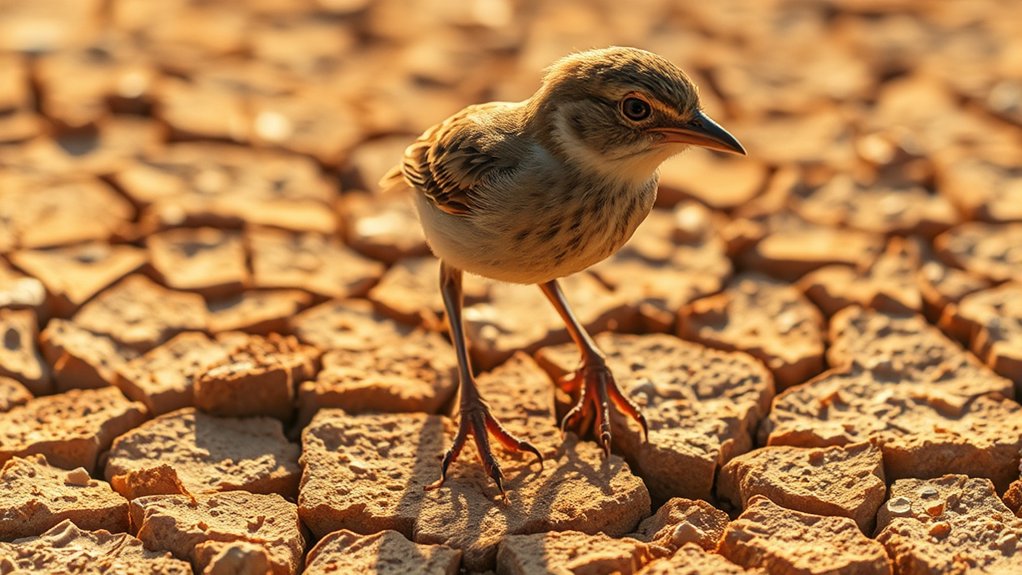
Bird feet are particularly susceptible to burns due to several anatomical and behavioral factors. You should know that bird feet often lack pain receptors in some areas, which means they may not feel heat or injury immediately.
Because birds frequently perch on or walk across surfaces like wires, metal, or hot pavement, especially in urban environments, their feet are exposed to potentially dangerous temperatures.
These surfaces can reach levels that cause second-degree burns, resulting in blistering and tissue damage if contact is prolonged. Additionally, the thin skin and minimal protective covering on bird feet increase their vulnerability.
Since birds rely heavily on their feet for balance and mobility, this susceptibility poses significant risks that you must understand to protect them effectively.
Signs Your Bird Has a Foot Burn
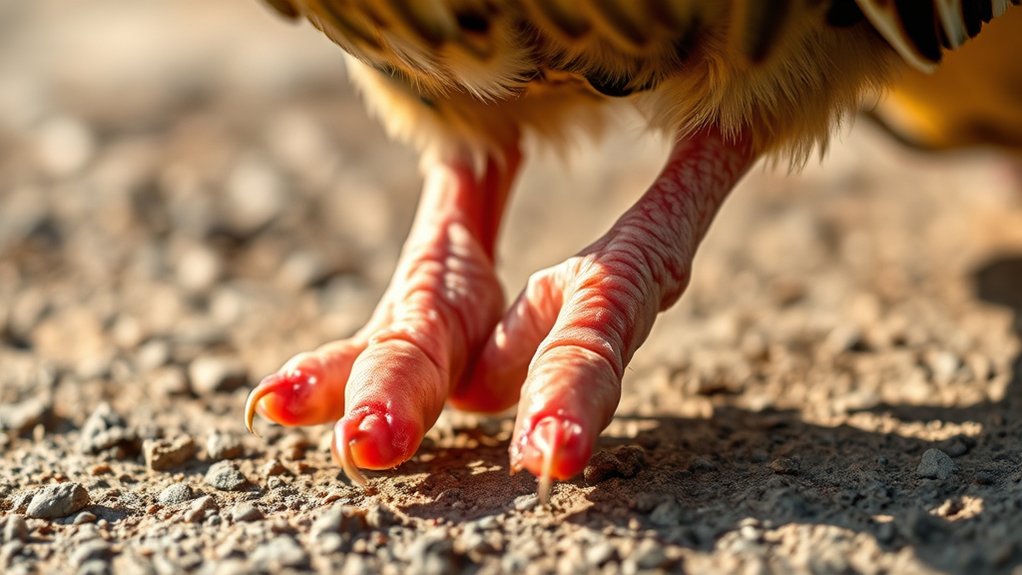
You’ll want to watch out for visible signs like redness, blistering, or open wounds on your bird’s feet. It’s also important to pay attention to any changes in behavior, such as limping or excessive grooming of the affected area.
On top of that, keep an eye on the skin’s texture—look for darkened or charred patches that could mean tissue damage.
Visible Burn Symptoms
How can you tell if your bird is suffering from a foot burn? Visible burn symptoms typically include blistering and peeling skin, which indicate thermal injury. You might notice reddened or swollen areas around the toes and foot, signaling inflammation from the burn.
In severe cases, open wounds, blackened tissue, or necrosis reveal deep tissue damage. Blisters filled with clear or cloudy fluid often develop on the affected skin. Additionally, the skin may appear scorched, exhibiting a shiny or leathery texture.
These signs reflect varying degrees of thermal damage and require prompt attention. Monitoring these symptoms carefully helps you assess the severity of the burn and determine the need for veterinary intervention.
Keep an eye out and don’t hesitate to seek help if you’re unsure.
Behavioral Changes Noted
Although physical symptoms are critical to identify, behavioral changes often provide the earliest indication of a foot burn in your bird. You may notice your bird increasing foot grooming or licking, signaling discomfort. It might favor one foot, avoid putting weight on it, or limp to reduce pain.
Restlessness, vocalizations expressing distress, and feather plucking near the feet are additional behavioral signs. Your bird could frequently shift or adjust its posture to alleviate foot pain.
Furthermore, sudden decreases in activity or reluctance to perch often indicate underlying foot injury or burns. Monitoring these behavioral changes closely helps you detect burns early, enabling timely intervention to prevent further damage and promote healing.
Skin Texture Alterations
When a bird suffers a foot burn, the skin texture often changes noticeably, providing clear signs of injury. You might observe roughness or peeling skin, indicating damage to the outer layers. The affected area can become thickened or leathery as the bird’s body attempts to heal the wound.
Blistering or scab formation is common, especially with thermal or chemical burns. Discoloration ranges from red and inflamed to darker, charred patches, signaling varying burn severity.
These texture changes rarely occur alone; you may also notice swelling, signs of pain, or abnormal feathering around the foot.
Keeping an eye on these alterations helps you spot foot burns early. That way, you can get prompt veterinary care and give your bird the best chance for recovery and comfort.
Immediate First Aid for Bird Foot Burns
Why is immediate action essential for a bird suffering from a foot burn? Prompt intervention prevents further tissue damage, reduces pain, and lowers infection risk.
To provide effective first aid, follow these steps:
- Remove the bird from the heat or chemical source to stop ongoing injury.
- Gently rinse the affected foot with warm, sterile saline or filtered water to flush out irritants and alleviate discomfort.
- Apply a thin layer of a bird-safe topical agent, such as aloe vera or Vetericyn spray, to soothe the burn and support healing.
After these steps, keep your bird in a calm, warm environment with a soft surface to minimize stress and movement.
It’s important to seek immediate veterinary evaluation to accurately assess the burn’s severity and start the right medical treatment.
Home Remedies for Burned Bird Feet
Several effective home remedies can help manage minor burns on your bird’s feet by reducing inflammation, preventing infection, and promoting tissue repair.
Start by rinsing the affected area with a warm saline solution to decrease swelling and limit bacterial growth.
Next, apply a thin layer of aloe vera gel or Manuka honey. Both are known for their anti-inflammatory and healing properties. They soothe pain and help accelerate tissue regeneration.
You can also use Vetericyn spray or similar bird-safe topical treatments to protect the burn from infection and enhance recovery.
Make sure your bird stays in a calm, warm environment to minimize stress. This helps the natural healing process.
Additionally, try restricting movement with a soft collar and provide soft, clean bedding. This prevents further injury and supports healing effectively.
Preventing Burns in Your Bird’s Environment
Although birds are naturally curious and active, their environment can expose them to significant burn risks if not properly managed. Temperatures above 118°F (48°C) can cause burns on their feet, so maintaining a safe environment is essential.
To prevent burns, you should use temperature-safe perches and avoid placing toys or perches near heat sources like cooking appliances or open flames. Also, cover or shield heating elements, such as heating pads, to prevent direct contact.
And don’t forget to regularly inspect and maintain the bird’s environment to spot and remove any potential hazards before injuries occur. Taking these steps helps keep your feathered friend safe and comfortable.
When to Call an Avian Veterinarian for Foot Burns
Even with careful prevention, your bird may still suffer a foot burn from exposure to hot surfaces like heating pads or cooking appliances.
You should call an avian veterinarian immediately if you notice signs such as blistering, redness, swelling, or open wounds on your bird’s feet.
Even minor burns can quickly lead to infections or tissue damage without professional treatment.
Also, if your bird shows pain, limps, or refuses to perch, these symptoms mean it’s time for a prompt veterinary check.
A qualified avian vet will provide the right wound care, which helps reduce the risk of complications like permanent tissue damage or secondary infections.
Getting help quickly is really important to ensure your bird recovers well and keeps its feet healthy in the long run.
Caring for Your Bird After a Foot Burn
If your bird gets a foot burn, the first thing you should do is gently clean the area. Then, apply bird-safe topical treatments to help ease the pain and keep infection at bay.
It’s really important to keep your bird’s environment warm during this time.
Try to limit their movement as much as possible. You can do this by giving them a soft, padded cage so they don’t hurt themselves even more.
Keep a close eye on the wound, too. That way, if you notice anything unusual or if it doesn’t seem to be healing, you can get your vet involved right away.
Immediate Burn Treatment
When your bird suffers a foot burn, immediately rinsing the affected area with cool, clean water or saline solution helps remove debris and lowers the temperature to minimize tissue damage.
After rinsing, you should take the following steps:
- Apply a thin layer of aloe vera gel or a veterinarian-approved topical burn ointment to soothe the tissue and promote healing.
- Wrap the foot gently in a soft, sterile cloth or gauze to protect the area from contamination and further injury.
- Keep your bird calm and restrict movement to prevent aggravating the burn.
Prompt veterinary care is essential for thorough assessment, pain management, and infection prevention. Acting quickly and following these steps will optimize your bird’s recovery and reduce complications.
Preventing Further Injury
To prevent further injury while your bird recovers from a foot burn, you need to keep its environment clean and free of hot surfaces and harmful chemicals.
Make sure to provide a soft, non-slip perch or substrate to reduce the chance of slipping. This helps your bird stay steady and comfortable.
Also, try to restrict access to heat sources like heaters or cooking appliances.
It’s important to regularly check your bird’s foot for signs of healing or infection. Adjust your care routine as needed to support recovery.
If you’re unsure about anything or want the best treatment options, consult an avian veterinarian. They can recommend appropriate topical treatments to help your bird heal properly and safely.
Frequently Asked Questions
Can Bird Feet Burns Cause Long-Term Mobility Issues?
Yes, bird feet burns can cause long-term mobility issues by damaging tissues and nerves.
If you don’t seek early veterinary care, scarring or infections may impair your bird’s ability to walk and perch properly over time.
Do All Bird Species Have Equal Risk of Foot Burns?
No, not all bird species share similar susceptibility. Species that spend a lot of time on hot surfaces are at a much higher risk of foot burns.
Your care and how you manage their environment play a huge role in protecting sensitive species, like parrots, from these hazards. So, it really comes down to paying attention to where they spend their time and making sure it’s safe for their feet.
Can Foot Burns Affect a Bird’s Ability to Regulate Temperature?
Yes, foot burns can impair a bird’s temperature regulation by damaging nerves and blood vessels. This damage reduces sensory feedback and causes inflammation. It also disrupts circulation.
All of these effects together make it harder for the bird to respond appropriately to temperature changes. So, foot burns can really affect how well a bird manages its body heat.
Are There Specific Materials Safer for Bird Perches?
Natural wood perches, unlike plastic or metal, offer safer surfaces for your bird’s feet by reducing heat transfer and abrasion risks. Using untreated hardwoods with smooth, varied diameters supports foot health and prevents pressure sores effectively.
It’s best to choose wood that hasn’t been treated or painted, so you avoid any harmful chemicals. Plus, having different perch sizes keeps your bird’s feet strong and comfortable. This simple change can make a big difference in your bird’s well-being.
How Quickly Do Bird Foot Burns Typically Heal?
Bird foot burns typically heal within 1 to 3 weeks, depending on severity. You should monitor scabs or blisters closely, provide prompt treatment, and minimize trauma to support faster recovery and avoid complications.
Keeping an eye on the healing process really helps. If you notice anything unusual, don’t hesitate to get it checked out. Taking good care of the affected area can make a big difference in how quickly your bird recovers.
Conclusion
You now know birds can indeed burn their feet, especially on hot surfaces. Just like a knight wary of molten lava, you must act swiftly when spotting burns. Cool the injury, apply safe remedies, and prevent future harm by managing their environment carefully.
Always monitor your bird closely and consult an avian vet if burns worsen. Protecting their delicate feet guarantees their health and mobility remain intact. This way, you’re safeguarding your feathered friend’s well-being.