

Yes, birds can carry ticks, especially ground-foraging species like robins, sparrows, and thrushes. These birds often host multiple tick species, including *Ixodes scapularis*. This tick may carry *Borrelia burgdorferi*, the Lyme disease bacterium.
Birds transport ticks across long distances during migration and into urban areas. This movement increases tick spread and Lyme risk. Although birds rarely infect ticks directly, their role in tick dispersal is vital.
Understanding this dynamic shows how birds influence Lyme disease geography and risk. It’s pretty interesting how much impact they can have, right?
Do Birds Carry Ticks and Spread Lyme Disease?
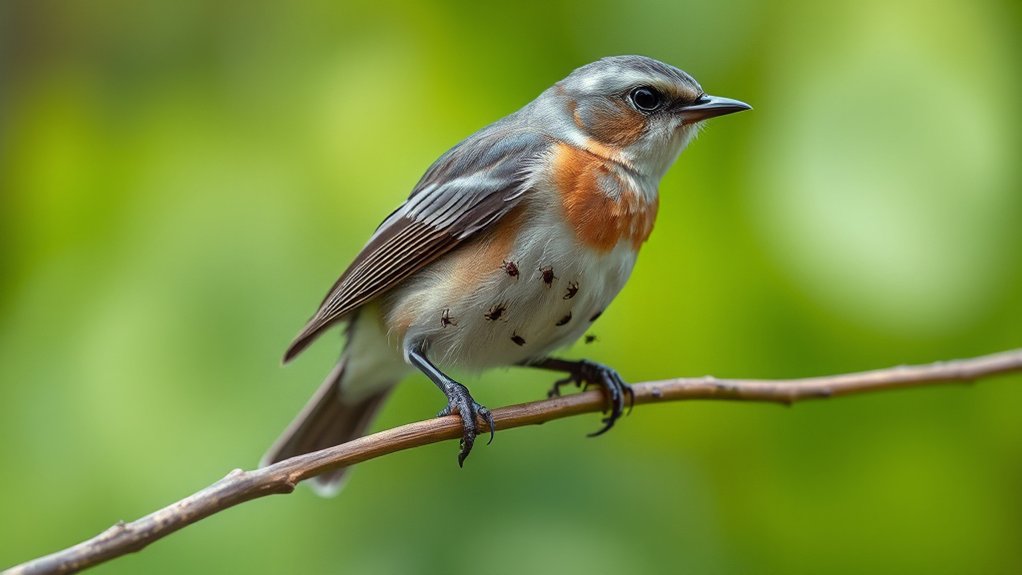
Although birds don’t typically test positive for Borrelia burgdorferi, many species, including migratory songbirds and ground-foraging passerines, carry ticks such as Ixodes scapularis and Haemaphysalis leporispalustris.
You should know that birds can transport these ticks over long distances during migration, which helps spread Lyme disease geographically.
Studies indicate that about 28.86% of captured birds carry ticks, some infected with B. burgdorferi, posing a risk of transmission.
Nearly 29% of captured birds carry ticks, some infected with Lyme disease bacteria.
By dispersing ticks across various environments, birds contribute to the expansion of tick habitats into urban and suburban areas.
This increase in tick populations raises the risk of Lyme disease for humans.
Which Bird Species Are Most Likely to Host Ticks?
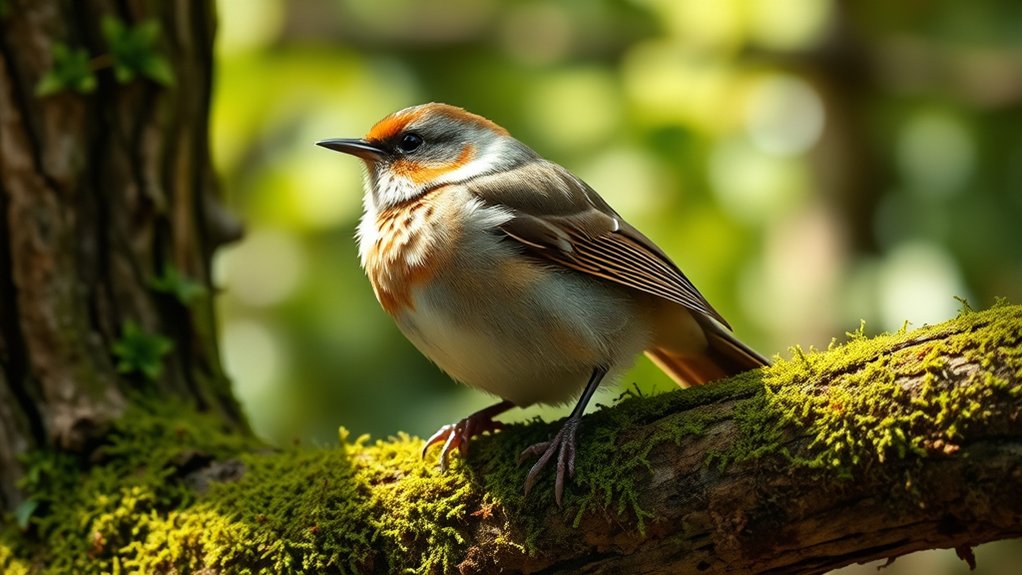
You’ll find that ground-foraging, seed-eating passerines like American robins and song sparrows often carry ticks. That makes them key hosts.
Species such as blue jays and ovenbirds also show higher infestation rates, which increases their role in spreading ticks.
Understanding these high-risk traits helps us see which birds contribute most to the spread of ticks and Lyme disease.
High-Risk Bird Traits
When you think about which bird species are most likely to host ticks carrying Lyme disease, certain traits really stand out. Birds that breed and winter at high latitudes and low elevations tend to show greater tick competence.
True thrushes, like American robins (*Turdus migratorius*), carry ticks much more than many other species.
You’ll also notice that ground-foraging seed-eating passerines have a higher potential to transmit Lyme disease through attached ticks.
Birds with low baseline corticosterone levels and broad geographic distributions are also identified as high-risk hosts.
Migratory species play a critical role by spreading infected ticks over long distances, which helps the pathogen move around.
Understanding these traits can really help you figure out which bird populations contribute most to Lyme disease ecology. It also guides targeted surveillance and control efforts in the best possible way.
Common Tick-Carrying Birds
Which bird species are most likely to carry ticks that transmit Lyme disease? Research shows that thrushes, such as the American robin and Swainson’s thrush, along with ground-foraging seed-eaters, frequently host ticks capable of pathogen transmission.
Approximately 28.86% of captured birds from families like Passerellidae, Turdidae, and Parulidae carry ticks.
Species like blue jays and ovenbirds also exhibit high infestation rates, sometimes harboring multiple ticks simultaneously.
Ticks typically attach beneath feathers, in the ear canal, bill rictus, or around orbital skin during feeding.
Both migratory and resident birds play a significant role in dispersing ticks over long distances, which helps expand tick populations.
Understanding these bird species’ roles helps clarify their importance in Lyme disease ecology and tick distribution.
How Do Ticks Attach to Birds and Spread Lyme Disease?
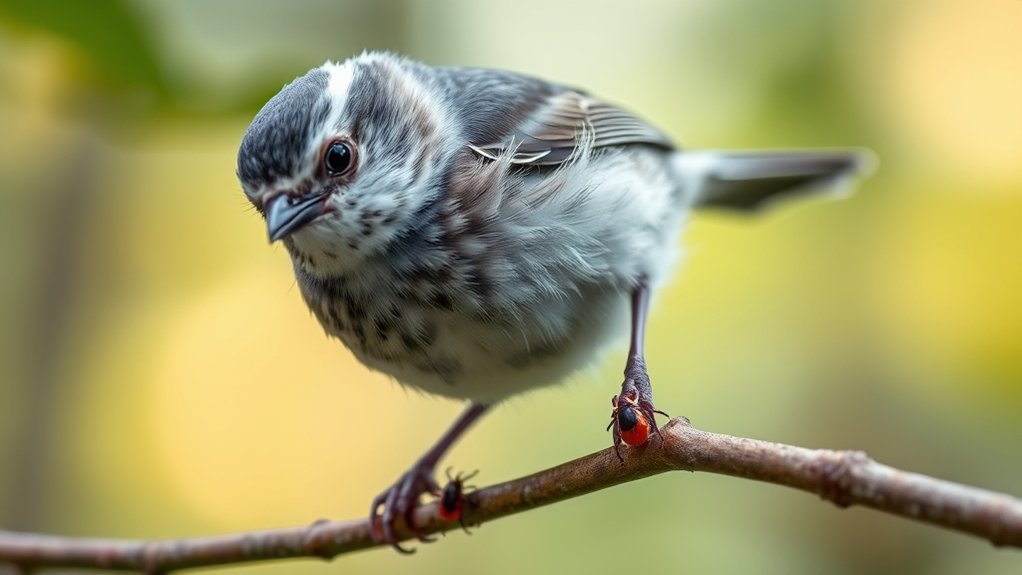
Although ticks primarily attach beneath a bird’s feathers in protected areas such as the ear canal, bill rictus, and orbital skin, you should understand that these attachment sites provide ideal conditions for feeding. Migratory birds carry ticks over long distances, aiding the geographic spread of *Borrelia burgdorferi*, the Lyme disease-causing bacteria.
Birds host various tick species, particularly *Ixodes scapularis*, which may be infected. Even if birds rarely test positive for Lyme bacteria, they significantly transport ticks. This contributes to new tick populations in urban and suburban areas.
| Attachment Site | Tick Species | Lyme Disease Role |
|---|---|---|
| Ear Canal | *Ixodes scapularis* | Feeding, transport |
| Bill Rictus | *Ixodes scapularis* | Secure attachment |
| Orbital Skin | Various Ixodes spp. | Protected feeding site |
| Feather Bases | Multiple tick species | Drop-off point for ticks |
| Body Surface | Nymph-stage ticks | Dissemination during migration |
Can Birds Transmit Lyme Disease Through Tick Infection?
You should know that birds can carry ticks infected with *Borrelia burgdorferi*, the bacteria responsible for Lyme disease.
Now, birds themselves rarely have the bacteria, but they do transport these infected ticks over long distances when they migrate.
Because of this, they help spread Lyme disease to new areas.
Birds as Lyme Hosts
Because birds can carry infected ticks during migration, they play a crucial role in spreading Lyme disease across regions. You should understand that birds are generally not primary reservoirs for *Borrelia burgdorferi*, the bacterium causing Lyme disease.
But they do host tick larvae and nymphs that may carry the pathogen.
Research shows species like American robins and thrushes often carry *Ixodes scapularis* ticks infected with Lyme bacteria. Although infected ticks can transmit *B. burgdorferi* to birds, these birds rarely develop enough bacteremia to infect feeding ticks in return.
Tick Dispersal by Birds
When birds migrate, they transport ticks across vast distances, which greatly influences how tick populations spread. It’s important to know that while most birds don’t carry Lyme disease bacteria themselves, they still move infected ticks, like *Ixodes scapularis*, to new areas.
Research has found *Borrelia burgdorferi*-positive ticks on both migratory and resident birds. This shows that birds actively spread Lyme-infected ticks.
And it’s not just wild areas affected; birds also bring ticks into urban and suburban environments, which raises the risk of humans encountering them.
How Does Bird Migration Help Spread Lyme Disease Ticks?
Although ticks are generally slow-moving creatures, migratory birds play an essential role in transporting them across vast distances, thereby facilitating the spread of Lyme disease.
As you observe migratory patterns, you’ll note that birds often pick up infected ticks in one region and carry them to new areas, effectively expanding the ticks’ habitat range.
Studies reveal a significant percentage of captured migratory birds host ticks, some infected with *Borrelia burgdorferi*, the Lyme disease pathogen.
By bypassing environmental barriers, these birds enable ticks to invade previously uninfested regions rapidly.
This dispersal mechanism contributes directly to the increasing incidence of Lyme disease in both urban and rural landscapes.
It really highlights how migration serves as a dynamic vector pathway for the pathogen’s geographic expansion.
What Bird Traits Increase Their Role in Tick Spread?
You’ll find that certain ecological traits, like where birds breed and what they eat, directly influence their ability to carry and spread ticks.
Plus, things like migration patterns and body size also play a part in how far and how effectively birds disperse infected ticks across different areas.
When you understand these factors, it becomes clearer which bird species are key players in spreading Lyme disease.
Key Ecological Traits
Because certain bird species show distinct ecological traits, they play a more crucial role in carrying and spreading ticks, including *Ixodes scapularis*. Birds breeding and wintering at high latitudes and low elevations tend to host more ticks.
You’ll also find that those with broad geographic ranges and low baseline corticosterone levels increase their potential to transmit Lyme disease through ticks.
Ground-foraging, seed-eating passerines like thrushes and robins show higher competence in carrying infected ticks.
Birds that breed either early or late in the season, representing extremes on the pace-of-life continuum, are more likely to host and disperse ticks capable of transmitting Lyme disease.
Understanding these ecological traits helps pinpoint which bird species contribute most notably to tick spread and pathogen transmission.
Migration and Dispersal
When birds migrate across vast distances, they often carry ticks that can hitch a ride to new environments. This increases the geographic spread of tick-borne pathogens. You’ll find that birds breeding and wintering at high latitudes and low elevations are more prone to transport ticks over long distances.
Species in families like Turdidae and Passerellidae, known for their migratory behavior, markedly contribute to tick dispersal. Birds with wide geographic ranges and strong flight capabilities can introduce infected ticks to novel regions, which helps facilitate disease spread.
Additionally, birds with early or late breeding strategies along the pace-of-life continuum display increased competence in carrying ticks. Ground-foraging seed-eating passerines also show higher potential for Lyme disease transmission. This highlights specific ecological traits that elevate their role in tick dispersal.
Body Size and Diet
Migratory behavior sets the stage for birds to spread ticks across regions, but specific traits like body size and diet further influence their role in tick carriage. Larger-bodied birds with broad geographic ranges can transport ticks over greater distances, increasing their potential as vectors.
You’ll find that true thrushes, such as American robins, show particularly higher competence in carrying and transmitting Lyme disease ticks. Ground-foraging, seed-eating passerines also exhibit elevated potential for tick transmission compared to species with other diets or foraging habits.
Additionally, birds breeding and wintering at high latitudes and low elevations tend to carry more infected ticks, reflecting habitat preference and body size. Species at extremes of the pace-of-life continuum, like early breeders or long-lived birds, further contribute to tick dissemination and disease transmission.
How Do Urban Birds Affect Lyme Disease Risk Near Homes?
Although urban environments might seem less prone to tick-borne diseases, birds like American robins and songbirds actively carry *Ixodes scapularis* ticks infected with *Borrelia burgdorferi* into neighborhoods and parks. Nearly 29% of urban birds captured in studies carried ticks, some harboring Lyme disease pathogens.
As migratory and resident birds move through urban green spaces, they transport ticks, increasing local tick abundance and infection risk near homes.
These green spaces serve as critical interfaces where birds, ticks, and humans converge, making tick encounters more likely.
By introducing infected ticks into residential areas, especially during migration periods, urban birds expand the geographic range of Lyme disease risk.
Understanding this dynamic helps you assess and reduce Lyme disease exposure in and around your home environment.
Birds vs. Rodents: Which Host More Lyme-Infected Ticks?
| Host Type | Infection Rate with *B. burgdorferi* | Role in Lyme Disease | Tick Species Commonly Carried | Contribution |
|---|---|---|---|---|
| Mice | 33.92% | Efficient reservoir host | *Ixodes scapularis* | Local transmission |
Mice are pretty good at hosting infected ticks. About a third of them carry *B. burgdorferi*. They mainly help spread Lyme disease locally by supporting tick populations.
| Chipmunks | 84.62% | Highly efficient reservoir | *Ixodes scapularis* | Local amplification |
|---|---|---|---|---|
| Birds | Rarely positive in biopsies | Tick dispersers | *Ixodes scapularis*, *H. leporispalustris* | Geographic spread of ticks |
Birds don’t often test positive for the infection in biopsies. But they play a key role by carrying ticks over long distances. This helps spread ticks geographically, even if birds themselves aren’t major reservoirs.
How to Reduce Tick Exposure From Birds Around You
Because birds can transport ticks into your yard, taking proactive steps to reduce tick exposure is essential for protecting yourself and your family.
Regularly remove leaf litter, tall grass, and brush to eliminate preferred tick habitats. Maintaining your yard by mowing the grass frequently and removing clutter can discourage birds and other wildlife.
Keep your yard tidy by clearing leaf litter, tall grass, and clutter to reduce ticks and discourage wildlife.
Installing physical barriers like fencing or wood chips can help keep ground-foraging birds away from tick-prone areas.
Also, use veterinarian-approved tick preventatives on pets that spend time outdoors. This reduces the chance of bringing infected ticks inside your home.
Make sure your family knows to perform thorough tick checks after spending time outside, especially in areas where birds are common.
These simple steps can really help minimize tick presence and lower the risk of tick-borne diseases linked to ticks transported by birds.
Why Learning About Birds Helps Fight Lyme Disease
When you study birds and their role in tick dispersion, you gain essential insights into how Lyme disease spreads geographically. Migratory birds like thrushes and robins transport ticks over long distances, introducing infected ticks into new areas even though birds aren’t primary reservoirs for *Borrelia burgdorferi*.
Research reveals that nearly 29% of captured birds carry ticks, some harboring Lyme disease bacteria.
By understanding these bird-tick interactions, you can better predict and monitor Lyme disease emergence in both urban and rural settings. This knowledge also guides the development of targeted prevention strategies to reduce human exposure.
Tracking bird-mediated tick dispersal is key for controlling Lyme disease expansion, enabling more effective public health responses to this vector-borne threat.
Frequently Asked Questions
Can Bird Nests Harbor Ticks and Increase Local Tick Populations?
Yes, bird nests can harbor ticks, especially larvae and nymphs. These nests provide suitable habitats that promote tick development.
You’ll find that this increases local tick populations by supporting their survival and reproduction. It also helps facilitate tick dispersal to new environments. So, bird nests play a bigger role than you might think in the tick life cycle.
Do Ticks Prefer Certain Bird Body Parts for Attachment?
You’ll find ticks favoring bird regions like the ears, bill, and orbital skin, where thinner skin offers easier access. These protected spots beneath feathers provide a stable environment essential for their feeding and survival.
It makes sense, right? These areas give ticks a cozy place to latch on without too much disturbance. Plus, being under the feathers means they’re less likely to be brushed off by the bird.
How Long Can Ticks Survive While on Migrating Birds?
Ticks can survive on migrating birds for several days up to 10 days, depending on species and life stage. You’ll find that environmental factors like temperature and humidity also influence their attachment duration during long flights.
Are There Seasonal Patterns in Bird-Tick Interactions?
Yes, you’ll see seasonal patterns in bird-tick interactions, with peaks in spring and early summer during bird migration and tick activity.
Interactions tend to decline in winter when ticks are less active and many birds are absent. It’s kind of like the natural rhythms of both birds and ticks syncing up.
Can Bird Feeding Stations Contribute to Tick Spread?
Oh sure, invite birds over, and watch ticks RSVP! You’ll find feeding stations unintentionally ferry ticks, aiding their spread by attracting birds that pick up and drop off these parasites.
This happens especially if you neglect cleaning and placement. It’s kind of like giving ticks a free ride without even realizing it. So, keeping stations clean is key to avoiding this problem.
Conclusion
You might think birds are harmless songsters, but they can carry ticks that spread Lyme disease, unlike rodents often blamed for transmission. While birds don’t directly transmit Lyme, their migration and urban presence help ticks hitch rides across regions, increasing your exposure risk.
Understanding how birds and ticks interact equips you to better protect yourself. So, recognizing birds’ role isn’t just about nature appreciation, it’s key to controlling Lyme disease spread near you.