
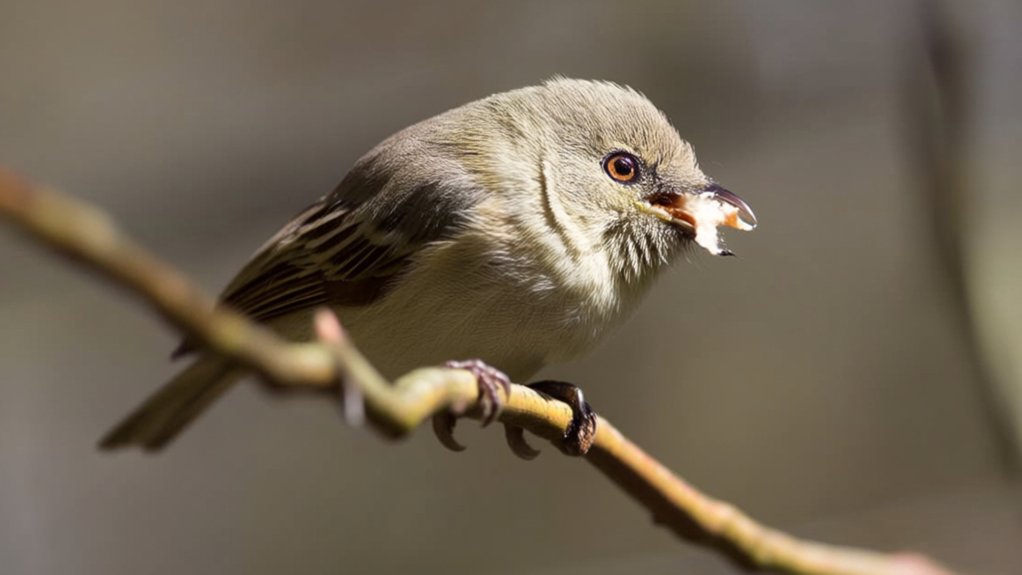
Yes, birds can choke to death if their airway or esophagus gets blocked by large prey, seeds, or foreign objects. Their unique anatomy, lacking an epiglottis, makes them especially vulnerable. Choking often happens when they swallow items that are too big or oddly shaped.
This can cause suffocation or digestive issues. You might notice signs like difficulty breathing or frantic movements. If you act quickly, you can save a bird’s life.
Understanding these risks helps you take better care of them. There’s more to learn about how to spot and handle choking incidents in birds. So, it’s worth paying attention and knowing what to do.
Can Birds Really Die From Choking?
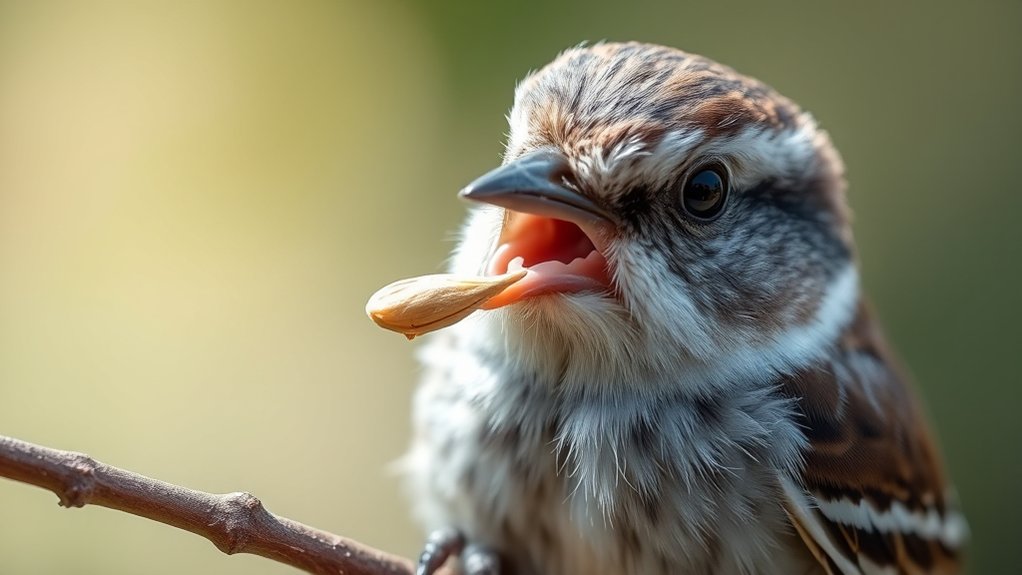
Although it might seem surprising, birds can indeed die from choking if something blocks their airway or esophagus. You should know that choking often happens when birds try to swallow large prey, seeds, or objects too big for their narrow throats.
For example, Great Blue Herons have been documented dying after lamprey got stuck in their esophagus. Owls also risk choking when swallowing large prey that obstructs their airway.
Unlike humans, birds don’t have an epiglottis, but their tongue and grooved mouth usually help prevent choking by guiding food safely. Still, choking incidents, though rare, can be fatal if the obstruction isn’t quickly removed or treated.
If you care for birds, it’s essential to be aware of what they eat and monitor them closely to prevent such dangers. It’s better to be cautious than sorry!
How Birds’ Anatomy Affects Choking Risk
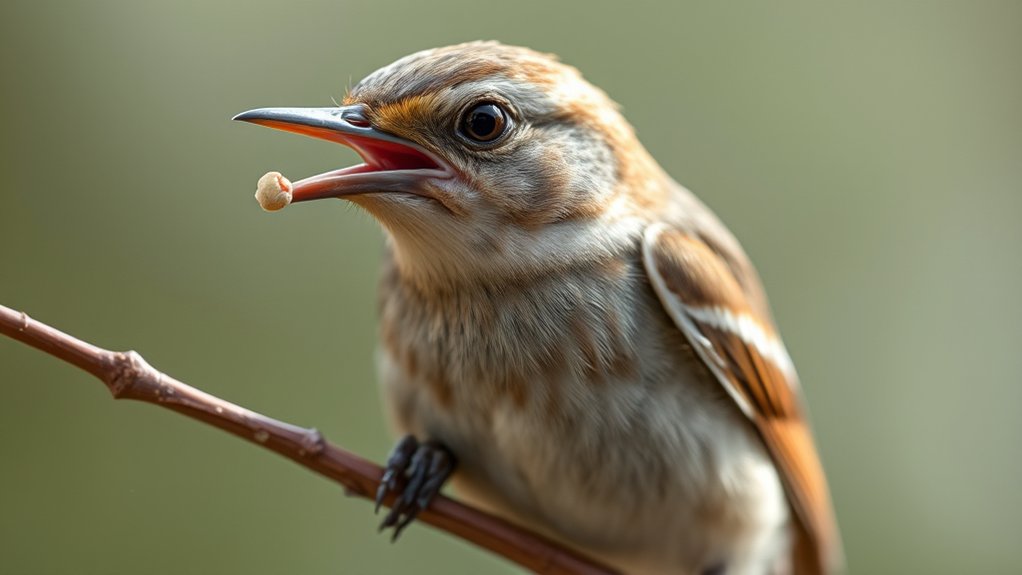
You mightn’t realize it, but birds don’t have an epiglottis—the flap that humans use to keep food from going down the wrong pipe. Instead, their throat is built differently, guiding food safely past the glottis.
That said, this unique setup means birds face different choking risks compared to us. So, knowing these differences can help explain why some foods might be more dangerous for birds.
Unique Throat Structure
Because birds lack an epiglottis, the flap that covers the trachea in humans, their anatomy plays an essential role in managing swallowed objects and preventing choking. Their tongues and grooved mouths guide food past the glottis into the esophagus. The throat’s shape and size limit what they can swallow safely.
Since birds don’t chew, their unique throat structure has to be flexible and efficient to handle whole prey. This delicate balance means any disruption can increase choking risk. So, it’s really important to understand how these features work together.
| Feature | Impact on Choking Risk |
|---|---|
| No epiglottis | Higher vulnerability |
| Tongue & grooved mouth | Helps direct food safely |
| Throat size | Limits food size |
| Flexibility | Maneuvers large prey |
| No chewing muscles | Relies on throat alone |
Absence Of Epiglottis
Since birds don’t have an epiglottis, the flap that covers the windpipe in humans, they rely entirely on their tongue and mouth structure to guide food safely into the esophagus.
Without this protective flap, food can more easily enter the airway, increasing the risk of choking.
Birds’ anatomy lacks the same choking mechanism mammals have. But their unique oral cavity and beak design help minimize airway blockage during feeding.
It’s pretty interesting how their body adapts.
Because food can pass freely into their trachea if it becomes lodged, birds face a higher choking risk.
Understanding this absence of an epiglottis helps you appreciate why birds are more vulnerable to choking.
It also explains why their feeding behavior and anatomy are so important in preventing airway obstruction.
Why Do Birds Choke on Food and Objects?
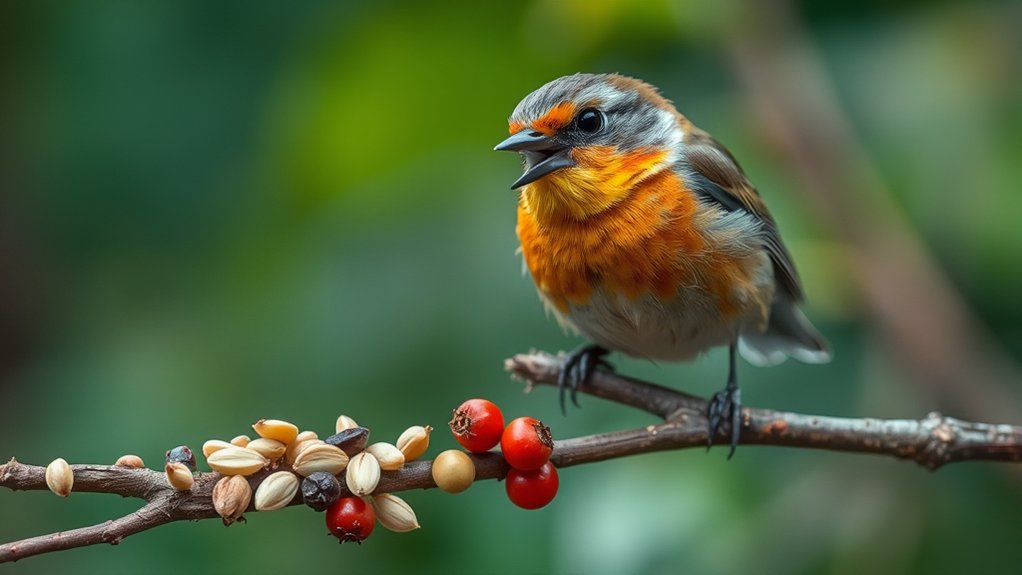
Although birds don’t choke as often as humans do, they can still face serious risks when food or objects get stuck in their crop, throat, or esophagus. You should understand that birds lack an epiglottis, making their airway more vulnerable to obstruction.
When you see a bird choking, it’s often because they try to swallow prey or food items that are too large for their throat. Or slow-moving or awkwardly shaped objects get lodged, blocking airflow or digestion.
The absence of an epiglottis also prevents proper protection of the airway during swallowing.
These blockages can lead to suffocation or interfere with swallowing, posing a real danger to the bird’s life. Knowing this helps you better care for and protect birds from choking hazards.
Which Birds Are Most at Risk of Choking?
Understanding which birds face higher choking risks can help you better protect them and respond effectively if they struggle. Large birds like herons and owls risk choking on big or slow prey.
Finches and other seed-eaters can choke on oversized seeds. Juvenile seabirds often choke on unfamiliar, large prey.
Pelicans and ospreys swallow fish head first, which reduces risk, but large prey still pose danger. Hawks and falcons usually handle small prey well but can choke on bigger items.
| Bird Type | Choking Risk Factors |
|---|---|
| Large Birds | Swallowing large or slow prey whole |
| Seed-Eating Birds | Large seeds or lodged objects |
| Juvenile Seabirds | Unfamiliar, large, slippery prey |
| Fish-Eating Birds | Large or awkward prey despite technique |
| Raptors | Large, unmanageable prey |
What Are the Warning Signs of Bird Choking?
You’ll notice physical signs like head bobbing or frantic movements when a bird is choking.
Also, listen for unusual breathing sounds, such as wheezing or panicked vocalizations, which can signal distress.
Behavioral changes are important too—things like open-mouth breathing or repeated attempts to clear the airway are key warning signs you shouldn’t ignore.
Keep an eye out for these to help your bird if it’s in trouble.
Physical Signs Of Choking
When your bird starts head bobbing or making frantic calls, it’s a clear sign that something might be wrong. Recognizing physical signs of choking early can save your bird’s life. Look for these key indicators:
- Difficulty breathing: Your bird may wheeze, gasp, or show panicked movements as it struggles to get air.
- Vocal changes: Sudden loud squawks or frantic calls often signal airway distress.
- Visible distress: Swollen or bulging crops, pawing at the throat, or attempts to cough indicate an obstruction.
If you notice these signs, act quickly. Your attentive response can prevent serious harm and help your feathered friend breathe easier.
Just stay calm and focus on helping your bird right away.
Behavioral Changes During Choking
Although birds can’t tell you when they’re struggling, their behavior often reveals early warning signs of choking. You might notice your bird bobbing its head or making violent movements as it tries to dislodge something blocking its airway. It may cough or forcefully swallow, attempting to clear the obstruction.
Listen carefully for panicked vocalizations or distressed, louder squawks that signal respiratory trouble. You could also see visible signs like a swollen throat or labored breathing accompanying these behaviors.
Recognizing these changes quickly is essential because they indicate your bird is in distress and needs immediate help.
Breathing Difficulties And Sounds
Noticing changes in your bird’s breathing can be one of the clearest signs that something is wrong. When a bird chokes, you might see it struggling to breathe or making unusual sounds.
To recognize the warning signs, watch closely for:
- Head bobbing, frantic movements, and gasping, showing it’s trying to clear its airway.
- Wheezing, panicked vocalizations, or sudden silence indicating severe obstruction.
- Difficulty swallowing, excessive drooling, or efforts to dislodge an object.
If your bird shows any of these symptoms, it’s crucial to act quickly. Understanding these breathing difficulties and sounds helps you respond effectively and protect your bird’s well-being during a choking emergency.
Just keep a close eye and don’t hesitate to step in if needed.
Real-Life Cases of Birds Choking
Because birds often swallow their prey whole or in large pieces, they sometimes face the risk of choking on items that get lodged in their esophagus or glottis. For example, in the 1980s, Great Blue Herons died after lampreys got stuck in their esophagus. This likely caused suffocation.
Birds swallowing prey whole risk choking when items lodge in their esophagus or glottis.
A male Northern Saw-whet Owl also died after swallowing an entire adult mouse. That’s unusual since owls usually tear their prey apart.
Juvenile seabirds have choked on snake pipefish, showing that even smaller, elongated prey can be dangerous.
Captive parrots sometimes choke on regurgitated food or other swallowed objects. This highlights the risks birds can face in domestic settings.
These real-life cases remind you that while choking in birds is rare, it’s a serious threat that can lead to fatal outcomes if not addressed promptly.
Emergency Steps to Help a Choking Bird
When you spot a bird struggling to breathe or showing signs of choking, quick and careful action can make all the difference. Here’s what you should do:
Gently open the bird’s beak to look for visible obstructions, but don’t force it open to avoid injury.
If you see an object and feel confident, use a small, soft tool like tweezers to carefully remove it. Avoid using your fingers on deeply lodged items to prevent damage.
If the bird continues to gasp, bob its head, or seems distressed, seek immediate help from a veterinarian experienced with avian emergencies.
Always handle the bird with care to minimize stress and injury. Acting swiftly while prioritizing professional support gives your bird the best chance of recovery.
How to Prevent Choking in Pet Birds
Though choking can be frightening, you can substantially reduce the risk by providing your pet bird with a diet suited to its species and ensuring food is appropriately sized or softened.
Cut food into manageable pieces and avoid hard, large items that can get stuck. Always monitor your bird while it eats, so you can quickly notice any signs of distress or difficulty swallowing.
Steer clear of giving objects or tiny foods that your bird might accidentally ingest and choke on. It’s also smart to learn and practice emergency first aid techniques for choking, so you’re prepared if an accident occurs.
Taking these steps shows you care deeply about your bird’s safety and well-being, helping keep mealtimes safe and enjoyable.
When to Seek Veterinary Help for Choking Birds
If your bird is having trouble breathing, bobbing its head, or making panicked sounds, you should get veterinary help right away.
Don’t try to remove the blockage yourself because you might accidentally cause more harm. It’s really best to leave it to the professionals who’ve the right tools.
Acting fast when you notice signs like wheezing or difficulty swallowing can make all the difference and could save your bird’s life.
Recognizing Choking Symptoms
Because birds can’t easily clear their throats, recognizing choking symptoms quickly is essential to saving their lives. You need to watch closely for unusual behaviors and signs that indicate distress.
Here are three key symptoms to look for:
- Physical signs: Head bobbing, violent movements, and frantic attempts to dislodge an object suggest choking.
- Respiratory distress: Difficulty breathing, wheezing, gagging, or silence when the bird usually vocalizes are urgent red flags.
- Vocal changes: Panicked squawks or repeated loud calls often signal airway obstruction.
If your bird stops responding or shows intense distress, seek veterinary help immediately. Acting swiftly can prevent serious harm and increase your bird’s chances of recovery.
Emergency Veterinary Interventions
When your bird shows alarming signs like gasping or head bobbing, you should seek immediate veterinary help without hesitation. These symptoms indicate your bird might be choking, and delaying professional care can lead to suffocation or death.
Don’t try to remove the obstruction yourself. Without proper training, you could cause injury.
A bird-savvy veterinarian uses specialized tools and techniques, such as crop lavage or endoscopy, to safely clear the airway.
Recognizing these symptoms early and acting quickly considerably improves your bird’s chances of recovery.
Understanding Bird Choking Symptoms and Responses
Although birds can’t tell you when they’re struggling, recognizing the signs of choking is vital to saving their lives. You need to act quickly when you notice symptoms that suggest your bird’s airway might be blocked.
Watch for these key indicators:
- Head bobbing, wheezing, and loud squawks signaling distress and difficulty breathing.
- Frantic movements or coughing-like actions as your bird attempts to clear the obstruction.
- Inability to swallow and signs of panic, which could mean the airway is severely compromised.
If you observe these symptoms, don’t wait. Immediate intervention or emergency veterinary care is essential because a blocked airway can quickly become fatal.
Your prompt response could mean the difference between life and death for your feathered friend.
Frequently Asked Questions
Can Choking Cause Long-Term Damage in Birds?
Yes, choking can cause long-term damage in birds. If you don’t get prompt veterinary care, your bird might suffer scarring, breathing issues, or swallowing difficulties.
Acting quickly helps protect your bird’s health and quality of life. So, don’t wait if you notice any signs of choking. It’s always better to be safe and get professional help right away.
Are Certain Bird Foods Safer to Prevent Choking?
Imagine feeding your bird like offering puzzle pieces; smaller, softer foods fit perfectly, reducing choking risk. You should avoid large seeds or whole prey. Introduce new foods slowly, and always watch your bird eat carefully.
It’s all about keeping things safe and comfy for your feathered friend. Taking these steps makes mealtime less risky and more enjoyable for both of you.
How Can I Train My Bird to Eat More Safely?
You can train your bird to eat safely by introducing small, manageable food portions. Watch them closely during meals to make sure they’re doing okay. Offering varied textures can also help keep their interest and encourage safe eating.
If you’re unsure or want extra guidance, consult an avian vet. They can give you personalized tips tailored to your bird’s needs and safety. It’s all about making mealtime both safe and enjoyable for your feathered friend.
Do Wild Birds Choke as Often as Pet Birds?
Imagine a wild crow expertly cracking nuts; it rarely chokes. You’ll find wild birds choke far less than pets because their natural diet and foraging skills keep them safe.
Unlike pet birds eating processed foods, wild birds have evolved to handle their food efficiently. They know exactly how to manage what they eat without getting into trouble. It’s kind of like having built-in safety skills.
Can Supplements Improve a Bird’s Swallowing Ability?
Yes, supplements can improve your bird’s swallowing ability by supporting muscle function and digestive health.
But, it’s really important to check with an avian vet first. This way, you can avoid any digestive issues and make sure the supplements are safe and suitable for your bird.
Conclusion
Just like the unexpected hurdles in a thrilling adventure, choking can suddenly threaten your bird’s well-being. You’ve learned how their unique anatomy plays a role and what signs to watch for.
By staying vigilant and prepared with quick action, you can be your feathered friend’s hero, ensuring their story continues safely. Remember, when in doubt, reaching out to a vet is the best plot twist to keep your bird thriving.