
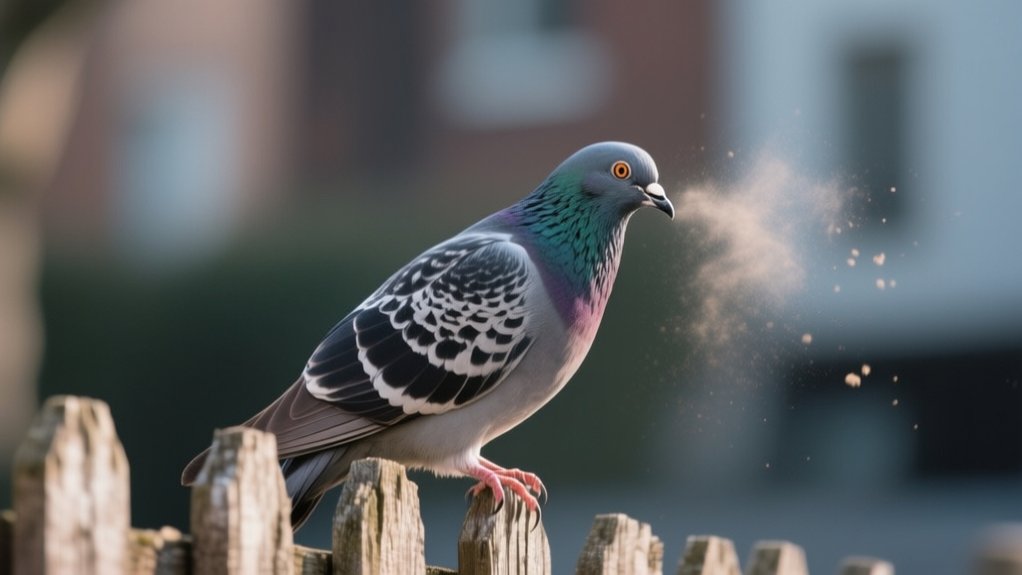
Yes, birds can cause pneumonia through a bacterial infection called psittacosis, caused by *Chlamydia psittaci*. You contract it by inhaling dust or droplets from infected feathers, droppings, or secretions. Symptoms often include dry cough, fever, and muscle aches.
Prompt antibiotic treatment is essential to prevent severe illness. Understanding the risks, symptoms, diagnosis, and prevention strategies will help you manage and reduce your chances of getting this bird-related lung infection.
What Is Psittacosis and How Do Birds Spread It?
Although you mightn’t see obvious signs, birds infected with *Chlamydia psittaci* can spread psittacosis to humans primarily through inhaling airborne particles from dried feathers, feces, or respiratory secretions.
Over 400 bird species, including parrots, pigeons, and poultry, carry this bacterium.
Infected birds may show respiratory symptoms or diarrhea, but many stay symptom-free while still contagious.
The bacteria shed through droppings and respiratory fluids become airborne when dried, especially during cage cleaning or in poorly ventilated, crowded bird spaces.
You’re more likely to breathe in these infectious particles than catch the disease through direct contact or bites.
Who Is at Risk of Getting Psittacosis?
If you work closely with birds—whether you’re a pet owner, poultry handler, or veterinarian—you’re at a higher risk of catching psittacosis.
The longer you’re around them, especially in places where birds are packed together or where there’s contaminated dust, the greater your chances.
On top of that, your age and how strong your immune system is can also play a role in how likely you’re to get infected.
Occupations With Higher Exposure
Because you work closely with birds, certain occupations face a higher risk of contracting psittacosis, an infection caused by *Chlamydia psittaci*. Poultry farm workers, bird breeders, and pet shop employees encounter frequent exposure to infected birds, which increases their risk.
Aviary workers, veterinarians, and bird handlers also face heightened danger due to regular contact with potentially infected avian populations.
Handling or cleaning cages of sick or asymptomatic birds substantially raises the chance of inhaling contaminated dust or aerosols.
Plus, exposure to imported or newly acquired birds of unknown health status intensifies your risk.
Working in environments with high bird density or poor ventilation further elevates the likelihood of respiratory infection.
Awareness and protective measures are essential if your occupation involves such exposure.
Taking simple precautions can really help minimize the risk of psittacosis.
Bird Contact Risk Factors
When you handle or care for pet, farm, or wild birds, your risk of contracting psittacosis increases considerably. This risk is especially high if you’re frequently exposed to birds, such as bird fanciers, pet shop workers, or poultry farm employees.
Veterinary staff and bird rehabilitation workers also face elevated risks due to close contact with potentially infected birds.
You increase your chance of infection through exposure to contaminated droppings, feathers, or dust in bird enclosures. Birds kept under stressful or overcrowded conditions shed more bacteria, which further raises your risk.
Understanding these risk factors helps you take the necessary precautions to minimize exposure. This way, you can reduce the likelihood of psittacosis transmission when interacting with birds in various settings.
Age And Susceptibility
Although psittacosis can affect people of all ages, adults are diagnosed more often than children. You’re at higher risk if you handle or work closely with infected birds, like pet owners, poultry workers, and veterinarians.
People with weakened immune systems face a greater chance of severe symptoms and complications. While it’s not fully clear how age affects susceptibility, older adults might be more vulnerable because their immune defenses weaken over time.
Young children don’t get psittacosis as often, but they can still catch it through contact with infected birds or contaminated environments.
Knowing these risk factors helps you take the right precautions, especially if your job or lifestyle involves frequent bird exposure.
Recognizing the Symptoms of Psittacosis Pneumonia
You’ll usually start noticing symptoms of psittacosis pneumonia about 5 to 14 days after you’ve been exposed to infected birds.
Common signs include a dry cough, a high fever, chills, headache, and muscle aches.
It’s important to recognize these symptoms early because they often look a lot like other types of atypical pneumonia.
Common Psittacosis Symptoms
Because psittacosis pneumonia symptoms often mimic other respiratory illnesses, recognizing them early can be difficult. You may experience a dry cough, fever, and chills, usually developing within 5 to 14 days after bird exposure. Headache and muscle aches frequently accompany these signs, further complicating early diagnosis.
Some individuals also report gastrointestinal symptoms such as nausea, vomiting, or diarrhea alongside respiratory complaints.
In severe cases, the infection can progress to atypical pneumonia, visible through bilateral infiltrates and ground-glass opacities on chest imaging.
Although less common, you might notice a rash, neurological abnormalities, or systemic inflammation, indicating a more advanced stage.
Prompt clinical suspicion is essential for accurate diagnosis and management due to the overlap with other respiratory conditions.
Symptom Onset Timing
When you’ve been exposed to birds carrying psittacosis, symptoms typically develop within 5 to 14 days. Sometimes, the onset can happen a bit later though. Early signs like dry cough, fever, and chills usually show up gradually during this incubation period.
The timing of symptom onset can vary depending on your immune response and how much you were exposed to. Sometimes, symptoms might not appear until after 14 days, especially if your immune system reacts more slowly. Knowing when symptoms typically start can really help make sure you get an accurate diagnosis and prompt treatment.
| Symptom Onset Period | Common Symptoms |
|---|---|
| 5 to 14 days (typical) | Dry cough, fever, chills |
| >14 days (delayed onset) | Gradual symptom appearance |
| Variable by individual | Influenced by immunity & exposure |
How Doctors Diagnose Psittacosis Pneumonia
Although psittacosis pneumonia shares symptoms with other respiratory infections, doctors diagnose it by combining clinical signs with a patient’s history of bird exposure. They often order chest X-rays, which typically show interstitial or multilobar infiltrates indicative of atypical pneumonia.
Laboratory tests play a vital role. PCR and real-time PCR can detect *Chlamydia psittaci* DNA rapidly, usually within 1 to 2 hours.
Serological tests like ELISA and complement fixation measure antibodies, confirming recent or past infection.
In complex cases, advanced methods such as metagenomic next-generation sequencing (mNGS) directly identify *C. psittaci* from samples, even after antibiotic therapy.
Treatment Options for Psittacosis Pneumonia
If you suspect psittacosis pneumonia, starting antibiotic treatment right away is crucial for effective management. The main treatment involves doxycycline or tetracycline, which work really well when started early.
Usually, the treatment lasts at least 10 days to ensure complete elimination of *Chlamydia psittaci*.
If you’re allergic to these antibiotics or if they don’t work for you, doctors might suggest alternatives like erythromycin, azithromycin, chloramphenicol, or rifampin.
Getting antibiotics early on significantly lowers the risk of serious complications and helps you recover faster.
It’s really important to follow the full prescribed course exactly as your doctor says. This helps prevent the infection from coming back and ensures you get fully better.
Your healthcare provider will keep a close eye on how you’re doing during treatment so they can make changes if needed.
Using the right antibiotics promptly is the key to successfully managing psittacosis pneumonia.
Possible Complications and What to Expect
Prompt initiation of appropriate antibiotic therapy greatly improves outcomes in psittacosis pneumonia. But it’s important to understand the potential complications too. If left untreated, the infection can progress to severe pneumonia and respiratory failure.
Systemic inflammation may lead to multi-organ dysfunction, including endocarditis, hepatitis, and neurological complications. Although mortality is under 1%, delays in treatment increase risks considerably. Early medical intervention helps reduce long-term complications and mortality.
| Complication | Description |
|---|---|
| Respiratory Failure | Severe lung impairment, requiring support |
| Systemic Inflammation | Multi-organ dysfunction risk |
| Endocarditis | Infection of the heart lining |
Expect close monitoring and prompt treatment to prevent these outcomes and ensure recovery.
How to Prevent Psittacosis at Home and Work
When working with birds at home or in occupational settings, you can considerably reduce your risk of psittacosis by following strict hygiene and safety measures. Always clean bird cages regularly, wearing NIOSH-certified dust masks and gloves to prevent inhaling contaminated dust or aerosols.
Isolate new or sick birds for at least 45 days, and consult a veterinarian for testing or prophylactic treatment. Source birds only from reputable suppliers who conduct health screenings to minimize infection risk.
After handling birds or cleaning enclosures, practice thorough hand hygiene to reduce bacterial transmission. In environments with high bird populations or unknown bird health status, stick closely to safety protocols and protective equipment use.
These steps together really help prevent psittacosis transmission both at home and work. It’s all about staying cautious and consistent!
When to See a Doctor for Bird-Related Illness
Although bird-related illnesses can start with mild symptoms, you should seek medical attention quickly when you experience flu-like signs such as fever, cough, or muscle aches within one to two weeks after exposure to birds.
If respiratory symptoms persist or get worse despite treatment, contact your healthcare provider right away. Immediate medical evaluation is really important if you develop severe pneumonia symptoms like difficulty breathing or chest pain.
Also, make sure to see a doctor if you notice any gastrointestinal symptoms after coming into contact with birds. It’s always better to be safe and get checked out.
Frequently Asked Questions
Can All Bird Species Transmit Psittacosis to Humans?
Not all bird species transmit psittacosis equally, but you should know that all birds, including pets, farm, and wild types, can carry *Chlamydia psittaci* and potentially infect you.
Whether you actually get infected depends on a bunch of things like how much bacteria the bird is carrying and the environment around you. So, it’s not a guarantee, but it’s definitely possible.
It’s a good idea to be cautious around all birds, just in case.
How Long Can Chlamydia Psittaci Survive Outside a Bird?
Like a stubborn shadow, *Chlamydia psittaci* can survive outside a bird for up to two weeks. This is especially true in cool, moist environments. So, it’s important to be aware of where it might be hanging out.
You’ll need thorough cleaning to get rid of it. Dry, hot conditions reduce its infectious lifespan considerably. That means heat and dryness are your friends when it comes to killing this bacteria.
Are Pet Birds Routinely Tested for Psittacosis?
Pet birds aren’t routinely tested for psittacosis unless they’re in high-risk environments. You’ll mainly find testing in poultry farms or bird trading centers.
There, scheduled screening and quarantine help control the disease’s spread effectively. It’s all about keeping things safe and under control where the risk is higher.
Can Psittacosis Be Transmitted Between Humans?
You shouldn’t underestimate psittacosis. It can jump between humans, especially in close contact situations like healthcare settings.
Transmission occurs via respiratory droplets, with incubation spanning 7 to 28 days. So, rigorous infection control is essential.
What Disinfectants Effectively Kill Psittacosis Bacteria?
You should use sodium hypochlorite, quaternary ammonium compounds, or formaldehyde-based solutions to kill psittacosis bacteria. Make sure to allow a proper contact time of at least 10 minutes to be effective.
Also, think about using hydrogen peroxide vapor or UV light as additional methods. These can help enhance the disinfection process. Just remember, the main disinfectants with adequate contact time are key to really getting rid of the bacteria.
Conclusion
You should stay sharp about psittacosis, a pneumonia-provoking pathogen perched in birds. Recognizing risks, respecting symptoms, and seeking swift medical scrutiny considerably supports successful treatment.
Preventive practices, particularly proper hygiene and protective protocols, provide powerful protection at home and work. When warning signs worsen, don’t wait. Visit your doctor promptly.
Staying vigilant and valuing veterinary and medical advice ensures you minimize the menace of bird-borne infections and maintain your health with confidence.