
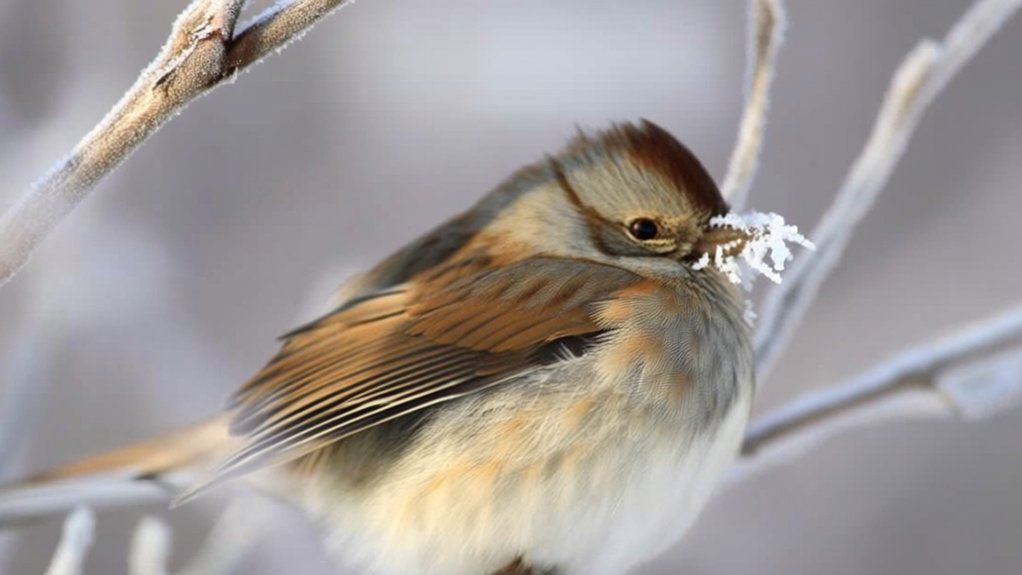
You might wonder if cold weather alone can kill birds, but it usually isn’t enough by itself. Birds rely on dense feathers, shivering, torpor, and behavioral strategies like roosting together to keep warm. Their survival really depends on having enough food and shelter to stop dangerous heat loss.
Without enough resources, birds face higher risks of dying. Understanding these adaptations and the important role of habitat and nutrition shows how birds make it through harsh winters. It also explains why your support can make a big difference.
Why Cold Weather Is Dangerous for Birds
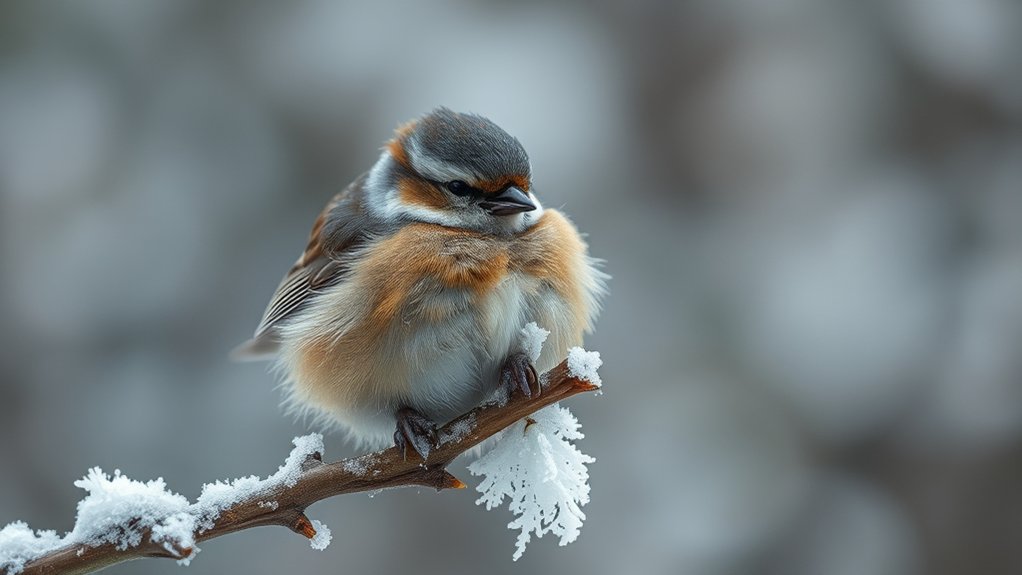
How does cold weather threaten birds’ survival? When temperatures plunge, birds lose body heat faster than they can generate it, risking hypothermia. If you observe a bird with poor insulation or low fat reserves, you’ll notice it struggles more in freezing conditions.
Extreme cold also risks frostbite, especially on extremities like feet, bills, and toes, where blood flow must be carefully regulated to prevent tissue damage. Sudden temperature drops or strong wind chills accelerate heat loss, making things even tougher for birds.
Without access to proper shelter or food, birds can’t maintain their energy balance, which increases cold-related stress and mortality. You can see how these factors combine to make survival in cold weather a constant challenge for birds, demanding precise physiological regulation and environmental support.
How Birds Keep Warm With Feather Adaptations
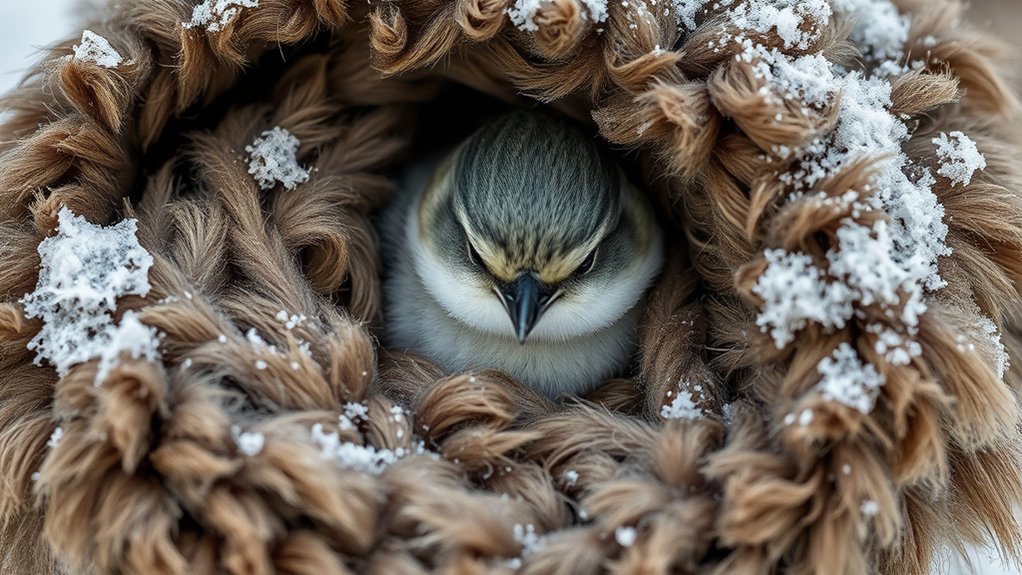
Although cold weather poses serious challenges, birds rely heavily on specialized feather adaptations to conserve body heat efficiently. You’ll notice they fluff their feathers, creating insulating air pockets that can retain up to 90% of their body heat. Their dense down feathers lie close to the skin, forming a critical thermal barrier.
Birds also increase their feather count by about 25% in winter, enhancing their insulation. Additionally, they keep their feathers waterproof by preening and applying oils, which prevents heat loss through moisture.
Fluffing and puffing up feathers trap warm air near the body. Dense down feathers provide a thick insulating layer. Seasonal feather growth boosts heat retention. Waterproof feathers reduce insulation loss from wetness.
All these adaptations work together to protect birds from cold stress effectively. It’s pretty amazing how nature equips them to stay warm, isn’t it?
How Shivering and Torpor Help Birds Stay Warm
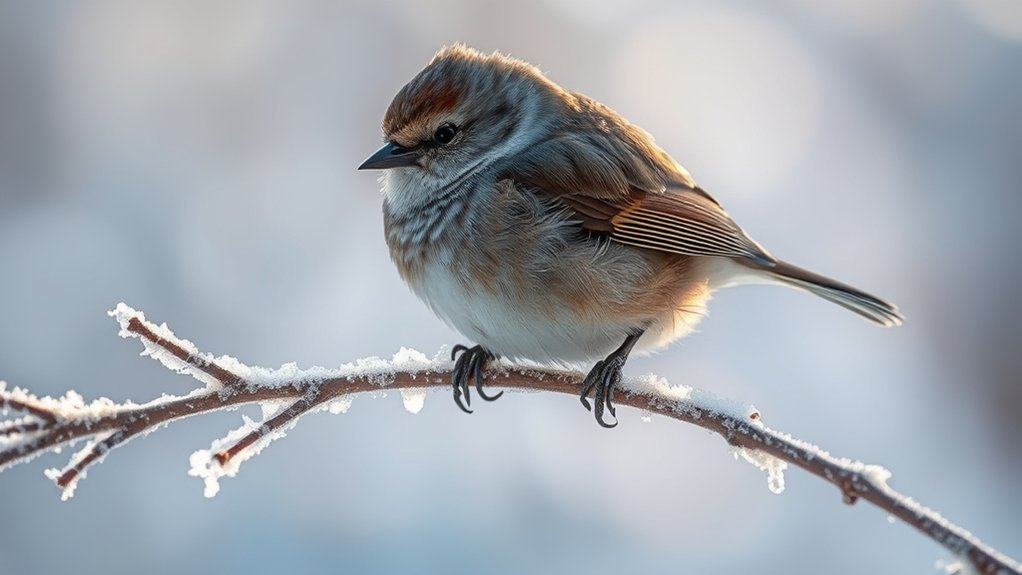
When temperatures plunge, birds shiver to generate heat by rapidly contracting their muscles. This process works much like human shivering. This muscle activity raises their core temperature, which is vital for small birds like chickadees. These little birds shiver continuously below freezing to avoid hypothermia.
But shivering uses a lot of energy. So, birds also enter torpor, a state where they lower their body temperature and metabolic rate markedly. During torpor, some small species reduce their body temperature by 20-30°F. This helps them save precious energy overnight.
This controlled drop lets them survive harsh winters without using too many resources. Together, shivering and torpor are essential physiological responses. They enable birds to maintain thermal balance and survive extreme cold conditions effectively.
How Birds Keep Their Feet and Legs Warm in Winter
You’ll notice that birds use a clever countercurrent heat exchange system in their legs to keep warm efficiently. It’s like a natural heating system that helps them conserve warmth.
You might also see them standing on one foot, tucking the other close to their body. This way, they minimize heat loss through their exposed skin.
Plus, the scales on their feet aren’t just for show—they actually act like little insulators, helping reduce heat loss when it’s freezing outside.
Countercurrent Heat Exchange
Because birds often expose their legs and feet to freezing environments, they rely on a specialized system called countercurrent heat exchange to conserve warmth. This mechanism allows warm arterial blood flowing from the body to pass close to the cooler venous blood returning from the extremities, transferring heat and minimizing loss.
You’ll notice arteries and veins run parallel, enabling efficient thermal exchange before blood reaches the feet. This keeps their feet near freezing without chilling the entire body or freezing tissues.
Key points about countercurrent heat exchange:
- Warm arterial blood heats cooler venous blood returning from feet.
- Parallel artery-vein arrangement maximizes heat transfer.
- Blood vessel constriction reduces flow and heat loss in extreme cold.
- Essential for birds standing in icy water or on frozen ground.
One-Foot Tucking
How do birds manage to keep their feet warm despite standing on ice or snow? They tuck one foot up into their feathers, which helps reduce heat loss through exposed extremities. This behavior is pretty common among perching and waterfowl species.
By doing this, they minimize the risk of frostbite because they’re conserving body heat. Birds have specialized scales and can regulate blood flow really precisely to support this tactic. This limits heat transfer from their legs to the cold surface.
Many birds also use something called counter-current heat exchange in their legs. This means they match the foot temperature to the ground to avoid excessive cooling.
Plus, by alternating which foot they tuck, birds keep warm efficiently while still standing.
Watching this clever strategy shows us how they survive harsh winter conditions without losing mobility or exposing vulnerable tissues to dangerously low temperatures. It’s pretty amazing how well adapted they are!
Protective Scales
Although birds often rely on behavioral adaptations to conserve heat, their feet and legs are also equipped with specialized protective scales that play an essential role in winter survival. These scales are tough, highly vascularized, and regulate blood flow to minimize heat loss.
Birds utilize a counter-current heat exchange system, where warm arterial blood transfers heat to returning venous blood, maintaining core temperature despite cold exposure.
The scales’ structure provides insulation and guards against freezing temperatures. This is critical when birds stand on ice or snow.
- Tough, vascularized scales reduce heat loss
- Blood flow constriction conserves warmth
- Counter-current heat exchange maintains core temperature
- Scales insulate and protect from frostbite
This system ensures your bird friends endure freezing conditions effectively. It’s pretty amazing how nature has equipped them to handle the cold!
Why Shelter and Roosting Sites Matter in Winter
When winter temperatures plunge, birds rely heavily on well-chosen shelter and roosting sites to conserve body heat and survive harsh conditions. Dense cover like thick shrubs and coniferous trees acts as essential insulation, blocking cold winds and reducing heat loss.
Natural cavities in trees and manmade nesting boxes provide safe, warm refuges where birds can conserve energy during freezing nights.
Natural tree cavities and nesting boxes offer birds vital warmth and energy-saving shelter on cold winter nights.
Roosting tightly in groups or selecting sheltered locations further minimizes heat loss, improving survival odds.
Leaving standing dead trees with cavities intact supports cavity-nesting and non-nesting species by preserving crucial winter roosts.
Properly placed and maintained roosting sites prevent hypothermia and frostbite by maintaining insulated environments.
You can see how indispensable these microhabitats are for birds’ winter endurance and overall survival. They really make all the difference when the cold sets in.
Why Food Is Critical for Birds’ Winter Survival
Because winter’s cold demands extra energy, birds have to eat high-calorie foods like seeds, nuts, and suet to keep their body heat up. You’ll notice their diet changes from insects and fruits to these energy-packed seeds. This switch helps them produce enough metabolic heat to stay warm.
Without enough food, they risk hypothermia and starvation. Many birds actually stash away food in the warmer months to make sure they’ve enough when natural resources get scarce.
By providing easy access to high-energy foods, you can really boost their chances of making it through winter.
- Birds rely on stored food caches for winter energy.
- High-oil seeds fuel increased metabolic demands.
- Insufficient food intake leads to dangerous heat loss.
- Supplemental feeders support energy needs during scarcity.
Knowing what birds need nutritionally is key to helping them survive those tough winter conditions.
Winter Behaviors Birds Use to Stay Warm and Safe
You’ll notice birds fluffing up their feathers to trap heat. This creates little air pockets that help keep most of their body warmth in.
They also tuck their feet and legs into their feathers, which helps reduce heat loss and save energy.
Plus, when they roost close together in sheltered spots, they can share body heat and protect themselves from cold winds.
All these behaviors boost their chances of staying safe and warm through the winter.
Feather Fluffing Benefits
Although cold temperatures pose a serious challenge, birds actively fluff their feathers to trap insulating air pockets. This helps them retain up to 90% of their body heat. Fluffing increases the volume of their plumage, creating a thicker thermal barrier against harsh cold.
By raising their feathers through ptiloerection, birds boost this insulation and reduce heat loss.
Regular preening keeps their feathers waterproof and flexible, which is vital for preserving these insulating properties. So, fluffing and preening together keep birds warm, dry, and protected from cold, damp conditions.
Key benefits of feather fluffing include:
- Trapping warm air close to the body for insulation
- Increasing plumage thickness to block cold air
- Enhancing waterproofing via preening to prevent dampness
- Allowing rapid adjustment of insulation during temperature changes
Roosting And Huddling
Beyond fluffing and preening, birds rely on social and behavioral strategies to maintain warmth during cold spells. You’ll notice many species roost together in dense cover or cavities, sharing body heat to combat dropping temperatures.
By huddling in tight groups, often arranged in circles or lines, they minimize exposed surface area and effectively conserve warmth. Birds also tuck their feet and bills into their feathers or beneath their bodies to reduce heat loss during rest.
Choosing sheltered roosting sites like tree cavities, thick shrubs, or man-made boxes protects them from chilling winds and predators. When temperatures plunge, birds settle earlier into their roosts, maximizing overnight warmth and conserving energy critical for survival.
These behaviors show us how birds have a smart, adaptive way of dealing with cold stress in winter environments. It’s pretty fascinating how they team up and find cozy spots to stay warm through the chilly nights.
Foot And Leg Protection
When temperatures drop, birds use some pretty clever strategies to protect their feet and legs from cold stress and frostbite. You’ll notice they’ve minimal muscle tissue in these areas, which helps reduce heat loss. They also rely on a neat physiological trick called counter-current heat exchange, where veins constrict to keep their extremities from freezing.
Birds often stand on one foot while tucking the other close to their body, which is a great way to conserve warmth. Plus, they tuck their bills beneath their feathers and lift their feet up to minimize heat loss even more.
These adaptations are super important for their survival during cold spells.
- Minimal muscle tissue in feet reduces heat loss
- One-legged stance conserves warmth
- Counter-current heat exchange prevents frostbite
- Feet elevation and bill tucking reduce heat loss
How Human Actions Support Birds in Harsh Winters
Because harsh winter conditions challenge birds’ survival, you can support them through targeted actions that address their critical needs. Providing high-energy foods like suet, sunflower seeds, and peanuts helps birds generate necessary body heat.
Installing or maintaining birdhouses and natural cavities offers protected roosting sites, shielding them from cold winds.
Planting native trees and shrubs supplies natural food and shelter, enhancing habitat quality.
Using heated bird baths ensures birds have access to unfrozen water, which is essential for digestion and thermoregulation.
Additionally, creating dense cover areas such as brush piles or thick shrubbery allows birds to escape predators and conserve warmth.
By doing these things, you actively help birds maintain their energy, stay hydrated, and stay protected. This increases their chances of making it through severe winter weather.
It’s a simple way to make a big difference for our feathered friends.
Myths and Facts About Birds and Cold Weather
Although many people assume cold weather is fatal to birds, scientific evidence shows that most species have evolved effective adaptations to survive harsh winters. You might think freezing temperatures alone threaten birds, but that’s rarely the case.
Cold weather alone rarely threatens birds; most have evolved adaptations to survive harsh winters.
Their survival depends on a combination of physical traits and behaviors that conserve energy and maintain body heat.
Consider these facts:
- Birds use dense feathers and down for insulation against cold.
- Species like chickadees thrive in subzero climates by shivering to generate heat.
- They cache food and seek sheltered roosting sites to conserve energy.
- Lack of food and shelter, not cold alone, often causes mortality in winter.
Understanding these distinctions helps you appreciate how birds endure winter’s challenges effectively.
Frequently Asked Questions
Can Cold Weather Affect Bird Migration Patterns?
Yes, cold weather can delay or alter your bird migration patterns by forcing later departures or smaller groups. You’ll notice shifts due to energy limits and food availability changes caused by temperature and snow fluctuations.
It’s kind of like when you’re not feeling your best and decide to stay in a bit longer. Birds do the same, adjusting their plans based on what’s happening around them. So, cold snaps can really change the whole migration game.
Do Birds Suffer Frostbite in Winter?
Frostbite strikes birds like a silent winter thief, targeting their feet and bills. You’ll see blood vessel constriction and protective feather tucking. But severe frostbite can cause tissue death, risking loss of toes or beak.
It’s pretty rough for them, especially in freezing temps. Birds do their best to stay warm, but sometimes frostbite still sneaks in. Just like us, it can be painful and dangerous for them.
How Do Baby Birds Survive Cold Snaps?
You observe baby birds survive cold snaps because their parents brood them, providing direct warmth and insulation. As their down feathers develop, they gain better cold resistance.
Plus, strategic hatching timing helps reduce their exposure to extreme temperatures. It’s like their parents have a built-in weather plan to keep them safe.
Are Some Bird Species More Cold-Resistant Than Others?
Yes, you’ll notice some birds like chickadees, ptarmigans, and snowy owls resist cold better due to thick feathers, specialized heat exchange, and behavioral adaptations.
On the other hand, migratory species depend on avoiding harsh winters through travel. It’s pretty interesting how different birds handle cold in their own ways.
Can Indoor Heating Harm Wild Birds if They Enter Homes?
Yes, indoor heating can harm wild birds by causing thermal shock, dehydration, and burns. If they enter homes, the sudden warmth may disrupt their natural instincts, impairing survival and causing stress or injury.
It’s kind of surprising, but that quick change in temperature can really throw them off. Birds rely on consistent environmental cues, so indoor heat can be more harmful than you might think.
Conclusion
You might think birds are little winter warriors impervious to the cold, but the truth is far more delicate. Their survival hinges on intricate feather adaptations, shivering thermogenesis, and seeking shelter. Each of these is a scientific marvel.
Without enough food or safe roosting spots, even the hardiest birds can suffer severe consequences in freezing temperatures. By understanding these mechanisms, you can better support birds during harsh winters. This way, you help ensure they thrive despite nature’s icy grip.