
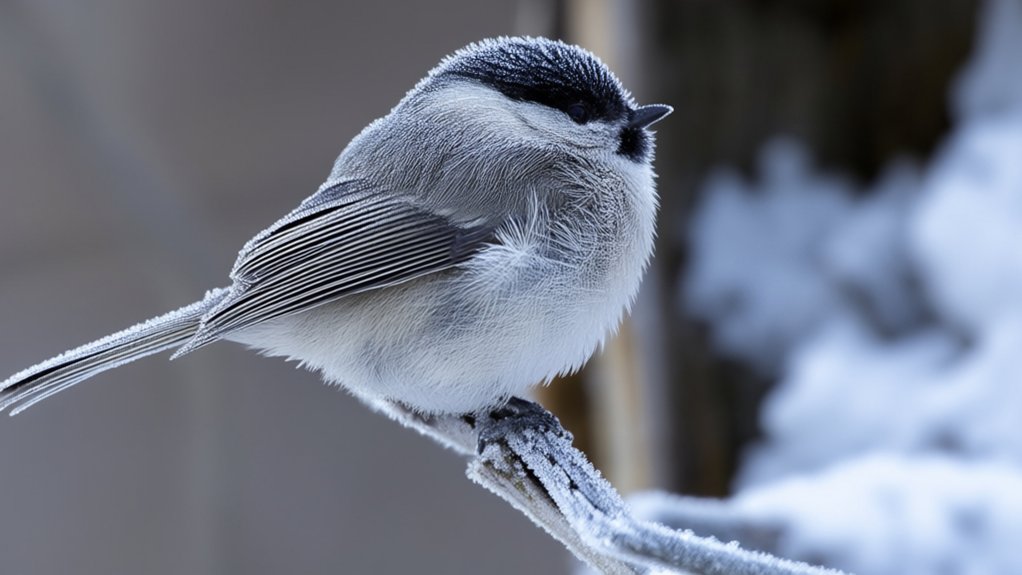
Yes, birds can die from cold when prolonged exposure, lack of shelter, and scarce food drain their fat reserves. This cripples their ability to generate heat and maintain body temperature. Hypothermia and frostbite especially threaten their extremities.
Insufficient insulation or shelter makes heat loss even worse. Birds have adaptations like feather fluffing and shelter-seeking to survive. But without enough energy or protection, their risk of dying goes up.
Understanding these factors helps you see how to support birds during harsh winters. It’s all about giving them a better chance to stay warm and safe.
How Cold Weather Threatens Bird Survival
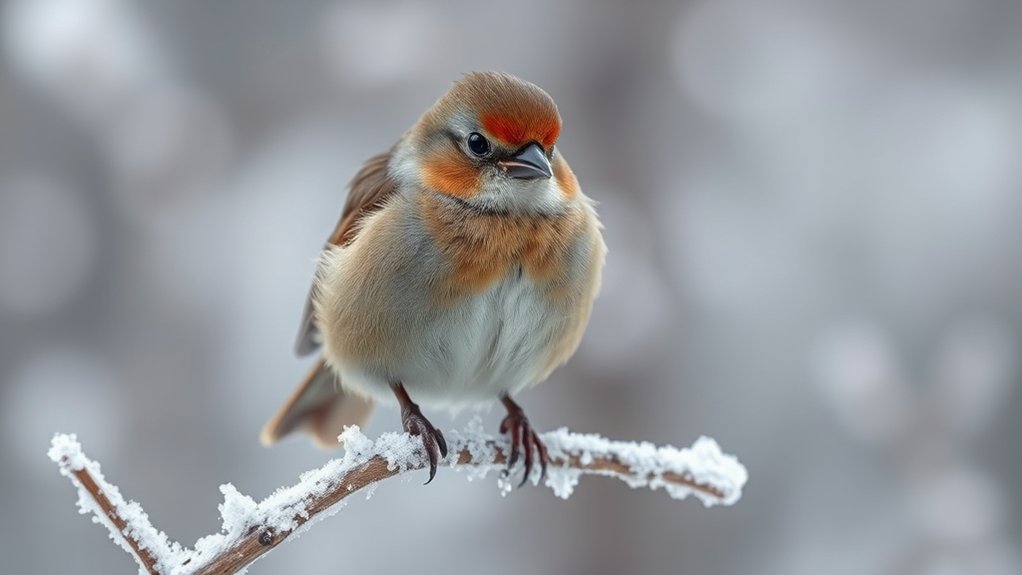
When cold weather strikes, birds face significant survival challenges because extreme temperatures can cause frostbite and hypothermia, especially on their feet, legs, and bills. Birds that don’t have enough insulation or shelter become really vulnerable to lethal cold stress.
Prolonged exposure to freezing conditions uses up fat reserves, which they need for energy and heat production.
If food is scarce during cold spells, a bird’s ability to generate enough body heat drops, and that raises the risk of death. Also, without good roosting spots to conserve heat overnight, birds can’t keep their core temperatures up. This makes them more likely to suffer fatal cold exposure.
How Hypothermia Affects Wild Birds
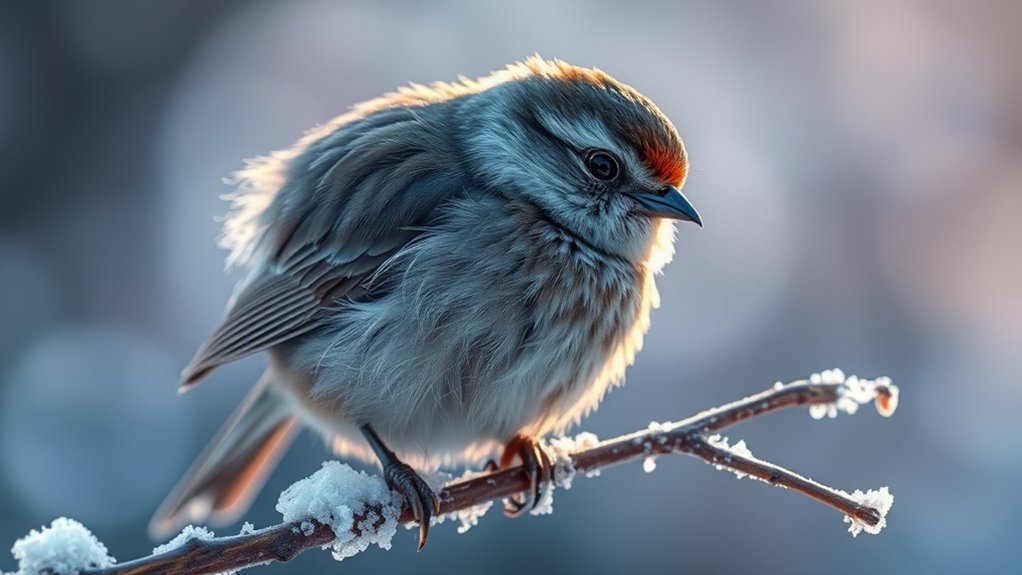
Although wild birds have adaptations to endure cold, hypothermia poses a critical threat when their body temperature falls below normal levels. When this happens, essential physiological processes slow down, impairing muscle function and coordination.
Wild birds face serious risks when hypothermia slows their muscles and coordination.
You’ll notice affected birds become sluggish, stop shivering, and lose the ability to perch or move properly.
Prolonged exposure to freezing temperatures without adequate shelter increases this risk, especially for birds lacking sufficient fat reserves. As their energy stores dwindle, they can’t generate enough heat, accelerating hypothermia onset.
Without prompt access to food, water, and shelter, these birds’ survival chances diminish sharply.
Understanding these signs and risk factors helps you recognize hypothermia’s impact on wild birds. It also underscores the importance of environmental conditions in their winter survival.
Physical Adaptations That Keep Birds Warm
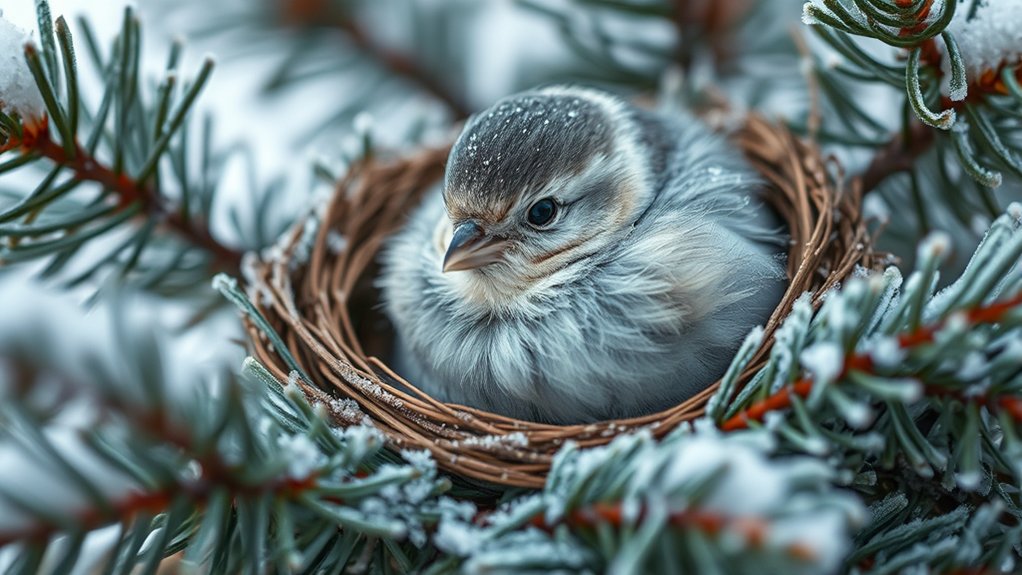
You can count on birds’ feathers to keep them warm because they trap heat really well. When birds fluff up their feathers, they create little air pockets that hold onto about 90% of their core warmth.
Another cool trick birds have is controlling blood flow in their feet and legs. They use something called counter-current heat exchange, which helps reduce heat loss and stops frostbite from setting in.
All these clever adaptations team up to keep birds nice and warm, even when it’s freezing outside.
Feather Insulation Benefits
Because feathers play a critical role in thermoregulation, understanding their insulation benefits reveals how birds survive freezing temperatures. Their down feathers trap air pockets, retaining up to 90% of body heat. By fluffing feathers (ptiloerection), birds increase trapped air volume, enhancing insulation.
Preening spreads waterproof oils, keeping feathers dry and effective. Additionally, many birds grow extra feathers in winter, improving insulation capacity. The precise arrangement and condition of feathers ensure ideal heat retention.
| Feature | Function | Benefit |
|---|---|---|
| Down feathers | Trap insulating air pockets | Retain body heat efficiently |
| Piloerection | Fluff feathers | Increase insulation thickness |
| Preening | Distribute waterproof oils | Maintain feather dryness |
| Winter molt | Grow additional feathers | Boost insulation capacity |
| Feather arrangement | Maintain feather structure | Optimize heat retention |
Regulating Blood Flow
Feathers provide an effective barrier against heat loss, but birds also rely on physiological mechanisms to maintain warmth. One key adaptation is regulating blood flow to their extremities, like feet and legs, by constricting blood vessels to reduce heat loss.
Birds use counter-current heat exchange in their legs, where warm arterial blood heats the cooler venous blood returning from the feet, stabilizing temperature. When exposed to cold, they constrict veins in their legs, minimizing blood flow to conserve core heat.
This vascular system prevents frostbite and protects crucial organs during freezing conditions.
Birds rapidly adjust blood flow based on environmental changes, optimizing heat retention and energy efficiency. This adjustment helps ensure survival even in harsh, cold climates. It’s pretty amazing how well they manage to stay warm!
Behavioral Strategies Birds Use in Winter
When temperatures drop, birds use specific behavioral strategies to conserve heat and survive harsh winter conditions. You’ll notice many species huddle together in tight formations, like lines or balls, especially during cold nights. Small birds often cluster in groups ranging from 5 to 60 individuals to share warmth, which really helps reduce heat loss.
Birds also look for shelter in cavities, dense foliage, or man-made structures. These places act as insulated roosting sites that keep them warmer.
Birds seek shelter in natural and man-made spaces that provide insulated warmth during cold weather.
At night, they try to stay still and reduce their activity levels to save energy and maintain body temperature.
These adaptive behaviors, such as communal roosting and choosing the right shelter, are crucial for preventing hypothermia and making it through freezing temperatures.
Why Food Is Critical to Winter Survival
Although winter presents numerous challenges, birds must increase their intake of high-energy foods like seeds and suet to maintain the body heat necessary for survival. Their elevated metabolic rate demands continuous energy to prevent hypothermia. Without sufficient calories, birds’ body temperatures drop, impairing essential physiological functions.
Many species cache food during warmer months to secure a reliable winter supply. But when natural sources dwindle, the risk of starvation rises. By supplementing their diet with calorie-rich feeders, you help birds meet these intense energy requirements.
Ensuring accessible, nutrient-dense food is critical because it sustains thermogenesis and overall health. This directly influences winter survival rates. Inadequate nutrition compromises their ability to generate heat and endure cold stress, making food availability a decisive factor in their winter resilience.
How Shelter and Roosting Protect Birds
Since cold nights pose a serious threat to birds’ survival, they rely heavily on shelter and roosting strategies to conserve heat. You’ll find that birds often roost in dense cover, such as conifers or thick shrubbery, which insulate against wind and cold. Many species seek tree cavities or manmade birdhouses, offering protection from harsh weather.
When roosting, birds frequently cluster tightly in groups or circles, sharing body heat to reduce heat loss. This behavior considerably enhances thermal regulation, increasing their chances of enduring frigid nights.
By selecting well-insulated, sheltered sites, birds minimize energy expenditure needed to maintain body temperature.
Understanding these adaptive behaviors highlights how critical appropriate shelter and roosting patterns are for birds to survive extreme winter conditions. It’s pretty amazing how they use their environment and social habits to stay warm when it gets really cold.
How Humans Can Help Birds Survive Winter
You can help birds survive the winter by giving them some shelter options, like birdhouses or natural cavities. These spots protect them from the cold and keep them safe from exposure.
Also, offering high-energy foods such as suet and black oil sunflower seeds is a big help. These foods support their metabolic heat production when temperatures drop below freezing.
And don’t forget about creating cozy, warm roosts with dense cover. This makes it easier for birds to maintain their body temperature overnight.
All these little things together really make a difference!
Providing Shelter Options
When you provide shelter options such as dense shrubs, brush piles, and standing dead trees, you create essential roosting sites that help birds conserve body heat during cold weather.
Installing birdhouses with varied hole sizes further accommodates different species, offering insulated, secure roosting spaces.
Leaving fallen leaves and plant debris on the ground adds natural insulation and creates microhabitats that shield birds from wind and freezing temperatures.
Maintaining dense evergreen trees and shrubs guarantees year-round shelter and supplemental food sources, which are critical for winter survival.
By making sure birds have access to these protected, sheltered areas, you reduce the energy they need to maintain body temperature.
This directly improves their chances of surviving harsh winter conditions.
Your thoughtful habitat management supports avian thermoregulation and overall winter resilience.
It’s a simple way to make a big difference for the birds during the cold months.
They’ll thank you by sticking around and thriving in your area.
Supplying High-Energy Food
Alongside providing shelter that conserves body heat, supplying high-energy food plays an essential role in helping birds endure winter’s challenges. You can support birds by offering foods rich in fats and proteins, which boost metabolic heat production.
When natural food is scarce, feeders stocked with high-calorie options prevent starvation and improve survival rates. It’s a simple way to make a big difference during the cold months.
| Food Type | Nutrient Content | Benefit |
|---|---|---|
| Suet | High fat | Sustains metabolic heat |
| Peanuts | Protein and fat | Supports muscle and energy |
| Sunflower Seeds | Fats and carbohydrates | Encourages diverse foraging |
Creating Safe Roosts
Although food and warmth are essential, providing safe roosting sites plays an equally important role in helping birds survive winter’s harsh conditions. You can support birds by installing birdhouses and roosting boxes with varied hole sizes, accommodating different species.
Leaving dead trees with natural cavities intact creates crucial shelter that conserves heat. Dense shrubbery, evergreen trees, and brush piles also serve as effective windbreaks, reducing exposure to cold.
Additionally, heated bird baths offer water and generate a warm microenvironment for resting birds.
By ensuring these safe, accessible roosts, you markedly reduce birds’ risk of hypothermia, enhancing their survival chances during cold spells.
Your efforts create critical refuges that help birds maintain body temperature and energy balance throughout winter. It’s a simple way to make a big difference for our feathered friends.
When Cold Weather Becomes Fatal for Birds
If birds can’t find enough food to fuel their body heat during extended cold spells, their chances of survival drop sharply. Without sufficient energy, birds can’t maintain core temperature, which makes them more vulnerable to hypothermia.
Prolonged exposure to freezing temperatures can lead to frostbite, especially on feet and legs. This damages tissue and makes it harder for them to move around.
When birds lose access to protected roosting sites, they face even more cold stress. Natural insulation just isn’t enough against persistent low temperatures combined with wind and snow cover.
If they don’t have adequate fat reserves from good foraging, their ability to generate heat drops. This often results in energy depletion.
Under these tough conditions, the complex balance of bird thermoregulation fails. That can lead to fatal outcomes if you can’t provide shelter or supplemental food during severe winter weather.
Frequently Asked Questions
Can Indoor Pet Birds Suffer From Cold-Related Illnesses?
Yes, your indoor pet birds can suffer cold-related illnesses like hypothermia if temperatures drop below their comfort range. You should maintain stable warmth and avoid drafts to protect their immune system and overall health.
Keeping their environment cozy is really important. Birds can get chilled pretty quickly, so making sure they’re warm helps them stay healthy and happy. Just a little extra care goes a long way!
Do Bird Species in Tropical Regions Face Cold Risks?
Tropical bird species generally don’t face significant cold risks because their environment stays warm year-round. You’ll find they lack cold adaptations and rarely experience freezing temperatures.
That said, occasional cold snaps at high altitudes can cause some stress. But for the most part, these birds are built for warmth, not cold.
How Do Birds Recover After Severe Cold Exposure?
Like a phoenix rising, birds rapidly shiver and boost metabolism to restore warmth. You’ll see them enter torpor, seek shelter, and consume energy-rich food.
They use specialized physiology to recover efficiently from severe cold exposure. It’s pretty amazing how quickly they bounce back. Birds really know how to handle the cold!
Are Juvenile Birds More Vulnerable to Cold Than Adults?
Yes, juvenile birds are more vulnerable to cold than adults because their feathers, thermoregulation, and survival behaviors are underdeveloped. This causes faster heat loss and a reduced ability to maintain body temperature in cold environments.
Basically, young birds haven’t fully grown the insulation they need yet. Plus, they’re still learning how to keep themselves warm and safe. So, it’s tougher for them to handle the cold compared to adult birds.
Can Climate Change Influence Birds’ Cold Tolerance?
You might notice birds struggling after sudden cold snaps, and that’s because climate change indeed influences their cold tolerance by disrupting food availability, migratory timing, and habitat.
All these factors impair their ability to build necessary fat reserves. It’s like their survival toolkit gets a bit compromised when the environment shifts unexpectedly.
Conclusion
When icy winds slice through feathers and food grows scarce, birds face a silent battle against cold’s deadly grasp. You can picture their tiny bodies huddling under frosted branches, using every adaptation and behavior to conserve warmth.
But without enough shelter and nourishment, hypothermia can take hold quickly. It’s a tough fight out there for these little creatures.
Understanding these challenges helps you see just how important your support is. Helping birds endure winter’s harsh chill means they can survive another day.