
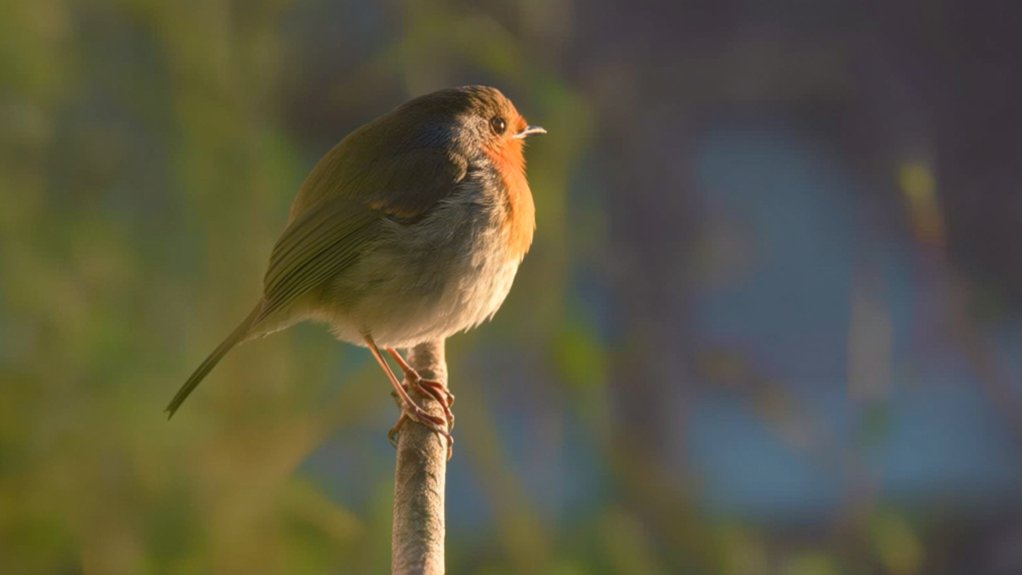
You might see birds that appear to die standing up because their muscles stiffen rapidly after death, locking their natural posture through rigor mortis. This stiffness can last from minutes to hours depending on conditions like temperature and bird size.
Most birds, however, die lying down or in resting poses. Understanding muscle changes after death and factors causing stunned or immobilized behavior gives you clearer insight into these appearances and what you can do to protect birds safely.
Why Birds Appear to Die Standing Up
Why do birds often seem to die while standing up? You’ll notice this happens because birds’ muscles stiffen rapidly after death, locking their bodies in the position they were in at the moment of death.
Many species, like songbirds and waterfowl, naturally perch or stand. So if they die suddenly, often from internal causes, they remain upright.
Birds that naturally perch or stand often remain upright if they die suddenly from internal causes.
Rigor mortis sets in quickly, causing muscle stiffening that keeps them in that stance. Since decomposition hasn’t progressed enough to make them collapse, the bird stays standing.
This mix of natural posture and rapid muscle stiffening explains why you often see birds dead in a standing or perching position.
Understanding these physiological mechanisms helps clarify why the upright position is so common after birds die. It’s pretty interesting how their bodies just freeze in place like that.
Common Misconceptions About Birds Dying Standing Up
Although many people assume birds commonly die while standing up, this belief doesn’t align with scientific observations. Most birds actually die lying down or in a resting position, especially following injury or fatigue.
You might notice birds falling asleep or losing consciousness while standing, but actual death usually occurs when they’re relaxed and horizontal.
The misconception arises because dead birds sometimes appear upright due to post-mortem muscle stiffness or environmental influences, not because they inherently die standing.
Raptors, for example, may seem to die while perched, but they typically collapse upon death or severe injury.
The posture in which a bird is found after death largely depends on the specific circumstances and external factors rather than an innate tendency to die standing.
What Causes Birds to Become Stunned or Immobilized
Understanding the conditions around a bird’s death naturally leads to examining what causes birds to become stunned or immobilized beforehand. Birds often experience disorientation or loss of motor control due to window collisions or internal injuries like concussions. Sudden stimuli such as bright lights or loud noises can trigger shock responses, causing temporary freezing.
Predatory attacks may induce paralysis or shock, while toxins impair the nervous system, leading to immobilization. It’s interesting how different causes can affect birds in various ways, isn’t it?
| Cause | Mechanism | Effect on Bird |
|---|---|---|
| Window collisions | Physical impact | Disorientation, loss of control |
| Internal injuries | Concussions, trauma | Temporary immobility |
| Sudden stimuli | Bright lights, loud noises | Shock response, freezing |
| Predatory attacks | Physical aggression | Paralysis, shock |
| Toxins | Nervous system impairment | Immobilization |
How to Know If a Bird Is Stunned or Dead
When you encounter a bird that appears motionless, carefully distinguishing whether it’s stunned or dead requires close observation of specific physiological signs. You should focus on subtle indicators beyond appearance.
Check for breathing. A stunned bird may breathe rapidly or slowly, while a dead one shows no respiration.
Also, observe muscle tone. Stunned birds often maintain some muscle tension; dead birds have limp, flaccid muscles.
Look for eye responsiveness. Closed eyes may open or react to stimuli if the bird is stunned but remain unresponsive if dead.
You can also try to detect a heartbeat. A faint heartbeat signals life, whereas no pulse indicates death.
How Long Can Birds Remain Upright After Death
Because rigor mortis causes muscle stiffness shortly after death, birds can remain standing upright for a brief period. This rigidity begins within 1 to 4 hours and can last up to 24 hours, depending on factors like temperature and size. In colder environments, stiffness prolongs, allowing the bird to stay upright longer.
However, once rigor mortis subsides, muscles relax, and the bird collapses naturally. Typically, you’ll observe birds maintaining posture from several minutes to a few hours after death.
| Factor | Effect on Upright Duration |
|---|---|
| Temperature | Lower temps extend muscle stiffness |
| Bird Size | Larger birds may stay rigid longer |
| Cause of Death | Influences onset and duration |
What to Do If You Find a Bird Standing Still
If you find a bird standing still for a prolonged period, closely observe its behavior to determine whether it’s simply resting or experiencing distress. Birds often conserve energy by remaining motionless, but unresponsiveness or sudden collapse signals potential injury or illness.
To assess the situation, consider these factors:
Check for signs of alertness, such as head movement or eye tracking. Note any sudden changes in posture or responsiveness. Observe environmental conditions that might cause stress, like cold or predators. Look for physical injuries or abnormal feather positioning.
If the bird remains alert and responsive, it’s likely resting. However, continuous unresponsiveness indicates distress, and you may need to seek expert assistance. Vigilant observation helps differentiate normal behavior from critical conditions.
How to Safely Help a Stunned Bird Recover
Identifying a bird in distress often means you’ll need to assist its recovery carefully to increase its chances of survival. Place the stunned bird in a dark, quiet, and warm container to minimize stress and promote neurological recovery.
Avoid handling, feeding, or poking the bird during this critical period, which can last from minutes to several hours.
Keep an eye out for signs that the bird is regaining consciousness, like purposeful movement or the ability to maintain an upright posture.
Once you see clear signs of recovery, gently transfer the bird outside to a safe, sheltered area for release.
During recovery, make sure to keep pets and people at a distance to prevent any extra stress or injury. This controlled environment helps the bird stabilize and improves its chances of a successful recovery.
Just be patient and let the bird take its time.
When and How to Report Injured or Dead Birds
When you encounter injured or dead birds, reporting them promptly to wildlife authorities guarantees proper handling and supports conservation efforts. This is especially important for protected or non-native species.
You should provide detailed information about the bird’s location, condition, and visible injuries when reporting dead birds. Also, make sure to follow guidelines for disposal or burial.
If you find injured birds that need medical care, contact licensed wildlife rehabilitators or local conservation agencies. They’ve the expertise to help.
Always wear gloves when handling birds to prevent disease transmission, such as bird flu or West Nile Virus. It’s a simple step that keeps you safe.
Avoid releasing or keeping wild birds indoors. Instead, seek professional assistance for ethical and safe intervention. This is the best way to help without causing harm.
How to Prevent Window Collisions and Bird Injuries
You can really cut down on bird collisions by putting up window decals or UV-patterned films. These make the glass more visible to birds, which helps them avoid flying into it.
Also, tweaking your outdoor setup can make a big difference. Try trimming plants that are close to windows and placing bird feeders in spots where birds won’t get confused or crash.
When you mix these physical barriers with changes to the habitat, you create a much safer space for birds while they’re flying around. It’s all about making their environment easier to navigate!
Window Collision Deterrents
Because birds often mistake large, reflective, or transparent windows for open sky or habitat, they frequently collide with glass surfaces. This can result in injuries or even fatalities. To reduce these collisions, you can apply effective deterrents that make windows more visible and discourage birds from flying into glass.
Here are some things to consider:
Install window decals, screens, or tape to break up reflections and make glass more visible. These measures can reduce collisions by up to 90%. You can also use external shading or UV-reflective films. Birds can detect these films, but humans mightn’t even notice them, which helps prevent impacts.
Try placing feeders and bird baths away from windows. This minimizes birds flying directly toward glass. Also, clean windows regularly and remove any reflective objects nearby. Doing so improves birds’ ability to recognize hazards and avoid collisions.
Safe Outdoor Environments
How can you create an outdoor environment that minimizes bird injuries from window collisions? Start by installing bird-friendly glass or decals, which reduce collisions by up to 90%. Avoid placing feeders or dense vegetation close to windows to prevent risky flight paths.
Reflective and mirrored surfaces confuse birds, so cover windows with screens or netting during migration seasons. Exterior treatments like shades or stickers help birds recognize glass as a barrier, preventing fatal strikes.
| Strategy | Effectiveness/Benefit |
|---|---|
| Bird-friendly glass/decals | Reduce collisions by ~90% |
| Vegetation/feeders placement | Minimizes risky flight paths |
| Window screens/netting | Decreases injuries during migration |
Implement these scientifically supported methods to maintain a safe outdoor environment for birds. It’s easier than you might think, and every little change helps keep our feathered friends safe.
Tips for Protecting Birds in Your Yard
When you create a safe environment in your yard, you considerably reduce the risk of birds suffering injuries that can lead to paralysis and death while standing. To protect birds effectively, focus on minimizing physical hazards and supporting their health.
You should remove sharp objects and toxic plants that can cause injury or poisoning. Providing stable, safe perches helps prevent falls and muscle strain.
Also, guarantee access to clean water and secure shelter to reduce stress and exposure to predators.
Make sure to monitor your yard for potential threats, including domestic animals and invasive species. Keeping an eye out can make a big difference in keeping birds safe and healthy.
Frequently Asked Questions
What Types of Birds Most Commonly Die Standing Up?
You’ll most commonly find larger wading birds like herons, cranes, storks, and flamingos dying standing up due to their prolonged upright posture and leg structure.
Sometimes, you’ll also see pigeons or doves that suddenly succumb while perched or standing. It’s pretty interesting how their body design plays a role in this.
Do Birds Have a Special Mechanism to Lock Their Legs?
Yes, birds have a tendon-locking mechanism called the “stay apparatus” that automatically tightens to lock their leg joints. This allows them to stand or sleep without using muscle effort.
It’s pretty neat because it prevents their legs from collapsing involuntarily. So, they can rest without worrying about falling over. Nature really figured out a clever way to help birds relax and stay balanced!
Can Environmental Factors Influence Birds Dying While Standing?
Yes, environmental factors like extreme temperatures, toxins, starvation, and severe weather can cause birds to die while standing. These stressors impair physiological functions, overwhelming their ability to maintain posture before succumbing to fatal conditions.
It’s like their bodies just can’t handle the stress anymore. When things get really tough, they might not even have the strength to sit or lie down before passing away. So, yeah, the environment plays a big role in this sad outcome.
Are There Differences in Standing Death Between Wild and Domestic Birds?
You’ll notice wild birds rarely die standing, as they seek shelter and perch safely. Domestic birds often do die standing, mainly because of confinement and sudden illness.
This contrast really shows how much environment and health impact death posture. It’s pretty clear there’s a distinct difference between these two groups.
How Does a Bird’s Age Affect Its Likelihood to Die Standing Up?
You’ll find older birds more likely to die standing due to muscle weakness, bone density loss, and organ decline.
Younger birds, on the other hand, maintain better posture and coordination, which reduces their chances of dying in a standing position.
Conclusion
While it might seem like birds simply take an eternal pause standing up, their delicate physiology often masks the true state beneath stillness. Understanding the subtle signs of a bird’s condition helps you distinguish between a temporary spell and a final rest.
By learning how to support stunned birds and prevent accidents, you play an essential role in their delicate balance. This way, you help ensure these feathered marvels continue to grace your surroundings with life and vitality.