
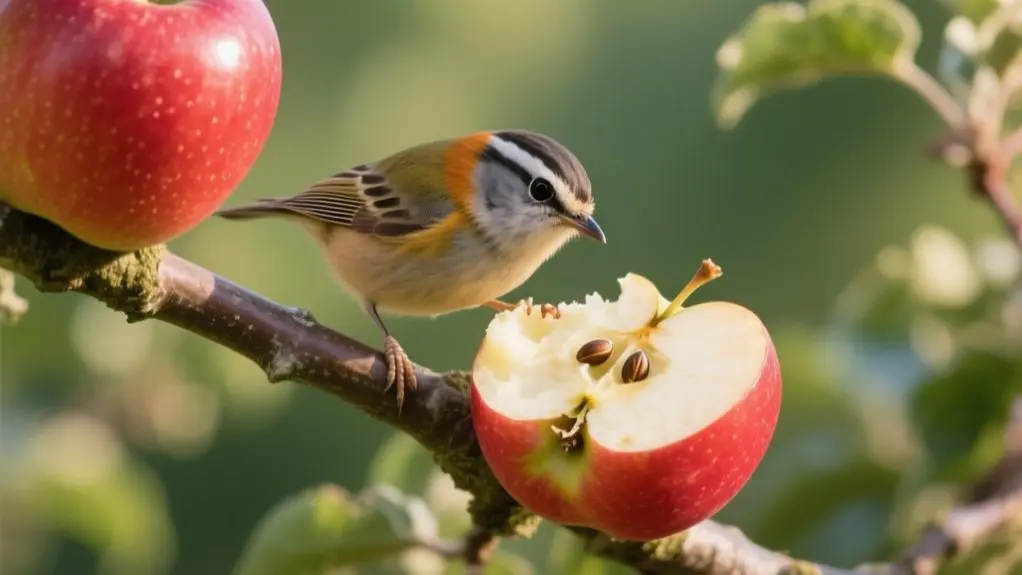
You can safely offer your bird apple flesh and skin, but avoid letting them chew or crack the seeds. Apple seeds contain amygdalin, which releases cyanide only when crushed. So swallowing whole seeds rarely causes harm.
Toxicity would require many crushed seeds, far beyond typical exposure. Birds naturally detoxify small cyanide amounts, making apple seeds less risky than other fruit pits. If you want to understand how different fruit seeds compare and how to keep your bird safe, keep exploring these details.
Are Apple Seeds Safe for Birds?
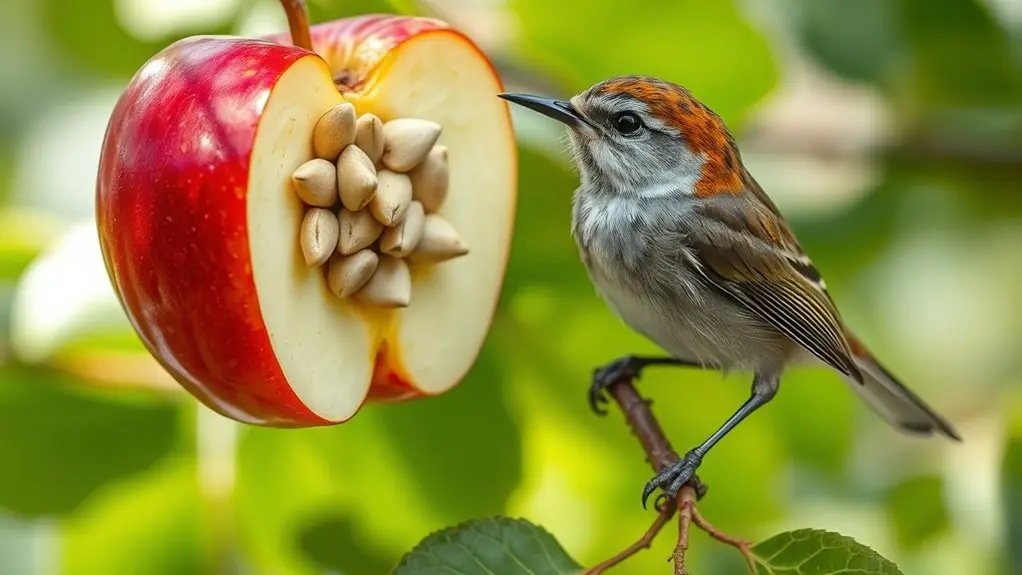
Although apple seeds contain amygdalin, which can release cyanide when crushed or chewed, they’re generally safe for birds if swallowed whole. When intact, the seed’s hard coating prevents cyanide release during digestion. The cyanide amount from a few seeds is far below levels that could harm birds.
Toxicity requires ingestion or chewing of approximately 40 to 60 crushed seeds, a quantity unlikely under normal feeding. So, routine removal of apple seeds is more of a precaution than a strict necessity.
To minimize any risk, you should wash apples thoroughly and remove seeds before offering them to pet or wild birds. This practice guarantees safety without compromising the nutritional benefits apples provide.
Why Apple Seeds Can Be Toxic
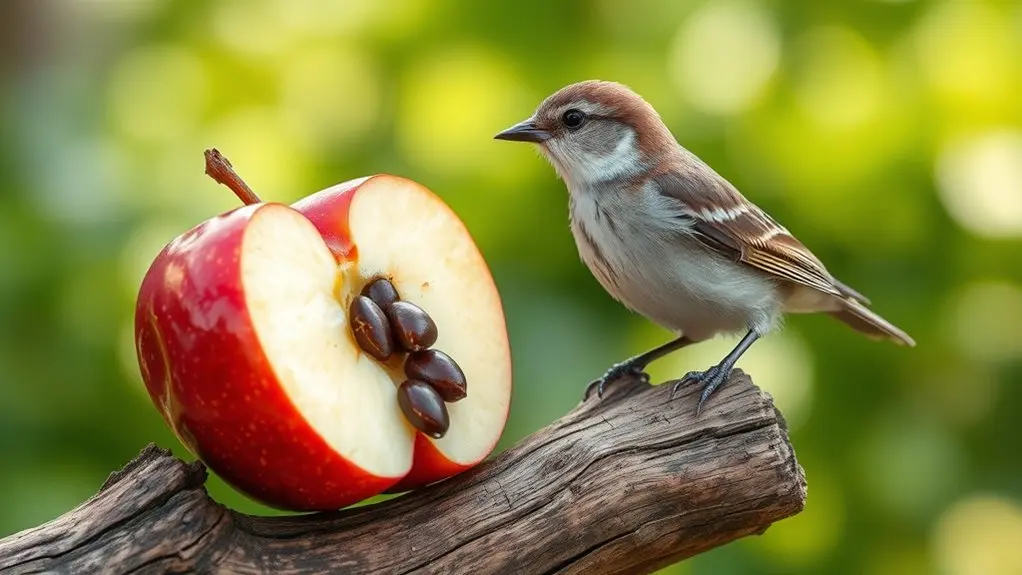
You should know that apple seeds contain a substance called amygdalin. When you crush or chew the seeds, this amygdalin releases cyanide.
Cyanide is harmful because it interferes with how your cells use oxygen, basically blocking cellular respiration.
Now, the good news is that swallowing a few seeds here and there usually isn’t a big deal since the amount of cyanide released is very small.
But if you crush and consume a lot of seeds at once, the risk of toxicity goes up significantly.
Cyanide Compounds Explained
When apple seeds are chewed or crushed during digestion, they release amygdalin. This compound breaks down into cyanide, which is a potent toxin. Cyanide interferes with cellular respiration, making it dangerous in high amounts.
But here’s the thing: apple seeds contain roughly 19.2 micrograms of cyanide per gram. That’s usually too low to cause harm unless you eat a lot of them.
Consider these key points: cyanide is released only when the seeds are broken down, not when swallowed whole. Plus, the liver and kidneys do a great job detoxifying small amounts of cyanide, so poisoning is generally prevented.
Also, birds would need to chew and eat a really large number of seeds to reach harmful cyanide levels.
Seed Crushing Risks
How does crushing apple seeds increase their toxicity? When you crush, chew, or break apple seeds, you release amygdalin, a compound that quickly converts into cyanide. This chemical reaction poses a significant risk because intact seeds don’t release cyanide as readily, making them less hazardous.
The danger amplifies if birds or animals consume multiple damaged seeds since the cumulative cyanide can reach toxic levels. Swallowing whole seeds typically prevents cyanide release because the seed coat remains intact, blocking conversion. So, the risk really depends on how many seeds are crushed and how badly their structure is damaged.
Understanding this mechanism is super important when you’re thinking about the safety of feeding apple seeds to birds or other animals. It helps you know when it’s risky and when it’s not.
How Much Cyanide Is in Apple Seeds?
Although apple seeds contain cyanogenic compounds like amygdalin, the amount of cyanide they can release is minimal. Each gram of seed holds about 19.2 micrograms of amygdalin, which only releases cyanide when crushed or chewed.
For you or a bird to reach a toxic level, around 202 milligrams of cyanide, you’d need to consume an impractical volume of crushed seeds.
Typically, seeds pass through digestive systems whole, which limits cyanide exposure. Your body and birds’ natural detox organs, like the liver and kidneys, efficiently neutralize small cyanide amounts.
Amygdalin in apple seeds is a precursor, not immediate cyanide. Large quantities of crushed seeds are needed for harmful cyanide levels.
Cyanide detoxification reduces toxicity risk in normal consumption scenarios.
Can Birds Eat Apple Skin and Flesh Safely?
You can definitely offer birds both the apple skin and flesh, as long as the fruit is thoroughly washed to get rid of any pesticides. The flesh is packed with nutrients that birds can easily digest.
And the skin? It’s great too—it adds fiber and antioxidants that help keep birds healthy. Just be sure to check for and remove any moldy or spoiled parts before feeding them.
Nutritional Benefits Of Apple
When you offer apples to birds, both the skin and flesh provide valuable nutrients that support their health. The apple flesh contains natural sugars, fiber, and vitamins that aid digestion and supply energy.
The skin adds extra fiber and encourages foraging behavior, which benefits mental stimulation.
However, it’s critical to wash apples thoroughly to remove pesticides and dirt before feeding.
Key nutritional benefits include:
Natural sugars and vitamins in the flesh for energy and immune support.
Dietary fiber from skin and flesh promoting digestive health.
Hydration, as the apple’s water content helps maintain fluid balance.
Preparing Apple For Birds
How can you safely prepare apples for birds to enjoy both the skin and flesh? First, thoroughly wash the apple to remove pesticides and contaminants. Keep the skin on, as it provides valuable fiber and antioxidants.
Be sure to remove the core and seeds to eliminate the risk of cyanide. Then, slice or chop the apple into manageable pieces to prevent choking and make it easier for the birds to eat.
| Preparation Step | Reason |
|---|---|
| Wash thoroughly | Remove pesticides and contaminants |
| Retain skin | Provide fiber and antioxidants |
| Remove core & seeds | Avoid cyanide poisoning |
| Slice or chop pieces | Facilitate safe and easy eating |
Why You Should Remove Apple Seeds
Although apple seeds contain only small amounts of amygdalin, which can release cyanide when crushed or digested, removing them before feeding birds reduces the risk of toxin accumulation over time. You should always remove seeds because even low cyanide levels can build up if birds consume seeds regularly.
Intact seeds pose less risk, but crushing or chewing increases cyanide release.
Removing seeds is a straightforward preventive measure to guarantee bird safety.
Consider these points:
- Birds need to ingest 40-60 crushed seeds to reach toxic cyanide levels.
- Swallowed whole seeds rarely release dangerous cyanide amounts.
- Routine seed removal minimizes any cumulative toxicity risks from repeated exposure.
How Dangerous Are Apple Seeds for Birds?
Since apple seeds contain cyanogenic compounds that release hydrogen cyanide when crushed or chewed, you might wonder how harmful they are to birds. Fortunately, a bird would need to consume hundreds of crushed seeds simultaneously to reach a toxic dose. Swallowing intact seeds usually prevents cyanide release, as the seed coat remains unbroken.
Also, birds’ livers and kidneys efficiently detoxify small cyanide amounts, minimizing risk. So, while the idea of cyanide sounds scary, the actual danger to birds is pretty low.
| Factor | Impact on Toxicity |
|---|---|
| Seed condition | Crushed seeds release cyanide |
| Quantity ingested | Hundreds needed for danger |
| Seed swallowing method | Whole seeds less risky |
| Bird detox organs | Neutralize small cyanide doses |
| Routine seed removal | Simple, precautionary measure |
In short, apple seeds pose low danger unless a bird eats a large number of crushed seeds at once. It’s always good to be cautious, but there’s no need to worry too much about whole seeds.
What to Do If Your Bird Eats Apple Seeds
Even though apple seeds generally pose a low risk to birds, you should still know how to respond if your bird consumes them. Intact seeds rarely release harmful cyanide unless chewed thoroughly, but monitoring your bird for signs of distress is essential.
Apple seeds are usually low risk, but watch your bird closely for any signs of distress.
Watch for symptoms such as drooling, weakness, or difficulty breathing.
If any of these symptoms appear, contact an avian veterinarian immediately. You can help by providing fresh water and observing your bird’s behavior closely to assess their condition.
To manage the situation effectively:
- Monitor your bird for abnormal symptoms or behavior
- Guarantee access to fresh water to support hydration
- Seek veterinary advice promptly if symptoms develop or concerns arise
Taking these steps helps keep your bird safe and minimizes any potential risks from eating apple seeds. It’s always better to be cautious and stay observant.
How Do Apple Seeds Compare to Other Fruit Pits?
You’ll notice that apple seeds do contain cyanogenic compounds, just like other fruit pits, but the amount is lower. This means they’re less toxic overall.
When you compare them to bigger pits from cherries or apricots, apple seeds are generally less risky for domestic birds.
That said, it’s still important to be careful if they get eaten. Knowing these differences can really help you figure out how dangerous they might be.
Cyanide Levels Comparison
How do apple seeds measure up in cyanide content compared to other fruit pits? Apple seeds contain about 19.2 micrograms of cyanide per gram, which is markedly lower than many other fruit pits.
This difference affects their potential toxicity for birds and humans.
Consider these comparisons: Apricot pits contain up to 2,300 micrograms of cyanide per gram, making them much more toxic. Cherry, peach, and plum pits have higher cyanide levels than apple seeds but less than apricot pits.
Bitter almonds contain around 4,500 micrograms per gram, far exceeding apple seeds’ content.
Because of their relatively low cyanide concentration, small amounts of apple seeds are unlikely to cause poisoning. This is quite different from the more hazardous cyanogenic compounds found in other fruit pits.
Toxicity Differences Among Pits
Why do apple seeds pose less risk than many other fruit pits? Apple seeds contain amygdalin, which releases cyanide when chewed, but their cyanide concentration is notably lower than that of pits from apricots, cherries, and peaches.
Stone fruit pits often have enough cyanogenic compounds to cause poisoning even in small amounts if cracked or chewed.
In contrast, apple seeds require ingestion of numerous seeds and thorough chewing to reach toxic cyanide levels.
Also, many fruit pits, unlike apple seeds, present physical hazards due to their hardness, which increases choking or injury risk.
So, while apple seeds do contain cyanide precursors, their toxicity and physical danger are much less pronounced compared to other fruit pits.
That’s why those other pits demand more caution.
Risks For Domestic Birds
Although apple seeds contain cyanogenic compounds, they pose considerably less risk to domestic birds than many other fruit pits.
Birds would need to ingest over 50 apple seeds chewed thoroughly to reach a toxic dose, which is unlikely given typical feeding behaviors.
In contrast, larger pits from cherries, peaches, or apricots contain higher cyanide concentrations and present a greater poisoning risk, especially if cracked or chewed.
Apple seeds’ cyanide content is markedly lower than that of larger fruit pits.
Birds usually swallow apple seeds whole or chew lightly, limiting cyanide release.
Apricot and cherry pits carry a higher toxicity risk due to their size and cyanide levels.
Are Pear and Stone Fruit Seeds as Risky as Apple Seeds?
When comparing the toxicity of pear and stone fruit seeds to apple seeds, you’ll find notable differences in cyanide content and risk.
Pear seeds contain cyanogenic compounds similar to apple seeds but generally have lower cyanide levels, making them less toxic.
Stone fruit pits, including cherries, peaches, plums, and apricots, hold higher concentrations of these compounds, posing a greater toxicity risk if ingested.
Chewing or crushing stone fruit pits releases cyanide more readily, increasing poisoning hazards for birds.
So, to minimize risk, you should remove pits from stone fruits before feeding them to birds.
It’s better to be safe than sorry.
Overall, pear seeds are less risky than apple seeds, but both warrant caution.
Stone fruit pits, due to their higher toxicity, should be avoided entirely to protect avian health.
Just keep that in mind when offering fruit treats to your feathered friends.
How Birds Naturally Handle Fruit Toxins
Because birds regularly consume fruits containing cyanogenic seeds, their digestive systems have adapted to handle small amounts of cyanide efficiently. You’ll find that birds have evolved mechanisms that allow them to detoxify the cyanide released during seed chewing through rapid metabolism.
Their liver and kidneys play a vital role in breaking down and eliminating these toxins, preventing harm.
Observations show wild birds regularly ingest fruit seeds without cyanide poisoning, as the quantity needed to reach toxic levels far exceeds typical consumption.
Consider these key adaptations:
- Efficient metabolic pathways rapidly neutralize cyanide.
- Organs like the liver and kidneys process and remove toxins.
- Behavioral tendencies limit excessive seed ingestion, reducing risk.
Understanding these natural defenses clarifies why birds can safely manage cyanogenic fruit toxins.
Frequently Asked Questions
Can Baby Birds Safely Eat Apple Seeds?
You shouldn’t let baby birds eat apple seeds because their immature digestion can’t handle the cyanide released when seeds are chewed. Always remove seeds and offer only apple flesh to guarantee their safety and healthy development.
It’s really important to keep those seeds out of their reach. Baby birds are delicate, and even small amounts of cyanide can be harmful. So, sticking to just the fruit is the best way to go.
Do Different Bird Species React Differently to Apple Seeds?
You might be surprised to learn that yes, different bird species react differently to apple seeds. Some tolerate small amounts because they have stronger detox systems. Others risk cyanide exposure, which makes their reactions really species-specific and variable.
How Should Apple Seeds Be Prepared Before Feeding Birds?
You should always remove apple seeds before feeding birds by cutting or coring the apple, then discarding the seeds safely. This step is super important because apple seeds contain cyanide, which can be harmful.
By removing the seeds, you make sure the birds only eat the safe parts like the flesh and skin. Plus, it helps keep them free from any contaminants that might be hiding in the seeds.
Are Dried Apple Seeds Less Toxic to Birds Than Fresh Ones?
Yes, dried apple seeds are generally less toxic to birds than fresh ones because drying reduces amygdalin content, lowering cyanide levels.
That said, you should still avoid feeding them to birds since some toxicity risk remains. It’s better to be safe than sorry when it comes to their health.
Can Wild Birds Help Disperse Apple Seeds Safely?
Yes, wild birds safely disperse apple seeds by eating the fruit and passing intact seeds through their digestive system. This natural process doesn’t release cyanide and promotes apple tree propagation in ecosystems without harming the birds.
It’s pretty cool how the seeds stay safe while traveling through the birds. So, the birds get a tasty snack, and the apple trees get to spread their seeds far and wide. Everyone wins!
Conclusion
You might wonder if a few apple seeds truly pose a threat to your bird, given their small cyanide content. Scientifically, while one or two seeds aren’t likely to cause harm, consistently feeding them increases risk. To stay safe, always remove seeds before offering apples.
Birds naturally avoid toxic parts in the wild, but in captivity, it’s up to you to prevent exposure. This precaution guarantees your feathered friend stays healthy and safe.