
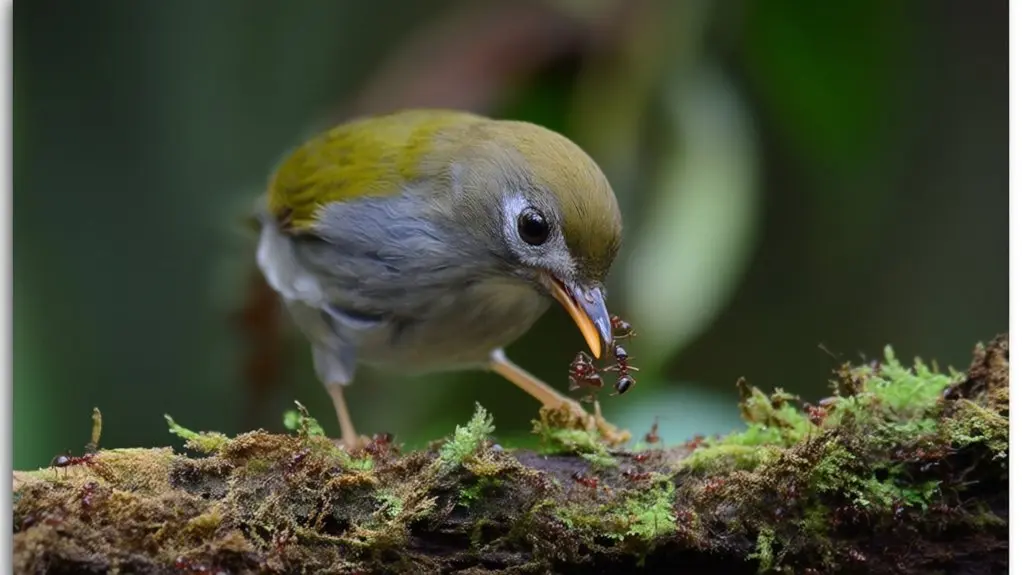
You can safely feed birds ants because they’re a nutritious protein source that’s essential for energy, growth, and immune support. Most native ants provide valuable minerals like zinc and iron without harming birds.
But be careful with aggressive ants like fire ants since they can sting or poison nestlings. Young birds don’t usually eat ants much at first because of their tough exoskeletons and chemicals. They start including ants in their diet as they grow older.
If you want to help birds safely, learning more about ant safety and feeding strategies is a great idea. It can make a big difference in supporting birds effectively.
Why Do Birds Eat Ants? Nutritional Benefits Explained
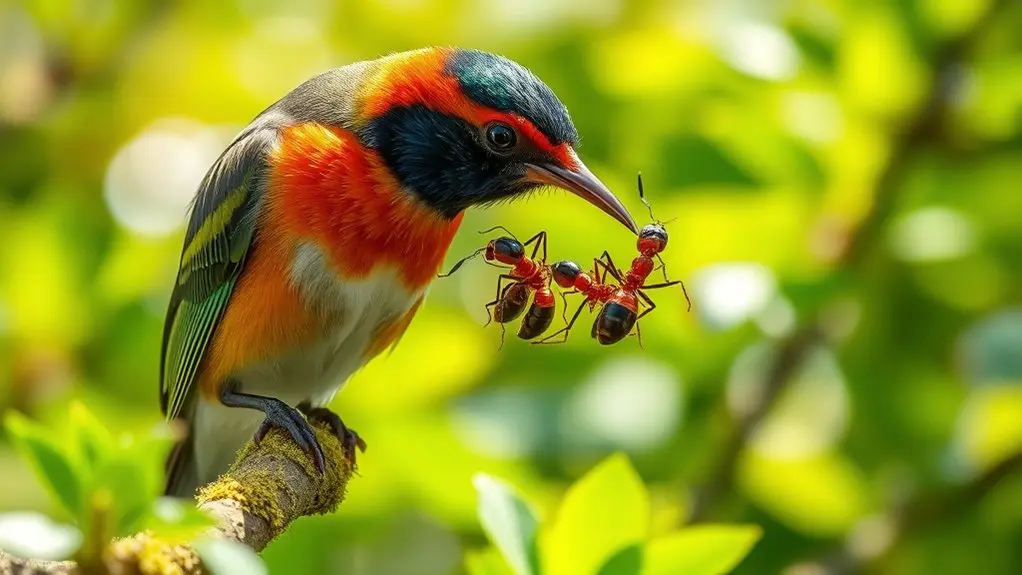
Although ants might seem like an unusual meal, birds eat them because they’re packed with protein, which is essential for muscle growth and maintenance. You’ll find that ants supply critical nutrients like zinc, iron, and potassium, which support overall health and immune function in birds.
When you observe small insectivorous birds, such as warblers and sparrows, you’ll notice they rely heavily on ants to fulfill their protein requirements. This high protein content helps birds sustain energy, especially during demanding periods like breeding and migration.
Furthermore, ants provide antioxidants and micronutrients that contribute to birds’ longevity.
Which Birds Commonly Eat Ants?
When you observe various bird species in their natural habitats, you’ll find that many actively include ants in their diets. This is because ants are abundant and packed with nutritional value. Several birds have adapted to take advantage of ants as a food source.
For example, Northern Flickers forage extensively on the ground and can consume over five thousand ants in one meal. Song Sparrows often include ants while foraging near feeders or right on the ground. Woodpeckers, starlings, and other small insectivorous birds regularly eat ants to supplement their diet.
Larger birds like crows and jays also eat ants whenever they get the chance. Plus, there are specialized species such as antbirds that rely heavily on ants. This really shows how important ants are as a protein source for many bird ecosystems.
Are Ants Safe for Birds to Eat?
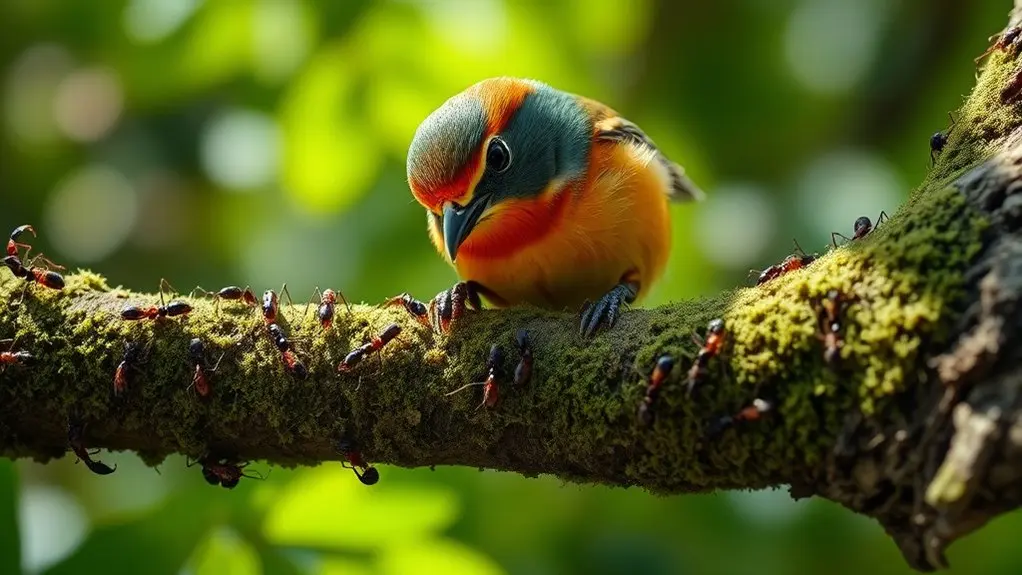
You’ll find that most native ants don’t cause any harm and actually provide a great source of protein for birds.
But watch out for aggressive ants like fire ants—they can sting and release chemicals that might hurt or scare birds, especially young nestlings.
Knowing these risks makes it easier to understand when ants are safe for birds to eat and when it’s better to be cautious.
Ants’ Safety for Birds
How safe are ants for birds to consume? Generally, ants provide a safe and nutritious protein source for adult birds, but several factors influence their safety. Consider these points:
Most native ants are harmless and beneficial in birds’ diets. Baby birds rarely eat ants because of their hard exoskeletons. They usually prefer softer prey instead.
Certain aggressive species, like fire ants, can threaten nestlings by attacking or invading nests.
Also, using chemical ant killers near bird habitats risks poisoning birds through toxic residues. So, it’s best to be cautious with those around birds.
Risks From Aggressive Ants
Although many ants serve as a safe and nutritious food source for birds, aggressive species like fire ants present significant risks. Fire ants attack and can kill nestlings and young chicks, posing a direct threat to bird populations.
While some birds consume queen and male fire ants, the aggressive behavior of these ants often results in painful stings and exposure to formic acid, a noxious chemical that can distress or harm birds. Native ants typically don’t pose these dangers, but invasive, aggressive ants increase the risk of injury or mortality if birds ingest or disturb their colonies.
When feeding on ants, you should recognize that consuming aggressive ants like fire ants is less safe, as the potential for harm outweighs the nutritional benefits they provide. So, it’s better to be cautious and avoid these ants whenever possible.
Do Baby Birds Eat Ants? Feeding Differences by Age
You probably won’t see parent birds feeding ants to their baby birds. That’s because ants have tough bodies and chemical defenses, which make them not so great for tiny, growing birds.
Instead, the parents usually bring softer prey like caterpillars or worms. These are easier for the babies to digest and much safer for them.
As the birds get older, their diet starts to change. They begin to eat more ants, especially if they belong to species that search for food on the ground.
Baby Birds’ Diet
Why don’t baby birds eat ants as part of their diet? Their hard exoskeletons and chemical defenses make ants difficult and potentially harmful for nestlings. You’ll notice parent birds feed their young soft-bodied invertebrates instead.
Consider these key points about baby birds’ diet: Baby birds lack the beak strength to crush ants’ tough exteriors. Parents prioritize easily digestible prey like caterpillers, spiders, and grubs. Soft-bodied prey reduces choking risk and ensures nutrient absorption.
Also, ants’ noxious chemicals pose poisoning risks to developing digestive systems. This selective feeding strategy supports proper growth and survival.
Adult birds develop skills to handle ants later, but for nestlings, gentle feeding choices are critical for safe development.
Ants’ Suitability For Nestlings
Baby birds rarely consume ants because their developing beaks and digestive systems aren’t equipped to handle the insects’ hard exoskeletons and chemical defenses. Instead, parent birds provide nestlings with softer, more digestible prey like caterpillars, spiders, and earthworms. These choices guarantee that young birds avoid the physical and chemical challenges ants pose, reducing risks of digestive discomfort or injury.
Nestlings rely heavily on their parents to deliver easily processed food during this vulnerable growth phase.
As the birds mature and their beaks and digestive tracts strengthen, they gradually begin to include ants in their diet, especially if their species forages on the ground or specializes in insects. This dietary shift reflects an adaptive feeding strategy linked to age and developmental stage.
How Do Ant-Eating Birds Forage and Catch Ants?
Although ants are small and often well-hidden, ant-eating birds have evolved specialized foraging techniques to locate and capture them efficiently. You’ll notice these birds adapt their methods based on habitat and ant behavior. Here’s how they do it:
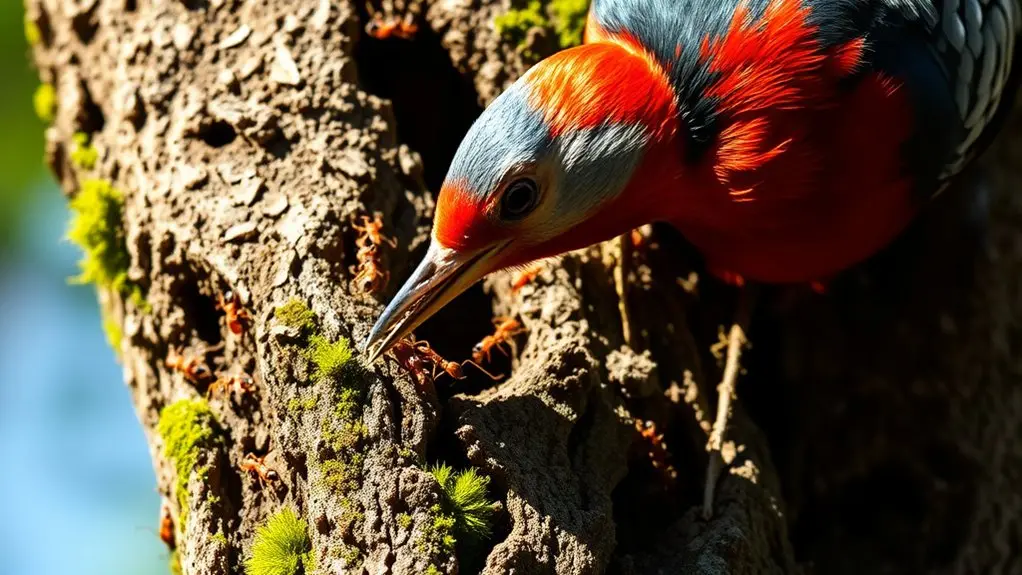
Woodpeckers use their strong beaks to make incisions in tree bark, then extend their long, sticky tongues to lap up ants from deep crevices.
Woodpeckers expertly chisel bark and use sticky tongues to reach hidden ants deep within trees.
Ground-foraging species like Song Sparrows peck through soil and leaf litter to unearth ants.
Birds such as Northern Flickers actively probe ant nests or decaying wood to access colonies.
Swallows catch flying ants mid-air, relying on agility and lightning-fast reflexes. These strategies reflect precise adaptations that maximize ant capture despite their small size and cryptic nature. It’s pretty amazing how these birds have figured out different ways to get their meals!
How to Attract Ant-Eating Birds to Your Yard
If you want to encourage ant-eating birds to visit your yard, creating a suitable environment that supports their foraging needs is essential. Keep your lawn short and well-maintained to allow birds like sparrows and thrushes to spot and capture ants easily on the ground.
Providing clean bird feeders stocked with seeds can attract these birds, which often hunt for ants nearby.
Plant native shrubs and trees that foster diverse insect populations, including ants, so there’s a natural food source for the birds. Avoid chemical pesticides or insect sprays because they reduce insect availability and harm the birds’ diet.
Instead, try to keep things as natural as possible to keep the birds coming back.
You can also apply natural deterrents such as diatomaceous earth around nesting areas to encourage ants to relocate. This helps create a yard that’s more appealing to ant-eating birds since they’ll find plenty of prey to feed on.
It’s all about making your yard a welcoming spot where these birds feel comfortable and well-fed.
Safe Ways to Control Ants Without Harming Birds
When controlling ants around your yard, choosing methods that don’t harm birds is essential to maintaining a balanced ecosystem. You can effectively manage ants while protecting birds by following these safe strategies.
First, use natural deterrents like diatomaceous earth or cinnamon. These repel ants without toxic effects on birds. It’s a simple way to keep your yard ant-free without risking bird health.
Natural deterrents like diatomaceous earth or cinnamon repel ants safely without harming birds.
Also, avoid chemical insecticides near bird feeders or nests. These poisons can be ingested or absorbed by birds, so it’s best to stay clear of those areas.
Keep your bird feeders clean, trim lawns regularly, and seal gaps or cracks with caulk. These steps physically block ants from nesting sites and help keep things tidy.
Finally, monitor ant activity and manually remove nests. This reduces ant populations without introducing harmful substances.
Frequently Asked Questions
Can Birds Get Allergic Reactions From Eating Ants?
Yes, birds can get allergic reactions from eating ants, especially venomous species like fire ants. You’ll notice swelling or breathing issues. These reactions are rare and mostly affect birds with weakened immune systems or health problems.
Do Ants Help Birds in Controlling Other Pests?
You’re killing two birds with one stone when ants indirectly aid birds by controlling pest populations. Ants forage insects, so by eating ants, birds reduce pests, maintaining ecological balance and supporting healthier habitats for themselves.
It’s like a natural teamwork happening out there. Birds get a tasty meal, and at the same time, fewer pests hang around to cause trouble. This balance helps keep the environment healthy, which is good news for both ants and birds.
How Do Bird Droppings Affect Ant Populations?
You’ll find bird droppings alter ant populations by enriching soil nutrients, which can boost ant activity. Yet sometimes, they deter certain species because of harmful compounds.
Their influence really depends on local environmental factors and how sensitive the ant species are. So, it’s not a one-size-fits-all situation.
Basically, bird droppings can both help and hinder ants, depending on where and which ants you’re talking about.
Are Certain Ant Species Toxic to Specific Bird Types?
If you observe small nestlings attacked by imported fire ants, you’ll see toxicity’s impact firsthand. These ants’ venom harms vulnerable birds, while native species rarely pose risks. You should always identify ant species before feeding birds.
It’s pretty important to know which ants you’re dealing with. Not all ants are bad for birds, but some can be really harmful. So, a little caution goes a long way when it comes to protecting those little feathered ones.
Can Ants Transfer Diseases to Birds?
Yes, ants can transfer diseases to birds, especially if they carry pathogens or parasites. You’ll find risks increase when ants contact decaying matter or waste. So, managing ant populations near birds is essential to reduce disease transmission.
It’s kind of surprising, but ants can be little disease carriers. When they crawl around places with waste or dead stuff, they pick up germs. Then, if birds come in contact with those ants, there’s a chance they could get sick.
That’s why keeping ants away from bird areas is a smart move. It helps keep our feathered friends healthier and safer.
Conclusion
You might wonder if ants are truly harmless snacks for birds. While ants offer valuable protein and nutrients, their formic acid and bites can pose mild risks, especially to young birds with delicate systems. Observations show most adult birds have adapted to handle these defenses effectively.
So, while ants are generally safe and beneficial, it’s wise to monitor young birds’ diets carefully. Make sure their meals remain varied to support healthy growth and development.