
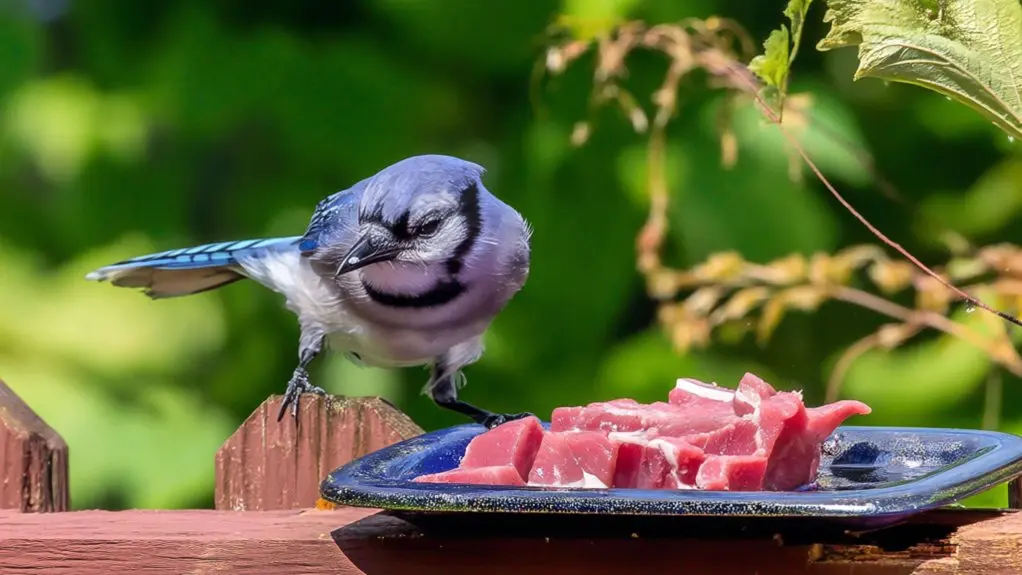
Yes, you can feed birds small amounts of properly rendered, unsalted beef fat safely. It must be free from seasoning and preservatives, and kept cool to prevent melting and spoilage. Avoid letting fat contact feathers, as greasy contamination harms waterproofing and bird health.
Using suitable feeders and storing fat in shaded areas reduces risks. Proper handling guarantees birds benefit without danger. Keep exploring to understand safer feeding methods and better fat alternatives for birds.
What Is Beef Fat? How Does It Compare to Bird Fats?

Although you mightn’t immediately think of beef fat as bird food, it plays a unique role when feeding wild or captive birds. Beef fat, also known as suet or tallow, is rendered from cattle and commonly used in cooking.
Compared to natural bird fats, beef fat has a higher melting point, around 95°F to 110°F, making it more stable in warmer conditions.
Bird fats tend to be leaner and contain less saturated fat, whereas beef fat is rich in saturated fatty acids. While bird fats are found in tissues like belly feathers and feet, beef fat primarily surrounds organs and lies beneath the skin.
Because of its composition and melting characteristics, beef fat requires careful handling to make sure it stays suitable and safe when offered as bird feed.
Can Birds Safely Eat Beef Fat in Small Amounts?
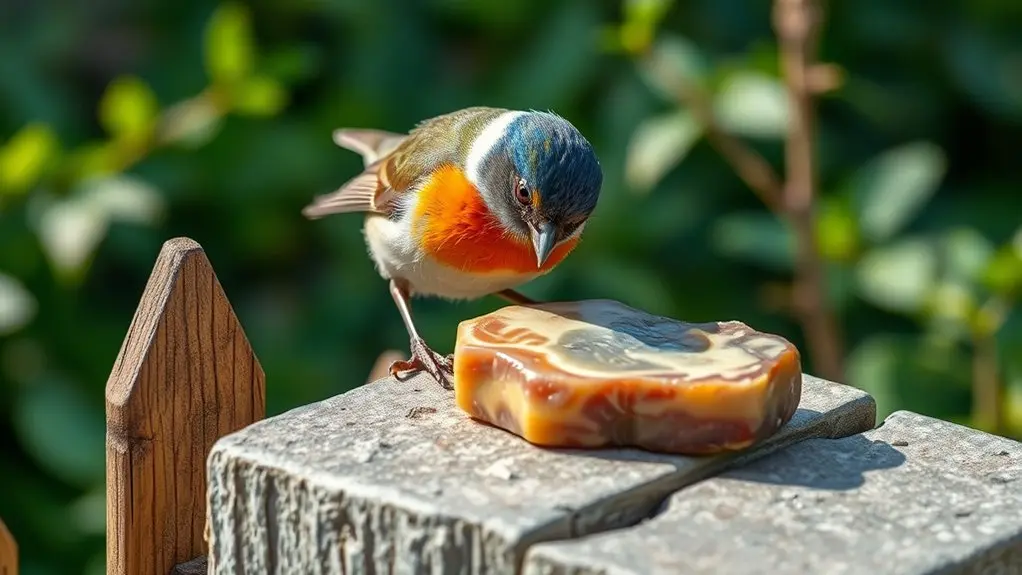
You can safely offer birds small amounts of beef fat, especially rendered suet from kidney or loin areas. Just make sure it’s free from seasoning and preservatives. It’s best to feed it in moderation.
Also, try to place it in shaded, protected feeders to prevent spoilage.
Safe Fat Types
How can you safely provide beef fat to birds without risking their health? Focus on small amounts of properly prepared beef fat, especially suet from around the kidneys and loins. Rendering the fat is essential because it prevents rancidity and spoilage. This makes it safer for birds to consume.
Avoid unprocessed or greasy beef fat since it can impair a bird’s waterproofing and grooming. Always serve beef fat free from additives, spices, or seasonings because these can pose health risks.
Keep in mind that beef fat melts around 95°F, so offer it in cooler conditions. This helps prevent it from contaminating feathers.
Feeding Precautions
When offering beef fat to birds, it’s important to make sure it’s rendered and free from additives to keep them safe. Raw beef fat has a higher melting point and low water content, so it’s less likely to spoil in cool weather. But you should still keep an eye on it regularly.
Always serve beef fat in enclosed feeders or on protected surfaces to avoid getting it on the birds’ feathers. You don’t want the fat coating their plumage because too much oil can mess up their waterproofing. That can lead to a higher risk of hypothermia.
Keep the portions small and check the temperature to make sure it’s not too hot or spoiled. By following these simple precautions, you can safely give beef fat as an occasional energy-rich treat without risking the birds’ health or natural insulation.
Risks of Feeding Uncontrolled Beef Fat to Birds
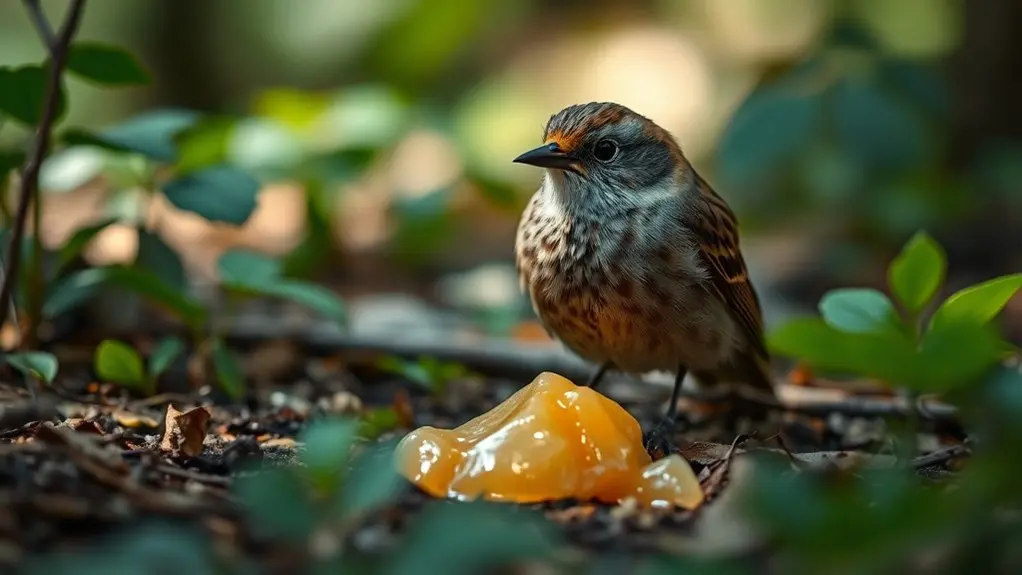
Although beef fat can provide energy for birds, feeding it without control poses serious risks to their health. You need to be aware that greasy feathers impair waterproofing, increasing the risk of hypothermia. Birds can’t clean fats and oils off themselves because these require soap, which they don’t use.
When beef fat melts around 95°F, it contaminates feathers and leaves birds vulnerable to cold and starvation.
Consider these key risks:
- Greasy belly feathers and feet cause feather contamination and health issues.
- Contaminated feathers lose waterproofing, which leads to increased cold exposure.
- Sunlight exposure melts fat, making feather contamination worse.
- Birds can’t remove fat on their own, so they stay vulnerable for longer.
Feeding uncontrolled beef fat puts birds’ survival at risk by messing with their natural defenses.
Best Practices for Feeding Beef Fat Safely
When feeding beef fat to birds, it’s best to choose high-quality suet that’s unsalted and free from additives. Make sure it has the right melting point to keep it safe for the birds.
You’ll want to use feeders made specifically for suet to help prevent contamination. It’s also a good idea to avoid putting suet directly on tree limbs since that can damage the birds’ feathers.
Storing suet properly is important too. Combining it with seeds can keep it fresh longer and provide a nice, balanced feeding option for your feathered friends.
Safe Fat Selection
How can you guarantee the beef fat you offer to birds is both safe and effective? Start by selecting the right type of fat and making sure it meets safety criteria. Raw suet from around the kidneys and loins is ideal because it melts at about 110°F, which helps minimize risks.
Avoid rendered beef fat and vegetable oils since their lower melting points can cause feather contamination. It’s really important to pick the right kind so the birds stay clean and healthy.
Keep these points in mind for safe fat selection:
- Choose raw suet free from additives, blood veins, or preservatives
- Avoid fats with melting points below 110°F to protect birds’ feathers
- Store fat in a cool, shaded area to prevent spoilage
- Use enclosed feeders to minimize contamination and exposure
Following these tips will help you provide safe and effective fat for your feathered friends.
Feeding Techniques
To feed beef fat safely, you’ll need to use appropriate techniques that protect both the birds and their feathers. Always place beef fat in a suet cage or enclosed feeder to prevent direct contact with feathers, which can cause matting and attract dirt.
Position feeders on vertical logs or perches to keep fat away from birds’ belly feathers and feet.
Choose shaded locations to reduce melting and contamination from sunlight exposure.
Regularly clean feeders and promptly remove any spoiled or greasy fat to prevent disease and feather contamination.
Avoid spreading beef fat directly on tree limbs or surfaces where birds might get greasy, as this can harm their plumage.
Following these best practices guarantees a safe and healthy feeding experience for your feathered visitors. It’s all about keeping things clean and comfortable so the birds can enjoy their treat without any trouble.
Suet vs. Rendered Beef Fat: Melting and Safety
Although both suet and rendered beef fat come from the same source, their different melting points really affect how safe they’re for bird feeding. Suet is the fat around the kidneys and loins, and it melts at about 110°F. That higher melting point makes it safer for birds.
Rendered beef fat melts at around 95°F, so it can liquefy easily in warm weather. This can actually harm birds by contaminating their feathers.
When choosing fat for feeding, keep these points in mind:
- Suet’s higher melting point means less mess and less chance of feather contamination.
- Rendered fat’s lower melting point can cause feather matting and loss of waterproofing.
- Properly rendered suet lowers health risks compared to unrendered fats.
- Avoid using rendered fat in warm conditions to keep birds’ feathers healthy.
Using suet is a great way to ensure safer, cleaner feeding for your feathered visitors.
Alternatives to Beef Fat That Birds Prefer
When you want to provide a more natural and appealing food source for birds, consider alternatives to beef fat like venison or squirrel fat. These natural fats closely resemble what many birds consume in the wild, making them more attractive and nutritious.
Venison fat, in particular, resists melting and spoiling in warm weather, ensuring a stable food supply year-round.
Birds such as woodpeckers, chickadees, and nuthatches often seek out these high-energy fats for sustenance. Incorporating ground oats, seeds, and nuts into homemade suet recipes alongside these fats can improve acceptance and nutritional value.
Choosing fats closer to birds’ natural diets also reduces risks associated with processed beef fat, such as feather contamination and related health problems.
This way, you help support their well-being more effectively. It’s a simple switch that makes a big difference for your feathered friends!
How to Spot and Prevent Fat-Related Feather Contamination
Providing birds with natural fats like venison or squirrel fat improves their nutrition, but it’s also important to keep an eye on how these fats affect their feathers. Fat contamination can mess with their waterproofing, which could lead to hypothermia or even worse.
You can usually spot contamination by looking for greasy or matted feathers, especially on the belly and feet. To keep this from happening, there are a few simple steps you can follow.
Use enclosed feeders like suet cages or mesh bags to keep fats off the feathers. Make sure to clean feeders regularly so grease doesn’t build up.
It’s also a good idea to feed fats in shaded spots to prevent melting and dripping. If you notice any greasy or contaminated feathers, remove them quickly to avoid long-term damage.
Frequently Asked Questions
Can Beef Fat Attract Unwanted Predators to Bird Feeders?
Yes, beef fat can attract unwanted predators like raccoons and foxes to your bird feeders.
You’ll want to use secure, enclosed feeders and place them in shaded, protected areas to reduce this risk effectively.
It’s all about keeping your feathered friends safe while avoiding any unexpected visitors.
Does Feeding Beef Fat Affect Bird Migration Patterns?
Feeding beef fat doesn’t affect bird migration patterns because migration relies on daylight and seasonal changes. While fat boosts energy temporarily, it won’t change timing or routes. So, you shouldn’t expect any migration shifts.
How Does Beef Fat Impact Bird Breeding or Nesting Behavior?
You should know that over 70% of bird species rely on natural fats for breeding energy. But beef fat’s impact on nesting is unclear.
Its contaminants and excess consumption may harm rather than help breeding success or chick development. So, it’s not always a good idea to assume beef fat is beneficial for birds during breeding.
Can Beef Fat Cause Allergic Reactions in Certain Bird Species?
Yes, beef fat can cause allergic reactions in certain bird species. You should watch for symptoms like swelling, respiratory issues, or skin problems. This is especially important if your bird has sensitivities.
Also, keep an eye on the fat itself—if it contains additives or preservatives, the risk might be higher. So, it’s always good to be cautious and monitor your bird closely.
Is Beef Fat Safe for Baby Birds or Fledglings?
You can offer baby birds small amounts of properly rendered beef fat, but avoid raw or greasy types. Always guarantee it’s cooked to prevent illness and protect their feathers.
And hey, it’s a good idea to consult experts before feeding it to fledglings. Better safe than sorry!
Conclusion
You can feed birds small amounts of beef fat safely, but be cautious. Over 60% of wild birds rely on natural fats for energy, so quality really matters. Avoid uncontrolled or rancid fat to prevent health risks and feather contamination.
Opt for suet or specially rendered beef fat to guarantee safety. Remember, offering the right type of fat supports their nutrition without harm. This way, you keep your feathered visitors healthy and thriving.