
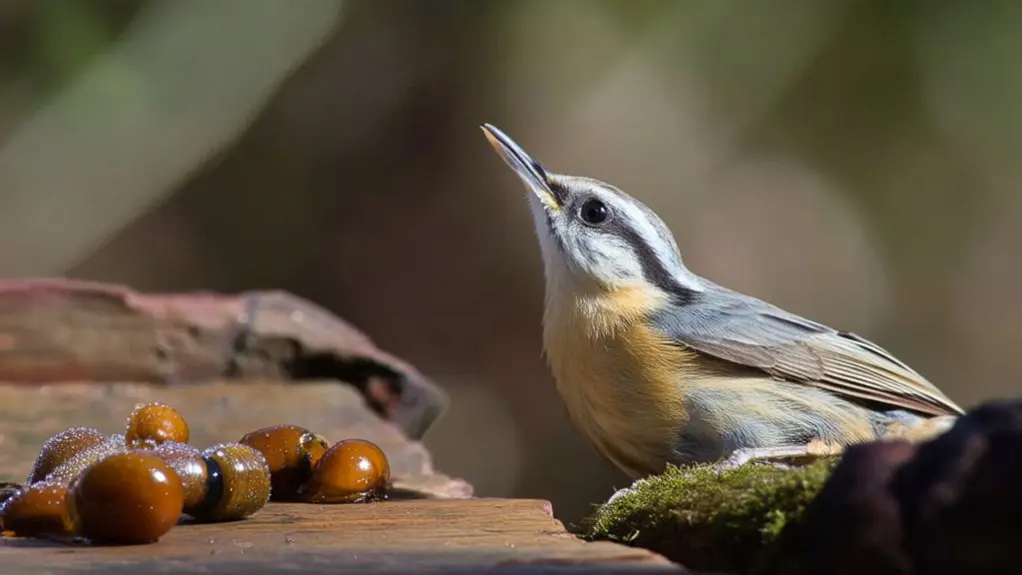
You might think birds can safely eat slugs trapped in beer, but caution is needed. Beer-soaked slugs carry alcohol and chemical toxins that pose poisoning risks to birds, especially small ones. Consuming these slugs can cause disorientation, physiological harm, and long-term health issues from toxin accumulation.
While birds are attracted to trapped slugs, feeding on them isn’t without danger. Understanding the complex impacts helps you protect your garden’s ecosystem and support safer slug control methods. So, it’s better to think twice before letting birds snack on beer slugs.
How Do Beer Traps Attract Slugs and Birds?
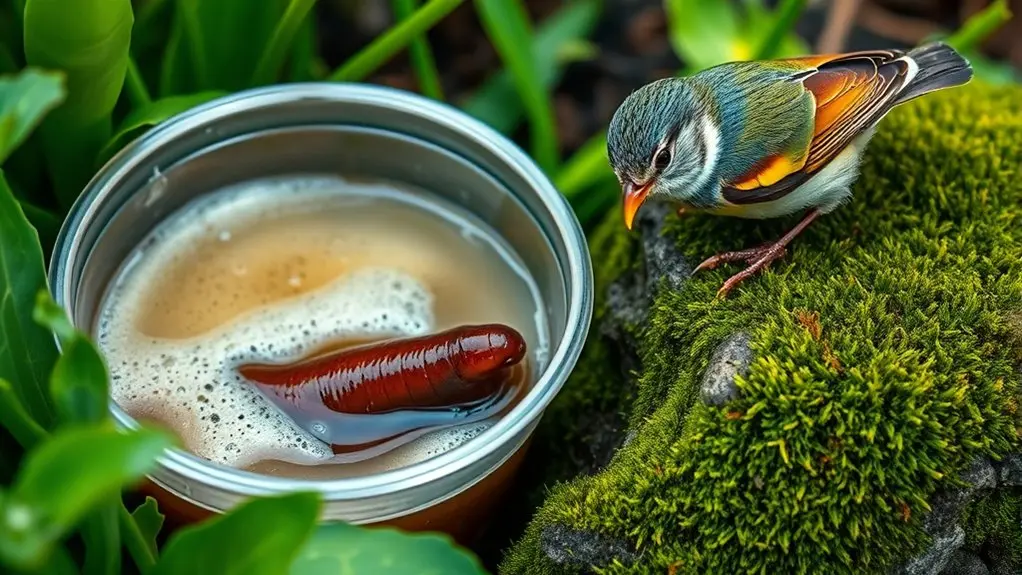
Although beer traps primarily target slugs by emitting the scent of malt, which they find irresistible, they also attract birds that prey on these slugs. When you set out a beer trap, the malt odor lures slugs, prompting them to enter and sample the liquid. Some slugs drown, while others exit unharmed, often returning multiple times.
Birds detect the presence of trapped slugs and other invertebrates drawn by the beer’s scent, viewing them as a convenient food source. The attraction of birds depends on whether slugs accumulate in the trap and remain accessible.
Why Do Some Slugs Survive Beer Traps and Others Don’t?
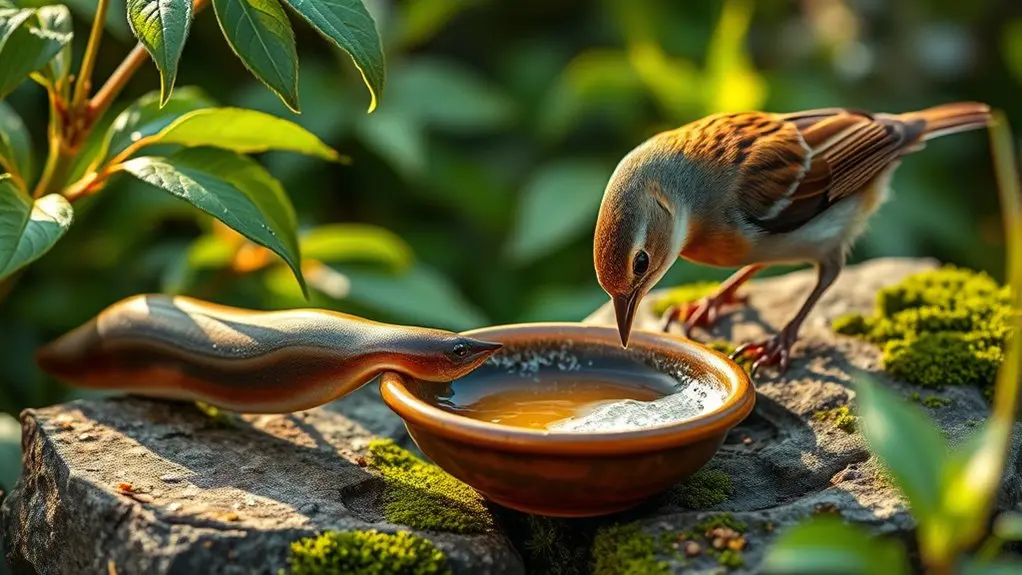
You’ll notice that whether slugs survive beer traps really comes down to some subtle differences in how they behave and react physically. The malt smell draws them in every time, no question about that.
But once they’ve had a taste, their chances of getting away depend on how quick and agile they are, and how they respond to being in the trap.
It’s these little variations in behavior that make all the difference. That’s why some slugs manage to survive multiple encounters with beer traps, while others don’t make it past the first one.
Understanding this helps explain the mystery behind their survival.
Slug Behavior Variations
When slugs encounter beer traps, their survival often hinges on behavioral differences that influence how they interact with the bait. Some slugs sample the beer briefly and then leave, likely detecting and avoiding prolonged exposure to the malt scent.
Species variation plays a role. Certain slugs are naturally more cautious or less attracted to beer, which reduces trap effectiveness.
Others that re-enter traps may survive by climbing out or staying near the edges to avoid drowning. The willingness to remain submerged varies with individual behavior and environmental factors.
This affects mortality rates quite a bit.
Additionally, some slugs show resistance or lower attraction to beer, allowing them to survive despite repeated sampling. Understanding these behavioral variations helps explain why beer traps don’t always eliminate all slugs consistently.
Trap Attraction Factors
Because slugs rely on the malt scent to locate beer traps, their initial attraction doesn’t guarantee capture or drowning. You’ll notice many slugs sample the beer, drawn by its aroma, yet continue their activity without falling in.
The malt scent works as a long-range attractant, but survival depends on how slugs behave and how the trap is designed.
Some slugs drink and leave safely, while others re-enter and still manage to escape. This shows that their chances of survival can vary a lot.
Factors like the slug’s movement, the trap’s structure, and how much beer is in the trap all play a part.
We don’t fully understand why only a few slugs actually drown, but it’s clear that just being attracted isn’t enough to catch them.
Knowing this helps explain why beer traps aren’t always deadly for slugs.
Can Birds Safely Eat Beer-Soaked Slugs?
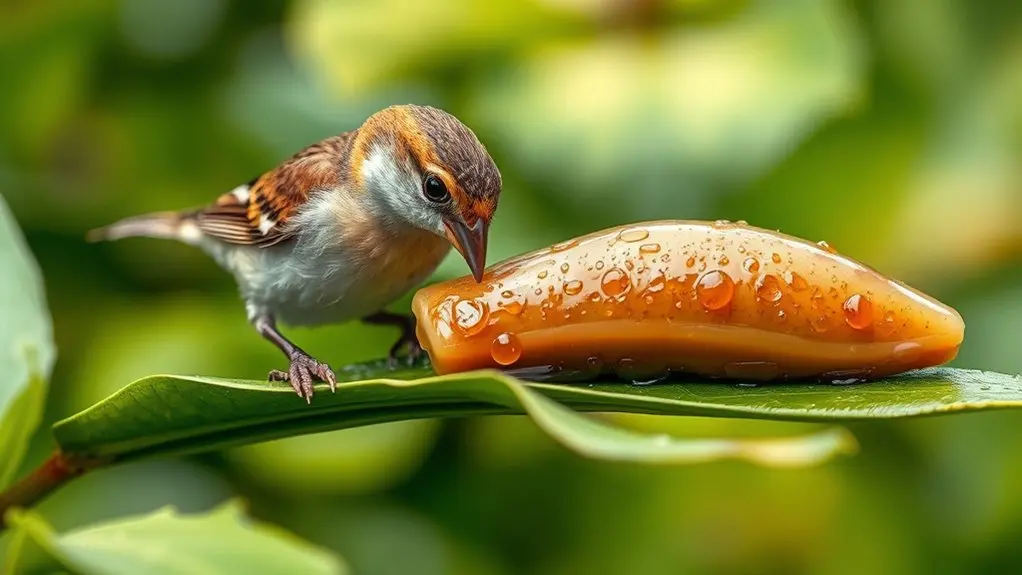
You should keep in mind that beer-soaked slugs might’ve alcohol and other chemicals that could be harmful to birds. This means there’s a risk of toxicity to consider.
Sure, slugs do offer some nutritional value, but those contaminants could easily outweigh the benefits.
Toxicity Risks to Birds
Although birds may be attracted to beer-soaked slugs as a food source, consuming them carries significant toxicity risks. The alcohol and malt chemicals present can cause alcohol poisoning in birds, leading to impaired coordination, disorientation, or even death. Small birds are particularly vulnerable to digestive distress and chemical toxicity from fermentation residues.
Secondary poisoning also threatens insectivorous and omnivorous birds consuming these slugs. To understand the risks, refer to the table below:
| Risk Factor | Affected Bird Types | Potential Effects |
|---|---|---|
| Alcohol content | All birds | Impaired motor skills, death |
| Malt chemicals | Small birds | Digestive issues, poisoning |
| Fermentation byproducts | Insectivorous species | Secondary poisoning |
| Quantity ingested | All birds | Severity of toxicity varies |
| Frequency of exposure | Wild and captive birds | Increased cumulative risk |
You should avoid encouraging birds to consume beer-soaked slugs because of these toxicity concerns. It’s better to keep them away from this kind of risk.
Nutritional Value Considerations
Understanding the toxicity risks associated with beer-soaked slugs leads naturally to questions about their nutritional value and safety as a food source for birds.
Slugs are protein-rich, making them potentially valuable for insectivorous birds. However, when soaked in beer, they may absorb alcohol or develop mold, which could pose health risks.
Also, if the slugs come from beer traps containing pesticides or other chemicals, these contaminants can be toxic when ingested.
While birds regularly consume natural slugs safely, the nutritional benefits of beer-soaked slugs are uncertain due to potential harmful substances.
To minimize risks and guarantee proper nutrition, it’s safer to offer birds natural, pesticide-free slugs rather than those exposed to beer traps or chemical contaminants.
That way, you’re helping keep them healthy without the added worry.
Do Beer Traps Really Work for Slug Control?
While beer traps use the scent of malt to lure slugs, their effectiveness in controlling slug populations remains limited. Many slugs are attracted and sample the beer but don’t drown. Instead, they drink and leave unharmed, often returning to the garden.
Beer traps lure slugs with malt scent, but many drink and escape, limiting their effectiveness.
Only a minority of slugs fall into the trap and drown, which restricts overall population reduction. Additionally, beer traps can unintentionally attract more slugs to vulnerable plants, potentially increasing damage.
You need to place traps strategically and maintain them regularly to avoid such issues.
However, even with careful management, beer traps rarely provide substantial slug control, making their practical value questionable. So, relying solely on beer traps for slug management may not give you the results you want in reducing slug-related garden damage.
How Do Beer Traps and Bird Attraction Impact Your Garden Ecosystem?
Because beer traps attract both slugs and predatory birds, they can considerably influence your garden’s ecosystem by altering predator-prey interactions.
By drawing slugs away from plants, beer traps reduce direct damage, but they also concentrate slug populations in specific areas. This concentration, in turn, increases bird visits, as predatory birds are naturally drawn to the trapped slugs.
The localized influx of birds may enhance natural pest control by increasing slug predation. However, this shift can disrupt the existing ecological balance, potentially affecting other garden species and interactions.
To minimize unintended consequences, you should place beer traps strategically away from valuable plants.
Doing so helps manage slug populations while controlling the distribution of predatory birds. This approach maintains a more stable and balanced garden ecosystem overall.
It’s all about finding the right balance to keep your garden healthy and thriving.
What Are the Risks to Birds From Eating Beer-Soaked Slugs?
If birds consume slugs soaked in beer, they risk ingesting harmful chemicals present in the beverage or any residual toxins accumulated by the slugs. Beer contains ethanol and additives that can be toxic in sufficient quantities.
Plus, slugs trapped in beer may carry pesticides or other chemicals absorbed from their environment.
When birds eat these slugs, they face potential secondary poisoning, which can impair their health or cause poisoning symptoms. Also, some slugs may drown in beer traps, but others that escape or drink without drowning still harbor toxins.
So, consuming these contaminated slugs increases the risk of chemical exposure to birds.
This exposure can disrupt their physiological functions or lead to longer-term health issues. In short, feeding on beer-soaked slugs poses a measurable risk to bird health.
It’s something to keep in mind if you’re thinking about using beer traps around your garden.
How to Attract Birds Naturally for Effective Slug Control
Encouraging birds to naturally control slug populations means creating an inviting environment that meets their habitat and dietary needs. You can attract slug-eating birds by providing native plants, water sources, and shelter. Avoid chemical pesticides to keep birds healthy.
Using bird feeders stocked with mealworms, sunflower seeds, and nuts can help increase the number of insect-eating birds visiting your garden. Natural shelters and leaf litter offer safe nesting spots, which also encourage birds to forage more.
| Attraction Method | Purpose | Examples |
|---|---|---|
| Native Plants | Habitat & food source | Shrubs, flowering plants |
| Bird Feeders | Supplemental nutrition | Mealworms, sunflower seeds |
| Natural Shelters | Safe nesting & foraging areas | Leaf litter, dense shrubbery |
| Avoid Chemicals | Maintain bird health | No pesticides or molluscicides |
How to Create Bird-Friendly Areas That Reduce Slug Damage
When you create bird-friendly areas that incorporate diverse native plants, water sources, and sheltered nesting sites, you considerably enhance the presence of insectivorous birds that prey on slugs.
Planting a variety of native shrubs and ground cover provides essential habitat and food sources, attracting birds that naturally reduce slug populations.
Installing bird feeders with mealworms, sunflower seeds, or nuts encourages birds to remain nearby, increasing predation pressure on slugs.
Adding bird baths or shallow water sources supports hydration, boosting bird activity and longevity in your garden.
Providing sheltered nesting areas with dense foliage and leaf litter offers secure breeding sites, allowing bird populations to thrive sustainably.
Avoiding chemical pesticides preserves bird health and the ecological balance necessary for effective, long-term slug control in your outdoor space.
How to Combine Beer Traps With Bird-Friendly Methods for Better Slug Control
Although beer traps effectively lure slugs away from vulnerable plants, combining them with bird-friendly methods considerably enhances slug control by leveraging natural predation. You should place beer traps away from high-value crops to concentrate slug activity in designated areas, reducing garden damage.
Maintain bird feeders, nesting sites, and native vegetation near traps to attract and sustain bird populations, which actively hunt slugs. Regularly clean and refill traps to keep them effective in attracting slugs.
Including water sources further supports birds, increasing their presence and predation rates.
This integrated approach creates an ecosystem that naturally suppresses slug populations by combining bait attraction with enhanced avian predation, making pest control more sustainable and efficient. It’s a smart way to protect your garden while helping local wildlife thrive.
Frequently Asked Questions
What Types of Birds Are Most Attracted to Beer-Soaked Slugs?
You’ll find thrushes, blackbirds, starlings, robins, blue tits, thrashers, and magpies most attracted to beer-soaked slugs. These birds actively hunt moist areas and respond to the malt scent.
They also feed on weakened or intoxicated slugs, which makes beer-soaked slugs especially appealing to them. So, if you’re trying to attract these birds, beer-soaked slugs can be a good bait choice.
Can Beer-Soaked Slugs Affect the Taste of Bird Droppings?
Like a drop in the ocean, beer-soaked slugs minimally affect bird droppings’ taste. You won’t notice drastic changes since beer residues only subtly alter chemical composition.
This means the nutritional value and appearance stay mostly unchanged. So, if you’re worried about flavor, it’s really not a big deal. The impact is pretty negligible overall.
How Often Should Beer Traps Be Refilled to Maintain Bird Interest?
You should refill beer traps every 2 to 3 days to maintain bird interest. Frequent refilling guarantees a fresh malt scent that attracts slugs consistently. This provides a reliable food source for insectivorous birds.
It also supports natural pest control effectively. Keeping the traps fresh helps keep the birds coming back regularly. So, don’t wait too long between refills!
Are There Safer Alternatives to Beer for Soaking Slugs?
You might think beer’s the only option, but you’re better off using iron phosphate pellets or natural barriers like coffee grounds and copper tape.
These methods effectively control slugs while minimizing harm to birds and other wildlife. They’re safer and just as easy to use. Give them a try and see how well they work in your garden!
Do Beer-Soaked Slugs Attract Other Wildlife Besides Birds?
Yes, beer-soaked slugs attract various wildlife besides birds, including beetles, ants, flies, and small mammals like mice. You might even see larger scavengers showing up.
The fermented scent is pretty appealing to lots of creatures out there. They’re all on the lookout for nutrients and easy food sources in their environment. So, it’s not just the birds that get drawn in by the beer-soaked slugs!
Conclusion
You should know that studies show up to 40% of slugs survive beer traps. So, relying solely on them isn’t enough for slug control.
While birds can safely eat beer-soaked slugs, the alcohol residue poses minimal risk if they consume them occasionally. It’s not something to worry about too much.
Combining beer traps with bird-friendly habitats helps boost natural predation. This way, you reduce slug damage more effectively.
By mixing these methods, you support a balanced garden ecosystem. You get to manage slugs in a way that’s both scientific and sustainable.