
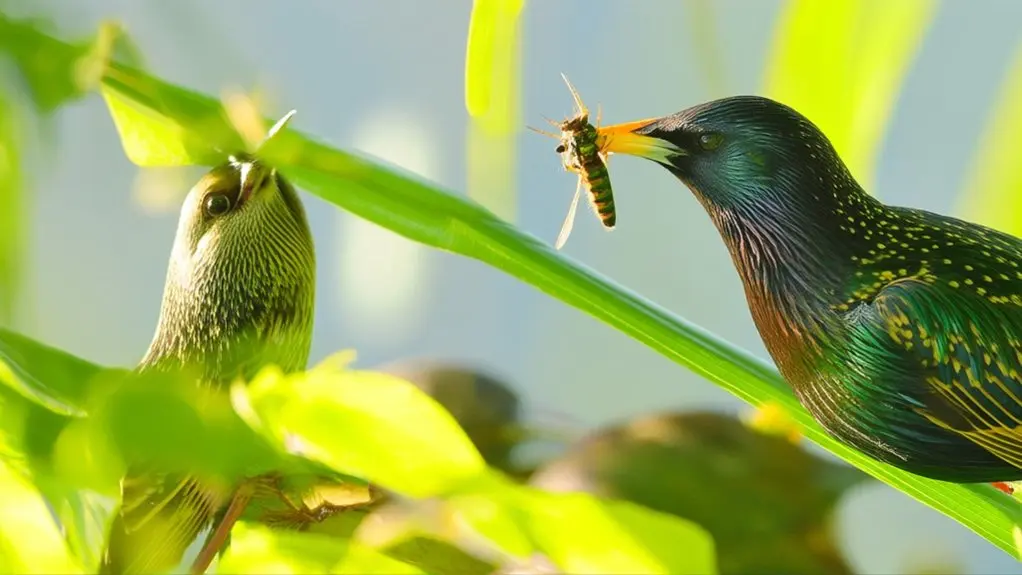
Yes, many bird species actively prey on other birds. They use sharp talons and hooked beaks to catch smaller or weaker individuals. This behavior provides essential nutrients for their survival.
But it also increases their risk of injury and exposure to diseases like avian influenza. Cannibalism may happen under stress or when food is scarce. Usually, it targets young or injured birds.
Predation plays a key role in keeping the ecosystem balanced. Knowing the risks and safety measures can help you support local birds more effectively. It’s all about understanding how nature works and lending a hand when needed.
Which Bird Species Eat Other Birds?
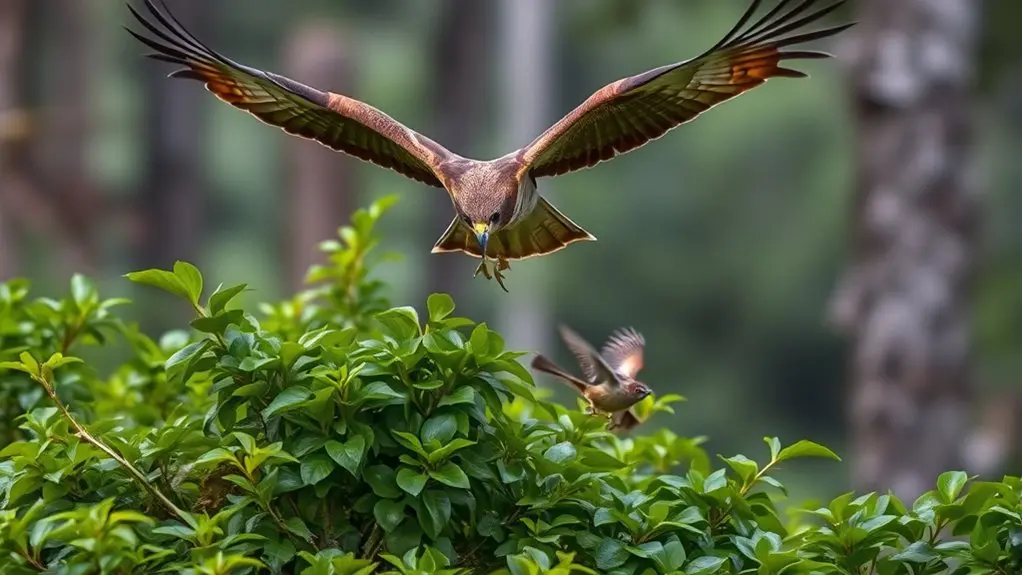
Although many birds primarily eat insects, seeds, or fish, several species actively prey on other birds as an essential part of their diet. Raptors like hawks, owls, falcons, and eagles regularly hunt various bird species, including pigeons, waterfowl, and songbirds.
Many birds hunt other bird species as a key part of their diet, including raptors like hawks and eagles.
You’ll also find smaller but aggressive species such as shrikes that attack and consume smaller birds or nestlings. Brood parasites, like cuckoos, indirectly exploit other birds by laying eggs in their nests. This leads the host to raise cuckoo chicks at the expense of their own offspring.
While rare, cannibalism occurs in some birds under stress or scarcity, where they consume members of their own species. Understanding these behaviors highlights the complex predatory relationships among avian species.
It’s pretty fascinating how diverse bird diets can be!
Why Do Some Birds Prey on Smaller or Their Own Kind?
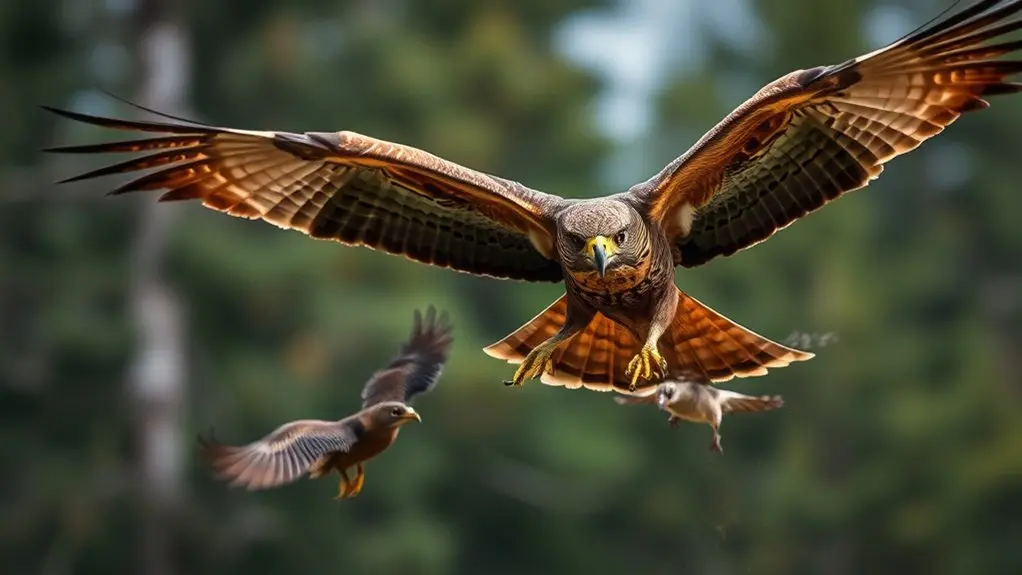
You’ll notice that birds sometimes prey on smaller birds or even their own kind mainly because of nutritional needs, territorial disputes, and environmental pressures like food scarcity.
When food is hard to come by, cannibalism within the same species often happens as a way to cope. It’s also a form of competition where individuals try to reduce stress on the population.
Understanding these behaviors actually gives us insight into their role in the ecosystem. For example, this kind of predation helps control population numbers and keeps the balance among species in check.
Reasons For Predatory Behavior
Why do some birds prey on smaller or even their own kind? Predatory behavior in birds primarily comes from their natural diet and survival needs. Raptors like hawks and falcons hunt smaller birds because they need high-protein prey to keep up their energy.
Also, certain territorial or aggressive species might attack their own kind to reduce competition for resources. Environmental factors, like food scarcity or overcrowding, can increase predation risks. This often pushes birds to target vulnerable individuals, such as young or injured birds.
While cannibalism is rare, it sometimes happens under stress or malnutrition. It acts as a last-resort survival mechanism. So, understanding these reasons shows us that predation among birds is mostly adaptive. It’s driven by ecological pressures and survival strategies rather than random aggression.
Intra-Species Cannibalism Causes
When food becomes scarce or competition intensifies, certain bird species, such as shrikes and some hawks, may resort to intra-species cannibalism. You’ll find that young, injured, or weaker birds become prime targets, especially in densely populated nesting areas.
This behavior often arises from instinctual drives to secure limited resources or mates within the species.
Additionally, adult birds sometimes prey on smaller conspecifics to reduce competition or enhance survival chances during environmental stressors like habitat loss or severe weather. Territorial disputes can also trigger such predation.
Understanding these causes reveals that intra-species cannibalism is a complex survival strategy influenced by ecological pressures, individual condition, and behavioral instincts rather than random aggression within bird populations.
Ecological Impacts Of Predation
Building on the understanding that intra-species predation arises from survival pressures, examining the ecological impacts of such behavior reveals its role in shaping bird populations and ecosystems. When birds like hawks and owls prey on smaller birds, they regulate prey populations, preventing overpopulation and promoting ecosystem balance.
Intraspecific predation, seen in hawks and falcons, reduces competition by eliminating weaker or less dominant individuals. Factors such as food availability, habitat overlap, and territorial disputes influence these predation patterns.
This selective pressure can enhance genetic fitness within populations by favoring stronger individuals.
By controlling population dynamics and resource competition, avian predation plays a critical ecological role, maintaining biodiversity and stabilizing food webs within their habitats. Understanding these interactions helps clarify why some birds prey on smaller or conspecific individuals.
It’s pretty fascinating how these behaviors keep ecosystems balanced.
How Common Is Cannibalism Among Birds?
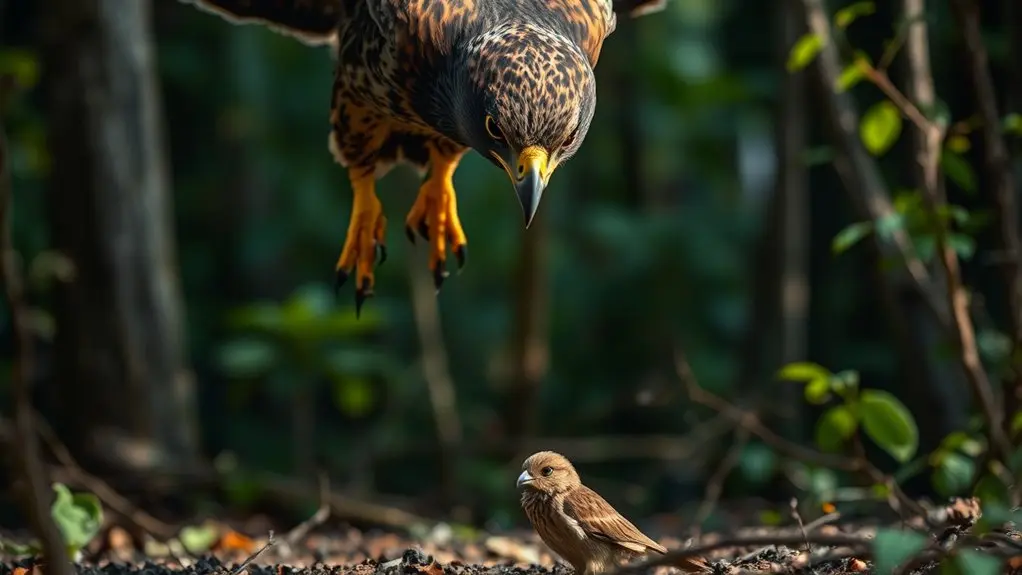
Cannibalism among birds occurs infrequently but has been documented in specific species, particularly under conditions of stress or limited food availability. You’ll find that it’s more common in young or weakened individuals, often in crowded or captive environments.
Species like house sparrows and some raptors have shown such behavior. This acts as a survival mechanism during extreme resource scarcity. While rare, this behavior is a natural response to environmental pressures rather than a widespread norm.
| Species Group | Conditions Favoring Cannibalism |
|---|---|
| House Sparrows | Captivity, overcrowding |
| Raptors | Food scarcity, stress |
| Young/Weakened Birds | Limited resources |
| General Behavior | Extreme environmental stress |
How to Spot Birds That Hunt Other Birds
You can usually spot bird predators by checking out a few key physical traits. Look for sharp talons, hooked beaks, and a sturdy, powerful build. These features are great clues that the bird might be a hunter.
Also, keep an eye on their behavior. Birds that hunt others often swoop down quickly in the air or use high perches to scan for prey.
When you notice these signs, it’s a good bet you’re watching a bird that actively goes after other birds.
Identifying Bird Predators
Although many birds coexist peacefully, several species actively hunt other birds. Knowing how to identify these predators is essential for understanding avian ecosystems.
Birds of prey, such as hawks, falcons, and owls, have keen eyesight that lets them spot prey from great distances or high above. You’ll often notice their sudden hunting dives and hovering near flocks—that’s a clear sign they’re on the hunt.
Corvids like ravens and crows also prey on smaller birds and scavenge carcasses. They often show aggressive territorial behaviors, too.
During nesting season, predation risk goes up since predators target eggs and chicks. This makes them more visible and easier to spot.
Recognizing these behaviors and physical traits helps you tell predators apart from non-threatening species. It really boosts your understanding of how birds interact and the bigger picture of their ecosystems.
Hunting Behaviors Observed
Recognizing the physical traits of bird predators provides a foundation for understanding their hunting behaviors. You can spot these hunters by observing rapid flights, aggressive chases, or stalking postures. Falcons and hawks often engage in high-speed chases or stooping dives to capture smaller birds.
Specialized hunters like peregrine falcons target prey during migration or breeding seasons. To help you identify these behaviors, here’s a summary:
| Behavior Type | Description | Example Species |
|---|---|---|
| High-Speed Chase | Fast pursuit of prey mid-air | Peregrine Falcon |
| Stooping Dive | Sudden steep dive to strike | Merlin |
| Ambush/Stalking | Perching quietly before attack | Cooper’s Hawk |
Watching for these signs helps you understand when a bird is hunting other birds. It’s pretty fascinating once you know what to look for!
Physical Traits Indicators
How can you quickly identify birds that prey on other birds? Look for sharp, hooked beaks designed to capture and tear prey efficiently. These birds often have keen eyesight, with forward-facing eyes that enhance depth perception critical for hunting.
Raptors like hawks and falcons exhibit strong talons and muscular legs, enabling them to grasp and kill smaller birds with precision. Notice also their stealthy flight patterns, which facilitate ambush strategies.
Some species, including shrikes, show aggressive behaviors accompanied by robust bills and sharp claws, further adapted for predation.
How Bird Predation Affects Ecosystem Balance
Why do predatory birds play a crucial role in maintaining ecosystem balance? They regulate prey populations, such as smaller birds and rodents, preventing overpopulation and ecosystem disruption. These predators influence prey behavior and nesting, promoting ecological diversity.
Plus, predation pressure drives natural selection, which helps foster adaptive defenses in prey species.
| Role of Predatory Birds | Impact on Ecosystem | Resulting Effect |
|---|---|---|
| Population control | Limits prey overpopulation | Maintains species diversity |
| Behavioral influence | Alters prey habits | Enhances ecological niches |
| Natural selection | Encourages adaptive traits | Improves survival capabilities |
When you understand these dynamics, it’s easier to appreciate how bird predation sustains ecosystem health by balancing species interactions and promoting biodiversity.
Risks for Birds That Eat Other Birds
Although predatory birds play a vital role in ecosystems, those that consume other birds face significant health risks. When you eat injured or diseased prey, you risk exposure to pathogens such as avian influenza or salmonella. This can compromise your immune system and overall health.
Furthermore, predation behavior increases your likelihood of injury during hunts and elevates stress levels, which can impair your fitness.
If you belong to a smaller species that preys on other birds, you might encounter legal restrictions or conservation challenges due to your impact on local populations.
Additionally, the nutritional value of prey birds varies, so relying heavily on them may disrupt your energy balance.
These factors underline the complex risks you navigate as a bird-eating predator within your environment.
Disease Risks From Bird-On-Bird Predation
Beyond the immediate physical dangers, bird-on-bird predation also plays a significant role in the spread of diseases within avian communities. When predatory birds hunt, they come into direct contact with prey, which helps pathogens like avian influenza spread. This contact, combined with shared feeding sites, increases the risk of parasite and bacterial infections.
Bird-on-bird predation spreads diseases like avian influenza through direct contact and shared feeding sites.
Predation events cause stress and injuries in prey birds, which can weaken their immune systems. When that happens, these birds become more susceptible to illness.
On top of that, overcrowded feeding stations make things worse by concentrating vulnerable birds in one spot.
Species like hawks and falcons act as vectors, potentially carrying and transmitting diseases during hunting. So, understanding these dynamics is really important for evaluating the broader health impacts of bird-on-bird predation beyond just the immediate physical harm.
Safety Measures to Reduce Predation at Bird Feeders
When you want to protect visiting birds from predators, implementing targeted safety measures at feeders is essential. Install predator guards to prevent attacks from cats and larger animals. Position feeders at least 12 feet away from cover to reduce ambush opportunities, and place thorny or spiny barriers underneath to deter ground predators.
Use transparent or reflective window decals to minimize bird collisions, which predators can exploit. Keep feeders clean by promptly removing spilled seed, as leftover food attracts unwanted scavengers and predators.
Situate feeders in open, visible areas to enhance birds’ ability to detect and escape threats early.
These scientifically supported strategies collectively reduce predation risks, promoting safer feeding environments for wild birds. Following these simple steps can really make a difference in keeping your feathered visitors safe and happy.
How to Support Local Birds Without Encouraging Harmful Behavior
If you want to support local birds effectively, focus on creating environments that encourage natural behaviors rather than dependency on supplemental feeding. Plant native species to provide authentic food sources and habitats. This approach reduces the need for artificial feeding.
Avoid offering bread or processed foods, as these can harm birds and foster unhealthy reliance. Installing bird-friendly nesting and roosting boxes promotes natural breeding and reduces overcrowding at feeders. It’s a simple way to help them thrive.
Limit the number of feeders and space them appropriately to minimize disease transmission and aggressive competition. Additionally, educating your community about the ecological significance of native birds supports sustainable populations without disrupting natural behaviors.
When you do these things, you help maintain balanced bird communities while minimizing behavioral risks linked to human intervention.
Frequently Asked Questions
Can Pet Birds Safely Eat Bird-Based Protein Supplements?
You can safely feed bird-based protein supplements to pet birds if you choose high-quality, species-appropriate options and follow recommended dosages.
Always consult an avian vet to avoid health risks like obesity or kidney strain. It’s better to be safe and get professional advice before adding anything new to your bird’s diet.
Do Baby Birds Ever Eat Other Baby Birds?
Baby birds rarely eat other baby birds, as their diet mainly consists of insects and regurgitated food. Cannibalism or predation among nestlings happens only under extreme stress or food scarcity. It’s pretty uncommon in most species.
How Do Birds Digest Feathers From Their Prey?
Like a skilled alchemist, your bird uses its gizzard’s muscular contractions and acidic stomach to break down prey feathers. Since keratin resists digestion, your bird regurgitates undigested feather pellets, preventing harmful buildup in its system.
It’s a pretty clever process. The gizzard works hard to grind and soften the feathers, but some parts just can’t be broken down. So, instead of letting those bits cause trouble inside, the bird gets rid of them by coughing up pellets. That way, your bird stays healthy and comfortable.
Are There Cultural Beliefs About Birds Eating Other Birds?
Yes, you’ll find cultural beliefs linking birds eating other birds to symbolism like death or transformation. These stories often serve as metaphors for survival, influencing local views on predatory birds and their ecological roles.
People tend to see these behaviors as more than just natural events. They can represent change or the cycle of life in many traditions. So, it’s not just about the act but what it means to different cultures.
Can Bird Predation Behavior Be Trained or Changed?
You can’t exactly reprogram birds’ natural hunting instincts, as their predation behavior is deeply ingrained. While environmental shifts may nudge adaptations, deliberate training or significant behavior change remains beyond practical reach for wild species.
That said, birds can sometimes adjust their habits based on experience or changes in their surroundings. But completely changing how they hunt? That’s a tough call and pretty rare in the wild.
Conclusion
You might think birds eating birds is a rare twist in nature’s script, but it’s actually a survival strategy some species use. While predation helps maintain ecosystem balance, it also carries risks like disease transmission.
By understanding these behaviors, you can better protect local birds at feeders without encouraging harmful habits. Remember, nature’s web is complex. Each thread, even the sharp ones, plays a crucial role in keeping the whole system intact.