
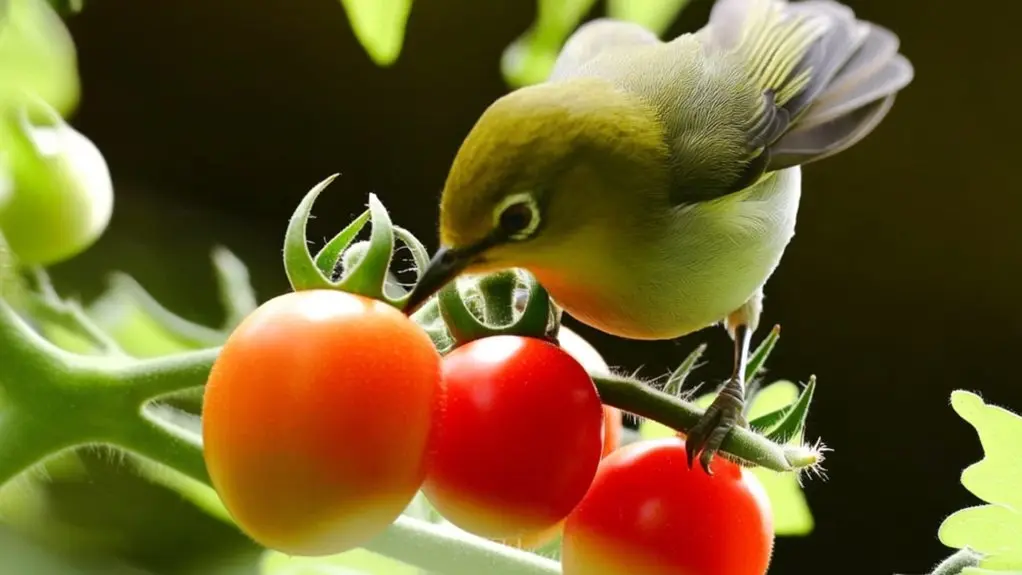
Yes, many common birds like robins, sparrows, and finches eat ripe cherry tomatoes because the bright color and juicy flesh provide nutrients and hydration, especially in dry seasons. They peck small, neat holes to access the soft interior.
While ripe tomatoes are safe and healthy for birds, green parts contain toxins and should be avoided. Managing hydration sources and deterrents helps protect your crop.
You can explore effective ways to identify damage and safeguard your tomatoes. It’s all about keeping your garden thriving while letting the birds enjoy a tasty treat.
Which Birds Commonly Eat Cherry Tomatoes?
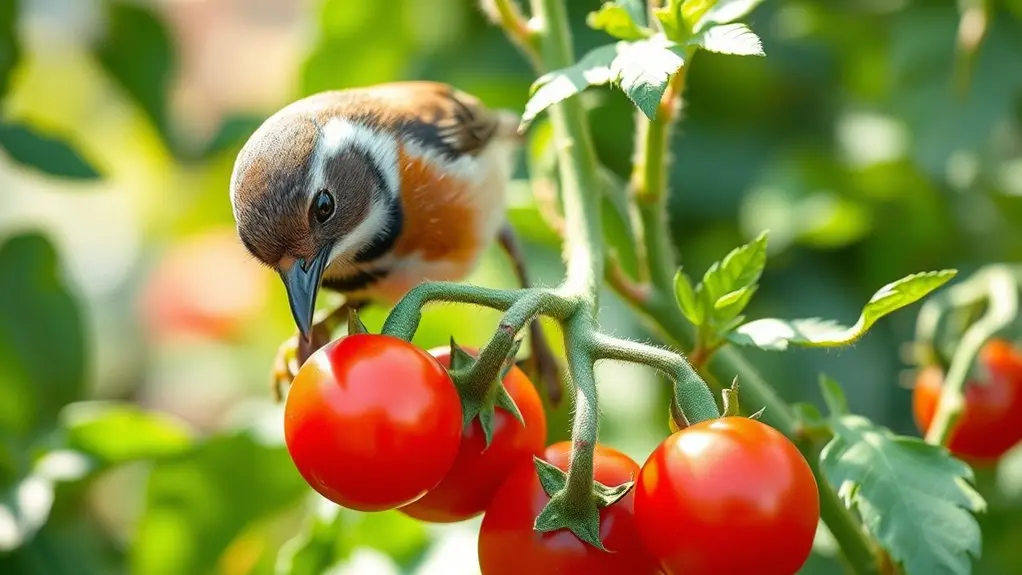
Although many backyard birds enjoy a varied diet, several species commonly eat cherry tomatoes when they’re ripe and accessible. You’ll often notice mockingbirds, starlings, and sparrows feeding on these small fruits.
Robins and jays also frequently peck at cherry tomatoes in gardens.
Robins and jays often enjoy pecking at cherry tomatoes growing in gardens.
When other food sources are scarce, some small songbirds like finches may target cherry tomatoes as a nutritional option.
Additionally, blackbirds and thrushes are known to feed on cherry tomatoes, often leaving small beak marks on the fruit.
This feeding behavior varies among species, but many fruit-eating birds incorporate cherry tomatoes into their diet.
Understanding which birds commonly consume cherry tomatoes can help you manage your garden and anticipate potential interactions with local wildlife.
Why Do Birds Peck at Cherry Tomatoes?
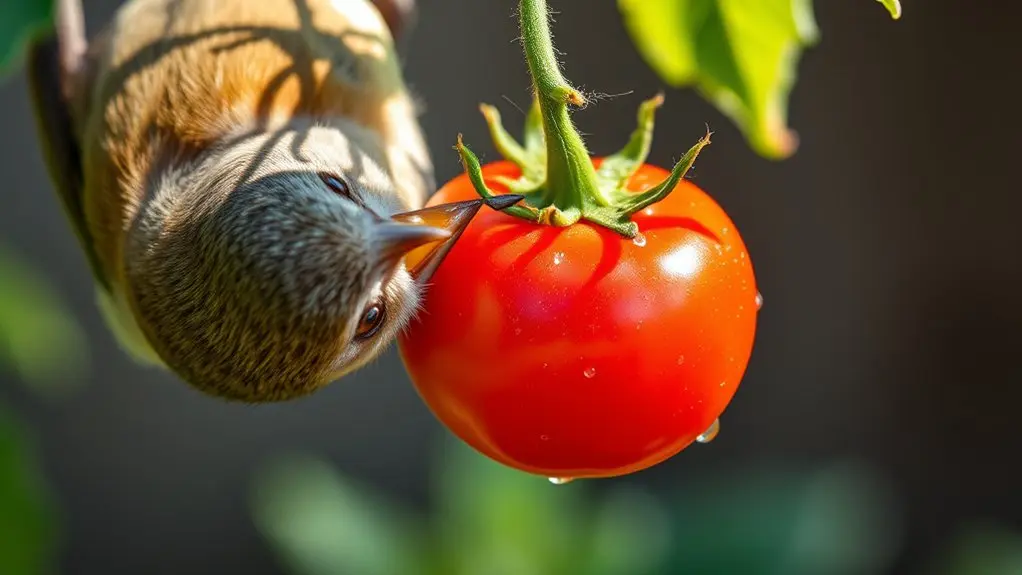
You’ll notice birds peck at cherry tomatoes mainly because their bright red color catches their eye. It’s like a big, shiny sign saying “snack time!” Plus, the sweet scent of the fruit draws them in even more.
And don’t forget about the juicy moisture inside—especially when things are dry outside, that’s super appealing to them.
Basically, birds go for ripe, soft tomatoes because they’re packed with nutrients and easy to eat. So, it’s kind of like grabbing a quick, tasty meal without much effort. Makes sense, right?
Reasons Behind Pecking
When birds peck at cherry tomatoes, they’re mainly after the fruit’s water and nutrients. This gives them important hydration and nourishment. You’ll notice this especially during dry seasons when water is harder to find.
Birds also peck to get soft, nutrient-rich food to feed their young. This helps the babies survive better. Often, their pecking leaves just small beak marks without fully damaging or eating the fruit. It’s like a careful way of foraging that avoids wasting food.
Attraction Factors Explained
Because cherry tomatoes display a bright red color that signals ripeness, birds are naturally drawn to them as a reliable food source. This vivid coloration acts as a visual cue, instinctively triggering feeding behaviors in many bird species.
Plus, ripe cherry tomatoes have a soft texture and high water content, making them easy for birds to peck and digest. During dry seasons, birds may also target these fruits to supplement their hydration needs.
When birds peck at cherry tomatoes, they’re checking ripeness and getting to the sweet, nutrient-rich flesh inside. Understanding these attraction factors helps explain why birds often interact with cherry tomato plants, since the fruit offers both nutritional value and hydration in an accessible form.
How to Identify Bird Damage on Cherry Tomatoes
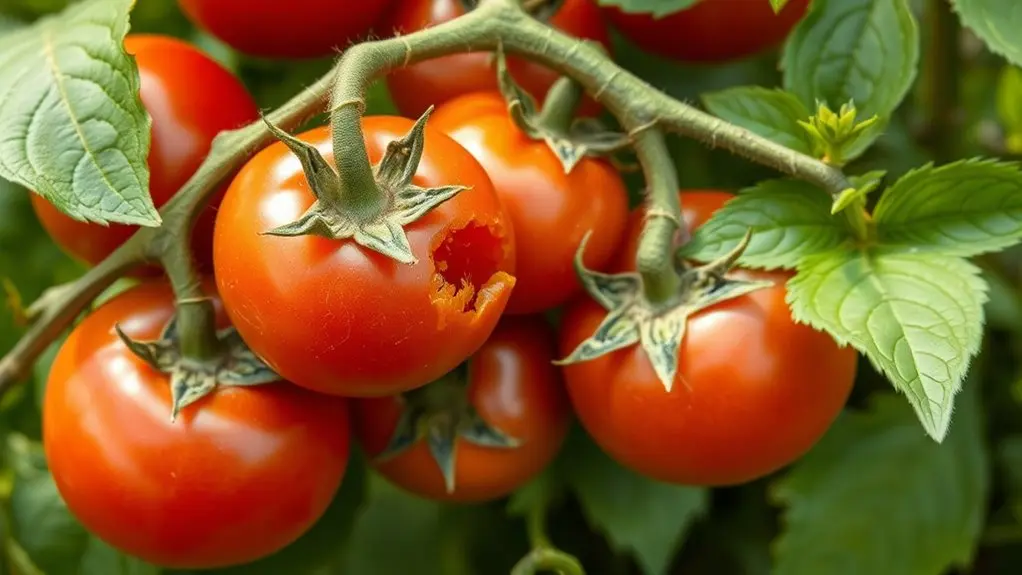
You can tell if birds have been nibbling on your cherry tomatoes by spotting small, neat holes or shallow gouges made by their beaks on the fruit’s surface.
Birds usually don’t mess with the plant much or scatter whole tomatoes around like mammals do, so the damage tends to be just on the fruit itself.
Also, if you see partially eaten tomatoes lying on the ground near your plants, that’s a pretty good sign that birds have been at work.
Common Damage Signs
Although bird damage on cherry tomatoes can be subtle, you can identify it by looking for small, neat beak punctures or shallow gouges on the fruit’s surface. Birds typically peck rather than tear, leaving clean, round holes.
You may also notice partially eaten tomatoes on the ground near the plant.
Importantly, the plant itself remains mostly undamaged, as birds focus on the fruit.
Here are common signs to watch for:
- Small, precise punctures or shallow gouges on cherry tomatoes.
- Partially eaten tomatoes with clean, round holes, often found on or beneath the plant.
- Presence of pecked fruit scattered nearby, indicating bird feeding activity.
Recognizing these signs helps you confirm bird-related damage effectively. Just keep an eye out for those telltale holes and the fruit left behind!
Differentiating From Other Animals
When distinguishing bird damage from that caused by other animals, focus on the characteristic small, neat punctures birds leave on cherry tomatoes. Birds peck shallow holes without tearing or scattering plant debris, unlike rodents that often chew irregularly and damage the plant itself.
You’ll notice bird damage is usually limited to the fruit, which generally stays attached to the vine after pecking.
In contrast, larger pests tend to carry or scatter the tomatoes around. To confirm bird activity, look for pecked fruits with beak-shaped punctures and scattered fallen tomatoes beneath the plant. These precise signs help you figure out that birds are the culprits.
Once you know it’s birds, you can use targeted management strategies to protect your cherry tomatoes effectively. It’s all about spotting those small clues and taking action before the damage gets worse.
Are Cherry Tomatoes Safe and Healthy for Birds?
Since ripe cherry tomatoes contain beneficial nutrients and hydration, birds such as mockingbirds and robins often consume them without harm. You should know that while ripe cherry tomatoes are generally safe, their green parts contain toxic alkaloids that can pose health risks.
To keep birds healthy, consider these key points:
- Offer only ripe cherry tomatoes, as green, unripe tomatoes can cause digestive issues.
- Provide cherry tomatoes in moderation to avoid overconsumption, which may lead to health problems.
- Recognize that the bright color and soft texture attract birds, supplying hydration and essential nutrients.
Effective Visual Deterrents for Cherry Tomatoes
If you want to protect your cherry tomato plants from birds, using visual deterrents can be highly effective. Hang reflective objects like old CDs, DVDs, or aluminum pie pans near your plants to create flashing light effects that startle birds.
Wind spinners mounted on poles add dynamic movement, enhancing the visual disruption.
Bright, shiny garlands made of foil or metallic material produce shimmering reflections that further repel birds. Combining multiple reflective deterrents such as tape, CDs, and pie pans increases overall effectiveness by amplifying visual stimuli.
To maintain their impact, regularly reposition and rotate these items, preventing birds from becoming accustomed to them.
This strategic use of moving and reflective materials leverages birds’ sensitivity to light and motion. It provides a scientifically grounded method to reduce bird damage to your cherry tomatoes.
Physical Barriers for Cherry Tomato Protection
Although visual deterrents can reduce bird damage, physical barriers provide a more reliable solution to protect your cherry tomato plants. By creating a barrier, you effectively prevent birds from accessing the fruit without compromising pollination.
Consider these options:
- Use fine-mesh netting or bird-proof poultry netting around your plants. This blocks birds while allowing pollinators through.
- Construct cages from garden mesh or tulle to encase the plants, ensuring full coverage.
- Regularly inspect and adjust your netting to eliminate gaps that birds can exploit.
Keep in mind, coarse mesh may hinder pollination and harvesting, so choose materials carefully. Properly managed physical barriers offer a scientifically sound approach to protect your cherry tomatoes from bird damage.
Providing Water Sources to Reduce Bird Damage
When you provide a clean, accessible water source away from your cherry tomato plants, you can considerably reduce bird damage by satisfying their hydration needs. Birds often peck at tomatoes during dry seasons because they’re looking for water inside the fruit.
Placing a birdbath or water dish at a distance offers an alternative hydration source and helps divert their attention from your crops. Regularly renewing this water encourages birds to drink there instead of targeting your ripe tomatoes.
Make sure the water is clean and easy for them to access—that’s key to keeping their interest. This simple strategy reduces the chances of birds damaging your cherry tomatoes by giving them a place to quench their thirst elsewhere.
How to Combine Deterrents for Best Tomato Protection
By combining visual, auditory, and physical deterrents, you create a multi-sensory barrier that substantially improves protection for your cherry tomatoes. This integrated approach targets diverse bird behaviors, enhancing overall effectiveness.
To optimize protection, use scare balloons, reflective tape, and netting together to provide visual cues and physical barriers. Rotate and reposition deterrents frequently to prevent birds from habituating and ignoring them.
Combine scare balloons, reflective tape, and netting, rotating them regularly to keep birds alert and away.
Also, incorporate moving objects like pinwheels and sound-makers such as banging pie pans to stimulate bird aversion through motion and noise.
This combination addresses both flying and ground-level bird activity, reducing access to your crop. Using multiple deterrent types at once creates a dynamic environment that discourages birds more reliably than single methods.
Just keep up with consistent management of deterrent placement and variety, and you’ll ensure sustained tomato protection throughout the growing season.
When to Harvest to Minimize Bird Damage
You should harvest cherry tomatoes early in the morning or right when they’re fully ripe to keep bird damage to a minimum. Picking the fruit before it gets too ripe makes it less appealing to birds.
Plus, it stops the tomatoes from sitting on the vine too long and attracting unwanted attention.
If you pay close attention to the signs of ripeness, you can time your harvest just right and protect your crop as much as possible.
Optimal Harvest Timing
Although birds are persistent foragers, harvesting cherry tomatoes early in the morning or at full ripeness considerably reduces their exposure to pecking.
To optimize harvest timing and protect your crop, follow these guidelines:
- Harvest tomatoes as they reach peak color and firmness to ensure quality and reduce bird attraction.
- Check your plants regularly throughout the day to promptly remove ripe fruit before birds can damage them.
- Maintain a consistent harvesting schedule to minimize the window when tomatoes are most vulnerable to bird pecking.
Delaying harvest until tomatoes are overripe just increases the risk of damage.
Early Picking Benefits
Timing your harvest to coincide with early morning hours or full ripeness considerably reduces the exposure of cherry tomatoes to bird pecking. By picking tomatoes early in the day, you limit their availability during peak bird feeding periods.
Additionally, harvesting fruit before it turns fully red decreases its attractiveness to birds, who prefer the most vibrant, ripe tomatoes. Regularly removing ripe cherry tomatoes prevents them from staying on the plant long enough to invite pecking damage.
Early picking also lets you enjoy ripe fruit indoors, away from pests. By timing your harvest to stay ahead of bird activity, you effectively minimize crop loss and protect your yield.
This proactive approach is essential for maintaining healthy, undamaged cherry tomatoes throughout the growing season.
Signs of Ripeness
Since birds target cherry tomatoes based on color and softness, recognizing clear signs of ripeness is essential to minimize crop damage. You should harvest tomatoes when they display full, vibrant colors, like bright red, orange, or yellow, which means they’re at their peak ripeness.
Delaying harvest makes the tomatoes softer and more attractive to birds, so it’s best to pick them on time.
To optimize timing, follow these guidelines:
- Monitor your plants regularly to spot ripe tomatoes quickly. This helps reduce the time they’re exposed to birds.
- Harvest tomatoes as soon as they reach the color you want to prevent them from getting too soft and damaged.
- If birds are a big problem, think about picking the tomatoes a little earlier than fully ripe. You might lose some flavor, but you’ll protect more of the crop.
Additional Tips for Protecting Cherry Tomatoes From Birds
When you install fine mesh netting around your cherry tomato plants, you create a physical barrier that effectively blocks birds from reaching the fruit while still allowing sunlight and air to circulate. Make sure to regularly inspect and adjust the netting to eliminate any gaps. This helps prevent bird access and reduces the risk of entanglement.
You can also use visual deterrents like reflective tape or shiny objects. These scare birds away without getting in the way of pollination or harvesting.
Be sure to harvest ripe cherry tomatoes promptly and bring them indoors. This helps minimize bird damage.
Another natural way to keep birds away is by planting bird-repelling species like marigolds or basil nearby. Combining these strategies really boosts protection, so you end up with healthier cherry tomato crops and less bird trouble.
Frequently Asked Questions
Can Birds Digest Cherry Tomato Seeds Safely?
Yes, birds can safely digest cherry tomato seeds because their digestive system breaks down the seed coat effectively.
You shouldn’t worry about occasional ingestion, but it’s best to avoid large quantities. Eating too many might cause minor digestive upset in your birds.
Do Cherry Tomatoes Attract Certain Bird Species More Than Others?
Yes, you’ll notice that frugivorous birds like robins and thrushes are more attracted to cherry tomatoes due to their bright color and sweetness. They really seem to enjoy the taste and the easy snack it provides.
Opportunistic feeders such as sparrows may also target them when other foods are scarce. So, while not their first choice, cherry tomatoes can still be on their menu if they need a quick bite.
How Often Should I Check My Cherry Tomato Plants for Bird Activity?
You should check your cherry tomato plants at least twice daily, early morning and late afternoon, when bird activity peaks.
Frequent inspections help you spot damage early. That way, you can step in quickly to protect your crop effectively. It really makes a difference!
Can Feeding Birds Cherry Tomatoes Affect Their Natural Diet?
Yes, feeding birds cherry tomatoes can affect their natural diet by reducing their intake of essential seeds and insects.
You should offer tomatoes sparingly to avoid disrupting their nutritional balance and natural foraging behaviors. It’s all about keeping things balanced so the birds stay healthy and happy.
Are There Any Signs Birds Dislike Cherry Tomatoes?
Notice birds pecking repeatedly but not eating cherry tomatoes? That’s a clear sign they dislike them.
You’ll see hesitation, avoidance of green ones, or preference for other foods, indicating acidity or taste deters their consumption.
Conclusion
You can protect your cherry tomatoes from hungry birds by understanding their habits and using smart deterrents like reflective tapes or water sources. Think of your garden as a delicate ecosystem. Balancing care and defense keeps your fruits safe.
Harvesting at the right time and combining methods acts like a shield, minimizing damage. With precise, proactive steps, you’ll safeguard your tomatoes while respecting the birds’ natural behaviors. This way, you ensure a fruitful and thriving garden.