
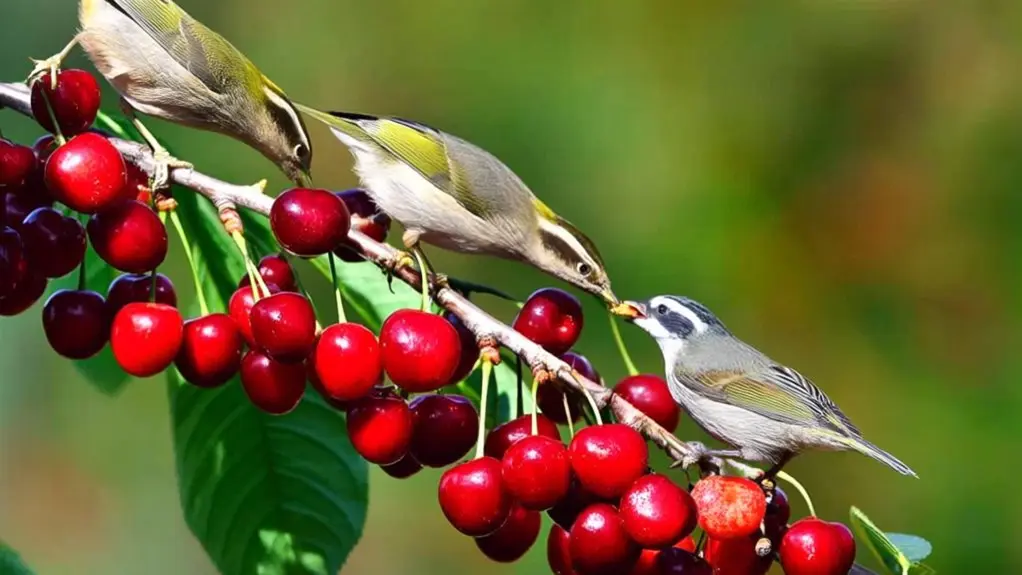
You can let birds eat cherries safely, as many species, including robins and bluebirds, consume them for quick energy. They also carry cherries to feed nestlings once the little ones are old enough to digest fruit.
While cherries aren’t enough protein for young birds, they do provide important supplemental nutrition during growth. Birds also transport cherries to safer spots, which helps reduce predation risks.
If you want to understand how this behavior affects orchards and learn the best ways to protect your crop, keep exploring these insights.
Which Birds Eat Cherries
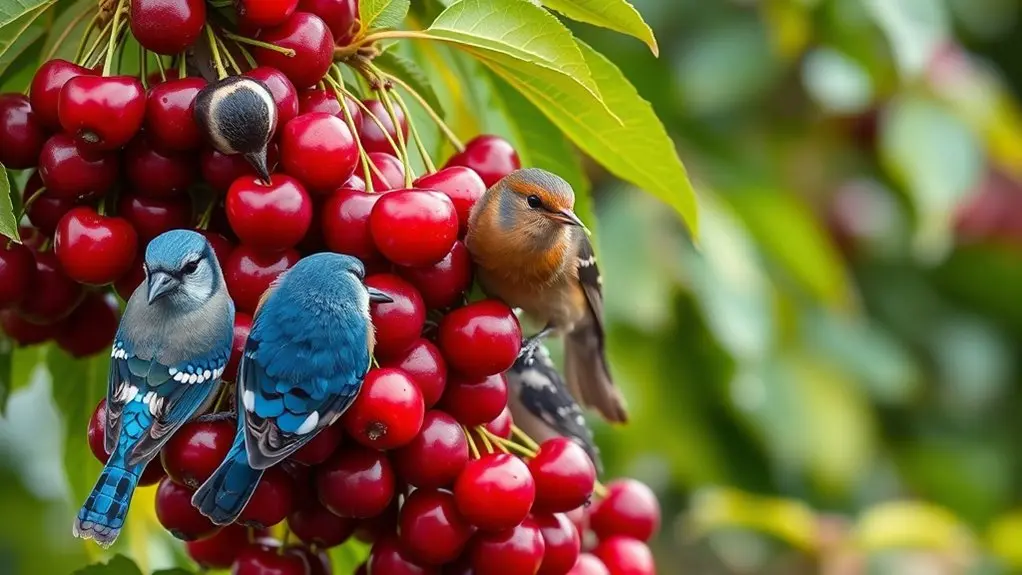
Although over twenty bird species have been observed eating cherries, you’ll most commonly find Northern Mockingbirds, Downy Woodpeckers, Eastern Bluebirds, and American Robins feeding on these fruits.
Cedar Waxwings, Gray Catbirds, and Wood Thrushes also consume cherries, often alongside elderberries and mulberries. Many of these species include other fruits in their diet, such as blackberries and dogwood berries, reflecting their frugivorous habits.
Cedar Waxwings, Gray Catbirds, and Wood Thrushes enjoy cherries along with elderberries, mulberries, and other fruits.
This diverse consumption highlights cherries’ nutritional role in supporting various bird species.
Significantly, historical observations dating back over a century document birds feeding cherries to their young, which really shows the fruit’s ecological importance.
Understanding which birds eat cherries helps you appreciate their dietary preferences and the broader interactions within ecosystems where these fruits serve as crucial food resources.
Why Birds Carry Cherries Away From Trees
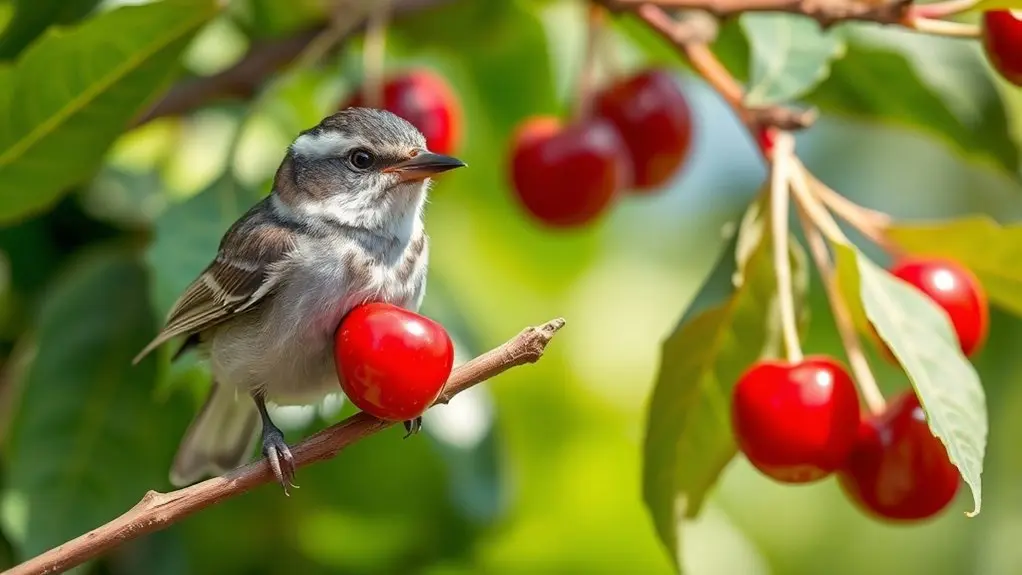
While many bird species enjoy eating cherries directly from the tree, you’ll often notice them carrying the fruit away instead. Birds like Northern Mockingbirds and Downy Woodpeckers frequently transport cherries to safer locations, such as their nests, to feed their young.
This behavior reduces their exposure to predators and disturbances, allowing them to consume or store food in a more secure environment.
You’ll find that most cherry carrying occurs during the later nestling stages when fledglings can better digest berries and gain nutritional benefits. So, carrying cherries away isn’t random; it’s a selective foraging strategy aimed at providing nourishment to offspring or ensuring safer feeding conditions away from the tree’s vulnerability.
This adaptive behavior enhances survival chances for both adult birds and their young.
How Birds Feed Cherries to Their Nestlings
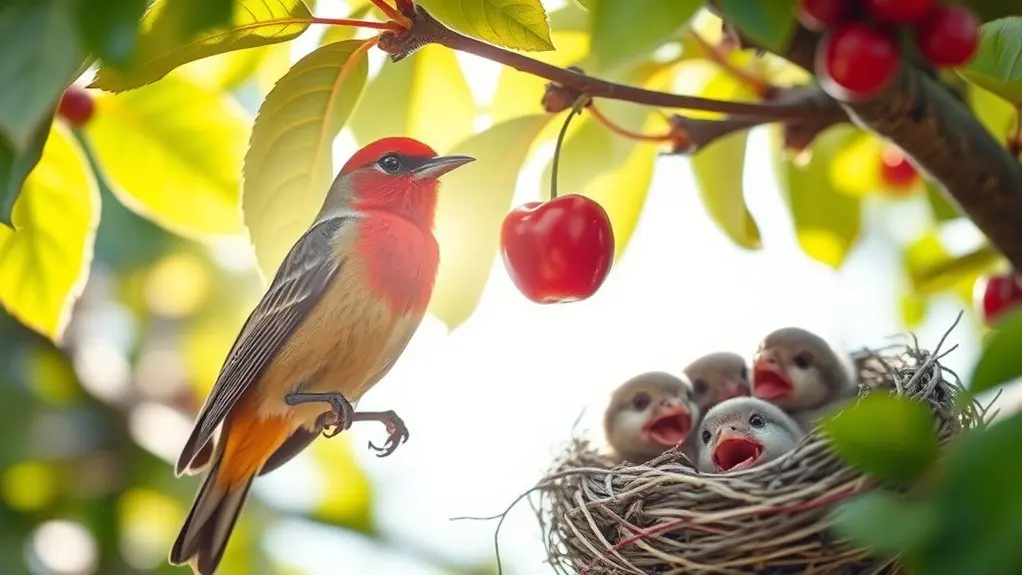
When you watch birds feeding cherries to their nestlings, you’ll notice they pick moments when the young are mature enough to digest the fruit well. Species like Northern Mockingbirds, Eastern Bluebirds, and American Robins carry cherries to their nests, often away from the tree. It’s kind of interesting how they do this.
Birds like robins and bluebirds carefully time feeding cherries to ensure their nestlings can digest them.
This behavior usually happens during later stages when the nestlings can handle the sugars and nutrients in the berries more effectively. Birds deliver cherries right into the nestlings’ beaks, making sure they eat quickly. It’s like they’re handing over a little energy boost.
Choosing cherries as food makes sense because they’re easy to access and packed with energy, which is just what the babies need during this crucial growth phase. By timing the feeding just right, birds help their offspring digest and grow better.
It’s a smart feeding strategy that really helps the young survive in the wild.
Can Nestlings Get Enough Nutrition From Cherries?
You’ve seen how birds carefully time feeding cherries to their nestlings, but you might wonder if cherries alone can meet the young birds’ nutritional needs. Nestlings need high-protein foods like insects for proper growth, which cherries just don’t have. While older nestlings can digest cherries better, early-stage nestlings depend heavily on protein-rich diets.
Cherries provide quick energy and are easy for parents to collect, so they serve as a supplemental food source rather than the primary one.
| Nutritional Aspect | Role of Cherries |
|---|---|
| Protein Content | Low; insufficient for growth |
| Digestibility | Better in older nestlings |
| Energy Supply | Provides quick energy |
| Collection Ease | High; parents gather easily |
| Feeding Stage | Later stages, not early growth |
Bird Damage in Cherry Orchards
Because birds like mockingbirds, woodpeckers, and thrushes actively feed on cherries during the ripening season, they cause significant damage to orchards by pecking holes in the fruit and carrying cherries away from trees. This feeding behavior results in physical damage, such as peck marks and holes, which degrade fruit quality and reduce market value.
You’ll find that bird activity can lead to substantial crop losses as entire bunches of cherries are removed or spoiled before harvest. This negatively impacts both yield and profitability for growers. Bird damage is a major concern requiring precise monitoring during critical ripening periods.
While various deterrent methods exist, understanding the extent and nature of bird damage is essential for developing effective management strategies in commercial cherry orchards. It’s really about knowing when and how birds are causing problems so you can act accordingly.
Natural Ways to Protect Cherries From Birds
Although birds pose a significant threat to cherry crops, you can use several natural methods to protect your fruit effectively.
First, install physical barriers like netting over your cherry trees to prevent birds from reaching the cherries.
Use netting as a physical barrier to keep birds from accessing your cherry trees.
Complement this by hanging reflective objects such as CDs or reflective tape, which confuse birds’ vision and deter them.
Visual scare devices like balloons with painted faces or fluttering flash tape can also reduce bird visits during ripening.
Additionally, plant alternative berry-producing species away from your cherry trees to divert birds’ attention.
Finally, provide designated feeding areas with grains or sunflower seeds. This supplemental feeding helps keep birds occupied and away from your cherries during critical harvest periods, ensuring better protection without harmful interventions.
How Falconry Deters Cherry-Eating Birds
How exactly does falconry deter birds from feasting on cherries? Falconry uses trained birds of prey, like falcons, to create a natural predator presence in cherry orchards. When you release these falcons during peak feeding times, the pest birds see a direct threat and steer clear of the area.
The falcons’ flight patterns mess with the feeding behavior of cherry-eating birds, cutting down their ability to eat the fruit. By setting up protection zones during critical periods, falconers get the most out of their deterrence efforts.
This method is an eco-friendly, humane alternative to chemical repellents or physical barriers. It lets you protect your cherry trees without harming the environment or the birds.
Falconry blends behavioral ecology with practical orchard management to make bird control effective and sustainable.
Physical Barriers to Keep Birds Off Cherry Trees
You can easily protect your cherry trees by using bird netting, just make sure it’s secured tightly around the base so birds can’t get in.
Another trick is to add reflective materials like old CDs, mirrors, or hanging tape. These create flashes of light that birds don’t like and help keep them away.
When you combine these physical barriers, it really cuts down on fruit loss and also stops birds from getting used to the deterrents.
Effective Netting Techniques
Why should you consider netting as your primary defense against birds eating cherries? Netting offers a physical barrier that effectively prevents birds from accessing fruit. This helps minimize crop loss with minimal impact on tree health.
To optimize netting effectiveness, focus on these key techniques:
- Completely cover the cherry tree with fine, durable, UV-resistant netting. Make sure to secure the edges firmly to the ground to block bird entry.
- Maintain adequate space between the net and fruit to ensure proper airflow and prevent damage to cherries.
- Regularly inspect the net for tears or openings. Repair them promptly to keep an impenetrable barrier.
Using lightweight, easy-to-install netting makes application and removal during harvest efficient. Plus, it’s a practical and scientifically sound way to protect your cherry crop from birds.
Reflective Deterrent Materials
Although netting provides a reliable physical barrier, reflective deterrent materials offer an additional, non-invasive method to protect cherry trees from birds.
Using objects like CDs, pie tins, mirrors, or reflective tape creates flashing lights and movement that confuse and deter birds. You should tie reflective streamers in sunny areas to maximize visibility and effectiveness.
Place these materials strategically where birds typically perch or approach the trees to optimize deterrence.
To prevent birds from getting used to them, regularly reposition or change reflective items. The shimmering reflections and unpredictable motion make cherry trees less attractive, reducing bird damage.
Best Time to Use Bird Deterrents on Cherry Trees
You’ll want to start using bird deterrents when the cherries begin to change color and start ripening, which usually happens in late spring or early summer. It’s important to keep those scare devices out consistently during this ripening period.
Just before the cherries reach full ripeness, putting up physical barriers can really help maximize protection.
And once you’ve harvested your cherries, make sure to take down the deterrents right away. This way, the birds don’t get too used to them, and the devices stay effective for next time.
Deterrent Timing Guidelines
When cherries start to change color, that’s the ideal time to hang bird deterrents like flash tape to maximize their scare effect. Applying deterrents too early or too late reduces their impact because birds either aren’t attracted yet or have already fed.
To guarantee the best protection, follow these timing guidelines:
- Deploy deterrents at the onset of fruit ripening to prevent early bird access.
- Remove deterrents promptly after cherry harvest to avoid habituation. This helps maintain their effectiveness in future seasons.
- Use deterrents only during vulnerable periods to minimize unnecessary disturbance to wildlife and keep the devices’ scare value high.
Removal And Replacement
Proper timing for removing and replacing bird deterrents plays a significant role in maintaining their effectiveness on cherry trees. You should install deterrents as cherries begin to change color, signaling the start of the ripening period when birds are most likely to feed.
Keeping deterrents in place during this vulnerable stage maximizes protection by minimizing bird habituation.
After harvest, promptly remove visual scare devices, such as flash tape, to prevent birds from becoming accustomed to them. This strategic removal and replacement schedule guarantees deterrents remain a novel threat, reducing feeding damage.
Safe and Effective Bird Repellents for Cherries
Although birds can cause significant damage to cherry crops, using safe and effective repellents helps protect your harvest without harming the fruit or the birds. To manage bird activity well, try these scientifically supported methods.
First, use non-lethal sprays like Avian Control. They provide up to two weeks of protection and don’t affect cherry quality.
Next, put up physical deterrents such as reflective tape and flash tape. These create visual disturbances that birds naturally avoid, especially when the cherries are ripening.
You can also apply organically approved bioinsecticides like Bulls-Eye. This reduces pest damage and indirectly lowers bird attraction to your cherries.
Combining these methods boosts their effectiveness. It’s a humane and reliable way to keep your cherry trees safe throughout the growing season.
Frequently Asked Questions
Are Cherries Safe for Pet Birds to Eat?
Yes, cherries are safe for pet birds if you remove the pits first. Make sure to feed only the flesh in small amounts. Too much can cause digestive issues or even obesity because of the natural sugars.
It’s a good idea to introduce cherries gradually. This way, you can keep an eye on how your bird reacts. Better safe than sorry, right?
Can Birds Spread Cherry Tree Diseases?
You’ll see birds flitting between cherry trees, unknowingly carrying fungal spores and bacteria on their feathers or feet. Their visits can spread diseases like bacterial canker.
Do Birds Prefer Cherries Over Other Fruits?
You’ll find birds often prefer cherries during peak seasons due to accessibility and ripeness. But they may choose other fruits with higher protein for feeding nestlings.
Species like mockingbirds show clear cherry preference in breeding periods. It’s interesting how their choices shift depending on what’s best for their young. Birds really know how to pick their meals!
How Do Birds Digest Cherry Pits?
You might think birds crack cherry pits, but most don’t digest them. Instead, they pass pits intact through their digestive tract. Sometimes, they disperse seeds by regurgitation or defecation.
This actually helps with natural cherry propagation. So, even though birds don’t eat the pits themselves, they play a big role in spreading cherry trees around. It’s pretty cool how nature works!
Can Feeding Cherries to Birds Affect Their Migration?
Feeding cherries to birds won’t affect their migration. Their movement depends on seasonal cues and biology, not specific foods.
Cherries might boost energy briefly, but they don’t change the timing or routes of migration. So, while it’s nice to help birds with food, it won’t make them migrate any differently.
Conclusion
You now know that many birds, like robins and cedar waxwings, eat cherries for their nutrients. They often carry them away to feed their nestlings.
For example, a Washington orchard used falconry and netting, and it reduced bird damage by 70%. Understanding bird behavior helps you apply deterrents effectively.
This way, you can protect your crop while keeping the birds safe. With precise timing and safe repellents, you can balance cherry harvest success and wildlife conservation efficiently.