
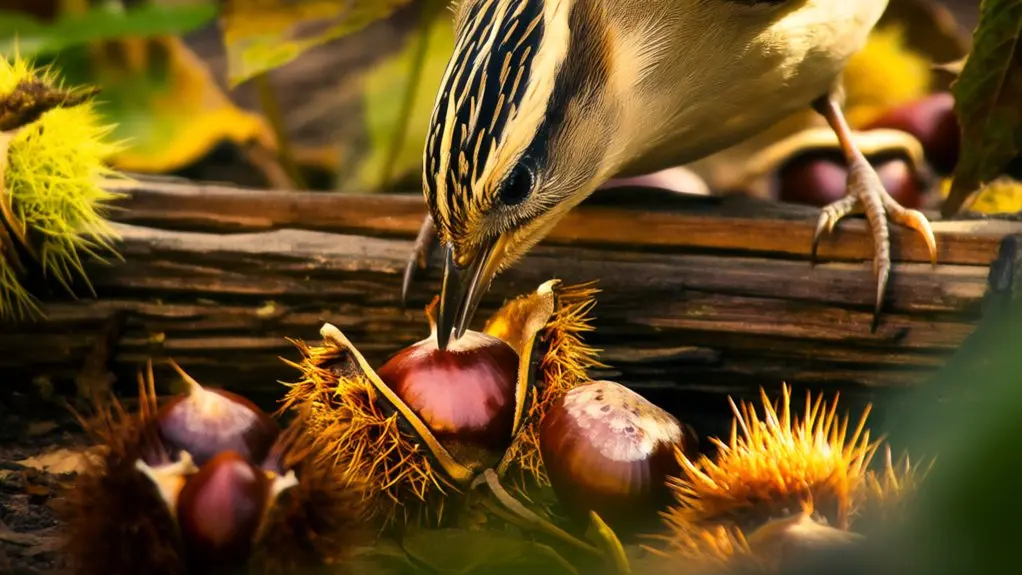
You can feed birds chestnuts safely only when they’re cooked. Raw chestnuts contain tannins and toxins that may cause digestive issues or toxicity. Cooking removes harmful compounds, softens the nut, and makes it easier to digest.
Offer chestnuts in moderation, about 1-2 nuts per day based on bird size. Always remove shells and skins after cooking. Improper feeding or spoiled chestnuts can lead to serious health risks.
Learn how to prepare, store, and serve chestnuts properly for your bird’s wellbeing. Taking these steps helps keep your feathered friends safe and healthy.
Nutritional Value of Chestnuts for Birds
Although many nuts offer nutritional benefits to birds, chestnuts stand out due to their unique composition. You’ll find that chestnuts are rich in carbohydrates, providing birds with a quick, efficient energy source essential during active periods. They also contain key minerals like potassium, magnesium, and iron, which support crucial physiological functions such as muscle control, nerve transmission, and oxygen transport.
Compared to other nuts, chestnuts are particularly low in fat, making them a healthier option if you want to avoid excessive lipid intake in birds’ diets. Additionally, chestnuts supply dietary fiber, which promotes proper digestion and maintains gut health.
You’ll also appreciate that chestnuts provide vitamin C, contributing to enhanced immune system function in certain bird species, making them a valuable nutritional component.
Are Raw Chestnuts Safe for Birds?
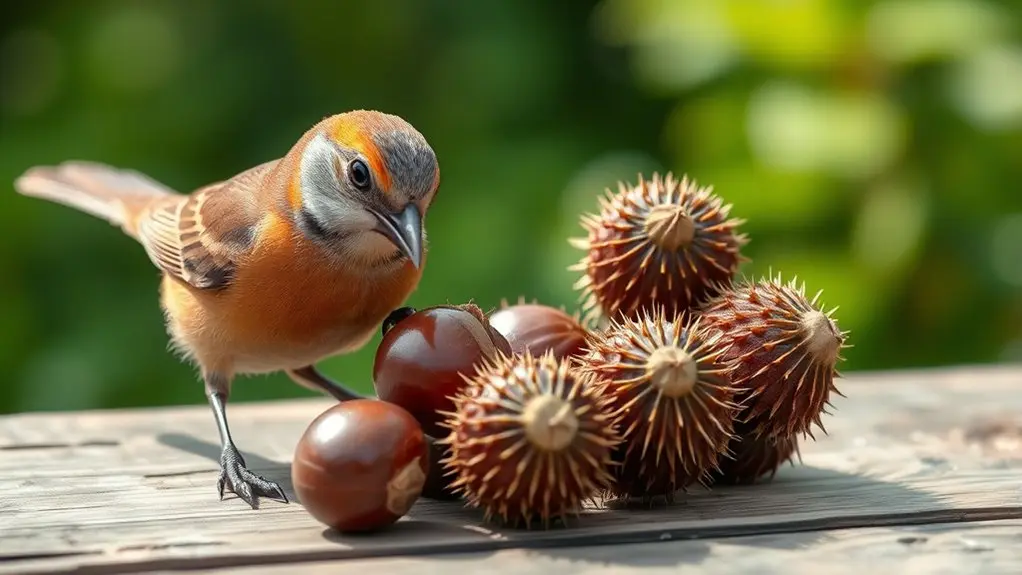
While chestnuts provide valuable nutrients for birds, their safety depends on how they’re prepared. Raw chestnuts contain tannins and natural toxins that can irritate or harm birds if consumed in large amounts. These compounds may cause digestive issues or pose choking hazards due to the hardness of raw nuts.
Because of these risks, raw chestnuts aren’t recommended as a regular food source for your feathered friends.
Consider these important points when deciding whether to offer chestnuts to birds:
- Raw chestnuts contain toxins that can be harmful in quantity
- Birds may struggle to digest or even choke on raw chestnuts
- Tannins in raw chestnuts can cause irritation and digestive distress
- Avoid giving raw chestnuts frequently to protect bird health
Always prioritize bird safety when offering chestnuts.
Does Cooking Make Chestnuts Safer for Birds?
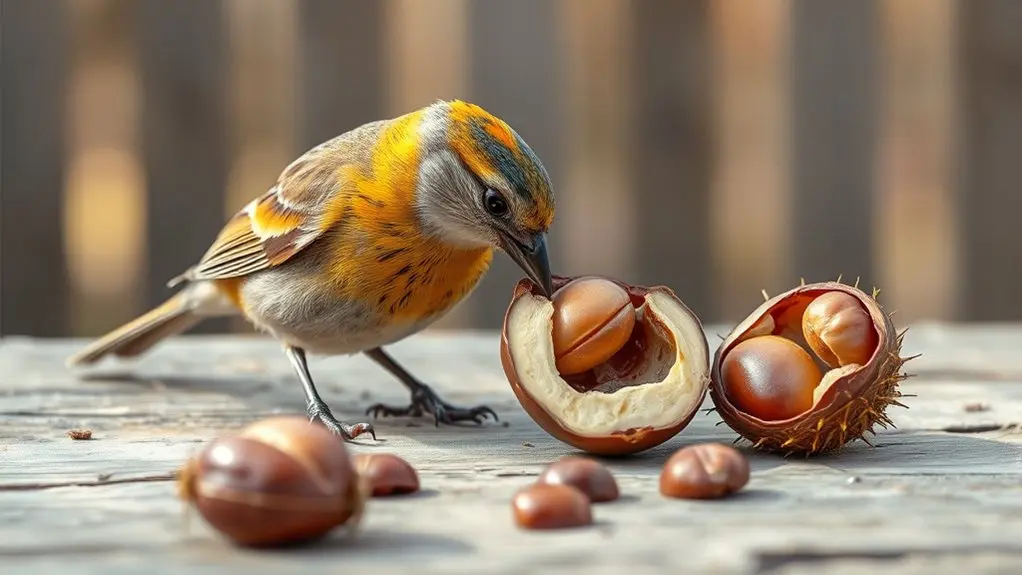
You’ll find that cooking chestnuts reduces harmful compounds and pathogens, making them safer for birds compared to raw chestnuts.
It’s pretty interesting because heat treatment also helps break down tough compounds and softens the nuts’ texture, which makes them easier for birds to digest.
Plus, cooking can slightly change the way nutrients are available, so it affects how birds absorb those essential nutrients.
Raw Vs Cooked Chestnuts
Because raw chestnuts contain natural tannins and anti-nutrients that can be difficult for birds to digest, offering them cooked chestnuts is generally safer. Cooking reduces moisture, neutralizes enzymes, and lowers the risk of harmful bacteria or mold.
It also softens chestnuts, making them easier for birds to consume without choking or injuring their beaks.
Thorough cooking eliminates potential pathogens, ensuring a safer treat. So, it’s a good idea to keep these benefits in mind when feeding birds chestnuts.
Consider these benefits when feeding birds cooked chestnuts:
- Reduced risk of digestive issues caused by tannins and anti-nutrients
- Lower chance of bacterial or fungal contamination
- Softer texture minimizes choking hazards and dental injury
- Enhanced safety through elimination of pathogens
Nutrient Changes With Cooking
Although raw chestnuts contain valuable nutrients, cooking considerably changes their composition in ways that affect bird digestion and safety. Heat reduces tannins, which are compounds that can irritate a bird’s stomach and make it harder for them to absorb nutrients. So, cooking actually makes chestnuts easier on their digestive systems.
Cooking also destroys mold and bacteria that are often found on raw nuts, which lowers the risks of illness. The process softens the shell and flesh, helping birds that don’t have great dexterity to eat chestnuts more easily.
Plus, cooking gets rid of certain anti-nutrients, which means birds can get more nutrition from the chestnuts.
That said, you want to avoid overcooking or adding seasonings. These can reduce the nutritional value or even introduce harmful substances.
Digestibility Improvements Through Heat
Cooking chestnuts not only changes their nutrient profile but also makes them much easier for birds to digest. Heat helps break down natural tannins and complex carbs, which means the nutrients become easier to access and it’s less hard on their digestive system.
Plus, cooking cuts down the risk of bacterial and fungal contamination that raw chestnuts might have. When you roast or boil chestnuts properly, they get softer, which helps prevent choking and makes swallowing way easier.
Heat also deactivates anti-nutritional factors, so birds can absorb nutrients better. Just keep in mind that overcooking can create harmful compounds, so it’s important to prepare chestnuts carefully.
You’ll help birds digest chestnuts more safely and efficiently. You reduce health risks linked to raw chestnut toxins. You promote comfortable feeding by softening the chestnuts. And you avoid creating harmful substances through controlled cooking.
How to Prepare Chestnuts Safely for Birds
When you prepare chestnuts for birds, you must thoroughly cook them, either by boiling or roasting, to neutralize the naturally occurring toxins.
After cooking, remove both the hard outer shells and the thin inner skins. This reduces choking hazards and helps birds digest the chestnuts better by making them more accessible to their enzymes.
Make sure to let the chestnuts cool completely before feeding them to the birds. This prevents burns or discomfort in their mouths and digestive tracts.
Also, avoid using salted, seasoned, or processed chestnuts because additives can be toxic or cause health problems.
How Much Chestnut Should You Feed Your Bird?
You should offer chestnuts in moderation—usually about 1 to 2 unsalted, plain chestnuts per bird each day. Of course, you’ll want to adjust this amount depending on the size of your bird.
It’s best to keep feeding chestnuts occasional rather than daily to avoid any digestive or nutritional issues. Just keep an eye on the portion size and how often you’re giving them.
That way, you can safely add chestnuts to their diet without messing up their regular meals.
Appropriate Portion Sizes
How much chestnut should you feed your bird to guarantee safety and nutritional balance? Offering chestnuts in appropriate portions is essential to avoid digestive upset and excess fat.
For most pet birds, provide a small piece about the size of a thumbnail or a few grams.
Larger parrots can safely consume 1 to 2 whole chestnuts daily, while smaller birds need only tiny slivers. Introduce chestnuts gradually to monitor tolerance and adjust serving size based on your bird’s size, age, and activity.
It’s a good idea to consider consulting an avian veterinarian for personalized advice.
- Prevents overeating and obesity risks
- Supports digestive health with manageable portions
- Maintains balanced nutrition without excess fat
- Allows careful monitoring of your bird’s response
Feeding Frequency Guidelines
Although chestnuts offer valuable nutrients, feeding them too frequently can disrupt your bird’s dietary balance. You should provide chestnuts only a few times per week as an occasional treat, never daily. Portion size must remain small—a few whole chestnuts or a small piece—tailored to your bird’s species and size.
Overfeeding risks weight gain and nutritional imbalances. Monitor your bird closely and adjust feeding frequency based on their health and behavior.
| Frequency | Portion Size | Notes |
|---|---|---|
| 2-3 times/week | Small piece or few whole chestnuts | Prevents overfeeding |
| Daily | Not recommended | May cause weight gain |
| Weekly | Occasional treat | Maintains dietary variety |
Bird Size Considerations
Since bird species vary widely in size, the amount of chestnut they can safely consume differs accordingly. Larger birds like parrots tolerate more chestnut per serving, while smaller birds such as finches require only tiny portions to avoid choking or digestive complications.
Generally, offering about 1-2% of a bird’s body weight in chestnuts daily is advisable. Medium-sized birds like cockatiels need roughly half a chestnut per feeding.
Always observe your bird’s reaction and tailor the amount based on its size, age, and health.
Avoid giving too much chestnut to small birds to prevent choking hazards. Recognize that larger birds can enjoy chestnuts safely in larger quantities.
Understand that portion control helps maintain your bird’s digestive health.
Monitoring your bird’s response ensures you don’t risk overfeeding or nutritional imbalance. It’s all about finding the right balance to keep your feathered friend happy and healthy.
Health Risks of Feeding Chestnuts to Birds
When you feed chestnuts to birds, you need to take into account the potential health risks associated with their natural compounds. Raw chestnuts contain tannins and lectins, which can be toxic or cause digestive disturbances in birds.
Cooking or roasting chestnuts reduces these risks, but you must make sure they contain no added salts, oils, or seasonings.
Also, chestnuts have a high carbohydrate content, so excessive feeding may cause weight gain or nutritional imbalances.
Moldy or spoiled chestnuts present a further hazard, as they can harbor fungi that lead to infections. So, it’s best to avoid giving birds any nuts that look questionable.
To minimize these health risks, you should offer chestnuts only in moderation and prepare them properly. Avoid raw or contaminated nuts to protect your birds’ well-being effectively.
Taking these steps will help keep your feathered friends safe and healthy.
Signs of Chestnut Toxicity in Birds
If birds consume chestnuts containing toxic compounds, you may notice signs such as lethargy, loss of appetite, and difficulty breathing. These symptoms show that the bird’s body is under distress because of toxic exposure.
You might also see gastrointestinal effects like vomiting or diarrhea, which signal digestive upset.
Neurological symptoms can show up too, like tremors, weakness, or uncoordinated movements. These reflect that the nervous system is affected.
In severe cases, birds might even experience sudden death without any warning.
Physical signs can include swelling or abnormal coloration on the body or limbs. So, watch carefully for these distress signals:
- Unusual weakness or tremors impairing movement
- Persistent vomiting or diarrhea causing dehydration
- Swelling or discoloration of legs or wings
- Sudden collapse or death without obvious cause
Catching these signs early is really important for helping your bird in time.
How Chestnuts Compare to Other Nuts Safe for Birds
Understanding the potential toxicity of chestnuts in birds highlights the importance of selecting safe and nutritious nuts for their diet. Chestnuts stand out due to their low fat and high carbohydrate content. This makes them a milder energy source compared to oil-rich nuts like walnuts and macadamias.
Their softer shell and flesh also make them accessible to smaller birds, unlike harder nuts such as acorns.
| Nut Type | Key Nutritional Traits |
|---|---|
| Chestnuts | Low fat, high carbohydrates |
| Walnuts | High fat, rich in omega-3 |
| Brazil Nuts | Very high fat, selenium-rich |
While chestnuts offer a balanced option, you should still provide them cooked or dried and in moderation. This helps avoid mold or bacterial risks.
How to Store Chestnuts to Keep Them Fresh
Proper storage conditions play a crucial role in preserving the freshness and nutritional quality of chestnuts. To keep them fresh, store fresh chestnuts in a paper bag or breathable container in a cool, dark place to inhibit mold growth.
Proper storage is key to preserving chestnut freshness and nutrition—use breathable containers in a cool, dark place.
Refrigerate them at 32°F to 40°F (0°C to 4°C) to maintain freshness for several weeks.
For long-term storage, vacuum seal dried or roasted chestnuts and freeze them at 0°F (-18°C) or lower.
Avoid airtight containers or plastic wrap at room temperature, as trapped moisture accelerates spoilage.
Regularly inspect chestnuts for mold, shriveling, or sprouting, discarding compromised nuts immediately.
Imagine the satisfaction of crisp, fresh chestnuts all season. Avoid the disappointment of moldy, unusable nuts.
Feel confident in your ability to store chestnuts safely. Preserve nutrients effectively for your feathered friends.
When to Skip Chestnuts and What to Feed Instead
Although chestnuts can provide nutritional benefits, you should skip feeding them to birds when the nuts are raw, moldy, or seasoned. These conditions increase the risk of digestive distress or toxicity.
Cooked or roasted chestnuts are safer but must be offered in moderation and free of salt or additives.
Some bird species struggle to digest tannins and other compounds in chestnuts, so keep an eye on your bird for any discomfort. If you notice any symptoms, stop feeding chestnuts and check with your vet.
Instead, try offering nutrient-rich foods like dark leafy greens, fresh berries, or nuts prepared specifically for birds. These options give your bird essential nutrients without the risks that come with improperly prepared chestnuts.
This way, you help support your bird’s health and digestion effectively.
Frequently Asked Questions
Can Baby Birds Safely Eat Chestnuts?
You shouldn’t feed baby birds chestnuts, as their immature digestive systems can’t properly process them. Chestnuts may cause choking, digestive upset, or malnutrition.
It’s best to wait until they’re fully weaned before offering any new foods. And always check with an avian vet first to be safe.
Are Chestnut Shells Safe for Birds to Chew?
Yes, chestnut shells are safe for you to let birds chew, as long as they’re raw, clean, and mold-free. Avoid any treated or roasted shells to prevent exposing birds to harmful chemicals or additives.
Just make sure the shells haven’t been processed in any way. Birds can enjoy them safely when they’re natural and fresh. It’s a simple way to keep your feathered friends happy and healthy!
Do Wild Birds Naturally Eat Chestnuts in the Wild?
Yes, wild birds like jays and woodpeckers naturally eat chestnuts by cracking their shells to get to the nutritious nut inside.
They especially do this during autumn and winter when chestnuts are abundant in forested habitats.
It’s a handy food source that helps them through the colder months.
Can Chestnuts Help Birds During Migration Periods?
Think of chestnuts as tiny fuel tanks for migrating birds. You’ll find their high carbohydrates and natural sugars boost stamina and body heat. This helps birds sustain long flights by providing essential energy reserves during migration periods.
It’s pretty amazing how nature packs such a powerful snack in something so small. Birds really rely on these little energy boosts to keep going over long distances. So yeah, chestnuts are like a tasty recharge station for them on the move.
Are There Specific Bird Species That Dislike Chestnuts?
You’ll find that small insectivorous species like warblers and robins dislike chestnuts due to their hard shells and low nutritional value. They often prefer softer, energy-rich foods like sunflower seeds or suet for easier digestion and energy.
It just makes more sense for these little birds to go for snacks that are easier to handle and give them a quick boost. Chestnuts don’t really fit the bill for their dietary needs. So, if you’re feeding birds and want to attract these species, it’s better to stick with softer seeds and suet.
Conclusion
When considering chestnuts for your bird’s diet, remember moderation is key. Too much can tip the scales toward toxicity. Raw chestnuts contain compounds that may harm your bird, but cooking reduces these risks and makes them safer treats.
Like all nuts, chestnuts offer valuable nutrients, yet they’re no miracle cure. By preparing and storing them properly, you guarantee safety and freshness.
Ultimately, knowing when to choose alternatives keeps your feathered friend thriving. Not every nut fits every beak, so it’s good to keep that in mind.