
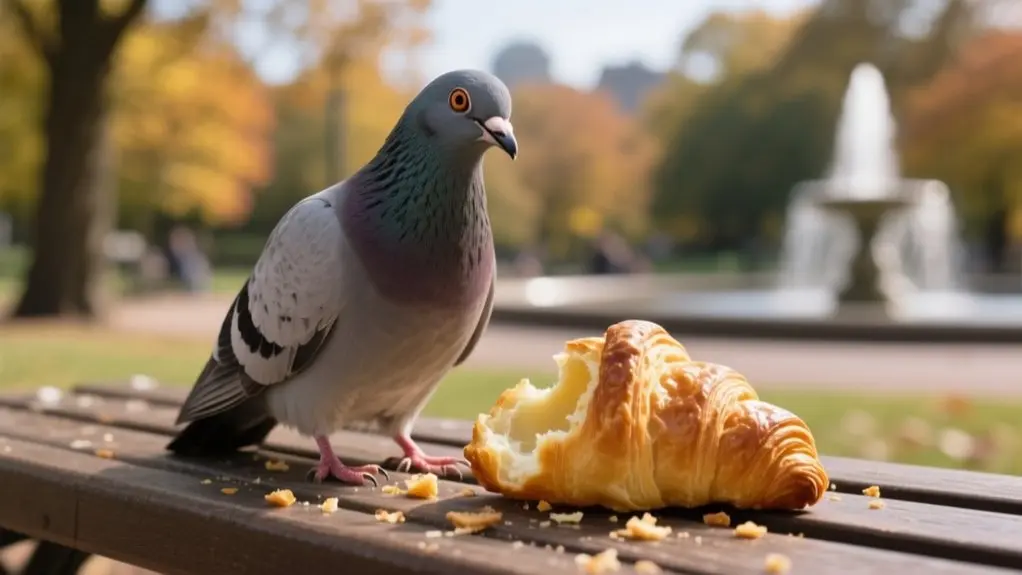
You shouldn’t feed croissants to birds because their high fat, sugar, and refined flour can harm bird health and disrupt their natural diet. These ingredients can lead to obesity, energy crashes, and malnutrition, increasing risks like Angel Wing Syndrome.
Compared to bread, croissants pose even greater digestion challenges. If you want to keep birds healthy and support their natural habits, understanding safer feeding choices and best practices can make all the difference.
Can Birds Safely Eat Croissants?
Although croissants might seem like a tasty treat, you shouldn’t feed them to birds because their high fat, sugar, and refined carbohydrate content can harm a bird’s health and cause nutritional deficiencies.
When birds eat croissants, they miss out on essential nutrients crucial for their survival, leading to imbalanced diets. Feeding birds croissants encourages them to rely on unhealthy human foods instead of natural foraging, which disrupts their instincts and well-being.
Moreover, the excessive fat in croissants can contribute to serious issues like Angel Wing Syndrome, affecting a bird’s ability to fly properly.
Moldy croissants worsen the risk by attracting pests and spreading disease.
To keep birds healthy, avoid feeding them croissants and opt for foods that support their natural dietary needs.
What’s in Croissants and Why Birds Should Care
Because croissants contain refined flour, butter, and sugar, they lack the essential nutrients birds need to stay healthy. When birds eat croissants, they risk nutritional deficiencies since these high-carb foods don’t provide the vitamins and minerals necessary for their wellbeing. You should understand what’s inside croissants to see why birds should care.
| Ingredient | Effect on Birds |
|---|---|
| Refined Flour | Offers empty calories, no nutrients |
| Butter | High fat, may lead to obesity |
| Sugar | Causes energy spikes and crashes |
Feeding birds croissants can also interfere with their natural foraging habits and increase the chances of conditions like Angel Wing Syndrome. So, it’s important to avoid offering croissants to birds because their diet needs more than just high-carb foods.
Why Croissants Are Bad for Bird Health
You might think sharing a croissant with birds is harmless, but actually, these pastries can cause some serious nutritional problems.
Croissants are full of unhealthy fats and sugars that can really mess with a bird’s diet and digestion.
When birds eat processed pastries like croissants, it can lead them to ignore the natural foods they need to stay healthy.
Nutritional Deficiencies Impact
When birds eat croissants regularly, they miss out on essential nutrients their bodies need to stay healthy. Croissants are loaded with carbohydrates and fats but lack vitamins, minerals, and proteins crucial for birds.
This nutritional deficiency can cause serious health issues like malnutrition and weakened immune systems. Feeding croissants can also lead to behaviors where birds ignore natural, nutritious foods, worsening their health over time.
| Nutrient | Croissants (Content) | Bird Requirement |
|---|---|---|
| Protein | Very low | High for muscle & feathers |
| Vitamins (A, D, E) | Negligible | Essential for vision, bone |
| Minerals (Calcium) | Minimal | Needed for eggshells |
| Sugars | High | Low; excess causes issues |
| Fats | High | Moderate for energy |
Avoid croissants to prevent nutritional deficiencies and protect your bird’s health.
Risks of Processed Pastries
Though croissants might seem like a harmless treat, their high fat and sugar content can quickly harm birds by causing obesity and nutritional imbalances.
Processed pastries like croissants lack essential nutrients, leading to nutritional deficiencies that weaken birds’ health.
When you feed birds croissants, they may start ignoring natural, healthier foods, which disrupts their natural foraging behavior.
This reliance on processed pastries can cause conditions such as Angel Wing Syndrome, impairing their ability to fly and find food.
Moldy croissants add further risks, exposing birds to fungal infections and attracting pests.
To protect birds, avoid offering croissants or similar processed pastries, and instead encourage natural, nutrient-rich foods that support their well-being and survival.
What Is Angel Wing Syndrome and How Croissants Cause It
Because birds aren’t adapted to digest the high carbohydrates and sugars found in croissants, feeding them these pastries can lead to Angel Wing Syndrome. This condition causes their wings to twist outward, making flight impossible.
When birds eat croissants, they often skip healthier foods like sunflower seeds, which provide essential nutrients. This neglect leads to nutritional deficiencies that worsen Angel Wing Syndrome. Without a proper diet, their wing development suffers, especially in waterfowl.
You might think feeding birds croissants is harmless, but it disrupts their natural diet and health. To prevent Angel Wing Syndrome, avoid giving birds processed treats and instead offer species-appropriate foods rich in nutrients. This helps maintain their wing strength and overall survival in the wild.
Croissants vs. Bread: Which Is Worse for Birds?
When you look at croissants and bread, both are packed with carbs but don’t offer much in the way of nutrients, which isn’t great for birds.
Croissants usually have added fats and sugars, and those extras can actually make health problems worse.
On the other hand, bread is simpler but still carries risks, like Angel Wing Syndrome.
Knowing how each one affects a bird’s digestion and overall health can really help you make smarter choices when feeding them.
Nutritional Content Comparison
If you feed birds croissants or bread, you’re giving them foods high in carbohydrates and sugars but low in essential nutrients like proteins, vitamins, and minerals.
Both lack the nutritional value birds need for a balanced diet, which can lead to malnutrition.
Croissants differ by containing high fat levels, increasing health risks for many bird species.
Bread, while lower in fat, still poses problems like Angel Wing Syndrome.
As a birding tip, avoid offering these human snacks to prevent unhealthy eating habits that make birds skip natural foraging.
Also, be cautious of moldy croissants or bread since mold can cause diseases and attract pests.
Prioritize feeding birds foods rich in crucial nutrients instead to support their well-being and natural behaviors.
Impact on Bird Health
Although both croissants and bread are common snacks people offer to birds, croissants pose a greater risk to their health due to their higher fat content combined with excessive carbohydrates and low essential nutrients.
The fact that birds fill up on croissants means they may skip more nutritious foods, leading to deficiencies over time.
Both croissants and bread can contribute to conditions like Angel Wing Syndrome, which affects a bird’s ability to fly and forage.
If you’ve ever fed birds cracked corn or seeds, you know these options support their natural diet far better than processed snacks.
Remember, moldy croissants are just as harmful as moldy bread, so avoid feeding old or stale baked goods.
Choosing healthier foods helps guarantee birds thrive beyond their last day with you.
Digestibility and Risks
Because croissants contain rich, buttery layers and flaky textures, they can be harder for birds to digest compared to bread.
Both croissants and bread are high in carbohydrates but lack essential nutrients, making them poor choices for bird diets. Feeding birds these foods can lead to nutritional deficiencies and digestive issues.
Moldy croissants pose the same health risks as moldy bread, including disease transmission.
To keep birds healthy, follow bird food guidelines and opt for croissant alternatives or safe treats like seeds and nuts rich in nutrients, fresh fruits and vegetables suitable for birds, or commercial bird food designed for balanced nutrition.
Healthier Alternatives to Croissants for Feeding Birds
While croissants might seem like a tasty treat, they’re high in fat and sugar and lack the essential nutrients birds need. Instead, you should offer nutrient-rich alternatives that truly support their health.
Bird-friendly fruits like berries and apples provide natural sugars and crucial vitamins, making them a better choice. You can also rely on seed mix benefits by offering blends with sunflower seeds, thistle, and millet, which supply a variety of essential nutrients.
Cracked corn is another energy-rich option suited for many species. For insectivorous birds, including mealworms adds much-needed protein to their diet.
How to Offer Croissants and Treats Without Harming Birds
You can still share treats like croissants with birds, but it’s important to do so carefully to avoid causing harm. Instead of offering croissants regularly, choose treat alternatives like bird seed mixes that support their health.
Sharing croissants with birds is fine occasionally, but bird seed mixes are healthier regular treats.
Keep feeding frequency low to prevent birds from relying on human food and disrupting their natural bird foraging habits.
Here’s how to offer treats responsibly:
- Limit treats to occasional small portions free of sugars, salts, and artificial ingredients.
- Encourage natural bird foraging by scattering food in different spots rather than providing large amounts in one place.
- Clean feeding areas regularly to prevent mold and bacteria buildup.
Signs Birds Are Struggling From Unhealthy Foods
You’ll start to notice birds having a tough time with unhealthy foods when their feathers look dull and they seem really tired or sluggish.
It’s like their usual energy just disappears. Plus, if you see them foraging less or suddenly relying more on human snacks, that’s a big red flag.
These changes aren’t just random—they often mean they’re missing important nutrients, which can seriously affect their health.
Visible Physical Symptoms
Many birds show clear physical signs when they struggle with unhealthy foods like croissants.
If you notice changes, it’s vital to take into account their dietary preferences and foraging behavior, as these affect their overall health.
Poor nutrition can quickly lead to visible symptoms that signal distress, so regular health monitoring is essential.
Watch for these signs:
- Dull or missing feathers and feather plucking due to nutrient deficiencies
- Excess weight or Angel Wing Syndrome caused by high carbohydrate intake
- Lethargy and reduced activity indicating poor nutritional balance
Spotting these symptoms early helps you intervene before serious health issues develop.
Encouraging natural foraging behavior and proper diet supports your bird’s wellbeing far better than processed human foods like croissants.
Behavioral Changes Noted
Although birds may initially seem unaffected, unhealthy foods like croissants quickly disrupt their natural behaviors and energy levels. You might notice behavioral alterations such as lethargy or reduced activity, signaling their struggle to maintain energy due to poor nutrition.
Birds fed on croissants often lose interest in their usual foraging instincts, neglecting the search for nutritious foods they need to thrive. This shift can lead to serious conditions like Angel Wing Syndrome, which hampers their ability to fly and hunt effectively.
If you observe changes in feeding patterns or signs of distress, these are clear indicators that the bird is struggling with the effects of unhealthy dietary choices.
Paying attention to these behavioral changes helps protect their health and survival.
Nutritional Deficiency Indicators
When birds rely on unhealthy foods like croissants, they start showing clear signs of nutritional distress.
Poor dietary balance from processed carbs can cause lethargy, weight loss, and even Angel Wing Syndrome, which affects their ability to fly.
You’ll notice changes in their feeding habits as they avoid natural foraging, leading to more severe deficiencies. Observing these signs is essential for improving their health through nutritional education.
Watch for these indicators of nutritional deficiency:
- Dull, brittle feathers and reduced activity levels
- Changes in vocalization and difficulty with nesting or migration
- Weight loss and decreased reproductive success
When and Why to Avoid Feeding Croissants to Wild Birds
Because croissants lack essential nutrients and contain high levels of fat and carbohydrates, you should avoid feeding them to wild birds. Offering croissants can disrupt their bird feeding habits, causing them to fill up on unhealthy food instead of practicing natural foraging.
This not only leads to nutritional deficiencies but also increases the risk of health issues like Angel Wing Syndrome. Moldy croissants pose additional dangers, potentially causing respiratory problems and attracting pests that spread disease.
When you consider croissant alternatives, choose foods that support birds’ natural diets to help maintain their health and survival skills.
Avoid feeding croissants regularly to wild birds to prevent interfering with their instinctive behaviors and guarantee they stay strong and healthy in their environment.
Best Practices for Feeding Birds to Support Their Natural Diet
Feeding wild birds requires thoughtful choices to keep them healthy and thriving. To support their natural diet, you need to focus on bird feeding techniques that encourage natural foraging behaviors and provide suitable food sources.
Avoid human foods like croissants, which lack essential nutrients and can disrupt their health.
Here are some best practices for feeding birds:
- Offer bird-specific foods such as sunflower seeds, cracked corn, or specialized seed mixes tailored to their nutritional needs.
- Place feeders in natural settings to encourage birds to forage and maintain their natural behaviors.
- Use clean feeders and refresh food regularly to prevent disease and spoilage.
Cleaning Bird Feeders When Offering Treats Like Croissants
Although croissants can be an occasional treat for birds, you’ll need to clean your feeders more often to prevent mold and pests from developing. Following proper feeder maintenance tips guarantees birds stay healthy despite offering non-standard treats.
Use safe cleaning solutions like soapy water mixed with bleach, and rinse thoroughly to avoid harmful residue. Stick to cleaning frequency guidelines by washing feeders at least every two weeks, or more often when croissants are involved.
| Task | Recommendation |
|---|---|
| Cleaning Frequency | Every 2 weeks or more frequently |
| Cleaning Solution | Soapy water plus diluted bleach |
| Rinsing | Thorough rinse after cleaning |
| Feeder Setup | Use multiple feeders to reduce crowding |
Consistent cleaning keeps feeders safe and birds healthy.
Keeping Backyard Birds Healthy With Proper Feeding Habits
When you offer backyard birds human foods like croissants, you risk causing nutritional gaps that can harm their health.
Sticking to bird feeding ethics means providing appropriate food that supports their natural foraging instincts and respects seasonal food availability. You want to encourage healthy habits rather than making birds dependent on unhealthy treats.
To keep your backyard birds healthy, focus on offering seed mixes with sunflower, thistle, and millet to meet their nutritional needs.
Also, maintain clean feeders to prevent disease spread. Adjust feeding based on seasonal food availability to mimic natural diets.
Frequently Asked Questions
Can Baby Birds Safely Eat Croissants?
No, baby birds can’t safely eat croissants. Croissant ingredients like high fat and carbs don’t meet baby bird nutrition needs, which require protein and essential nutrients.
Feeding croissants can cause malnutrition and health problems.
Instead, you should offer safe food alternatives such as specialized bird formulas or soft fruits that support their growth and development.
Always prioritize foods designed for baby birds to keep them healthy and thriving.
Do Croissants Attract Unwanted Pests to Bird Feeders?
You know what they say: “Don’t invite trouble to your doorstep.”
Yes, croissants do attract unwanted pests to bird feeders. Their high fat and sugar content draws ants, rodents, and even raccoons, making pest control more complicated.
To keep your feeder clean, avoid croissants and choose alternative snacks like seeds or nuts.
This helps protect the birds and keeps pests away, creating a safer feeding environment for everyone.
How Long Can Croissants Be Left Outside for Birds?
You shouldn’t leave croissants outside for more than an hour or two, especially considering croissant freshness and outdoor temperature effects.
Warm or humid conditions speed up mold growth and attract pests quickly.
Birds generally prefer fresher, natural foods, so they’ll lose interest in croissants fast.
To keep things safe and healthy, swap croissants for bird-specific foods that suit their diet better and avoid waste or harm.
Are There Any Bird Species That Can Digest Croissants Better?
You might think some birds handle croissants better, but even species like crows or pigeons with stronger digestion don’t truly benefit from croissant nutrition.
While they can process these pastries more easily than finches or sparrows, croissants lack the essential proteins and vitamins birds need.
Can Feeding Croissants Change a Bird’s Behavior or Migration Patterns?
Yes, feeding croissants can cause behavioral changes and migration disruptions in birds. When you offer croissants, their dietary preferences shift toward high-carb, processed foods, which lack essential nutrients.
This can lead birds to rely more on human-provided food, reducing their natural foraging skills.
As a result, their migration patterns may be altered because they don’t prepare properly for long journeys, risking their survival and impacting overall bird populations.
Conclusion
Imagine watching vibrant birds flutter around your garden, their wings strong and graceful. Feeding them croissants might seem like a sweet treat, but it’s really a recipe for trouble. It can lead to health issues like angel wing syndrome.
Instead, stick to natural foods that keep their feathers shiny and their flights effortless. By choosing wisely and cleaning feeders regularly, you’re helping those feathered friends thrive. You’re turning your backyard into a safe haven full of joyful, healthy birds.