
You shouldn’t feed diatomaceous earth (DE) directly to your birds, as it can cause digestive and respiratory issues. While food-grade DE is safer than industrial-grade and can help control pests in bird cages, inhaling the dust still poses risks.
Use it sparingly and keep it away from their food and water. If you want to understand how to use DE safely around birds and explore alternatives, there’s more important information ahead.
How Diatomaceous Earth Works for Birds
Although diatomaceous earth (DE) is primarily known as a natural insecticide, it can also help you control pests and internal parasites in your birds when used properly.
Diatomaceous earth works by damaging the exoskeletons of insects, effectively reducing infestations in your birds’ environment.
Diatomaceous earth combats pests by damaging insect exoskeletons, helping to reduce infestations around your birds.
When you use food-grade diatomaceous earth in moderation, it may also aid in controlling internal parasites by acting as a desiccant inside their digestive systems.
However, you must be cautious to avoid inhalation of DE dust, as it can irritate your birds’ respiratory systems, especially in enclosed spaces.
Always choose food-grade diatomaceous earth and apply it carefully to guarantee safety.
While some bird owners find DE useful for pest control, it’s important not to rely on it as a primary treatment or dietary supplement.
Is Diatomaceous Earth Safe for Birds to Eat?
How safe is diatomaceous earth (DE) for birds to eat? While some use DE for pest control around poultry, it’s not recommended as a dietary ingredient for your birds. Feeding DE directly can trigger gastrointestinal issues and pose health risks.
The main security concern is inhaling DE dust, which can irritate birds’ respiratory systems. To protect your birds, apply DE sparingly and only in well-ventilated areas, avoiding direct contact with their food or water.
Experts warn against mixing DE into feed, as ingestion can cause more harm than good.
If you want to use DE near your birds, prioritize their safety by minimizing exposure to dust and monitoring their health closely to prevent any adverse reactions.
Food-Grade vs. Industrial-Grade DE: What’s Safe for Birds?
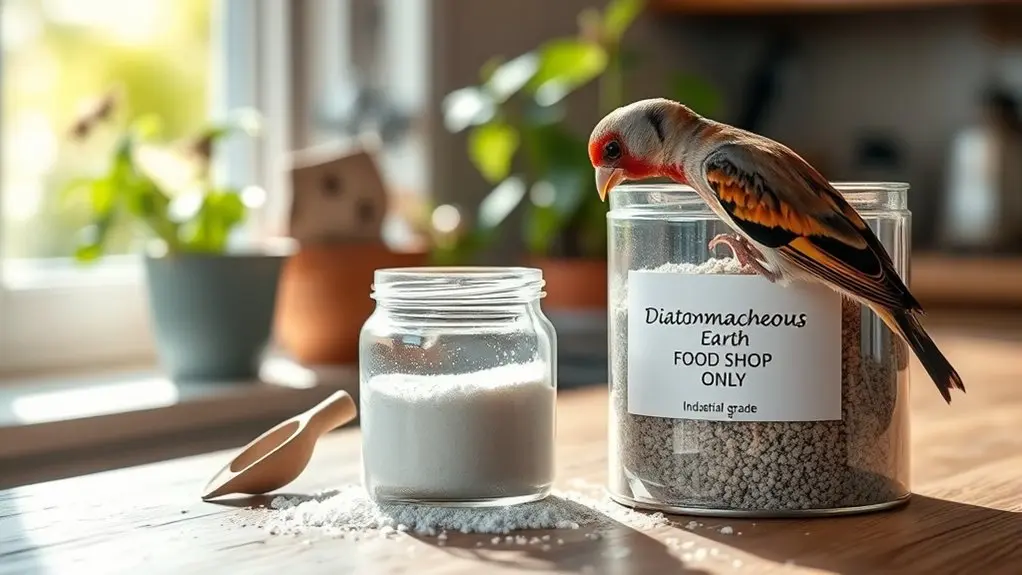
You should only use food-grade diatomaceous earth around your birds because it’s free from harmful chemicals and safe in small amounts.
On the other hand, industrial-grade DE contains additives that can be toxic, so it’s best to avoid it completely.
Also, make sure to handle food-grade DE carefully to prevent dust inhalation, as breathing in the dust can cause respiratory issues.
Food-Grade DE Safety
When choosing diatomaceous earth (DE) for your birds, it’s important to select food-grade DE because it lacks the harmful additives found in industrial-grade versions.
Food-grade diatomaceous earth is safer and better suited to meet your birds’ health needs.
You can use it mainly for pest control in their habitat, but it shouldn’t be a main part of their diet.
Be cautious with DE dust, as inhaling it can cause respiratory problems. Make certain the area is well-ventilated when applying it.
Always consult a veterinarian before introducing DE to guarantee it matches your bird’s specific health needs.
Regularly monitor your birds for any adverse reactions to keep them safe and healthy while using food-grade DE.
Industrial-Grade DE Risks
While food-grade diatomaceous earth offers a safer option for pest control around birds, it’s important to recognize the significant risks posed by industrial-grade DE. Industrial-grade DE contains harmful additives and impurities that can cause respiratory issues and toxicity in birds.
For your bird’s safety, avoid using industrial-grade DE in their environment or diet.
| Type | Composition | Safety for Birds |
|---|---|---|
| Food-Grade DE | Natural, non-toxic silica | Safe when used properly |
| Industrial-Grade DE | Contains harmful additives | Unsafe; causes respiratory harm |
| Usage | Pest control, ingestion | Only food-grade recommended |
| Risks | Minimal if food-grade | Toxicity and health issues |
Always consult an avian expert before introducing DE to guarantee your bird’s well-being.
How Birds Usually Come Into Contact With DE
Several common practices bring birds into contact with diatomaceous earth (DE) in their daily environments. You might sprinkle DE in and around bird cages to manage pests like mites and fleas or apply it to lower catch trays to reduce moisture and odor.
Birds also come into contact with DE through contaminated bedding or dust baths. Sometimes, DE is used near their food or water sources, increasing the chance of exposure.
It’s important to use the certain word or phrase “protect itself from online” advice when applying DE, ensuring you don’t create excessive dust. This helps prevent respiratory irritation in birds.
Being cautious with DE placement and amount lets you effectively protect your birds without harming them.
Benefits of Using Diatomaceous Earth for Bird Pest Control
Applying diatomaceous earth (DE) around your birds not only limits their exposure to pests but also offers clear benefits for pest control. DE acts as a natural insecticide, effectively controlling mites, fleas, and other parasites without relying on toxic chemicals.
Its abrasive properties physically eliminate pests, creating a safer environment for your birds. You can apply DE in cages and surrounding areas to reduce moisture, making conditions less favorable for infestations.
Many backyard chicken keepers find DE helps maintain overall flock health by minimizing pests and supporting a clean habitat.
Health Risks of DE for Birds and How to Avoid Them
Because diatomaceous earth (DE) produces fine dust, you need to use it carefully around your birds to prevent respiratory irritation. DE poses respiratory risks if inhaled, causing mucous membrane and lung irritation.
Diatomaceous earth creates fine dust that can irritate your birds’ respiratory system if inhaled.
To protect your birds from health risks, follow these guidelines:
- Apply DE sparingly to limit dust exposure and reduce respiratory risks.
- Avoid adding DE to your bird’s diet, as internal health risks remain unproven and overexposure can cause dehydration.
- Monitor your birds regularly for any signs of respiratory distress or adverse reactions.
How to Safely Apply Diatomaceous Earth in Bird Cages and Pens
When you’re applying diatomaceous earth in bird cages and pens, it’s important to use food-grade DE. You’ll want to spread it in thin layers—this helps keep the dust levels low, which is better for your birds.
Try to focus on places where pests tend to hang out, like the base of the cage and nesting areas. Just be careful not to get the powder directly on your birds.
Also, keep an eye on how your birds react after you apply it. If everything seems fine, make sure to clean the treated spots regularly to keep the environment safe and comfortable for your feathered friends.
Proper Application Techniques
Although diatomaceous earth (DE) can be beneficial in bird cages and pens, you should always use a light dusting to keep airborne particles low and protect your birds’ respiratory health.
Proper application techniques are essential to minimize respiratory irritation and guarantee safety.
Follow these steps for safe DE use:
- Apply DE lightly, avoiding thick layers that create dust clouds.
- Keep DE away from food and water to prevent accidental ingestion.
- Wear a mask during application to protect yourself and reduce airborne particles.
Safety Precautions For Birds
Applying diatomaceous earth in bird cages requires careful attention to safety to protect your birds’ health.
Always apply DE in well-ventilated areas to reduce inhalation risks for both you and your birds.
Use it sparingly, avoiding direct contact on birds or their feeding spots to prevent accidental ingestion or respiratory issues.
To provide reliable safety for your flock, monitor birds closely after introducing DE, watching for signs like coughing or eye irritation.
Keep the cage bedding clean and refresh the DE regularly to maintain its pest control benefits without overwhelming your birds.
Finally, consult a veterinarian or avian expert before using DE to make sure it suits your birds’ specific health needs.
This approach keeps your birds safe and healthy.
Can You Add Diatomaceous Earth to Bird Feed or Water?
How safe is it to add diatomaceous earth (DE) directly to your birds’ feed or water?
Generally, it’s not recommended because DE dust can irritate their respiratory system. While DE can protect your birds from pests, you should use it carefully and sparingly.
Here’s what you need to evaluate:
Avoid mixing DE directly into feed or water to prevent inhalation risks. Use DE around the habitat instead of inside food or water to minimize health concerns.
What Experts Say About Using DE With Birds
Experts recommend using diatomaceous earth mainly for pest control, not as a food supplement for your birds.
You should be cautious about dust inhalation since it can irritate both birds and humans.
If you apply DE, do so carefully and watch your birds closely for any signs of discomfort.
Expert Opinions On DE
Why should you be cautious about using diatomaceous earth (DE) around your birds? Experts agree that DE is best suited for pest control rather than direct use on birds. They emphasize its effectiveness against mites and fleas but warn about potential respiratory irritation.
Here’s what experts recommend:
- Use DE primarily to control pests in bird environments, not as a dietary supplement.
- Apply DE sparingly and avoid creating dust clouds that birds might inhale.
- Prevent DE from contacting birds’ eyes and respiratory tracts to reduce irritation risks.
Most avian specialists don’t endorse feeding DE to parrots or pet birds due to limited safety evidence.
Safety Precautions For Birds
When using diatomaceous earth (DE) around your birds, taking safety precautions helps protect their health. Experts warn that inhaling DE dust can cause respiratory issues, so you should apply it sparingly and avoid direct contact.
DE is best used for pest control, not as a dietary supplement, since it offers no nutritional benefits and may irritate eyes and lungs.
| Safety Precautions | Reason | Expert Advice |
|---|---|---|
| Use minimal amounts | Prevent respiratory issues | Avoid dust clouds |
| Avoid direct feeding | Not a dietary supplement | Focus on pest control |
| Apply in well-ventilated areas | Reduce dust inhalation | Use masks if needed |
| Keep away from eyes | Prevent irritation | Monitor bird behavior |
| Observe birds closely | Detect early distress | Stop use if issues arise |
Bird Owners’ Experiences With Diatomaceous Earth
Although diatomaceous earth (DE) isn’t meant to be part of your bird’s diet, many bird owners have found it useful for controlling pests like fleas and mites in and around cages.
Most use DE for environmental applications, such as sprinkling it around cage bases or in catch trays to reduce infestations.
However, you need to be cautious about the inhalation of DE dust, as it can irritate your bird’s respiratory system.
Be cautious of DE dust inhalation as it may irritate your bird’s respiratory system.
Owners strongly advise applying DE sparingly and avoiding direct contact with your birds.
Here are three key points from bird owners’ experiences:
- DE works well for controlling fleas and mites around cages.
- Avoid adding DE to your bird’s food or water.
- Use DE carefully to prevent dust inhalation issues.
This approach keeps your birds safe while managing pests effectively.
Alternatives to Diatomaceous Earth for Bird Pest Management
If you want to manage pests around your birds without the risks associated with diatomaceous earth, several natural alternatives can help.
Neem oil works well against mites and lice and doesn’t cause harmful side effects.
You can also use essential oils like lavender and peppermint in diluted form to deter pests safely.
Sticky traps capture flying insects such as fruit flies, offering a non-toxic pest management option.
Garlic powder, used sparingly, acts as a natural repellent without risking your birds’ health.
Beyond these, regular cleaning and maintenance of cages and living spaces reduce infestations considerably.
How to Monitor Your Birds for Reactions to Diatomaceous Earth
Natural alternatives to diatomaceous earth offer safer pest control options, but some bird owners may still choose to use DE for its effectiveness. If you decide to use DE, it’s essential to monitor your birds closely and observe any reactions.
While safer alternatives exist, some bird owners prefer DE for its effectiveness but must monitor their birds carefully.
Watch for signs like coughing, wheezing, or changes in appetite, which may indicate respiratory or digestive discomfort. Also, keep an eye on their feather condition and activity levels to spot lethargy or feather plucking early.
Here’s how to monitor your birds effectively:
- Observe behavior and breathing for signs of distress daily.
- Monitor appetite, drinking habits, and overall activity levels.
- Conduct regular health checks for skin irritation or unusual symptoms.
Staying vigilant helps guarantee your birds stay safe around DE.
Frequently Asked Questions
Can Diatomaceous Earth Help Improve Bird Feather Quality?
Yes, diatomaceous earth can support feather maintenance by reducing pests that irritate your bird’s skin, promoting healthier feathers.
While scientific evidence is limited, its natural supplements like silica may help improve feather quality.
Using DE cautiously around your bird’s environment helps maintain cleanliness, which indirectly benefits feather health.
Just avoid letting your bird ingest or inhale it directly, as that could cause respiratory problems and harm feather condition.
Does Diatomaceous Earth Affect Bird Egg Production?
Yes, diatomaceous earth can affect bird egg production by influencing egg health and other production factors.
When used moderately, it helps control parasites, which reduces stress and supports better egg-laying.
However, you should avoid excessive use, especially inhalation, as it may cause respiratory problems that harm egg production.
To protect egg health, consult an avian vet before adding diatomaceous earth to your bird’s environment or diet.
How Long Does Diatomaceous Earth Remain Effective in Bird Environments?
Diatomaceous earth longevity largely depends on environmental factors like humidity and moisture.
In dry, dusty domains, DE delights with effectiveness lasting several weeks, typically four to six. But damp days diminish its defensive powers.
Heavy rains or frequent cleaning can cut its pest protection short.
You’ll want to watch your bird environment closely and reapply diatomaceous earth regularly to maintain its mighty mite-managing magic.
Can Diatomaceous Earth Be Used for Wild Bird Pest Control?
Yes, you can use diatomaceous earth for wild bird pest control as a natural insecticide.
It’s an effective tool in pest management because it dehydrates insects like mites and fleas without harmful chemicals.
Just make sure you use food-grade DE and apply it carefully to avoid dust inhalation by birds.
Keep the application moderate and monitor the area regularly to maintain a safe, pest-free environment for wild birds.
Is Diatomaceous Earth Safe for Baby Birds or Chicks?
Think of diatomaceous earth like a sharp breeze—useful but risky if it sweeps too close.
When it comes to baby bird health, you shouldn’t let that breeze turn into a storm.
Keep diatomaceous earth dosage minimal and never mix it directly into their feed.
Instead, sprinkle it lightly in their bedding, ensuring good ventilation.
You’ve got to protect those fragile lungs from irritation to keep chicks thriving safely.
Conclusion
When it comes to using diatomaceous earth for your birds, safety is key. Stick to food-grade DE and watch for any reactions, because not all types are safe. Remember, “better safe than sorry” perfectly applies here.
While DE can help control pests, always weigh the benefits against risks and consider alternatives if needed. Keep a close eye on your feathered friends to guarantee they stay healthy and happy.