
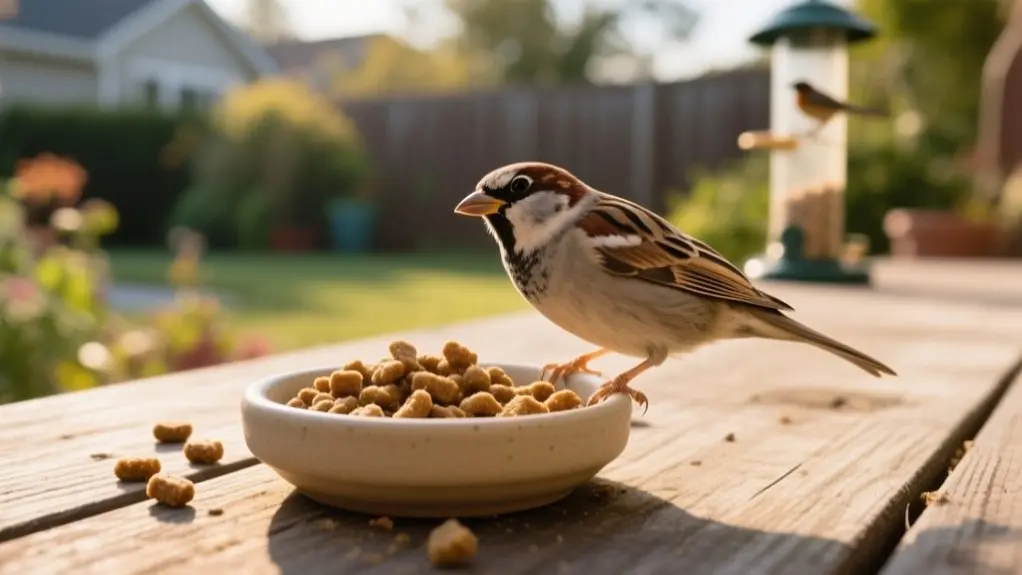
You can let birds eat dog kibble occasionally, but it’s not ideal since it lacks essential nutrients they need and may cause health issues if given regularly. Many wild birds do eat kibble, often soaking it first to soften it, yet kibble isn’t designed for their digestion or diet.
To keep birds healthy, it’s better to offer species-appropriate foods and watch for any problems. There’s more to understand about safe feeding and better alternatives ahead.
What Is Dry Dog Kibble Made Of and How Does It Compare to Bird Food
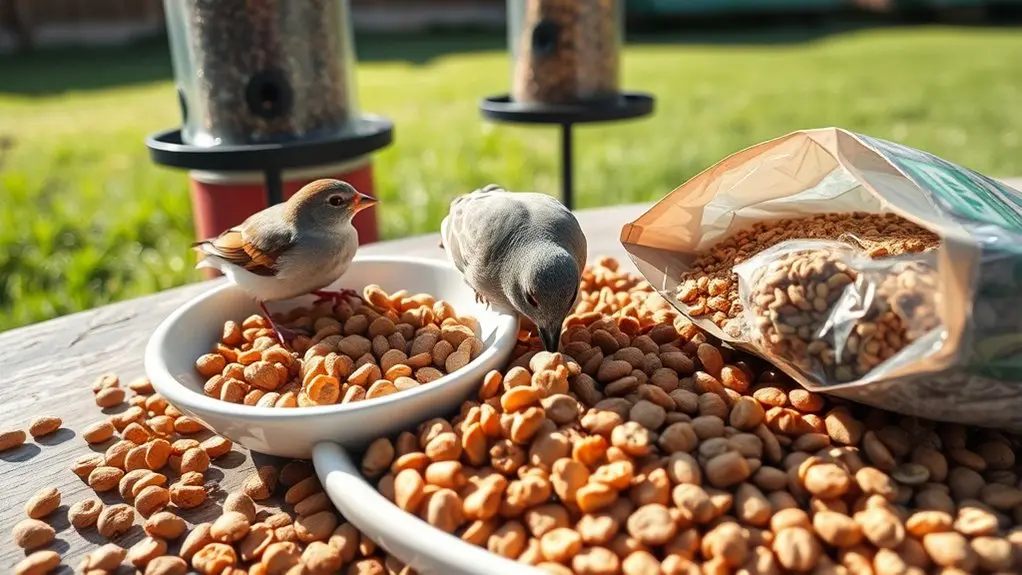
Although dry dog kibble is designed to provide balanced nutrition for dogs, its ingredients and nutrient profile differ markedly from what birds need.
Dry dog food mainly contains protein sources like meat or meat by-products, grains, vegetables, plus added vitamins and minerals tailored to dogs.
Birds, however, typically require diets rich in seeds, fruits, and insects to meet their caloric and nutritional demands.
Unlike bird food, which is formulated to mimic natural diets for specific bird species, dry dog food may lack essential nutrients crucial for birds’ health.
While some larger birds might eat dry dog food, it doesn’t fully satisfy their dietary needs.
Which Wild Birds Are Known to Eat Dog Kibble
You might be surprised by the variety of wild birds that have been spotted eating dry dog kibble. These birds show remarkable adaptability in their diets, often taking advantage of this unconventional food source.
Wild birds surprise us with their adaptability by eating dry dog kibble as an unconventional food source.
Here are some wild birds known to eat dog kibble:
- American crows, common grackles, house sparrows, and blue jays are all opportunistic feeders comfortable with dry dog food.
- Ducks, ibises, seagulls, and woodpeckers demonstrate versatility by including kibble in their varied diets.
- Eastern bluebirds and dark-eyed juncos are occasional kibble consumers expanding the range of wild birds adapting to this food.
Many wild birds even soak kibble in water to make it easier to eat, which shows their resourcefulness.
How Birds Eat Dog Food
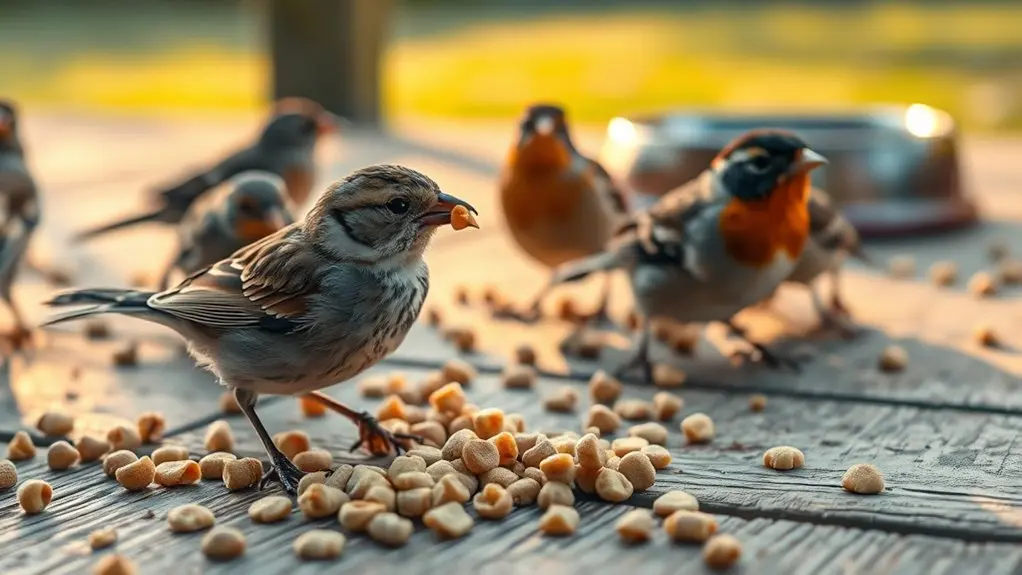
Several bird species have developed unique ways to eat dry dog kibble, often soaking it in water to soften the hard pieces for easier consumption.
When feeding birds dog food, you’ll notice larger species like American crows and blue jays can handle the kibble directly.
Smaller birds tend to wait nearby, taking advantage of the feeding environment created by their bigger counterparts.
Understanding how birds eat dog food helps you provide food the best way. Offering softened kibble can make it more accessible and appealing.
Birds often adapt, initially attracted by other foods like nuts before accepting dog kibble as part of their diet.
Nutritional Benefits and Drawbacks of Dog Kibble for Birds
While dog kibble provides protein, carbohydrates, vitamins, and minerals that can benefit birds nutritionally, it isn’t formulated to meet their specific dietary needs.
You should understand these key points about dog kibble and birds’ nutritional needs:
- Dog kibble offers a more balanced profile than typical birdseed but lacks essential nutrients crucial for birds’ long-term health.
- Ingredients like fillers and preservatives in dog food may not align with birds’ digestive systems, even if some nutrients are beneficial.
- Feeding dog kibble occasionally can supplement a bird’s diet, but it shouldn’t replace species-appropriate foods that fully satisfy their nutritional needs.
Health Risks of Feeding Dog Kibble to Birds
Although dog kibble contains some nutrients, relying on it for feeding birds can pose serious health risks. Dog food doesn’t meet birds’ specific nutritional needs, which can cause malnutrition.
Over time, feeding birds dry kibble may lead to obesity and organ failure due to improper calorie levels. Certain preservatives and additives in dog kibble could be harmful or even toxic to birds, causing severe health complications.
You should also know that regular consumption may make birds dependent on kibble, reducing their natural foraging behaviors and survival skills.
Because the safety of dog kibble varies based on its ingredients and formulation, it’s essential to consult wildlife experts before offering it to birds to avoid these health risks.
Can Dog Kibble Replace Bird Food?
You might be wondering if dog kibble can double as bird food. Well, it actually doesn’t meet the unique nutritional needs that birds have.
Feeding dog kibble to birds regularly could even lead to some digestive issues.
Plus, dog kibble is missing key nutrients that birds need to stay healthy.
Nutritional Differences Explained
Because dog kibble is designed specifically for canine nutritional needs, it can’t adequately replace bird food. You need to understand the nutritional differences to see why dog food doesn’t work for birds. Here are three key points:
- Nutrient Proportions: Dog food’s protein, carbohydrates, vitamins, and minerals are balanced for dogs, not birds. This difference can lead to potential malnutrition in birds.
- Dietary Requirements: Birds need specific seeds, fruits, and insects that aren’t in dog kibble. These are essential for their health.
- Long-term Effects: Feeding dog kibble regularly to birds may cause nutritional deficiencies. This can impact their growth and weaken their immune system.
While birds might nibble on dog food occasionally, it should never replace their natural diet.
To keep your birds healthy, provide species-appropriate food tailored to their unique nutritional needs.
Potential Health Risks
Understanding the nutritional gaps between dog kibble and bird food highlights why relying on kibble can pose serious health risks for birds. Dog kibble lacks essential nutrients birds need and contains high protein but low fiber, which can cause obesity and digestive problems over time.
Some ingredients in kibble, like artificial additives and preservatives, are potentially toxic to birds and may trigger adverse reactions. Feeding birds dog kibble regularly disrupts their natural diet and feeding behaviors, leading to malnutrition.
While some birds may nibble on kibble occasionally, you shouldn’t replace their species-appropriate food with it. Offering dog kibble as a staple risks long-term health issues, so it’s vital to avoid using it as a substitute for proper bird nutrition.
Appropriate Feeding Alternatives
Although dog kibble offers a protein-rich option for wild birds, it can’t fully replace their natural diet. Their natural diet meets their unique nutritional needs better.
When considering appropriate feeding alternatives, you should focus on options that support pet health without disrupting local ecosystems.
Here are three key points to keep in mind:
- Provide natural bird foods like seeds, nuts, fruits, and insects. These better cater to birds’ dietary requirements.
- Avoid relying solely on dog kibble, as its long-term effects on wild birds remain unclear and may cause imbalances.
- Consult wildlife rehabilitators or local experts to guarantee your feeding practices benefit birds safely and effectively.
This approach promotes healthier birds and preserves natural feeding behaviors.
Impact of Dog Kibble on Small and Large Birds
When you put out dog kibble, you’ll notice that bigger birds like crows usually take over the feeding spots. This means smaller birds often have to look elsewhere for food.
It’s also important to remember that dog food isn’t really balanced for birds nutritionally. So, if they end up eating too much of it, it could actually hurt their health.
Knowing how these feeding habits work can help you make smarter choices for all the birds that visit your yard.
Feeding Dynamics Among Birds
Several bird species react differently to dog kibble, shaping unique feeding dynamics in your backyard. Understanding these feeding dynamics among birds is important to grasp how dog kibble influences a pet bird’s diet and wild birds alike.
Larger birds like crows and blue jays often dominate kibble feeding spots, which can draw their attention away from traditional feeders, reducing competition for smaller birds.
This shift allows smaller birds such as nuthatches and titmice to feed more peacefully at regular feeders.
It also encourages birds to adapt their foraging strategies, creating new behavioral patterns around available kibble.
Nutritional Effects On Birds
Because dog kibble isn’t designed for birds, feeding it to them can affect their nutrition in unexpected ways. The nutritional effects on birds vary depending on their size and species.
Larger birds like crows and blue jays might eat dog kibble without immediate problems, but the long-term impact on their health is uncertain.
Smaller birds may benefit indirectly, as larger birds focus on the kibble, allowing them to feed on regular bird food peacefully.
However, dog kibble lacks essential nutrients vital for birds and contains high protein and carbohydrates, which can cause health issues such as obesity and digestive problems if consumed regularly.
To maintain your birds’ well-being, it’s best to prioritize specialized bird food over dog kibble when feeding them.
What Experts Say About Feeding Dog Kibble to Birds
Although some wild birds like crows and blue jays might eat dry dog kibble, experts warn it doesn’t provide the nutrients most bird species need. It could cause health problems if offered regularly.
When you consider feeding dog kibble to birds, keep these expert insights in mind:
- Dog kibble lacks the specialized nutrients essential for many bird species, risking malnutrition.
- Regular feeding may disrupt natural foraging behaviors and nutritional balance in wild birds.
- Larger birds might compete with smaller ones for kibble, potentially limiting access to appropriate food sources for the smaller species.
Experts also emphasize the unknown long-term effects of dog kibble on birds.
They recommend consulting wildlife rehabilitators before introducing it into their diet to protect avian health.
Safe Ways to Offer Dog Kibble to Birds
If you decide to offer dog kibble to birds despite the risks, there are ways to do it more safely. First, soak the kibble in water to soften it, making it easier for birds to eat and digest.
Soak dog kibble before feeding birds to soften it for easier eating and digestion.
Use large, shallow dishes to provide easy access and reduce mess.
Choose kibble brands with fewer fillers and no harmful additives to protect your pet birds’ health. Always monitor the birds’ behavior and condition when introducing dog food to their diet, as long-term effects are unclear.
Regularly clean the feeding area to prevent mold and bacteria buildup from leftover kibble.
Signs of Nutritional Deficiency or Illness From Feeding Dog Kibble
When you feed birds dog kibble over time, you may notice signs of nutritional deficiency or illness emerging. Since dog kibble lacks essential vitamins and minerals tailored for birds, their health can decline quickly.
Watch for these key indicators:
- Feather and Skin Issues: Poor plumage, feather plucking, or dull feathers signal nutritional deficiency affecting their coat.
- Behavioral and Physical Changes: Lethargy, increased aggression, or withdrawal often point to underlying health problems caused by inadequate nutrition.
- Gastrointestinal Symptoms: Diarrhea or vomiting may occur as birds struggle to digest dog kibble properly.
Regularly monitor your bird’s weight, activity, and feather condition to catch these warning signs early.
Ignoring nutritional deficiency can lead to obesity, weakened immunity, and serious illness, so acting promptly is vital.
Safer Alternatives to Dog Kibble for Wild Birds
If you want to feed wild birds, it’s better to skip dog kibble and go for safer, more nutritious options.
You can try making your own bird treats at home, which is pretty easy and fun. Or, you can grab some store-bought wild birdseed blends that are specially made to meet their dietary needs.
These choices help keep the birds healthy and full of energy, without the risks that come with processed pet food.
Nutritional Bird Food Options
Although dog kibble might seem convenient, wild birds thrive best on diets that closely resemble their natural food sources. To provide safer nutritional bird food options, focus on foods that meet their specific needs. Here are three key options to contemplate:
1. Bird seed blends
Premium mixes with sunflower seeds, millet, and peanuts support various species and offer balanced nutrition.
2. Fresh fruits and vegetables
Berries, leafy greens, and seedless apples add vitamins and hydration, supplementing their diet naturally.
3. Specialized bird pellets
Formulated to deliver complete nutrients tailored to bird species, these pellets guarantee better health than dog kibble.
Always supply clean, fresh water alongside food to aid digestion and hydration, enhancing wild birds’ well-being effectively.
Safe Homemade Bird Treats
Since wild birds require diets that mimic their natural intake, making safe homemade bird treats offers a practical and nutritious alternative to dog kibble. You can mix seeds, nuts, and dried fruits to create a blend that suits their dietary needs better.
Try combining unsalted peanut butter with whole grains for energy-rich snacks birds love. Including fresh fruits like apples, berries, and bananas adds essential vitamins and variety.
During colder months, you can make suet cakes using animal fat and seeds to provide high-calorie food that supports their energy demands.
Just be sure your homemade bird treats avoid harmful ingredients such as chocolate, avocado, or excess salt, which can harm birds.
With these safe options, you’ll nourish wild birds in a way that’s both healthy and tasty.
Store-Bought Wild Birdseed
When you choose store-bought wild birdseed, you provide birds with a carefully balanced mix designed to meet their unique nutritional needs. Unlike dog kibble, birdseed blends feature seeds like sunflower, millet, and safflower, which are both appealing and beneficial for wild birds.
Here’s why birdseed is a safer, smarter choice:
- Birdseed contains essential vitamins and minerals tailored to avian health, unlike dog kibble’s generic formulation.
- It attracts a wide variety of species, from finches to cardinals, enriching your feeding experience.
- Store-bought birdseed is free from harmful additives often found in dog food, ensuring safety for wild birds.
Using birdseed regularly supports birds’ diets, especially during scarce winter months, promoting their overall well-being.
How to Support Wild Birds Responsibly in Your Backyard
If you want to support wild birds in your backyard, offering fresh, dry dog kibble can be a practical alternative food source. Soften kibble with water to help birds digest it easily. Place it in large, shallow dishes to reduce mess and allow easy access.
Keep an eye on feeding dynamics. Larger birds like crows may dominate, so provide smaller birds chances to eat safely when bigger birds are distracted. Always monitor leftover food to prevent pests. Engage with local birdwatching groups to learn responsible feeding practices.
| Tip | Purpose | Notes |
|---|---|---|
| Fresh, dry kibble | Suitable food source | Avoid stale or wet kibble |
| Soften kibble | Easier digestion | Add water before feeding |
| Large, shallow dish | Easy access for birds | Limits mess and waste |
| Monitor leftovers | Prevent pests | Clean regularly |
Frequently Asked Questions
Can Dog Kibble Attract Unwanted Wildlife to My Backyard?
Yes, dog kibble can cause wildlife attraction in your backyard. Leaving it outside invites raccoons, squirrels, and larger birds like crows, disrupting your local ecosystem.
These animals might damage property as they search for food, and larger birds can dominate feeding spots, pushing out smaller species.
To avoid this, you should clean up leftover kibble regularly. This helps maintain balance and prevents unwanted wildlife from becoming a frequent nuisance.
How Should Dog Kibble Be Stored to Keep It Safe for Birds?
You wouldn’t store fruit next to a grill, so don’t leave dog kibble exposed either.
For safe bird feeding, follow storage tips like keeping kibble in airtight containers away from moisture and pests.
Store it in a cool, dry place, out of direct sunlight to preserve nutrition.
Separate opened and unopened bags to avoid contamination, check expiration dates regularly, and clean containers often.
These steps keep kibble fresh and safe for birds.
Is It Harmful if Birds Eat Dog Kibble Mixed With Birdseed?
Yes, it can be harmful if birds eat dog kibble mixed with birdseed because it causes a nutritional imbalance.
Dog kibble doesn’t provide the specific vitamins and minerals birds need, so relying on it disrupts their diet.
Over time, this imbalance can lead to health issues like obesity and digestive problems.
To keep birds healthy, you should stick to feeding them birdseed or species-appropriate food instead of mixing in dog kibble.
Can Feeding Dog Kibble to Baby Birds Affect Their Growth?
Yes, feeding dog kibble to baby birds can definitely affect their growth. You might think it’s a quick fix, but dog food lacks the proper nutritional balance baby birds need.
Their developing bodies require specific proteins and vitamins that dog kibble doesn’t provide, which can stunt growth and weaken their immune systems.
To help baby birds thrive, you should stick to species-appropriate diets or special formulas designed for their unique needs.
Are There Specific Dog Kibble Ingredients Toxic to Certain Bird Species?
Yes, you should watch out for toxic ingredients in dog kibble that can harm certain bird species. Ingredients like chocolate, onion, xylitol, and avocado are especially dangerous.
These can cause serious health issues like hypoglycemia, respiratory distress, or even death. High salt and fat levels also pose risks.
Always check labels carefully to avoid feeding your bird anything containing these toxic ingredients.
Conclusion
While some wild birds might nibble on dog kibble, it’s not an ideal food source. Did you know that over 90% of bird species require diets rich in seeds, fruits, or insects to thrive?
Dog kibble lacks the essential nutrients birds need and can lead to health issues. Instead, stick to bird-friendly foods and feeders to support their well-being. You’ll help keep your backyard birds healthy and happy without risking their nutrition.