
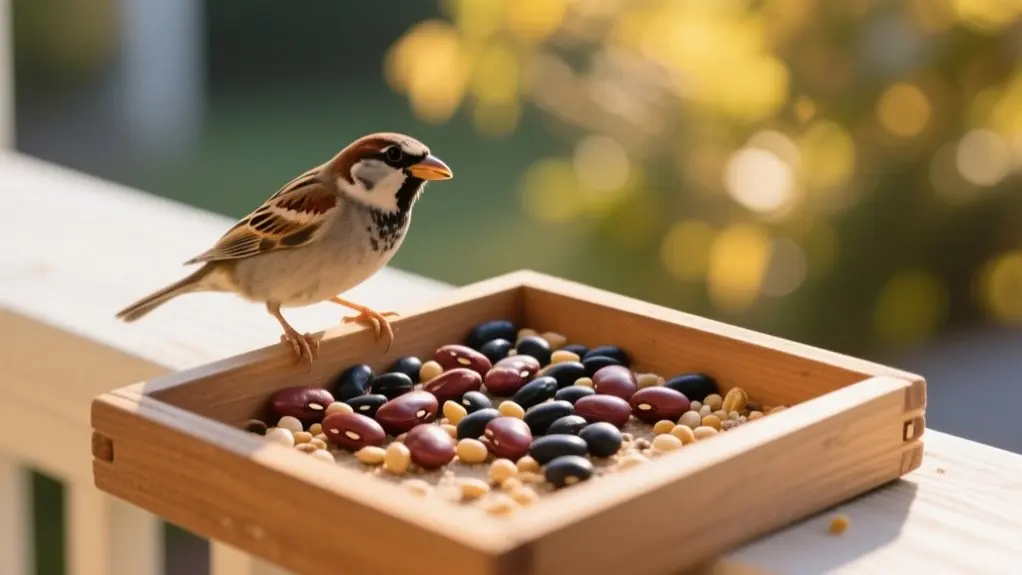
You can feed your bird dried beans like black or kidney beans, but only when they’re fully cooked to remove harmful toxins like lectins. Raw beans can cause serious illness with symptoms such as vomiting and lethargy.
Soaking and boiling beans properly makes them safe and easier to digest. Introduce them gradually and serve in moderation as part of a balanced diet.
If you want to keep your bird healthy, there’s more to know about safe preparation and alternatives.
Why Are Raw Dried Beans Unsafe for Birds?
Although dried beans might seem like a healthy snack, raw ones contain harmful lectins, especially phytohemagglutinin, that can poison your bird if eaten.
If you own an African Grey, you need to be particularly cautious.
These lectins can cause severe gastrointestinal distress, lethargy, and even organ damage in your feathered friend.
Kidney beans are especially toxic when raw, so avoid giving them to your African Grey unless they’re fully cooked.
Feeding raw dried beans poses a serious risk, and symptoms may not appear immediately, making it harder to identify the problem quickly.
Instead, stick to safe alternatives like cooked beans or fresh green beans and snow peas.
Protect your African Grey by keeping raw dried beans off the menu.
How Does Cooking Make Dried Beans Safe?
When you cook dried beans, the heat destroys harmful toxins like lectins that raw beans contain.
Plus, cooking breaks down tough compounds, which makes the beans easier to digest and safer for your bird.
Toxin Reduction Through Heat
Cooking plays an essential role in making dried beans safe for birds by breaking down harmful toxins like lectins and protease inhibitors. These compounds can be dangerous if the beans are eaten raw, but proper heat treatment neutralizes them.
To guarantee toxin breakdown methods work effectively, follow these tips: soak beans before cooking to reduce toxin levels and improve digestibility.
Boil beans at a high temperature (at least 100°C) for 10-15 minutes to meet cooking temperature guidelines.
Check specific cooking times for different bean varieties, as some require longer to become safe.
Breakdown Of Harmful Compounds
Since dried beans contain harmful compounds like lectins and protease inhibitors, you need to cook them thoroughly to make them safe for birds. Cooking methods neutralize these toxic compounds with heat, ensuring bird diets remain safe and nutritious.
Soaking beans before cooking also reduces toxin levels and shortens cooking time. Here’s a quick overview:
| Bean Type | Harmful Compounds | Cooking Effect |
|---|---|---|
| Kidney | Lectins, Protease Inhibitors | Heat neutralizes toxins |
| Fava | Lectins | Soaking reduces toxins |
| Pinto | Protease Inhibitors | Cooking improves safety |
| Black | Lectins | Proper cooking essential |
| Navy | Protease Inhibitors | Soaking + cooking required |
Always avoid feeding raw beans to birds, as toxic compounds can cause serious health problems.
Improved Digestibility And Safety
Neutralizing harmful compounds in dried beans is only part of the process to make them safe for birds. Cooking greatly improves digestibility and safety by breaking down lectins and complex carbs, which can otherwise harm birds.
When you prepare beans, consider these key points:
- Cooking methods: Boil beans for at least 10 minutes to eliminate toxins effectively.
- Bean varieties comparison: Different beans vary in toxin levels, so proper cooking is essential for all types.
- Dietary balance: Cooked beans add protein, vitamins, and minerals, supporting a balanced diet without causing digestive issues.
Which Dried Beans Are Best for Parrots?
How do you choose the best dried beans for your parrot? Focus on safe, nutritious options like black beans, kidney beans, and pinto beans. These are among the best bean varieties for your bird.
Remember, raw beans contain harmful lectins, so cooking is crucial. Following parrot feeding guidelines, introduce beans gradually to monitor your bird’s reaction and avoid digestive upset.
Beans provide valuable protein and fiber, supporting your parrot’s health when prepared properly.
While this overview points you toward safe choices, always consult reliable sources or an avian veterinarian for detailed bean preparation tips tailored to your parrot’s needs.
Choosing the right beans and feeding them correctly guarantees you’re adding a healthy, enjoyable food to your bird’s balanced diet.
How to Prepare Dried Beans for Your Bird
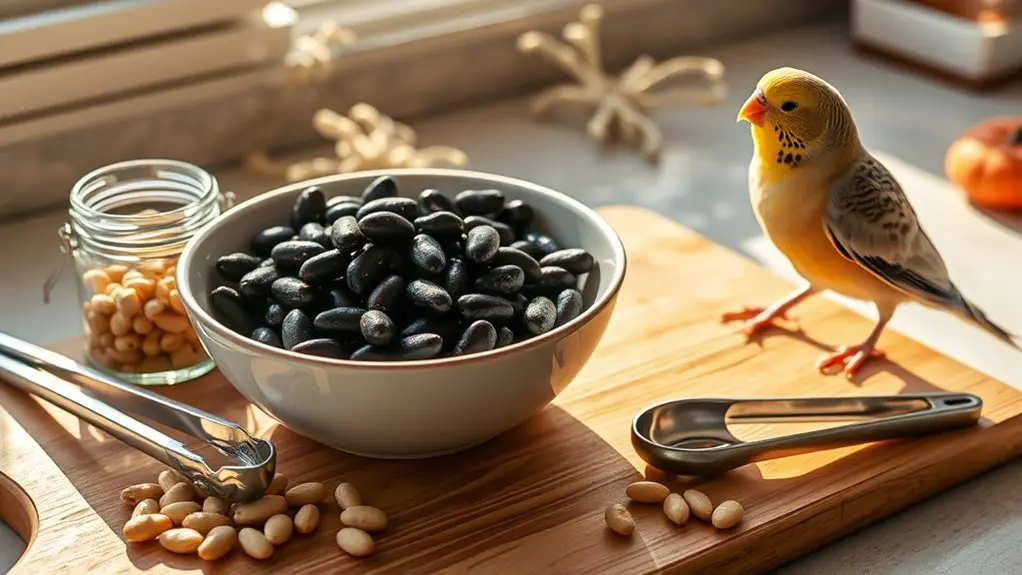
After selecting safe dried beans like black or kidney beans for your parrot, you need to prepare them properly to guarantee they’re safe and easy to digest.
Proper preparation involves choosing the right bean varieties and using safe cooking methods.
Always soak the beans overnight to reduce cooking time and improve digestibility. Then, cook them thoroughly without any salt or seasoning to eliminate toxins harmful to your bird.
Keep these serving tips in mind:
- Cool beans completely before serving to avoid burning your bird’s beak.
- Serve beans in moderation as part of a balanced diet.
- Avoid adding spices or salt, which can be harmful.
How Often Should You Feed Dried Beans to Your Bird?
Wondering how often you should offer dried beans to your bird? Feeding frequency matters because beans should complement, not dominate your bird’s diet. Aim to serve cooked, cooled, and chopped beans a few times a week.
Portion control is key. Small servings prevent digestive upset and help you monitor your bird’s response. Gradually introduce beans to maintain dietary balance, ensuring your bird still enjoys fresh fruits, vegetables, and other staples.
Always tailor feeding frequency and portion size to your bird’s species and needs, consulting trusted avian dietary resources when in doubt.
What Are the Signs of Bean Poisoning in Birds?
While dried beans can be a healthy addition to your bird’s diet, it’s important to recognize the signs of bean poisoning. Bean toxicity symptoms can be subtle at first but worsen quickly, posing serious avian health risks.
Watch for:
- Vomiting, diarrhea, and difficulty breathing, which require immediate emergency care tips to follow.
- Changes in behavior like lethargy, loss of appetite, increased aggression, or withdrawal.
- Neurological issues such as tremors or seizures indicating severe poisoning.
If you notice any of these signs, act quickly and consult a veterinarian.
Immediate action and veterinary consultation are crucial if you observe any signs of bean poisoning in your bird.
Properly cooked beans reduce risks, but recognizing symptoms early guarantees your bird gets prompt treatment and improves recovery chances.
Why Dried Beans Are Good for Your Parrot’s Health
You’ll find that dried beans are packed with protein and fiber, which support your parrot’s energy and digestion.
These nutrients play a key role in keeping your bird healthy and active.
Nutritional Benefits Overview
A serving of properly cooked dried beans offers your parrot a powerful boost of protein essential for muscle growth and overall health.
When you choose different bean varieties, you provide a diverse range of nutrients that support your bird’s well-being. Proper cooking methods are essential to eliminate toxins, ensuring the beans are safe to eat.
Including dried beans in your parrot’s diet helps maintain nutritional balance by supplying important vitamins and minerals.
Here’s why dried beans benefit your parrot’s health:
They deliver important vitamins like iron, potassium, and folate for bodily functions.
Dietary fiber promotes healthy digestion and gut flora.
Energy levels improve with the added nutrient variety from beans.
Protein and Fiber Content
Because dried beans pack a rich source of protein and fiber, they make an excellent addition to your parrot’s diet. Different bean varieties like black beans and kidney beans offer essential amino acids and minerals such as iron and magnesium, supporting your bird’s growth and overall health.
However, you must cook beans properly to remove harmful toxins and boost digestibility. Never feed them raw. Using safe cooking methods like boiling guarantees your parrot benefits fully from these nutrients.
Incorporate cooked beans into your parrot’s meals regularly but in moderation. Adjusting feeding frequency prevents digestive issues and keeps your bird interested in their diet.
What Not to Feed Your Bird When It Comes to Beans
When feeding your bird, steer clear of raw dried beans like kidney and fava beans since they contain toxins that can seriously harm your pet. Understanding the right bean varieties, proper cooking methods, and feeding guidelines is vital to keep your bird safe.
Avoid these common mistakes: feeding raw dried beans, especially kidney and fava, due to their toxic compounds. Also, don’t overfeed cooked beans without moderation, as this can cause health issues from excess protein.
And never offer dried beans that haven’t been thoroughly cooked because incomplete cooking won’t eliminate harmful toxins.
Stick to fully cooked beans and consult avian experts to guarantee safety. Remember, some bean varieties like green beans and snow peas are safer options, but always prioritize proper preparation and moderation in your bird’s diet.
Can Birds Safely Shell Dried Beans Themselves?
You might be wondering if your bird can safely shell dried beans all by itself. Well, shelling can be a great way to keep your feathered friend mentally stimulated.
But here’s the catch—raw beans actually contain toxins that could be harmful if your bird eats them.
So, it’s really important to make sure the beans are cooked before your bird gets anywhere near them.
And, of course, always keep an eye on your bird while it’s shelling those beans to make sure everything stays safe and sound.
Risks of Raw Beans
Although birds might seem capable of handling dried beans themselves, raw beans contain toxins like lectins that can harm them if ingested. You shouldn’t let birds shell dried beans on their own because the bean toxicity effects can seriously impact bird digestive health. Instead, focus on safe bean alternatives and proper preparation.
Keep these risks in mind:
- Raw beans contain lectins that disrupt digestion and cause illness.
- Birds lack the ability to neutralize these toxins by themselves.
- Offering raw beans risks poisoning and digestive upset.
To protect your bird, avoid feeding raw dried beans and consult avian experts before introducing any new foods.
Opt for cooked beans or fresh vegetables like green beans, which support bird digestive health without the dangers of raw beans.
Benefits of Shelling
Since birds naturally enjoy foraging, letting them shell dried beans themselves offers valuable mental stimulation and exercise. You’ll notice that shelling techniques vary by species, but all encourage natural foraging benefits that keep your bird engaged and active.
This hands-on activity also promotes beak health by strengthening muscles and encouraging proper wear. However, always guarantee the beans are cooked first to remove any toxins, as raw dried beans can be harmful.
Offering safe, additive-free beans lets your bird enjoy a rewarding challenge while you know they’re protected.
How to Safely Introduce Dried Beans to Your Bird
When introducing dried beans to your bird, always cook them thoroughly to eliminate harmful toxins found in raw beans. Proper cooking techniques are essential to guarantee safety and digestibility.
Start by comparing bean varieties. Black beans and pinto beans are good options to test your bird’s preferences. Introduce beans gradually, offering small amounts to monitor any adverse reactions.
Keep these tips in mind:
- Use simple cooking techniques like boiling without additives or seasonings.
- Observe bird preferences by noting which bean varieties they enjoy and tolerate well.
- Offer dried beans as an occasional treat, not a dietary staple, to maintain balanced nutrition.
Alternatives to Dried Beans for Protein-Rich Bird Treats
If you’re looking to diversify your bird’s diet with protein-rich treats, several alternatives to dried beans can provide both nutrition and variety.
Cooked lentils offer excellent lentil benefits, as they’re easy to digest and safe when prepared properly.
Quinoa varieties stand out, too, delivering complete protein with essential amino acids that support your bird’s health.
When it comes to chickpea preparation, fully cooked and mashed or chopped chickpeas make a tasty, safe snack.
You can also try fresh or frozen peas, which supply protein plus vitamins and minerals without the risks dried beans pose.
For a different twist, spread nut butters like almond or sunflower seed butter (without added sugar or salt) on bird-safe treats or toys to boost protein intake.
When to Consult an Avian Vet About Diet Changes
Although introducing new foods like dried beans can enrich your bird’s diet, you should consult an avian vet immediately if you notice any signs of digestive distress or unusual behavior.
Behavioral changes such as lethargy or loss of appetite often signal that your feathered friend isn’t adjusting well to dietary adjustments.
Veterinary consultations become essential when you see vomiting, diarrhea, or other digestive issues, sudden changes in feather condition or skin health, or if your bird has pre-existing health conditions requiring careful diet management.
Before making significant dietary adjustments, especially with dried beans, it’s best to seek professional advice.
Regular veterinary consultations help guarantee your bird stays healthy and thrives on its evolving diet.
Don’t hesitate to reach out if anything feels off. Early intervention can prevent serious complications.
Frequently Asked Questions
Can Dried Beans Cause Allergies in Birds?
Yes, dried beans can cause allergies in birds if not prepared correctly. You should always focus on proper bean preparation, like thorough cooking, to reduce toxins that trigger allergy symptoms such as feather plucking and digestive issues.
Stick to safe varieties and introduce them gradually to watch for any reactions.
If you’re unsure, consult an avian specialist to keep your bird healthy and avoid potential allergic responses.
Are Canned Beans Safe for Birds to Eat?
Canned beans can be a double-edged sword for your bird. They’re safe if you handle them right. Choose low-sodium canned bean types to maximize nutritional benefits while minimizing harm.
Always rinse them thoroughly to wash away excess salt and preservatives. Avoid any with added spices or sauces.
How Should Dried Beans Be Stored Before Feeding?
You should store dried beans in airtight storage containers to keep moisture out and maintain freshness.
Make sure the containers are sealed tightly to prevent pests and mold growth.
Keep them in a cool, dry place with an ideal temperature below 70°F to avoid degradation.
Avoid direct sunlight or heat sources, which can ruin their quality.
Label your containers with the purchase date to track freshness and use the beans within one to two years.
Can Baby Birds Eat Dried Beans?
No, you shouldn’t feed baby birds dried beans. For baby bird nutrition, safe food sources are essential, and dried beans in their raw form can be toxic and hard to digest.
Always follow feeding guidelines by thoroughly cooking and mashing beans before offering them. This makes the beans safe and easier for baby birds to eat.
When introducing any new food, consult an avian specialist to keep your baby bird healthy and thriving.
Do Dried Beans Affect a Bird’s Hydration Levels?
Yes, dried beans can affect a bird’s hydration levels because they need a lot of water to digest. If you feed your bird dried beans, watch for hydration effects like dehydration, especially if fresh water isn’t available.
The digestive concerns arise since dried beans are hard and tough to break down, so cooking them improves their nutritional value and digestibility.
Always provide fresh water to keep your bird healthy and hydrated.
Conclusion
You now know that raw dried beans contain toxins harmful to birds, but cooking neutralizes these dangers, making them a safe protein source. Notably, parrots need about 18% protein in their diet, which cooked beans can help provide.
Just remember to introduce beans gradually and never let your bird eat them raw. Always keep an eye on your feathered friend’s health, and consult an avian vet if you notice any changes after diet updates.