
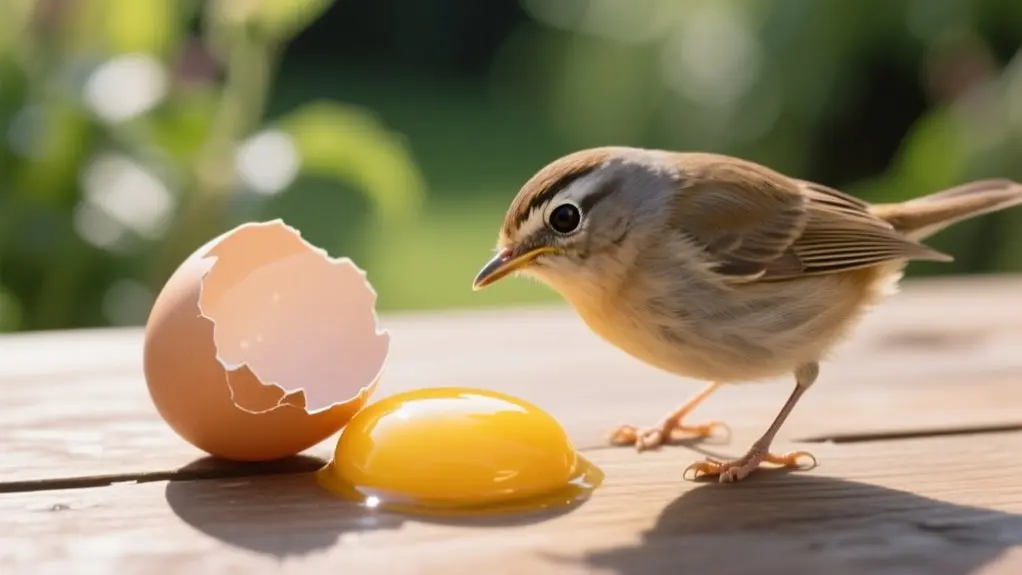
You can safely feed birds cooked egg yolks occasionally since they’re packed with essential nutrients like protein, vitamins, and minerals that support growth and overall health. Just make sure to offer fully cooked yolks, boiled or scrambled, and limit feeding to once or twice a week to avoid health risks like high fat intake or dietary imbalances.
If you want to understand how to balance egg yolks with other foods and learn feeding tips, keep exploring the details ahead.
Why Are Egg Yolks Safe and Nutritious for Birds?
Although you mightn’t realize it, egg yolks are incredibly safe and nutritious for birds because they pack essential nutrients like calcium, iron, phosphorus, zinc, and vitamins A, D, E, and K.
Wild birds often eat their own eggs when food is scarce, showing how naturally beneficial egg yolks are.
Wild birds consuming their own eggs during scarcity highlights the natural value of egg yolks.
You can safely offer cooked egg yolks to birds to provide them with crucial fats and proteins that support energy and overall health.
Feeding egg yolks mixed with peanut butter and cornmeal is a smart way to make this treat more appealing.
Including egg yolks regularly in a bird’s diet helps sick birds recover and supports breeding birds, proving how indispensable this nutrient-rich food source truly is.
Nutrients Provided by Egg Yolks
When you provide birds with egg yolks, you give them a concentrated source of essential nutrients like calcium, iron, phosphorus, zinc, and vitamins A, D, E, and K. These make up over 90% of these elements in the egg.
Egg yolks also deliver nearly half the protein found in a whole egg, contributing about 37% of the total protein content. The fat and cholesterol in egg yolks are crucial for birds, supplying energy and supporting overall health.
Since egg yolks contain no carbohydrates, they offer a nutrient-dense option that’s easy to digest, especially beneficial for recovering birds.
These nutrients work together to support growth, repair, and daily function, making egg yolks a valuable addition to your bird’s diet.
How Cooked Egg Yolks Benefit Bird Health
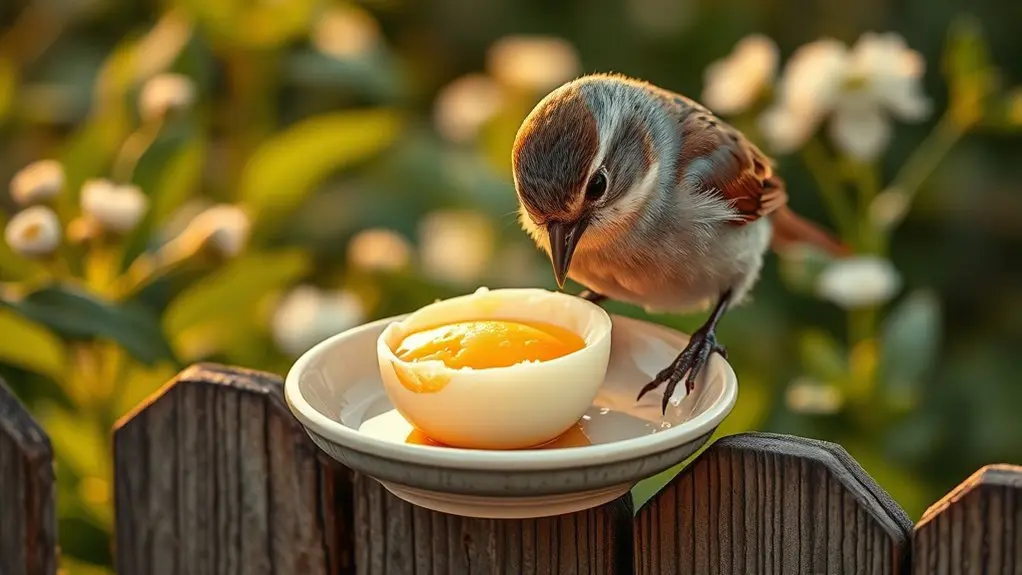
Because cooked egg yolks pack a powerful combination of fat, protein, and essential nutrients like calcium and vitamins A, D, E, and K, they play an important role in maintaining bird health. Many bird species benefit when you include cooked egg yolks in their diet, especially during breeding or recovery.
Birds that eat eggs regularly gain strength and crucial nutrients to support growth and energy. You can mix yolks with peanut butter or cornmeal to boost appeal for wild birds.
| Benefit | Description |
|---|---|
| Nutrient-Rich | Provides essential fats and vitamins |
| Supports Breeding | Helps parents and chicks thrive |
| Aids Recovery | Speeds healing in sick birds |
Feeding cooked egg yolks helps birds stay healthy and energized.
Best Egg Yolk Preparations for Birds
When you’re getting egg yolks ready for your birds, it’s best to stick with safe cooking methods like scrambling or boiling.
These ways help keep the nutrition intact without adding anything harmful. Plus, each method has its own perks, so picking the right one can really give your bird a health boost.
Just remember to steer clear of frying eggs with oils—those fats aren’t good for your feathered friends.
Safe Egg Cooking Methods
Choosing the best way to prepare egg yolks for your bird can make a big difference in their health and enjoyment. Boiled eggs are a safe, nutritious choice since they don’t contain added oils or fats.
You can also try soft boiled eggs, which offer a good balance of nutrition and are easier for birds to eat. Scrambled eggs are another popular option because they’re easy to digest and birds usually find them tasty.
Avoid fried eggs, as the oils used in cooking can harm your bird’s health.
While raw eggs retain full nutrition, they pose contamination risks, so stick with cooked methods like boiled, soft boiled, or scrambled eggs to keep your feathered friend safe and healthy.
Nutritional Benefits By Preparation
Understanding how different cooking methods affect the nutritional value of egg yolks can help you provide the best diet for your bird. Egg yolks offer nearly half of the protein and over 90% of key minerals and vitamins essential for bird health.
Boiled eggs rank among the healthiest preparations because they’re safe and easy for birds to digest. Scrambled eggs, on the other hand, are popular for their softness and palatability, making them great for picky eaters.
Both methods preserve crucial nutrients without adding harmful fats or oils. While raw egg yolks contain nutrients, cooked options like boiled eggs and scrambled eggs reduce risks and improve digestibility, ensuring your feathered friend gets maximum benefit with minimal health concerns.
Avoiding Harmful Additives
Since birds are sensitive to additives, you should avoid preparing egg yolks with oils or seasonings that could harm them. The best way to serve egg yolk is through boiled eggs, whether hard or soft boiled, because they don’t require added fats or harmful ingredients.
Soft-boiled eggs keep nutrients intact and are easy for your bird to digest. Avoid frying eggs entirely, as the oils used can negatively affect their health. Scrambled eggs without any butter or oil are also a safe option.
Raw eggs have nutritional benefits but must be fresh and uncontaminated. Always serve egg yolk in moderation, limiting it to twice a week, to keep your bird’s diet balanced and healthy.
This approach helps you provide safe, nutritious meals without risking exposure to harmful additives.
How Often Should You Feed Egg Yolks to Wild Birds?
You should feed cooked egg yolks to wild birds no more than twice a week to keep their diet balanced.
It’s important not to overdo it.
During breeding seasons, offering egg yolks can give birds some extra nutrition when they need it most.
So, it’s a good idea to provide them a little more during that time.
Just keep an eye out for signs of overfeeding, like leftover food or changes in their behavior.
If you notice anything, you can always adjust how often you feed them.
Recommended Feeding Frequency
Although cooked egg yolks offer valuable fats and proteins that boost wild birds’ health, you should feed them only once or twice a week to prevent dietary imbalances.
Maintaining a balanced feeding frequency helps wild birds get diverse nutrients from their natural diet.
When offering egg yolks, always make sure they’re fully cooked to avoid health risks. You can mix the yolks with peanut butter or cornmeal to increase their appeal and nutritional value.
Remember, wild birds naturally consume eggs sporadically, so your feeding should mimic this occasional pattern.
Overfeeding egg yolks might disrupt their natural foraging habits and lead to nutritional issues.
Stick to a moderate feeding frequency to support their health without causing dependence or harm.
Seasonal Feeding Considerations
When wild birds enter their breeding season, they need extra fat and protein to support egg production and chick growth. Cooked egg yolks can be a helpful supplement. Seasonal feeding with egg yolks offers valuable nutrition during these critical times.
You should feed egg yolks in moderation, ideally no more than twice a week. This provides benefits without risking health issues from too much fat. Mixing egg yolks with peanut butter or cornmeal can boost their appeal and nutrition.
Remember, different bird species have unique dietary needs, so tailor your seasonal feeding accordingly, especially during nesting or fledging periods.
Signs of Overfeeding
Feeding egg yolks to wild birds can boost their energy during breeding seasons, but overdoing it may cause health problems. You should offer egg yolks no more than twice a week to avoid signs of overfeeding.
Watch for lethargy, weight gain, or changes in droppings. These can indicate dietary imbalance. Birds fed too many yolks often lose interest in other essential foods, leading to nutritional deficiencies.
Keep in mind that some species are more prone to health issues from excess fat and cholesterol than others. To protect their well-being, monitor their behavior closely and consider regular veterinary check-ups.
This helps guarantee your feathered friends get the right balance and stay healthy without the risks of overfeeding egg yolks.
Health Risks of Feeding Egg Yolks to Parrots
Because egg yolks contain high levels of fat and cholesterol, you should limit how often you offer them to your parrots. Feeding egg yolks too frequently can lead to health risks, including severe atherosclerosis, especially in young or breeding birds.
Veterinarians recommend giving egg yolks no more than twice a week to keep your parrots healthy. Instead, focus on a balanced diet with pellets, fresh fruits, vegetables, and foraging options.
Keep these points in mind about egg yolks and parrots’ health risks:
- Excessive egg yolk intake can cause heart and artery problems.
- Overfeeding may lead to obesity due to high fat content.
- A varied diet reduces the chance of nutritional imbalances.
Limit egg yolks to protect your parrots’ long-term health.
Avian Veterinarians’ Advice on Feeding Eggs
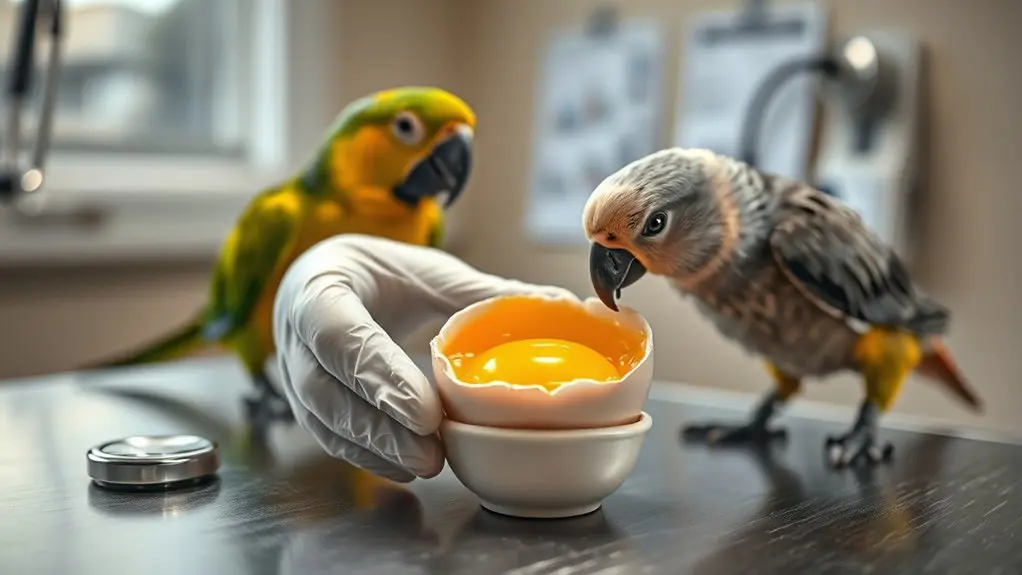
Although eggs can offer valuable nutrients, avian veterinarians like Dr. Susan Orosz advise feeding them to parrots only in moderation. They recommend limiting egg consumption to no more than twice a week, mainly for breeding pairs, since regular feeding can lead to health issues like atherosclerosis.
Avian veterinarians emphasize that egg whites should be given cautiously due to potential allergies or digestive concerns.
To keep your bird healthy, focus on providing a balanced diet rich in pellets, foraging materials, greens, vegetables, and fruits rather than relying on eggs as a staple.
How Wild Birds Naturally Consume Eggs and Yolks
You might be surprised to learn that wild birds often eat eggs. Sometimes they even eat their own or those of rival birds, especially when food is hard to come by.
Egg yolks are packed with essential fats and proteins, which really help them during breeding and when raising their chicks.
Wild Birds Eating Eggs
Several wild bird species consume eggs and yolks as part of their natural diet, especially when food is scarce. You might notice they eat their own eggs or those of rival birds, which helps them survive tough times.
Egg yolks provide essential fats and proteins, fueling their energy needs.
After hatching, many birds seek out calcium, often from crushed egg shells, to support their health and their chicks’ growth. Notably, Person Named historical bird keepers fed yolks to abandoned chicks, showing their nutritional importance.
Here are key points to remember about wild birds eating eggs:
- They eat eggs mainly during food shortages to adapt.
- Crushed egg shells offer crucial calcium for growth.
- Egg yolks serve as rich energy and protein sources.
Natural Yolks Consumption
When food becomes scarce, wild birds often turn to eggs and yolks as an essential source of nutrition. Their natural foraging behaviors include consuming their own eggs or those of rivals, providing crucial fats and proteins from the yolks. This practice supports survival, especially for feeding abandoned chicks, as seen in species like canaries.
Birds also exhibit calcium sourcing strategies by eating eggshells after hatching, which helps strengthen their bones and maintain overall health.
These egg consumption patterns aren’t considered cannibalism but practical adaptations to resource availability.
Understanding these behaviors shows how wild birds efficiently use all parts of the egg to meet nutritional needs, highlighting the role of yolks in their natural diet during challenging times.
Debunking Cannibalism Myths About Egg Yolks
Although it might seem unsettling, birds eating their own eggs isn’t an act of cannibalism but a survival strategy driven by nutritional needs. You should know that cultural misconceptions often paint this avian behavior inaccurately.
Birds don’t eat their eggs out of cruelty; instead, they show impressive nutritional adaptability when food is scarce. This natural response helps them survive harsh conditions without harming their species.
Keep in mind:
- The term “cannibalism” doesn’t fit since eggs aren’t other birds, but a food source.
- Wild birds eat eggs as a last resort, not out of social intent.
- Feeding egg yolks to chicks has long been a nurturing practice, not linked to cannibalism.
Understanding this clears up many myths surrounding egg yolk consumption.
Alternatives to Feeding Egg Yolks to Birds
If you want to provide birds with a balanced diet without relying on egg yolks, you can turn to nutrient-rich alternatives like cooked legumes, fresh fruits, and leafy greens.
These nutrient alternatives supply essential vitamins and hydration while supporting overall health.
Incorporating live or dried insects, such as mealworms, encourages natural foraging behaviors.
It offers birds a protein boost that mimics their wild diet.
For calcium sources, crushed oyster shells or cuttlebone are excellent options, especially for breeding or nesting birds needing extra calcium.
Moreover, commercial bird pellets or seed mixes tailored to specific species guarantee a well-rounded diet without the risks linked to egg yolks.
How to Balance Egg Yolks With Other Foods in a Bird’s Diet
Since egg yolks provide valuable nutrients like fats, proteins, and vitamins, you can include them in your bird’s diet, but only in moderation, ideally no more than twice a week.
To balance egg yolks with other foods, practice proper egg yolk storage by refrigerating leftovers promptly.
Properly refrigerate leftover egg yolks to maintain freshness and nutritional value when feeding your bird.
Use mixing techniques such as combining yolks with peanut butter and cornmeal to create nutrient-rich treats.
Most importantly, maintain dietary variety by offering pellets, fresh fruits, vegetables, and greens alongside egg yolks.
Here’s how to balance egg yolks effectively:
- Store egg yolks safely to prevent spoilage and nutrient loss
- Mix yolks with other nutritious ingredients for a balanced snack
- Rotate foods regularly to guarantee a diverse, complete diet
This approach keeps your bird healthy while enjoying egg yolks responsibly.
Signs Your Bird Is Responding Well to Egg Yolks
Balancing egg yolks with other foods sets the stage for you to observe how your bird responds to this nutrient boost. You’ll notice egg yolk benefits through visible changes in your bird’s health and behavior.
A well-rounded bird diet enriched with egg yolks often leads to increased energy, vibrant feathers, and social engagement. Watch for these clear signs:
| Sign | What It Means |
|---|---|
| Increased activity | Nutritional boost improving energy |
| Vibrant plumage | Healthy feathers from nutrients |
| More vocalization | Thriving on added protein and fat |
| Weight gain | Muscle growth and overall health |
These indicators show your bird is thriving with egg yolks, confirming the nutritional boost’s positive impact on its well-being.
Frequently Asked Questions
Can Baby Birds Digest Egg Yolk Safely?
Yes, baby birds can digest egg yolk safely, and it offers great baby bird nutrition.
You’ll find egg yolk benefits include essential fats, proteins, vitamins, and minerals that support their growth.
When feeding, follow proper feeding guidelines by offering it mashed and in moderation.
Remember to balance their diet with other foods to avoid health issues.
This way, you guarantee your baby bird gets the nutrients it needs for healthy development.
Are Egg Yolks Safe for All Bird Species?
Egg yolks aren’t safe for all bird species, like how a key fits some locks but not others. You’ll enjoy the nutritional benefits they offer, like essential fats and vitamins, but you must follow feeding guidelines closely.
Some birds, especially parrots, face species-specific risks like obesity or vitamin imbalance if you overfeed them.
How Should Egg Yolks Be Stored Before Feeding Birds?
You should follow proper egg storage methods to keep yolks fresh for birds.
Store cooked yolks in an airtight container in the fridge and use them within 3-5 days.
If using raw yolks, refrigerate and feed within 24 hours.
Label containers with the date as freshness indicators.
For yolk preparation tips, thaw frozen yolks slowly and bring them to room temperature before feeding to avoid shocking your bird’s system.
Can Egg Yolks Cause Allergies in Birds?
Yes, egg yolks can cause allergic reactions in some birds, though it’s rare.
While egg yolks provide essential fats and proteins, you should follow feeding guidelines carefully.
Introduce egg yolks gradually to monitor any signs of intolerance, like vomiting or feather plucking.
If your bird shows allergic reactions, stop feeding egg yolks and consult an avian veterinarian to keep your feathered friend safe and healthy.
Is It Okay to Feed Raw Egg Yolk to Birds?
Yes, you can feed raw egg yolk to birds safely. Studies show wild birds consume raw yolks regularly, highlighting their natural raw egg benefits.
Keep feeding guidelines in mind. Offer yolk no more than twice a week to avoid health issues. The nutritional value is impressive, packed with fats, proteins, and vitamins essential for your bird’s health, especially if it’s breeding or recovering.
Always serve fresh yolks to reduce bacterial risks.
Conclusion
Feeding egg yolks to birds is like offering a golden treasure chest filled with nutrients that spark their vigor. When you prepare them just right, you’re painting a healthy, bright future for your feathered friends.
Remember to balance yolks with other foods, creating a harmonious feast. Watch closely—if your bird’s eyes sparkle and energy soars, you’ve struck nature’s perfect chord.
So go ahead, share this sunny delight wisely and watch life take flight.