
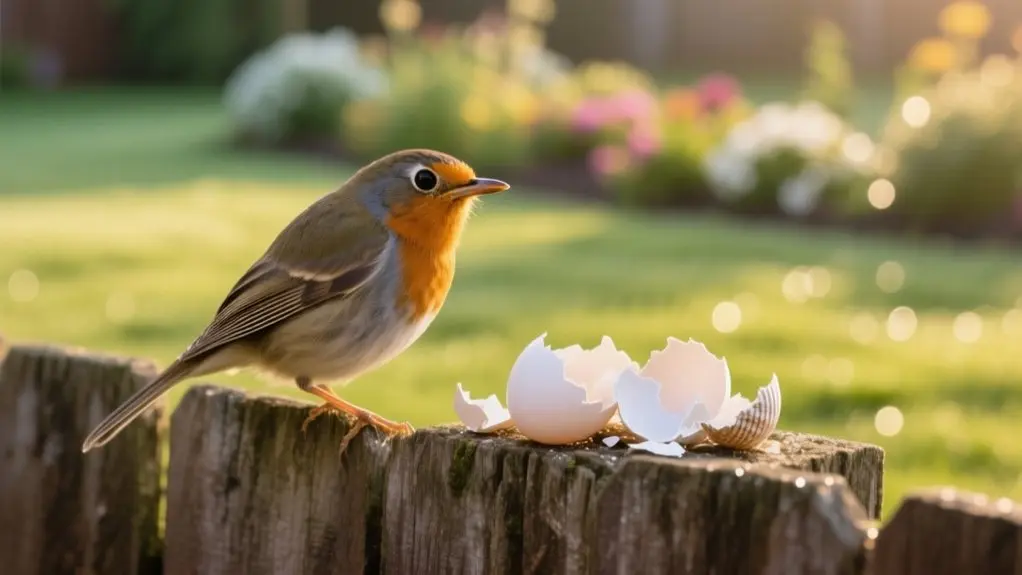
Yes, you can safely feed birds crushed eggshells as a natural calcium boost, especially during nesting season when females need extra nourishment for strong eggshells. Just rinse, sterilize by boiling or baking, and crush them into small pieces for easy consumption.
Offering eggshells can attract species like Blue Jays and Cardinals, supporting their health and reproduction. If you want to learn the best preparation methods and tips for attracting more birds, keep exploring this helpful info.
Why Birds Need Eggshells for Calcium
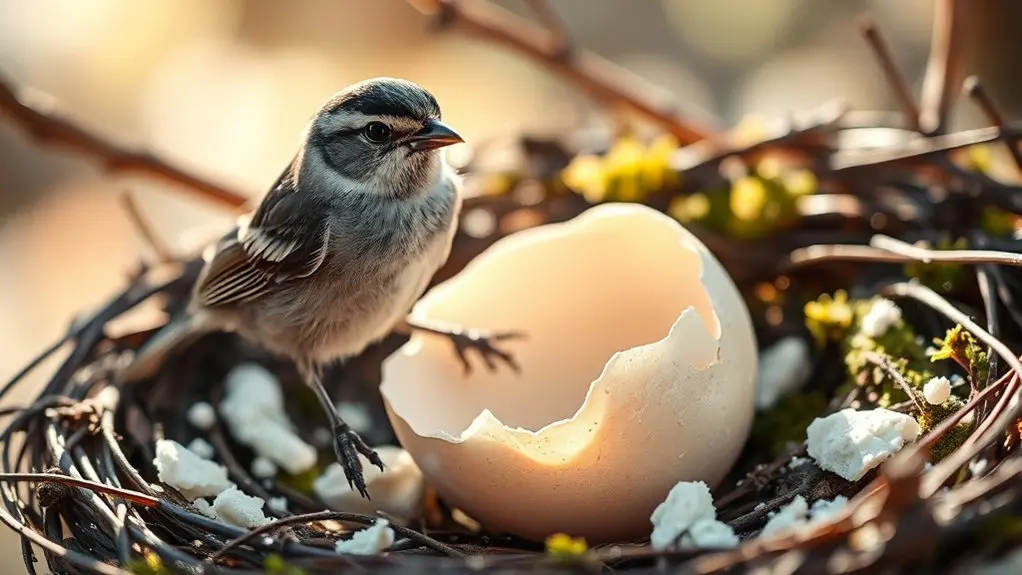
Because female birds need a lot of calcium to build strong eggshells during nesting season, they often seek out eggshells as an essential source. You’ll notice many birds, like Blue Jays and robins, actively searching for eggshells during spring.
This calcium is vital because it helps create sturdy eggshells that protect the developing chicks inside. Without enough calcium, eggshells become weak and more prone to breaking, which puts hatchlings at greater risk.
If you provide crushed or baked eggshells, you can help local birds meet their calcium needs, boosting their chances of successful reproduction.
Are Eggshells Safe for Birds to Eat?
You can safely offer eggshells to birds, but only if you prepare them the right way. First, rinse the shells thoroughly.
Then, either bake or boil them to kill any bacteria.
Once they’re clean and dry, crush the shells into small pieces. These little bits are a great natural source of calcium, which is especially important for nesting females.
If you watch closely, you might notice how the birds react. This can give you a good idea if they’re benefiting from the extra calcium you’re providing.
Eggshell Preparation Safety
Although eggshells can provide valuable calcium for birds, you must prepare them safely to avoid health risks. Proper eggshell preparation safety guarantees you won’t introduce bacteria or contaminants when feeding eggshells to birds.
So, follow these key steps:
First, rinse eggshells thoroughly to remove any leftover egg residue that can harbor harmful bacteria.
Then, boil shells for 10-15 minutes or bake them at 250°F for 10 minutes to sterilize and kill pathogens.
Finally, handle eggshells cleanly and avoid seasoning or additives, because only plain, prepared eggshells are safe for birds.
Health Benefits For Birds
Properly prepared eggshells don’t just prevent health risks. They also offer valuable benefits for birds.
Eggshells provide a natural, safe source of calcium, essential for strong eggshell production and overall bird health, especially during nesting.
By boiling or baking eggshells, you reduce bacteria risks, ensuring they’re safe for your feathered visitors. Crushed eggshells are easy to mix with birdseed or scatter on the ground, making them accessible to various bird species.
This extra calcium supports female birds during the demanding nesting period when they need more nutrients to produce healthy eggs.
Watching birds, you’ll often see them actively seeking out eggshells, drawn by their nutritional value. Offering eggshells is a simple way to promote the health benefits for birds in your backyard.
How to Clean Eggshells Before Feeding
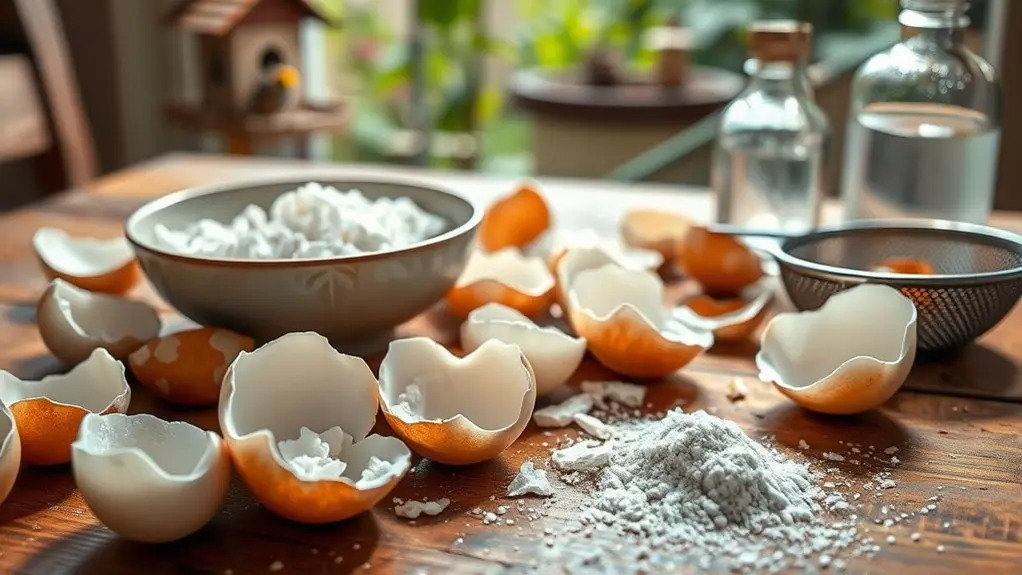
Three simple steps guarantee eggshells are safe and nutritious for birds. Proper cleaning eggshells is essential before feeding them to your feathered friends. Follow these steps to verify safety and maximize benefits:
Three easy steps ensure eggshells are safe and beneficial treats for your backyard birds.
- Rinse the eggshells under warm water to remove any residue and contaminants.
- Boil the shells for 10-15 minutes to eliminate bacteria and confirm they’re safe for birds.
- Let the eggshells dry completely, either in the sun or in a low oven at 250°F for about 10 minutes.
Once dry, crush the eggshells into small pieces or flakes, making it easier for birds to eat.
Store the cleaned and crushed shells in a dry, airtight container to keep them fresh until you’re ready to feed them.
Should You Boil or Bake Eggshells?
How do you decide whether to boil or bake eggshells before feeding them to birds? Both methods effectively sterilize the shells, making them safe for consumption.
You can boil eggshells for 10-15 minutes to eliminate bacteria thoroughly.
Alternatively, baking eggshells at 250°F for about 10 minutes dries and sterilizes them just as well.
Whether you choose to boil or bake eggshells, avoid adding any seasoning or additives to keep the shells safe and healthy for birds.
Properly prepared eggshells provide a valuable calcium source, especially during breeding seasons when birds need extra nutrients.
Once sterilized, you can incorporate the shells into bird feeders or scatter them outdoors for easy access.
Either method guarantees the eggshells are clean and nutritious for your feathered friends.
How to Crush Eggshells for Easy Feeding
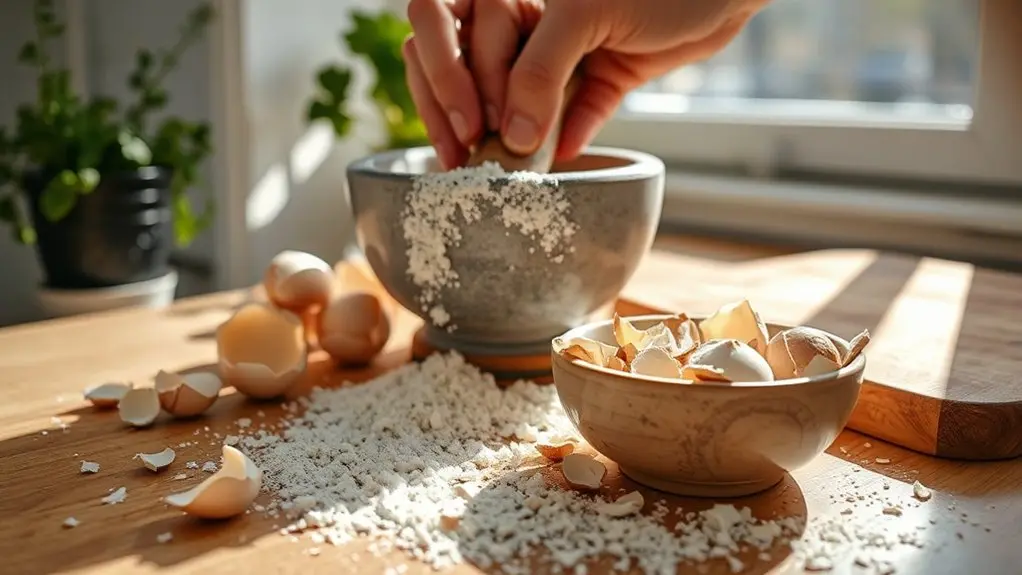
Before feeding eggshells to birds, make certain you rinse them thoroughly to remove any residue and then dry them completely. You can do this either in the sun or in a low oven around 250°F for about 10 minutes.
Once dried, crushing eggshells into manageable pieces is key for easy feeding. Here’s how to do it:
- Use a mortar and pestle or a blender to crush the eggshells into small, dime-sized flakes.
- Confirm the crushed eggshells are small enough for birds to pick up and consume easily.
- Scatter the crushed eggshells on the ground or in feeding trays for easy access.
These crushed eggshells provide essential calcium and make feeding more efficient and bird-friendly.
Best Ways to Offer Eggshells to Birds
You’ll want to prepare eggshells properly by baking them first to make sure they’re safe for birds.
Then, try offering crushed shells mixed in with birdseed—this works great for smaller birds. For bigger birds like crows, whole boiled eggs can be a good option.
Also, timing your feeding during nesting season can really help attract different species since they’re looking for extra calcium around that time.
It’s a simple way to support your local birds!
Eggshell Preparation Methods
Although eggshells offer valuable calcium for birds, you need to prepare them properly to confirm safety and accessibility. Start by thoroughly rinsing eggshells before putting them to use. This removes any residue or contaminants.
Next, eliminate bacteria by baking at 250°F for 10 minutes or boiling for 10–15 minutes. Finally, crush the dried eggshells into small, dime-sized flakes to make it easy for birds to pick them up.
Here’s a quick guide for preparation:
- Rinse eggshells before putting them through heat treatment.
- Bake or boil to sterilize and confirm safety.
- Crush into small flakes for easy bird consumption.
Feeding Techniques For Birds
How can you make eggshells most appealing and accessible to birds? One effective feeding technique for birds is mixing crushed eggshells with birdseed or scattering them on the ground, encouraging natural foraging.
Using platform feeders to offer crushed eggshells guarantees multiple species can benefit from this calcium source. For crows, try presenting whole boiled eggs with shells intact, as these birds enjoy the nutrient-rich treat.
Ground feeding techniques, like spreading crushed eggshells beneath feeders, also help smaller birds access the calcium easily.
Keep an eye on bird activity around your feeding areas; this lets you adjust your methods to attract a wider variety.
Attracting Different Bird Species
To attract a variety of bird species, offering eggshells in ways that suit their feeding habits works best.
Tailoring your bird feeding approach helps you engage more species and support their nutritional needs, especially during the spring nesting season.
Here are three effective ways to offer eggshells:
- Scatter crushed eggshells on the ground or add them to platform feeders for easy access by many birds.
- Offer whole boiled eggs directly to crows, who particularly enjoy eggshells.
- Mix crushed eggshells with birdseed to attract species like Blue Jays and Cardinals.
Which Birds Eat Eggshells Most Often?
Birds like crows, Blue Jays, and cardinals often eat eggshells to get the calcium they need, especially during nesting season.
You’ll notice crows particularly enjoy boiled eggshells, using them to boost their calcium intake.
Blue Jays actively raid nests to find these calcium-rich materials, supporting their own egg production.
Cardinals also turn to eggshells as a natural calcium source during critical nesting periods.
You might spot woodpeckers nibbling on eggshells occasionally, especially when they need extra calcium for strong eggshell formation.
Ground-feeding birds such as sparrows readily consume crushed eggshells scattered on the ground, making it easy for them to get the nutrients they need while foraging.
These birds all rely on eggshells to meet their calcium demands effectively.
How Eggshells Help Nesting Birds
You can help nesting birds by providing crushed eggshells that are packed with calcium. Female birds need this mineral to make strong eggs.
Strong eggshells, in turn, protect the developing chicks and give them a better chance to survive.
In spring, when birds are busy laying eggs, offering a steady source of calcium can really support healthy egg production.
This simple act helps local bird populations thrive and keeps the cycle of life going strong.
Calcium Needs During Nesting
Although finding enough calcium can be tough during spring, female birds need extra amounts to build strong eggshells essential for their chicks’ survival.
The calcium needs during nesting increase considerably, especially in the nesting season when eggshells must be sturdy.
You can help by understanding how eggshells support these birds:
- Eggshells provide a natural calcium source when environmental calcium is scarce.
- Birds like Blue Jays actively seek crushed eggshells to meet their nutritional demands.
- Offering crushed eggshells reduces the chance they’ll raid other nests for calcium, protecting local bird populations.
Supporting Healthy Eggshells
When nesting season arrives, female birds rely heavily on calcium to produce strong, healthy eggshells that protect their developing chicks. You can support nesting birds by offering crushed eggshells, which serve as an essential mineral source during this critical time.
Many species, like Blue Jays and Robins, actively seek out extra calcium to guarantee their eggs develop properly. By providing eggshells, you help reduce nest raiding behavior since birds won’t need to scavenge elsewhere.
Regularly replenishing this supply throughout the spring nesting season boosts the chances that young birds will hatch strong and healthy. Supporting healthy eggshells with accessible calcium not only benefits individual birds but also strengthens your local bird populations during their most vulnerable life stage.
Can Offering Eggshells Attract Blue Jays and Others?
How can offering eggshells attract Blue Jays and other birds to your yard? Blue Jays actively seek calcium-rich sources like crushed eggshells, especially during the spring nesting season. They need this calcium to support strong egg production.
By providing eggshells, you offer an easy-to-access supplement that appeals not only to Blue Jays but also to Cardinals and Woodpeckers.
Offering eggshells provides a convenient calcium source loved by Blue Jays, Cardinals, and Woodpeckers alike.
Here’s why offering eggshells works:
- Blue Jays use calcium to strengthen their eggs, so they’re drawn to your yard’s supply.
- Crushed shells scattered or placed on platform feeders increase visibility and accessibility.
- Providing eggshells helps reduce Blue Jays’ nest-raiding behavior by meeting their nutritional needs directly.
When Is the Best Time to Offer Eggshells?
Offering eggshells attracts Blue Jays and other birds by providing a valuable calcium source, but knowing the right time to put them out makes a big difference.
The best time to offer eggshells is during the spring nesting season, starting in March, when female birds need extra calcium for laying strong eggs.
For example, female robins lay one egg per day for several days, so consistent calcium availability is essential.
You should place crushed eggshells in accessible spots to encourage birds to forage and benefit from this nutrient.
How Often Should You Replenish Eggshells?
Why should you replenish eggshells daily during nesting season? From March to June, birds need extra calcium for strong eggs and healthy chicks. Providing fresh eggshells regularly supports female birds in this critical period.
Here’s why daily replenishment matters:
- Meet Calcium Demands: Breeding birds consume more calcium, so you should refill eggshells as soon as they’re gone.
- Encourage Visits: A consistent supply attracts various species, boosting nesting success in your yard.
- Easy to Maintain: Crushed eggshells mix well with seeds, making daily refreshes simple.
Common Mistakes When Feeding Eggshells
Although feeding eggshells to birds can boost their calcium intake, many people make avoidable mistakes that reduce the benefits or even pose risks.
One common error isn’t properly cleaning eggshells. Leftover residues can harm birds, so always rinse and dry them thoroughly.
Another mistake is using commercial eggshells, which might carry contaminants. Stick to locally sourced eggs instead.
You should also crush eggshells into small pieces so birds can easily consume them.
Don’t forget to bake or boil the shells to kill harmful bacteria before feeding.
Finally, pay attention to the birds’ preferences, as some species mightn’t be interested in eggshells.
Avoiding these pitfalls guarantees your feathered friends get safe, effective calcium support.
Frequently Asked Questions
Can Bird Eggshell Consumption Affect Egg Color or Quality?
Eating eggshells won’t change the color of a bird’s eggs since genetics mainly control that.
However, you’ll find eggshell nutrients, especially calcium, essential for egg quality.
When birds consume eggshells, they get the calcium needed to create strong, healthy shells.
If you want to help nesting birds produce better eggs, ensuring they get enough eggshell nutrients is key to preventing fragile shells and supporting chick development.
Do Wild Birds Naturally Seek Out Eggshells in Their Habitat?
Just like a miner hunts for precious ore, wild birds naturally seek out eggshells in their habitat to boost their nutrition.
You’ll notice during nesting season, especially, that birds like Blue Jays cleverly collect these calcium-rich fragments.
This instinct helps them meet essential dietary needs, supporting healthy eggs and chicks.
By tapping into this resource, they maintain a balanced ecosystem while ensuring their own reproductive success.
You can see nature’s resourcefulness at work.
Are There Any Bird Species That Should Avoid Eating Eggshells?
Yes, some bird species should avoid eating eggshells due to species sensitivity.
For example, certain nectarivores and parrots with a high risk of calcium-related disorders mightn’t benefit from them.
If you care for birds prone to kidney disease or younger birds who could choke, it’s essential to monitor their intake or avoid eggshells altogether.
Always watch how each bird reacts, since tolerances can vary widely, even within the same species.
Can Feeding Eggshells to Birds Cause Digestive Issues?
Feeding eggshells to birds won’t usually ruffle their digestive health feathers if you prepare them right. When crushed finely and cooked, eggshells become a gentle calcium sprinkle rather than a sharp shard, helping their guts stay smooth.
But tossing in whole shells can be like throwing a wrench in the works, risking choking or upset stomachs.
Keep an eye on their behavior to guarantee their digestive system stays in harmony.
How Do Eggshells Compare to Commercial Calcium Supplements for Birds?
Eggshells compare well to commercial calcium supplements for birds because they offer natural calcium that supports better calcium absorption.
You’ll find eggshells contain about 40% calcium by weight, similar to many supplements but without additives or chemicals.
Birds often prefer the natural texture, which can encourage them to eat more and absorb calcium efficiently.
Plus, using eggshells helps you recycle kitchen waste while providing a safe, effective calcium source.
Conclusion
Just like a tiny seed needs rich soil to grow strong, birds rely on eggshells for essential calcium to build their wings and dreams. By offering clean, crushed shells at the right time, you become a gardener of their health and happiness.
Remember, consistency is key. Like the steady sun nurturing a garden, your care helps them thrive. So, keep those shells coming, and watch your feathered friends flourish.