
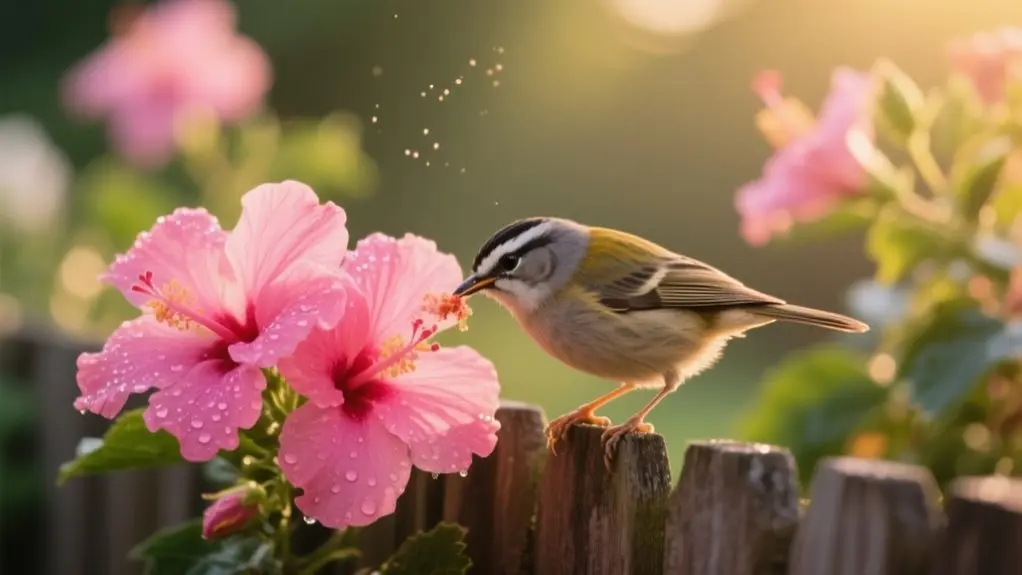
You can safely offer birds certain flowers like hibiscus, sunflowers, nasturtiums, and dandelions. These provide nutrition, hydration, and antioxidants. Avoid toxic ones such as lilies, azaleas, and foxgloves because they can harm birds.
Choose native, non-toxic plants that bloom in different seasons to support bird health and natural foraging. Also, keep pesticides out of your garden to protect them. If you want to create a thriving bird-friendly space, there’s plenty more to contemplate.
Which Flowers Are Safe for Birds to Eat
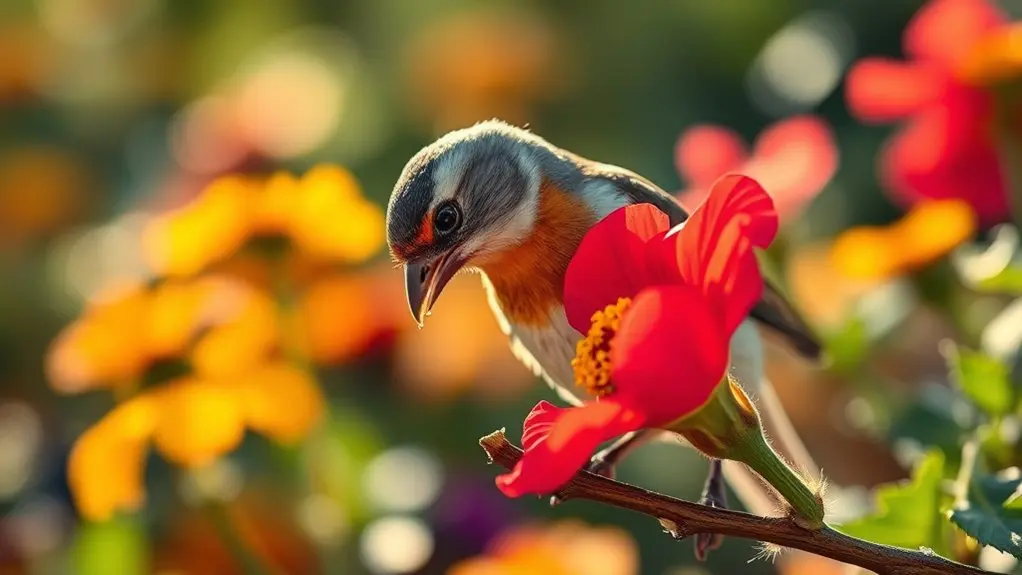
Although not all flowers are safe for birds, many varieties provide both nutrition and hydration that birds love. You can offer safe options for birds like hibiscus, sunflower, and nasturtium, which are packed with nutrients and moisture.
Calendula petals are another excellent choice, delivering antioxidants that boost birds’ health.
Don’t overlook dandelion flowers; they’re safe and rich in essential nutrients while attracting helpful insects to your garden.
Clover flowers also make safe options for birds, supplying much-needed protein, especially during breeding seasons.
Furthermore, planting fuchsia and bee balm can attract various bird species by offering nectar-rich blossoms.
Common Toxic Flowers Birds Should Avoid
If you want to keep birds safe in your garden, you need to avoid planting certain toxic flowers that can harm them. Among the common toxic flowers birds should avoid are lilies, which can cause kidney failure, and azaleas, known for their grayanotoxins that trigger vomiting and diarrhea.
Foxglove is another dangerous option, as its cardiac glycosides may cause serious heart issues. Tulips, especially their bulbs, can lead to gastrointestinal distress and lethargy.
Foxglove’s cardiac toxins and tulip bulbs can cause severe heart and digestive problems in birds.
Wisteria’s seeds and pods also pose a threat, causing digestive and neurological problems.
When focusing on keeping birds healthy, stay clear of these plants to prevent accidental poisoning. By knowing which flowers to avoid, you’re taking an important step in keeping birds safe and thriving in your outdoor space.
How to Identify Safe, Bird-Friendly Flowers in Your Garden
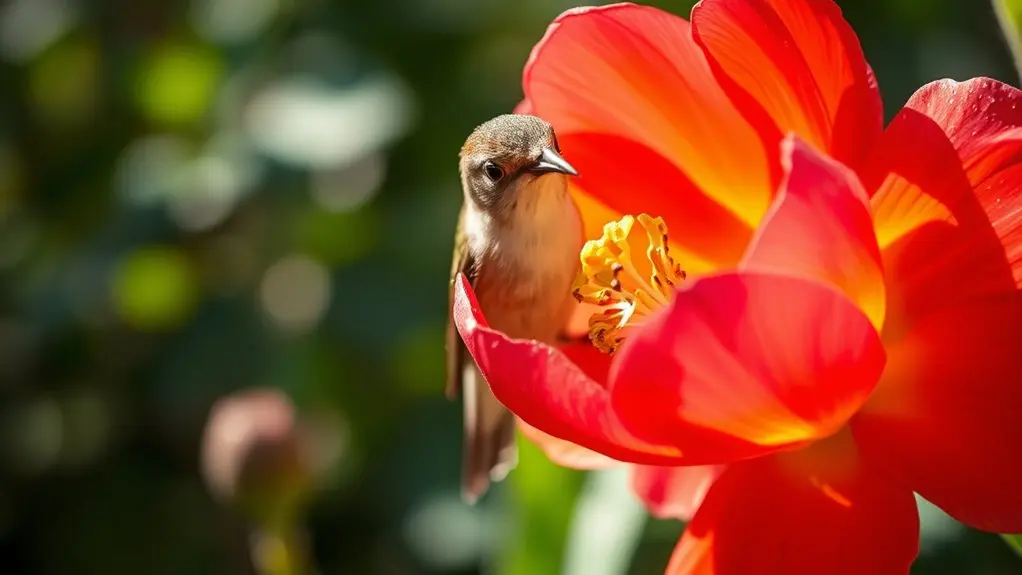
If you want to attract birds safely, start by picking non-toxic flowers that offer nectar or seeds.
It’s a good idea to focus on native species because they’re the best fit for local birds’ diets.
Just make sure to look into each plant before adding it to your garden—this way, you keep things both beautiful and bird-friendly.
Recognizing Non-Toxic Blooms
When selecting flowers for your garden, focus on those known to be safe and bird-friendly to create a welcoming space for your feathered visitors.
Recognizing non-toxic blooms is key to ensuring your garden supports bird health and enjoyment.
Look for plants that are both attractive and safe, avoiding toxic ones like lilies and daffodils. Brightly colored flowers often signal bird safety and appeal.
Consider adding these non-toxic blooms to your garden: hibiscus and nasturtiums, which offer nutritional value; sunflowers, a favorite among many bird species; pansies and marigolds, known for their safety and color; and zinnias and cosmos, vibrant blooms that attract birds.
Researching specific species helps confirm their safety, making your garden a true bird haven.
Choosing Native Flower Species
Although selecting flowers for your garden can be exciting, focusing on native species will help you create a safe and inviting habitat for birds. Native plants like coneflowers (Echinacea) and black-eyed Susans (Rudbeckia) offer essential seeds and nectar that attract various bird species.
To identify safe, bird-friendly flowers, research local native plants adapted to your ecosystem. Prioritize those that attract pollinators, such as trumpet vine (Campsis radicans) and bee balm (Monarda), which are favorites of hummingbirds.
Avoid toxic flowers like foxglove and oleander, as they pose risks to birds.
Seasonal Flowers That Provide Food for Birds
You can attract birds by planting seasonal flowers that offer both edible petals and rich nectar. For example, nasturtiums provide tasty treats that birds love.
And flowers like zinnias and cosmos? They really draw in hummingbirds with their sweet nectar.
By choosing the right blooms, you’ll support birds’ diets and keep your garden lively throughout the year.
It’s a win-win for you and the feathered visitors!
Edible Seasonal Flowers
Since many birds rely on seasonal flowers for nourishment, planting varieties like nasturtiums, sunflowers, and bee balm can provide them with vibrant petals, nutritious seeds, and insect-attracting blossoms.
Edible seasonal flowers play an essential role in supporting bird diets, especially during blooming seasons when other food sources might be scarce.
You can enhance your garden’s appeal for birds by choosing these flowers that offer both visual beauty and vital nutrients.
Consider adding these edible seasonal flowers to your outdoor space:
- Nasturtiums: Bright petals and seeds safe for birds
- Sunflowers: Seeds and petals loved by goldfinches and cardinals
- Bee balm: Attracts insects that feed insectivorous birds
- Dandelions: Leaves and flowers that provide fresh nutrition
These choices guarantee your garden supports local bird populations effectively.
Flower Nectar Foraging
Beyond providing seeds and petals, many seasonal flowers offer an abundant source of nectar that fuels the energy needs of birds like hummingbirds.
When you focus on flower nectar foraging, you’ll notice birds are drawn to bright, tubular blooms like trumpet vine, bee balm, and salvia, which make nectar easy to access.
These flowers produce crucial sugars and nutrients that boost birds’ energy, especially during spring and summer.
By planting a variety of seasonal flowers that bloom at different times, you help guarantee a steady nectar supply, essential for migratory birds.
Flowers like coneflowers and columbines not only attract nectar feeders but also support pollinators, creating a thriving ecosystem.
Encouraging flower nectar foraging benefits both birds and your garden’s health.
Nutritional Benefits of Edible Flowers for Birds
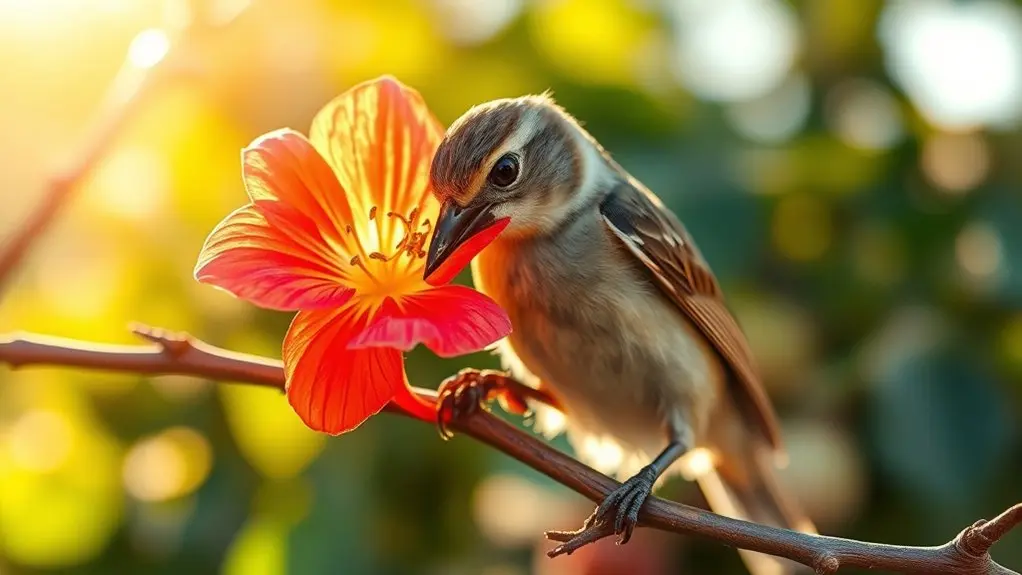
Although many people may not realize it, edible flowers like nasturtiums and dandelions offer birds crucial vitamins and minerals that boost their health and well-being. By including edible flowers in their diets, you help support their immune systems and overall energy.
Here are some nutritional benefits edible flowers provide:
- Antioxidants in hibiscus and sunflower protect birds from oxidative stress.
- Petals supply hydration, especially during hot weather.
- Calendula’s anti-inflammatory properties assist recovery from injuries or stress.
- Variety in edible flowers encourages natural foraging behavior and mental stimulation.
Offering a range of edible flowers not only nourishes birds but also enriches their daily activities, promoting a healthier and happier life.
How Safe Flowers Help Attract Birds to Your Garden
If you want to attract more birds to your garden, start by choosing safe, native flowers. These flowers not only provide nectar but also support local insects, which birds love.
Bright, tubular blooms like bee balm are especially good at drawing in hummingbirds.
And don’t forget about plants that produce seeds—they offer food later in the season when nectar might be scarce.
Choosing Bird-Safe Flowers
When you choose bird-safe flowers for your garden, you create an inviting habitat that supports local wildlife. Selecting the right plants guarantees you provide food and shelter without risking birds’ health.
Focus on native species and non-toxic options to attract a variety of birds safely.
Consider these bird-safe flowers for your garden:
- Native coneflowers and sunflowers offer seeds and nesting materials.
- Bee balm and cardinal flower produce nectar that attracts hummingbirds.
- Black-eyed Susans and cosmos provide nutritious seeds in fall and winter.
- Marigolds and zinnias add vibrant color while being safe for birds.
Flower Benefits For Birds
Since birds rely on flowers for both food and shelter, planting bird-safe blooms can transform your garden into a vibrant haven.
The flower benefits for birds are clear: nectar-rich blossoms like salvias and pentas attract hummingbirds, providing essential energy.
Sunflowers and coneflowers produce seeds that feed seed-eating birds, supporting their health and numbers.
By planting a variety of flowers, you encourage insects to thrive, which become crucial food for nesting birds during chick-rearing.
This diverse floral environment not only attracts birds but also boosts local biodiversity, creating a balanced ecosystem.
When you choose safe and varied flowers, you invite birds to visit, feed, and nest, making your garden a lively sanctuary full of life and color.
Native Plants Attract Birds
Adding native plants to your garden takes the flower benefits for birds a step further by providing them with food and habitat perfectly suited to their needs.
When you choose native plants, you support local bird species with natural food sources and shelter.
These plants create a balanced ecosystem that encourages birds to visit and stay.
Consider including these native plants to attract birds:
- Manzanita and toyon produce flowers and fruits loved by many birds.
- Blue elderberry offers dark berries that thrushes and mockingbirds enjoy, especially in fall and winter.
- Pineapple sage and hot lips salvia provide nectar to hummingbirds.
- Native flowering plants support insects, essential for nesting songbirds and their chicks.
Why Native Plants Are Great for Feeding Birds
Although you might not always notice, native plants play an essential role in feeding birds by supporting the insects and producing the fruits they depend on. When you plant native species, you provide birds with high-protein insects like caterpillars and nutritious berries that are crucial during nesting season.
Native plants thrive in local conditions, needing less water and upkeep, which helps maintain a balanced ecosystem. Plus, they create diverse habitats offering food, shelter, and nesting spots. Here’s a quick look:
| Native Plant | Food Source | Benefits to Birds |
|---|---|---|
| Blue Elderberry | Berries | Nutritious, attracts birds |
| Toyon | Fruits | Supports diverse species |
| Local Flowering Plants | Caterpillars/Insects | Protein-rich feed |
| Native Shrubs | Seeds | Shelter and nesting sites |
Choosing native plants means you’re feeding birds naturally and sustainably.
Risks of Feeding Treated or Non-Native Flowers
When you offer treated or non-native flowers to birds, you risk exposing them to harmful chemicals like pesticides and herbicides. These can cause serious health problems. Treated flowers often contain toxins that may lead to sickness or even death if ingested.
Non-native flowers might lack the nutrients birds need, which can cause malnutrition or digestive issues. Some non-native species also disrupt ecosystems by outcompeting native plants and threatening natural food sources.
Plus, certain popular flowers like lilies and azaleas are highly toxic to birds.
Be aware that:
- Treated flowers may carry harmful pesticides or fungicides
- Non-native flowers often provide poor nutrition
- Invasive species can harm local bird habitats
- Some ornamental flowers are toxic to birds
Always choose safe, chemical-free, native flowers to protect bird health.
How to Grow and Maintain a Bird-Safe Flower Garden
Protecting birds from harmful chemicals and toxic plants starts with how you design and care for your garden. Choose native flowers like coneflowers and sunflowers, which birds eat and provide seeds to support local ecosystems. Avoid toxic plants such as azaleas and lilies to keep your garden safe.
Plant a variety of flowers that bloom at different times to guarantee birds eat throughout the growing season. Steer clear of pesticides and herbicides since these chemicals harm birds and disrupt their natural behaviors.
Adding water features like birdbaths near your flower beds attracts more birds and enhances their foraging opportunities.
Other Safe Foods to Supplement Bird Nutrition
Since birds benefit from a varied diet, offering other safe foods alongside flowers can help meet their nutritional needs. You can enhance your bird’s health by including a range of food for birds that provides essential vitamins, minerals, and antioxidants.
Along with edible flowers like hibiscus and dandelions, consider adding these safe options: fresh fruits such as berries and apples, vegetables like carrots and leafy greens, grains including quinoa and millet, and seeds, nuts, and specially formulated bird pellets.
These foods support immune health and provide balanced nutrition tailored to different bird species.
Always avoid toxic plants like those from the nightshade family, and research any new food to guarantee it’s safe.
Offering a variety of food for birds keeps them healthy and happy.
How to Tell If Birds Are Safely Eating Flowers
How can you tell if birds are safely eating flowers in your garden? First, make sure the flowers you offer, like hibiscus, nasturtiums, and dandelions, are known to be safe and free of pesticides or chemicals that could harm birds.
Observe the birds closely. If they nibble on the flowers without showing signs of distress or illness, they’re likely eating safely. Familiarize yourself with flower species and avoid toxic ones such as foxglove and azalea.
Providing a variety of safe, edible flowers can encourage birds to enjoy a nutritious supplement to their diet.
When to Avoid Feeding Flowers to Birds
Although offering flowers can be a lovely way to attract birds, you should avoid feeding them certain types that are toxic or treated with chemicals. Toxic flowers like lilies, azaleas, and those from the nightshade family can cause serious harm.
Also, flowers treated with pesticides or herbicides pose a poisoning risk. Avoid flowers outside their natural diet to prevent digestive issues.
During avian disease outbreaks, skip feeding flowers altogether to reduce pathogen spread.
Here’s when to avoid feeding flowers to birds:
- If the flowers are known to be toxic, such as lilies or azaleas
- When flowers have been treated with pesticides or herbicides
- If the flowers aren’t part of the bird’s natural diet
- During avian disease outbreaks to prevent illness transmission
Frequently Asked Questions
Can Baby Birds Safely Eat Flowers?
Yes, baby birds can safely eat certain flowers, but you need to be careful. Flowers like dandelions and hibiscus provide valuable nutrients that support their growth.
However, you shouldn’t rely on flowers alone. Balance their diet with insects and seeds for complete nutrition.
Always avoid flowers treated with pesticides, as those chemicals can harm baby birds. So, choose safe, untreated flowers to give them the best start.
Do Birds Prefer Flowers Over Seeds or Insects?
If you watch closely, you’ll see birds dance like they’re chasing liquid jewels, nectar-filled flowers. You won’t find them choosing flowers over seeds or insects all the time, though.
They crave flower nutrients mainly for energy, especially nectar lovers like hummingbirds. Seeds and insects offer proteins and fats birds need for strength.
How Do Flowers Affect Bird Behavior and Mating?
Flowers influence your bird’s behavior and mating by encouraging floral foraging, which boosts energy during breeding.
You’ll notice males defending flower-rich areas to attract females, using vibrant blooms to enhance their courtship displays.
The bright colors and enticing scents in flowers stimulate your bird’s mating rituals, increasing territorial behaviors and helping them signal health and vigor.
Can Flower Pollen Cause Allergies in Birds?
Yes, flower pollen can cause allergies in birds due to pollen toxicity. If you expose your bird to flowers with high pollen levels, like ragweed, it might sneeze or show respiratory distress.
Birds with respiratory issues are even more vulnerable. To keep your bird healthy, avoid areas with heavy pollen during peak seasons.
You’ll prevent allergic reactions and guarantee your feathered friend stays energetic and comfortable.
Are Dried or Wilted Flowers Safe for Birds?
Yes, dried or wilted flowers can be safe for your birds if you’re careful about flower toxicity.
You should only offer non-toxic varieties like hibiscus or dandelions and avoid flowers known to be harmful, such as lilies or azaleas.
Always check that the flowers haven’t been treated with pesticides or developed mold, as those pose health risks.
Conclusion
When feeding birds flowers, it’s great to know that over 20% of common garden flowers are safe for them to eat. These blooms offer valuable nutrients and variety. By choosing bird-friendly flowers and avoiding toxic ones, you’re helping keep your feathered friends healthy and happy.
Remember to watch their behavior to make sure they’re eating safely. Also, avoid feeding flowers during harsh seasons. With a little care, your garden can become a safe, nourishing haven for birds year-round.