
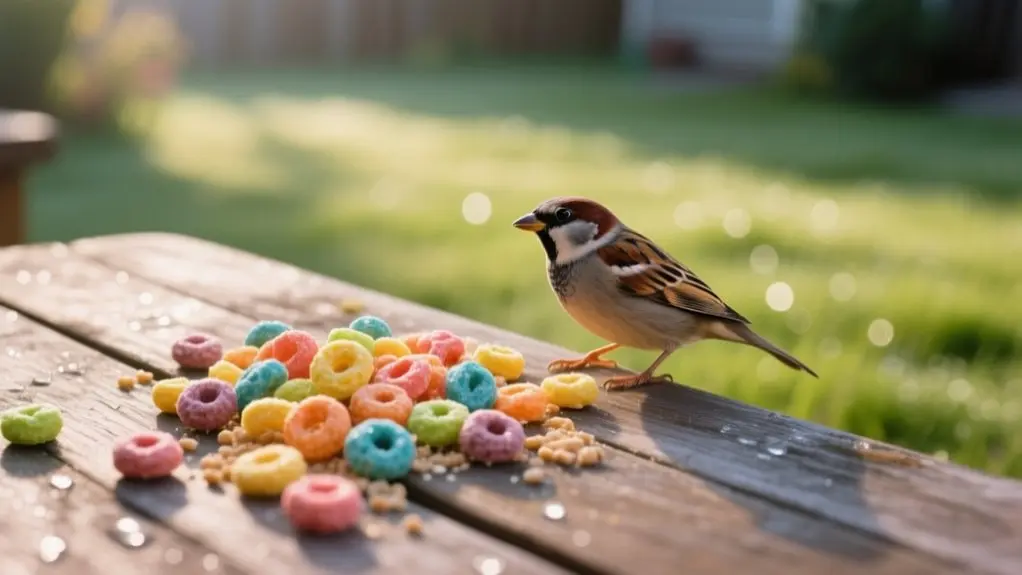
You shouldn’t feed Fruit Loops to your bird because their high sugar and artificial ingredients can cause obesity, digestive issues, and behavioral problems. Birds struggle to process refined sugar, and artificial colors may disrupt their digestion or cause allergies.
While the bright colors might attract your bird’s curiosity, these snacks offer no real nutrition and can harm their health. If you want safer feeding options and advice on introducing treats, exploring expert recommendations will help.
Are Fruit Loops Safe for Birds to Eat?
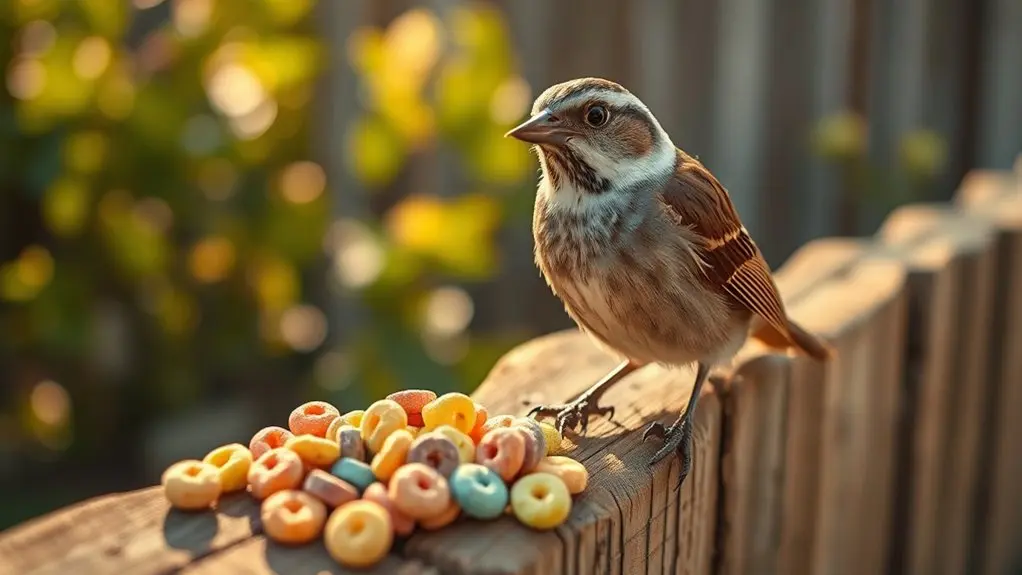
Why should you be cautious about feeding Fruit Loops to birds? Fruit Loops contain high sugar levels and artificial flavorings that can be harmful, especially to birds like conures that struggle to process sugar.
In bird feeding, it’s important to note many species, including cardinals and titmice, often avoid Fruit Loops, possibly due to their bright colors resembling toxic foods.
Offering human foods such as Fruit Loops also risks introducing bacteria from your saliva, which can contaminate their food and lead to illness.
While you might be tempted to share these colorful cereals, it’s best to limit Fruit Loops to tiny, rare treats.
Instead, focus on providing a balanced diet of fresh fruits and vegetables to keep your birds healthy and safe.
How Does Sugar in Fruit Loops Affect Birds?
Although Fruit Loops might seem like a fun snack to share, their high sugar content can seriously harm your bird’s health. Birds, including conures, can’t process sugar effectively, which makes sugary treats like Fruit Loops risky.
Regular sugar intake can lead to rapid weight gain and metabolic disorders, putting your bird at risk for diabetes and other chronic issues. Over time, this can also cause behavioral problems, such as feather plucking.
If you want to offer Fruit Loops, it’s essential to keep them as an occasional treat rather than a daily snack. Limiting sugar exposure helps protect your bird’s well-being and prevents long-term health complications that sugary foods can cause.
Always prioritize a balanced diet over sugary snacks.
Why Artificial Colors and Flavors Are Risky for Birds
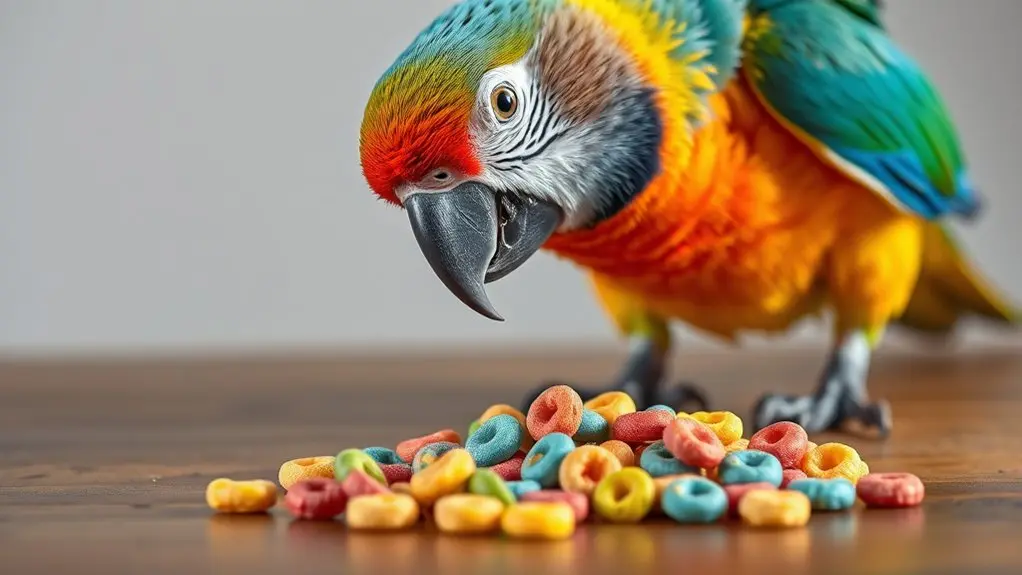
Because artificial colors and flavors often contain chemicals that birds can’t properly digest, feeding your feathered friend treats like Fruit Loops can pose serious health risks.
These synthetic ingredients may disrupt your bird’s digestive system and overall well-being.
Since many artificial colors and flavors haven’t been tested for safety in birds, you’re exposing them to unknown dangers. Your bird might even develop allergic reactions or other adverse effects from these additives, leading to long-term health problems.
Birds’ digestive systems aren’t built to process high levels of artificial substances, which can throw off their nutritional balance.
To keep your bird healthy, it’s best to avoid foods with artificial colors and flavors and stick to natural, bird-safe options instead.
Can Birds Digest Fruit Loops Properly?
How well can birds digest Fruit Loops?
Birds, including conures, struggle to properly digest Fruit Loops because of their high sugar content and artificial ingredients. Your bird’s digestive system isn’t designed to handle straight sugar well, which can cause discomfort and nutritional imbalances.
The artificial flavorings and preservatives in Fruit Loops may further disrupt digestion, making it harder for your bird to absorb nutrients from their food.
Also, if the Fruit Loops contain dairy, your bird might’ve lactose intolerance issues, leading to digestive problems.
While Fruit Loops might look colorful and fruity to you, most birds actually avoid them, which signals they aren’t suitable.
What Health Risks Do Fruit Loops Pose for Birds?
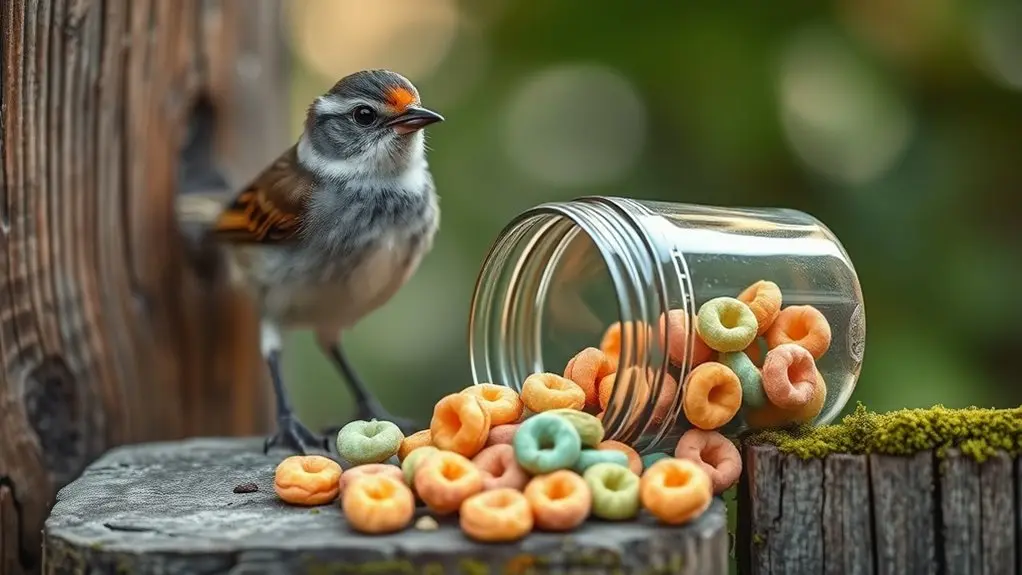
You should know that the high sugar content in Fruit Loops can cause serious health problems for birds, like obesity and diabetes.
Plus, the artificial colors and flavors aren’t safe either—they can upset your bird’s digestion or even be toxic.
Knowing these risks is really important because it helps you keep your feathered friend safe and healthy.
Sugar Content Concerns
Although Fruit Loops might seem like a harmless treat, their high sugar content poses serious health risks to your bird. Birds have difficulty processing straight sugar, so feeding them snacks like Fruit Loops can lead to sugar content concerns that affect their overall health.
Consuming too much sugar can cause obesity, digestive issues, and other complications. When you’re feeding birds, it’s important to avoid foods with excessive sugar to prevent these problems.
Even occasional treats with high sugar can disrupt their metabolism and contribute to long-term health issues. To keep your bird healthy, stick to natural, low-sugar foods and avoid processed snacks like Fruit Loops.
Being mindful of sugar content concerns will help you provide better care for your feathered friend.
Artificial Ingredients Impact
Since Fruit Loops contain artificial flavorings and colors, feeding them to your bird can cause digestive issues and other health complications.
These artificial ingredients aren’t designed for a bird’s sensitive system, and they can trigger problems like inflammation or upset stomach.
When you consider the risks, keep in mind three key concerns:
- Artificial ingredients can disrupt your bird’s natural digestion, leading to discomfort or illness.
- Combined with high sugar levels, these additives increase the chance of obesity and diabetes.
- Birds’ immune systems may react negatively to synthetic chemicals, weakening their overall health.
How Often Can Birds Have Fruit Loops as Treats?
If you want to give your bird Fruit Loops as a treat, keep it occasional and small. No more than half a Fruit Loop once a week is best. Fruit Loops contain high sugar and artificial additives, so moderation is key to prevent health issues.
Introduce them slowly and watch your bird’s reaction. Some birds may dislike the artificial colors or flavors. Always balance treats with fresh fruits and veggies for ideal nutrition.
| Benefit of Moderation | Risk of Overfeeding |
|---|---|
| Keeps bird healthy | Digestive upset |
| Limits sugar intake | Nutritional imbalance |
| Prevents addiction | Potential toxicity |
| Preserves appetite | Behavioral issues |
| Supports longevity | Weakens immunity |
Preventing Food Contamination When Feeding Birds
To keep your bird healthy, you need to prevent food contamination when feeding. Proper hygiene and careful handling around your bird feeder are essential to avoid exposing your pet to harmful bacteria or mold.
Follow these key steps:
- Always use separate bowls for bird food. Never share with human dishes to avoid contamination from saliva or other foods.
- Clean your bird feeder and feeding areas regularly to prevent bacteria buildup and maintain a safe environment.
- Check all food for spoilage or mold before offering it, as spoiled snacks can seriously harm your bird.
Also, wash your hands before handling bird food to reduce germ transfer.
Staying informed about safe feeding practices helps guarantee your bird enjoys treats without risk.
Healthy Snack Alternatives to Fruit Loops for Birds
While Fruit Loops may seem like a fun treat, you’ll want to choose healthier snack options that truly benefit your bird’s well-being. Fresh fruit like apples, oranges, and berries make excellent, bird-safe choices packed with essential vitamins and hydration.
These healthy snack alternatives to Fruit Loops for birds provide natural nutrients without harmful additives. You can even create homemade fruit loops by cutting fresh fruit into circular shapes, ensuring no added sugars or artificial ingredients.
Dehydrated fruit snacks without added sugars also offer a nutritious option, preserving natural flavors and nutrients your bird will enjoy. Offering a variety of fresh fruit encourages a balanced diet, promoting overall health.
Just be sure to avoid salts, preservatives, and any harmful additives to keep your feathered friend safe.
How to Introduce New Snacks Safely to Your Bird
Although introducing new snacks can be exciting, you’ll want to do it gradually to help your bird adjust without stress. Different bird species have unique dietary needs, so start small and watch closely for any signs of discomfort or allergies.
To introduce new snacks safely, follow these steps:
- Offer small portions in a separate bowl to avoid mixing with regular food.
- Observe your bird species carefully for any adverse reactions or changes in behavior.
- Keep a log of snacks introduced, noting preferences and reactions to guide future choices.
Always research snack safety and consult an avian vet to guarantee the new treats fit your bird species’ dietary restrictions.
Gradual introduction helps keep your feathered friend happy and healthy.
What Natural Fruits Are Best for Feeding Birds?
You’ll find that birds really love fruits like berries, apples, and citrus. Each of these offers unique nutrients that are great for them.
It’s a good idea to keep seasonal availability in mind, so you can provide fresh options throughout the year.
Preferred Bird-Friendly Fruits
If you want to attract birds to your yard, offering natural fruits like blueberries, raspberries, oranges, and apples is a great choice.
These bird-friendly fruits provide essential nutrients and are safe for many species, including frugivores like orioles and tanagers.
To guarantee you’re feeding birds the best options, follow these tips:
- Choose fresh, clean fruits free from chemicals or coatings.
- Opt for native, fruit-bearing plants to support local birds year-round.
- Rotate fruits to provide variety and meet different birds’ dietary needs.
Seasonal Fruit Availability
Since many birds adjust their diets based on seasonal fruit availability, providing a variety of fruits throughout the year helps support their nutritional needs. Birds like blueberries, raspberries, blackberries, and serviceberries offer essential nutrients and are especially abundant in late summer and autumn.
You can plant native fruit-bearing trees and bushes to create a steady food source year-round. In winter, birds rely on leftover fruits and preserved berries, so having diverse options is key.
While you might wonder if a colorful froot loop is a fun treat, natural fruits remain far better for their health. Offering seasonal fruits guarantees birds get the right nutrients, unlike sugary processed snacks.
Why Do Birds Show Interest in Fruit Loops?
Why do birds often flock around colorful Fruit Loops despite them being an unconventional food source? When you’re feeding birds, you might notice their curiosity towards these vibrant cereals. Their interest isn’t random; it’s driven by a few key factors:
- The bright colors resemble ripe fruits, naturally attracting birds.
- The sugary aroma entices birds to check out the cereal as a possible treat.
- The unique shapes and textures intrigue birds, prompting them to explore.
Though birds may be drawn to Fruit Loops visually and by scent, their interest often remains superficial. Many birds don’t actually consume them, showing that their attraction is more about curiosity than genuine nutritional value.
What Bird Experts Recommend About Feeding Human Food?
Though it might seem harmless to share colorful snacks like Fruit Loops with birds, experts strongly discourage feeding them high-sugar human foods. Birds, including popular pets like conures, can’t properly process refined sugars and artificial ingredients found in these snacks. Feeding birds such items can cause digestive problems and other health issues.
Instead, you should offer natural, fresh fruits and vegetables, which supply essential nutrients without harmful additives. If you’re unsure about what’s safe, consult an avian veterinarian to guarantee your bird’s diet stays balanced.
Also, watch how birds react to any new foods. Some human foods may cause aversion or even fear in wild birds, so it’s best to stick with what experts recommend for safe and healthy feeding.
Frequently Asked Questions
Can Fruit Loops Cause Allergic Reactions in Birds?
Yes, Fruit Loops can cause allergic symptoms in birds. If you feed them this cereal, watch for changes like feather plucking, unusual behavior, or digestive issues.
These allergic symptoms show your bird’s body isn’t handling the artificial ingredients well. You shouldn’t ignore these signs.
Stop feeding Fruit Loops and consult an avian vet to keep your bird safe and healthy.
Monitoring their reaction helps prevent serious health problems.
Do Different Bird Species React Differently to Fruit Loops?
You’ll notice species preferences paint a colorful mosaic when birds meet Fruit Loops. Some nibble cautiously, others turn away like it’s a suspicious puzzle.
Cardinals eye them with wary curiosity, while chickadees and titmice simply refuse to play along.
It’s like a dietary dance, where each bird’s unique taste buds and instincts lead the rhythm.
Even cockatiels join the party in moderation, proving that reactions vary wildly across species.
What Should I Do if My Bird Eats Too Many Fruit Loops?
If your bird eats too many Fruit Loops, watch closely for signs of sugar impact like diarrhea or lethargy.
You should give your bird fresh water to help flush out excess sugar and toxins.
Remove any leftover Fruit Loops to prevent more consumption, and contact an avian vet if symptoms worsen or persist.
Moving forward, focus on a balanced diet with natural fruits and veggies to keep your bird healthy.
Are There Any Long-Term Behavioral Changes From Eating Sugary Cereals?
Imagine a sweet trap: sugary cereals can spark long-term behavioral changes in birds due to their sugar sensitivity.
You’ll notice they might prefer these high-calorie treats over natural foods, leading to unhealthy feeding habits.
Over time, this shift can cause increased aggression or competition for sugary snacks and reduce their interest in balanced diets.
Can Fruit Loops Affect the Taste Preferences of Young Birds?
Yes, Fruit Loops can affect the taste preferences of young birds through taste conditioning.
When you expose a young bird to sugary cereals like Fruit Loops, it associates the sweet, colorful food with a positive experience.
This conditioning makes birds favor sugary snacks over healthier options later on.
If you want your bird to develop balanced eating habits, it’s best to avoid giving them sugary treats early on to prevent this taste conditioning.
Conclusion
You might think sharing a colorful Fruit Loop with your bird is harmless fun, but trust me, it’s like handing over a sugar bomb wrapped in artificial danger! Feeding Fruit Loops can turn your feathered friend’s health upside down faster than you can say “snack time.”
Stick to natural fruits and safe treats instead. You want your bird chirping happily, not struggling with preventable health issues. Choose wisely; their well-being depends on it!