
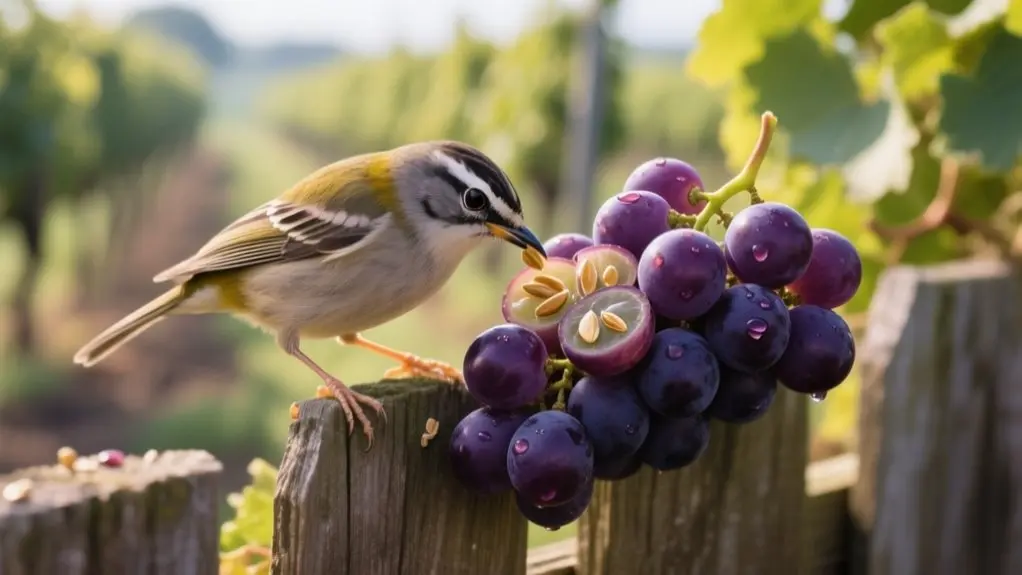
You can safely feed birds grapes with seeds in moderation, as most species digest the seeds without harm thanks to their strong gizzards. Small birds like parakeets and cockatiels can eat seeded grapes but often do better with seedless ones to avoid toxins.
Always wash grapes thoroughly to remove pesticides. Stick to 1-2 grapes daily for small birds to prevent upset stomachs. If you want to know how different birds handle seeded grapes and their benefits, keep exploring.
Are Grapes With Seeds Safe for Birds to Eat?
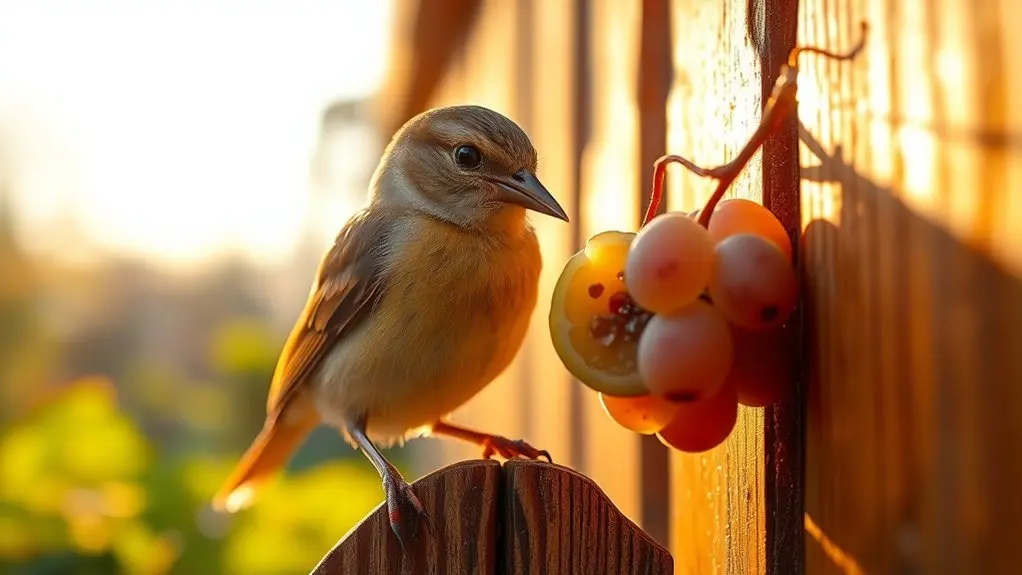
Wondering if grapes with seeds are safe for your birds? Generally, grapes with seeds are safe for most bird species, including parakeets and cockatiels, since they can digest seeds without harm.
However, if you have smaller birds, it’s best to remove the seeds before serving, as they might be more sensitive to potential toxins. Many bird owners choose seedless grapes to avoid any risk and make digestion easier for their pets.
Wild birds often eat grapes with seeds naturally, as they’re used to foraging for food. Just remember to wash grapes thoroughly and check for contaminants before offering them to your birds.
How Do Birds Digest Grapes With Seeds?
Although grapes contain seeds, many bird species can digest them easily because their strong gizzards grind the seeds effectively. When birds eat grapes, their rapid digestive transit time helps break down nutrients efficiently, including those in the seeds. This process allows birds like parakeets and cockatiels to benefit from the protein and energy seeds provide.
However, it’s wise to monitor how many grapes with seeds birds eat to avoid digestive upsets.
| Factor | Explanation |
|---|---|
| Gizzard Strength | Grinds seeds for easier digestion |
| Digestive Speed | Faster than mammals, breaks down nutrients |
| Seed Safety | Non-toxic but monitor intake |
| Nutritional Benefit | Seeds add protein and energy |
| Bird Species Example | Parakeets, cockatiels digest seeds safely |
Can Feeding Grapes With Seeds Harm Small or Captive Birds?
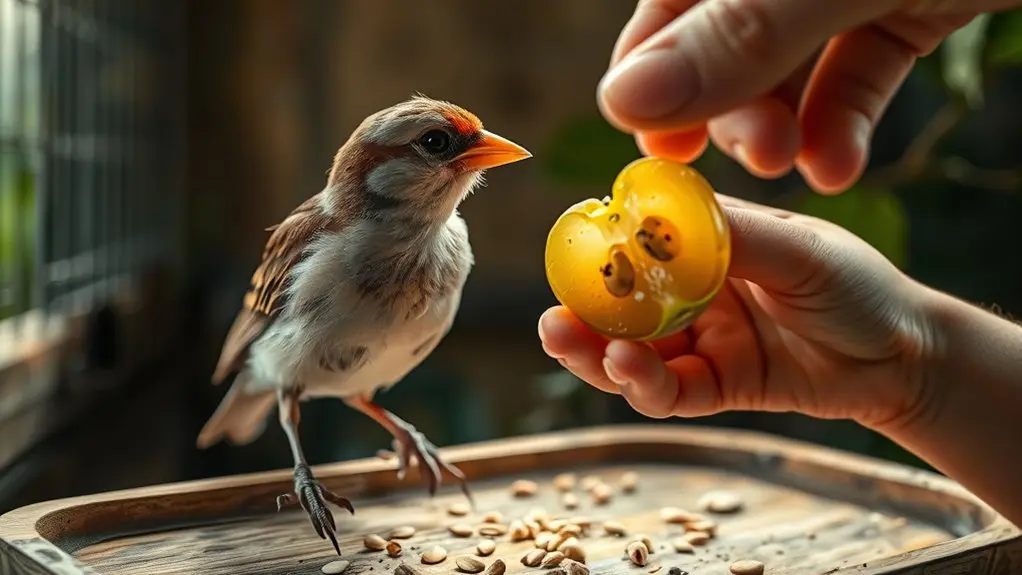
Because small and captive birds are more sensitive to toxins, feeding them grapes with seeds can pose health risks. The seeds in grapes contain cyanide compounds that, while safe for humans in small amounts, can harm small birds.
As a bird lover, you should avoid giving your pet grapes with seeds to prevent exposure to this toxin. Feeding seedless grapes or removing seeds before offering grapes is the safest choice.
Small birds like parakeets and cockatiels are especially vulnerable to cyanide poisoning, so careful preparation matters.
Always wash grapes thoroughly and remove any seeds to keep your birds safe.
How Many Grapes With Seeds Can Birds Eat Daily?
How many grapes with seeds can you safely offer your birds each day? The answer depends on your bird’s size. For small birds, limit their intake to 1-2 grapes with seeds daily to avoid digestive issues.
Larger birds can handle more, but you should watch how they respond and adjust portions accordingly. Remember, seeds in grapes aren’t toxic, but too many grapes, seeded or not, can upset their stomach. So, moderation is essential.
Always wash grapes thoroughly before serving to remove any pesticides or contaminants.
Which Bird Species Prefer Grapes With Seeds?
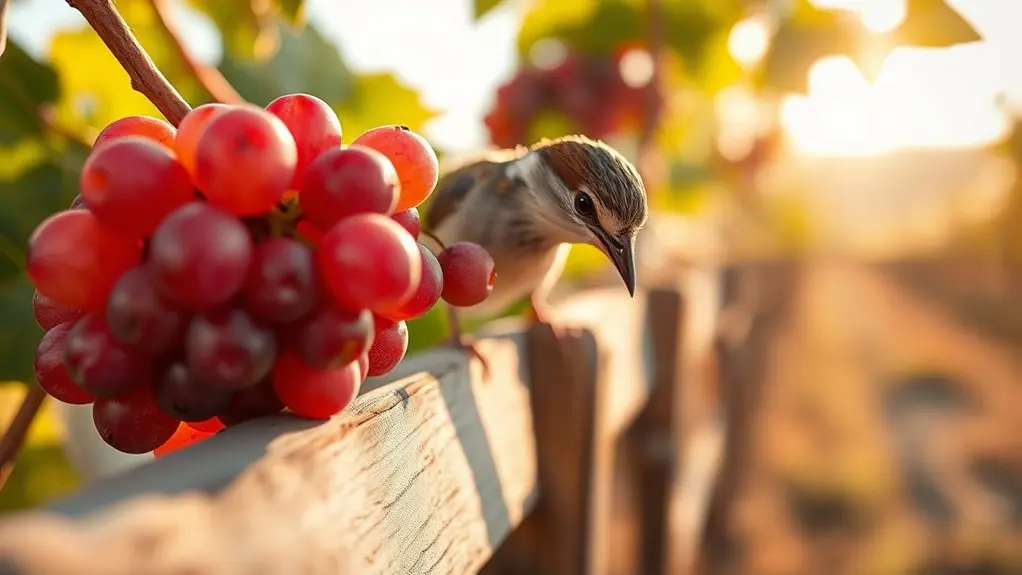
When you offer grapes with seeds, you’ll find that many bird species, such as parakeets and cockatiels, enjoy them without any health concerns.
Lovebirds are another bird species that prefer grapes with seeds, savoring both the flavor and hydration.
Lovebirds enjoy grapes with seeds, appreciating their taste and refreshing hydration.
In the wild, American robins and bluebirds often forage for whole grapes, seeds included, directly from the vines. While these bird species can handle seeds well, you should introduce grapes gradually and watch for any digestive issues.
However, not all bird species favor grapes with seeds; for example, goldfinches typically choose other fruits or seeds instead.
Understanding which bird species prefer grapes with seeds helps you provide a safe and enjoyable treat for your feathered friends.
Why Do Some Birds Prefer Seedless Grapes?
You’ll notice some birds really like seedless grapes because they’re easier to eat and digest.
Plus, these grapes tend to be sweeter and have a smoother texture.
That’s why certain species, like parakeets and lovebirds, especially enjoy them.
Seedless Grape Advantages
Although many birds enjoy grapes, seedless varieties offer distinct advantages that make them a favorite for species like parakeets and cockatiels. Seedless grapes are easier to eat, reducing choking risks and making feeding safer.
Their sweetness without seeds encourages birds to feed more often, supporting energy and health. Plus, seedless grapes eliminate harmful fruit seed toxins, making them a safer choice.
Here’s why seedless grapes stand out:
| Advantage | Benefit |
|---|---|
| Easier Consumption | Less choking risk |
| Increased Palatability | Encourages frequent feeding |
| Safer for Small Birds | Avoids toxic seeds |
Digestive Ease For Birds
Because seedless grapes lack tough seeds, many birds like parakeets and cockatiels find them easier to digest and safer to eat. You’ll notice these birds prefer seedless grapes because seeds can pose a risk. They’re hard to break down and may cause digestive discomfort or blockages if eaten in excess.
Seedless grapes offer a smoother texture that’s more palatable, encouraging your feathered friends to eat more fruit and absorb maximum nutrition. By choosing seedless grapes, you help your birds avoid the cyanide found in seeds, which can be harmful.
Even wild birds often opt for seedless varieties when they can, showing a natural preference for easier feeding options.
Preference Based On Species
When you observe different bird species, you’ll notice many prefer seedless grapes due to their ease of eating and digestion.
Birds like parakeets and cockatiels favor seedless grapes because they reduce choking risks and digestive complications.
Smaller birds often find grapes with seeds cumbersome, so seedless varieties offer a more convenient snack.
Even species such as American robins and starlings, which tend to eat grapes whole, lean toward seedless grapes since they’re quicker and easier to consume.
While some birds, like lovebirds, enjoy grapes regardless of seeds, they still benefit from the softer texture of seedless grapes.
Benefits of Seedless vs. Seeded Grapes for Birds
When you offer grapes to birds, going for seedless ones can really make a difference. They’re easier for birds to eat and help keep things safe by reducing the risk of choking.
Plus, some grape seeds might’ve substances that aren’t great for birds. So, choosing seedless grapes means you’re helping your feathered friends enjoy their treat without any worries.
Knowing this can help you provide a healthier and more enjoyable snack for the birds you want to feed. It’s a simple choice that goes a long way!
Seedless Grapes Advantages
Although both seeded and seedless grapes can be tasty treats for birds, seedless grapes offer clear advantages that make them a safer and more enjoyable choice.
You’ll find seedless grapes reduce choking risks and digestive issues, especially for smaller birds like parakeets and lovebirds.
Plus, seedless grapes eliminate concerns about cyanide exposure found in some seeds, keeping your feathered friend safer.
Birds also tend to prefer the sweeter taste and softer texture of seedless grapes, making snack time more appealing.
For you, seedless grapes simplify preparation since there’s no need to remove seeds before feeding.
Risks of Seeded Grapes
Choosing seedless grapes for your birds not only makes feeding easier but also helps avoid potential health risks associated with seeded grapes.
Seeded grapes carry risks because their seeds contain cyanide, which can be harmful, especially to small birds like parakeets and cockatiels.
While some birds, such as lovebirds and cockatiels, may eat seeded grapes in moderation, it’s safer to remove the seeds to prevent any health issues.
In captivity, offering seedless grapes guarantees your birds enjoy the fruit without the danger posed by seeds.
Plus, seedless grapes are more digestible and let your birds focus on the sweetness without struggling with seeds.
Bird Digestion Considerations
Because seedless grapes are easier for birds to digest, they often make a better choice than seeded varieties, especially for smaller species like parakeets and cockatiels.
When considering bird digestion, keep these points in mind:
- Seedless grapes reduce the risk of gastrointestinal distress caused by seeds.
- Grapes with seeds still offer hydration and vitamins but may challenge birds’ digestion.
- Excess seed consumption can lead to digestive issues despite some nutrients in seeds.
- Seedless grapes allow birds to enjoy the fruit fully without removing seeds.
Choosing seedless grapes guarantees your bird gets essential nutrients safely, making feeding simpler and healthier.
How to Prepare Grapes With Seeds for Feeding Birds
When you prepare grapes with seeds for birds, start by washing them thoroughly to remove any pesticides and contaminants. This step is essential to keep your feathered friends safe.
Next, consider chopping the grapes into smaller pieces. This makes it easier for birds, especially smaller species, to digest.
Chopping grapes into smaller pieces helps smaller birds easily enjoy and digest this tasty treat.
While some birds like cockatiels can handle grapes with seeds occasionally, removing the seeds is generally safer since certain seeds contain cyanide, which may harm small birds.
At your feeding stations, offer these prepared grapes in moderation and watch how the birds respond.
Observing their preferences helps you decide whether to continue with seeded grapes or switch to seedless options, ensuring the treats are both enjoyable and safe.
Tips for Introducing Grapes With Seeds Safely Into a Bird’s Diet
Although grapes with seeds can be a tasty treat for some birds, you should introduce them carefully to avoid any health risks.
Here are four tips to help you do it safely:
- Wash grapes with seeds thoroughly to remove pesticides and dirt before offering them.
- Chop the grapes into smaller pieces, especially for larger birds, to aid digestion.
- Start with only 1-2 grapes a few times a week, avoiding daily feeding to prevent digestive issues.
- Observe your bird closely for any adverse reactions or changes in behavior after trying grapes with seeds.
Feeding Grapes With Seeds to Parakeets and Cockatiels
You can safely offer grapes with seeds to parakeets and cockatiels.
Just make sure to chop them into smaller pieces so they’re easier to digest.
Also, don’t forget to wash the grapes thoroughly to remove any pesticides before feeding them to your birds.
These fruits are packed with important vitamins and hydration, making them a healthy treat to share every now and then.
Seed Safety Considerations
Since parakeets and cockatiels can digest small seeds without problems, feeding them grapes with seeds is generally safe.
When considering seed safety for your birds, keep these points in mind:
- Grapes contain trace cyanide in seeds, but levels are too low to harm parakeets or cockatiels.
- Always wash grapes thoroughly to remove pesticides before offering them to your birds.
- Introduce seeded grapes gradually, watching for any adverse reactions or preferences.
- Serve grapes in moderation to avoid digestive discomfort and maintain nutritional balance.
Chopping Grapes Benefits
Chopping grapes into smaller pieces offers several benefits for parakeets and cockatiels, making the fruit easier to eat and digest.
When you’re feeding grapes with seeds, chopping grapes helps reduce choking risks, especially for parakeets, whose smaller beaks handle tiny pieces better.
While cockatiels can safely enjoy grapes with seeds, you should still consider chopping grapes to encourage them to try new textures.
Both birds love the natural sweetness, and chopping grapes makes this energy-rich treat more accessible.
Just remember to offer grapes in moderation to avoid digestive issues.
Nutritional Value Insights
Two key vitamins found in grapes, vitamin C and vitamin K, play an important role in maintaining the feather and skin health of parakeets and cockatiels.
When feeding grapes with seeds, keep these nutritional insights in mind:
- Grapes provide antioxidants that support immune function and overall health.
- Seeds aren’t toxic but removing them reduces choking risks and aids digestion.
- Feeding grapes occasionally guarantees a balanced diet without excessive sugar intake.
- Always wash grapes thoroughly to eliminate pesticides and contaminants.
How Wild Birds Eat Grapes Straight From the Vine
When you watch wild birds like robins and bluebirds in a vineyard, you’ll often see them picking grapes straight from the vine, usually choosing the overripe or fallen ones.
Wild birds eat grapes whole, seeds included, as their digestive systems handle them easily. These juicy fruits provide essential hydration and nutrients, making grapes a favored snack during foraging.
While wild birds generally prefer uncut grapes, some species adapt by eating chopped pieces when whole grapes aren’t available.
The presence of grapevines attracts a variety of wild birds, boosting biodiversity in gardens and vineyards.
Watching these birds enjoy grapes straight from the vine offers a glimpse into their natural feeding habits and the important role grapes play in their diet.
Nutritional Benefits of Grapes With Seeds for Birds
Wild birds don’t just enjoy grapes for their taste. They gain important nutrients from them too. When you offer grapes with seeds to birds, you’re providing a nutrient-rich treat that supports their health in several ways:
- Vitamins C, K, and B6 in grapes boost skin and feather condition.
- The seeds add fiber, helping digestion and gut health.
- Grapes supply fructose, giving birds necessary hydration and energy.
- Calcium in grapes and seeds strengthens bones and aids egg-laying in females.
Keep in mind, though, grape seeds contain low cyanide levels, which may be risky for smaller birds.
Frequently Asked Questions
Can Birds Spread Grape Seeds and Grow New Vines?
Yes, birds can spread grape seeds and help grow new vines through seed dispersal. When you spot birds eating grapes with seeds, know they often pass those seeds intact, scattering them as they fly.
You’ll find this natural seed dispersal boosts grapevine growth by planting seeds in new spots.
However, whether new vines actually grow depends on soil, climate, and other conditions, so not every seed will sprout successfully.
Do Birds Share Grapes With Seeds With Other Animals?
Imagine a king guarding his treasure chest. Birds treat grapes with seeds the same way. You won’t often see them sharing these juicy gems during animal interactions.
They’re protective, prioritizing their own feast and wary of rivals.
When you watch closely, you’ll notice species like bluebirds or robins rarely invite others to snack on seeded grapes.
How Do Grape Seeds Affect Bird Droppings or Waste?
When you feed birds grapes with seeds, seed digestion is usually minimal because their digestive systems often pass the seeds intact. This means you’ll often find grape seeds in their droppings, which can contribute to natural seed dispersal.
While the seeds add some fiber to their waste, they don’t break down much, so the droppings may have visible seed remnants.
Just remember, too many seeds might lead to digestive upset in some birds.
Are There Seasonal Effects on Birds Eating Grapes With Seeds?
Imagine a treasure chest that only opens during certain times. That’s how seasonal availability works for birds eating grapes with seeds.
You’ll notice birds feast on these juicy gems mostly in harvest season when grapes are ripe and abundant.
In colder months, when other fruits hide away, birds rely more on grapes, seeds and all.
Can Grape Seeds Cause Choking Hazards for Larger Birds?
Yes, grape seeds can pose choking risks even for larger birds.
While your parrot or cockatiel has a strong beak to crack seeds, some seeds might still be too large or hard, increasing choking hazards.
You should always watch them closely when introducing grapes with seeds.
To keep choking risks low, consider removing seeds before feeding, especially if your bird is still getting used to this new treat.
Conclusion
Imagine your parakeet enthusiastically nibbling on a grape, seeds and all, like tiny treasures hidden inside. Grapes with seeds are generally safe for birds in moderation, offering vitamins and antioxidants that boost their health.
Just remember, too many seeds might upset their tummy, so keep portions small. By introducing grapes carefully, you’re not just feeding them, you’re sharing a sweet, natural gift that brightens their day and yours.