
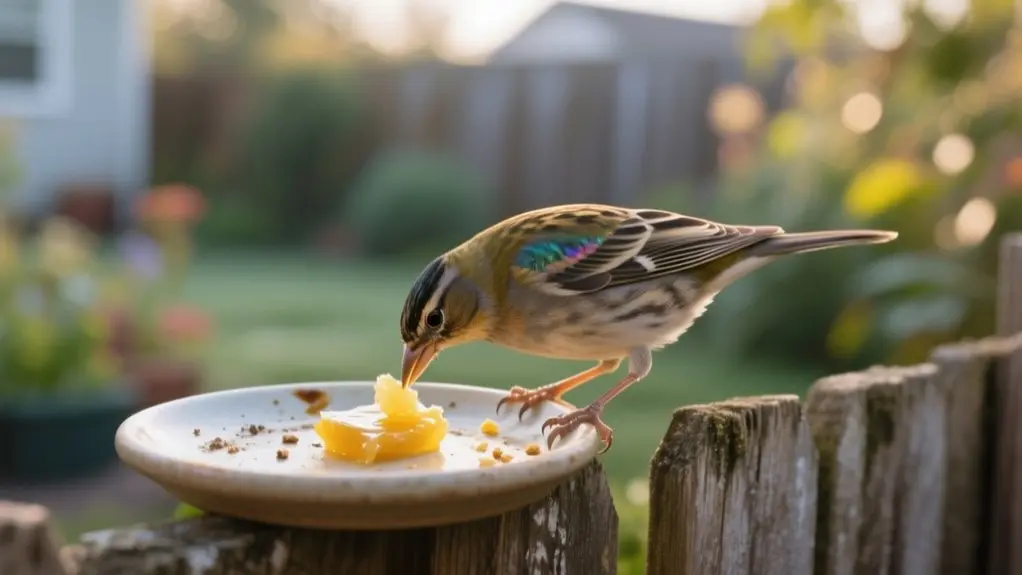
You shouldn’t feed birds leftover cooking fat because it coats their feathers, making them dirty and less waterproof. This can cause serious health issues. The salt and seasonings in cooking fat can be toxic and disrupt birds’ electrolyte balance.
Rancid fats promote harmful bacteria growth, putting birds at risk. Instead, opt for natural suet, which offers safer, nutritious energy. If you’re curious about protecting birds and providing healthy fats, there’s plenty more to explore.
Why Leftover Cooking Fat Is Harmful to Birds
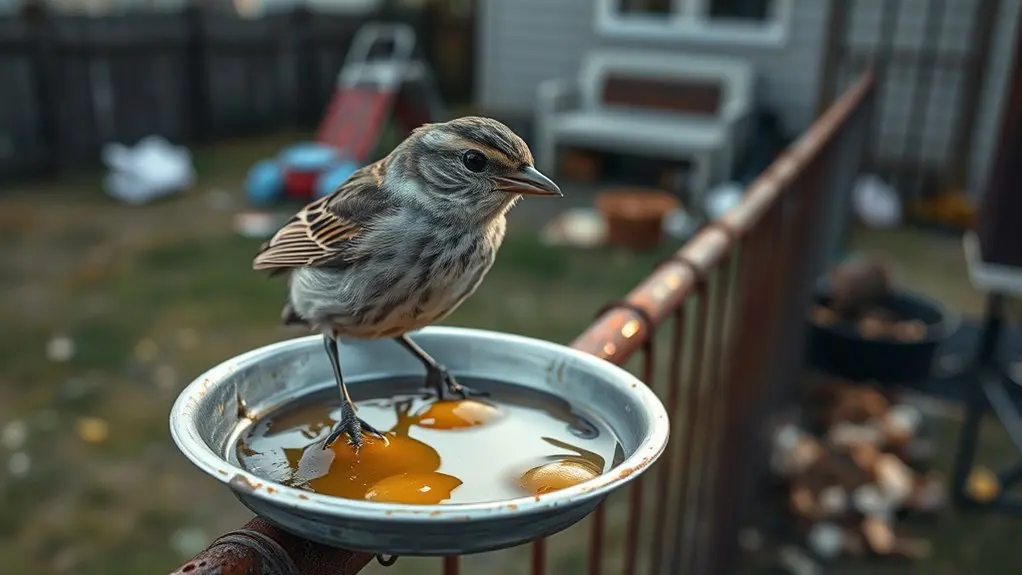
Although leftover cooking fat might seem like a convenient treat, it can seriously harm birds. When birds come into contact with leftover cooking fat, it coats their feathers, making it difficult for them to stay clean and dry. This can lead to serious health problems.
Rancid fats often harbor harmful bacteria like salmonella, which puts birds at risk of infection. Furthermore, cooked fats such as turkey fat usually contain high salt levels, which are toxic to birds if ingested.
Many cooking fats melt too easily in warm weather, increasing the chance they’ll spread and contaminate feathers.
How Cooking Fat Damages Bird Feathers and Insulation
When cooking fat gets on a bird’s feathers, it breaks down their natural waterproofing. This leaves them exposed to wet conditions.
You’ll also notice that this greasy layer reduces insulation, making it harder for birds to stay warm. Because of this, their ability to regulate body temperature and survive harsh weather can be seriously affected.
Feather Waterproofing Risks
If birds come into contact with cooking fat, their feathers quickly lose the waterproofing and insulation they rely on to stay warm and dry.
Cooking fat coats bird feathers with a greasy layer that prevents them from repelling water effectively.
This contamination makes it tough for birds to preen and maintain their feathers, reducing their ability to stay protected from cold and wet conditions.
Fat residues also trap dirt and debris, further damaging the feathers’ function.
Since birds can’t naturally remove cooking fat without soap, they remain vulnerable once exposed.
Moreover, rancid cooking fats can harbor harmful bacteria, posing extra health risks.
Insulation Impairment Effects
Cooking fat doesn’t just ruin a bird’s waterproofing. It also severely disrupts its insulation. When cooking fat coats feathers, it creates a greasy layer that’s tough for birds to clean off.
This breaks down their natural oils that keep plumage healthy and warm. This oily buildup reduces the feathers’ ability to trap heat, making it harder for birds to maintain their body temperature.
Without proper insulation, birds risk hypothermia, starvation, or even death from exposure.
Plus, rancid cooking fat can contain harmful bacteria, which worsens their health and further damages feather integrity.
Since birds can’t effectively remove cooking fat themselves, you can see how this contaminant poses a serious threat to their survival in colder conditions.
Why Salt and Seasoning in Cooking Fat Harm Birds
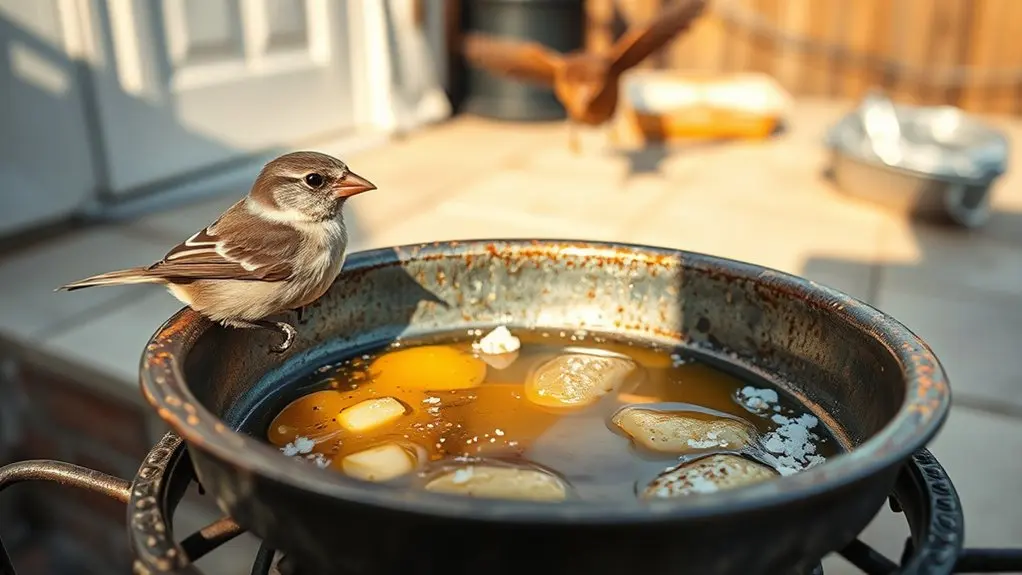
Although it might seem harmless to share leftover cooking fat with birds, the salt and seasonings in it can seriously harm them. Birds are highly sensitive to salt since their natural diet contains very low sodium. Even small amounts of salt can disrupt their electrolyte balance, causing dehydration and kidney damage.
Seasonings and additives often contain compounds toxic to birds, further affecting their health. When you give birds cooking fat with salt and spices, you risk exposing them to harmful substances they can’t process.
Plus, rancid fats in leftovers may harbor bacteria like salmonella, posing additional dangers. To protect birds, avoid feeding them cooking fat containing salt or seasonings. They need clean, safe food to thrive without risking serious health issues.
Why Suet Is Safer Than Leftover Cooking Fat for Birds
Because suet is a pure, natural fat with a higher melting point than leftover cooking fats, it provides birds with a safer and more reliable energy source.
Unlike greasy cooking fats that can melt easily and damage feathers, suet holds up well even in warmer weather, protecting birds’ insulation.
When you use a suet feeder, you offer birds a nutrient-rich option free from harmful salt and additives often found in leftover cooking fat.
Suet also resists rancidity, ensuring it stays fresh longer. Plus, you can mix suet with bird-friendly ingredients like seeds and nuts, boosting its nutritional value.
Since birds naturally consume animal fats, suet is a safer, healthier choice than leftover cooking fat for feeding wild birds.
Safe and Nutritious Fats for Wild Birds
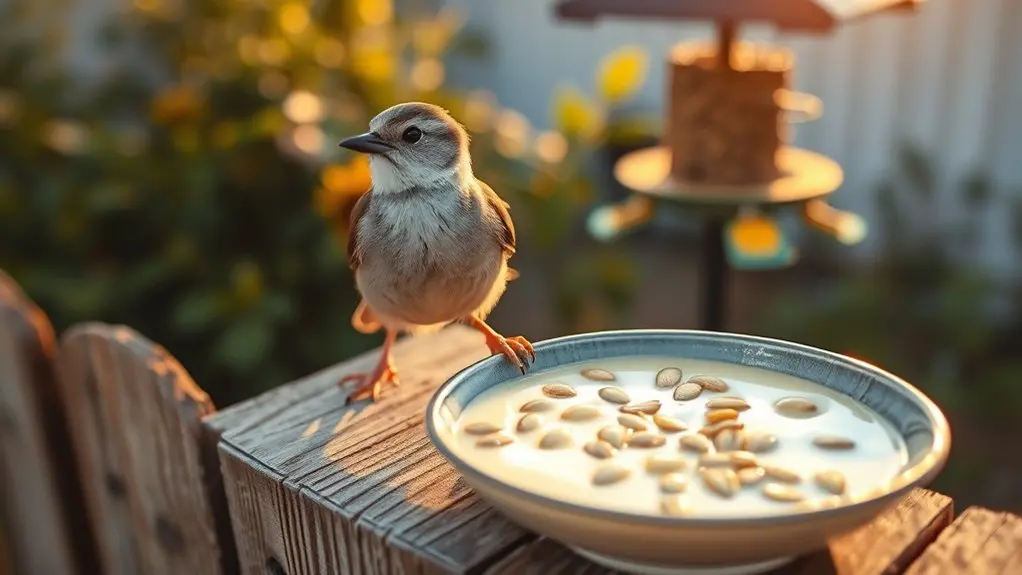
When you want to provide wild birds with safe and nutritious fats, suet stands out as an excellent choice. This rendered beef fat resists rancidity and delivers essential nutrients and energy that birds need, especially during colder months.
Suet is one of the safest and most nutritious fats for wild birds because it avoids harmful additives found in cooking fats from processed foods. You can boost its appeal by mixing suet with natural binders like peanut butter, seeds, and grains, offering variety and added nutrition.
Commercial suet cakes often contain flavors that attract more bird species, making them a popular option for feeders.
How to Prepare Suet and Fat Balls for Bird Feeding
Suet provides a great base for creating homemade bird treats that attract a variety of species. To prepare suet, cut beef fat into small pieces and heat it in a double boiler until it liquefies. This makes it easy to mix with seeds or nuts.
Suet is a versatile base for homemade bird treats, easily melted and mixed with seeds or nuts.
You can create fat balls by combining rendered suet with birdseed, nuts, and dried fruits, then shape them into balls for hanging in your garden.
For a no-melt option, mix solid peanut butter with rendered suet and add oats or seeds to form a nutritious bird cake.
Use a suet feeder to enclose the mixture, preventing contamination and spoilage while allowing birds easy access.
Store any prepared suet or fat balls in the freezer to keep them fresh longer.
How to Keep Fat Treats Fresh and Safe for Birds
To keep fat treats fresh and safe for birds, it’s important to store them properly in the freezer.
Choosing pure, rendered fats like suet or lard is a great idea because they resist spoilage better.
You’ll also want to check your treats regularly for any signs of rancidity or off-smells.
If something seems off, it’s best to throw those treats away right away.
Using the right types of fat and storing them correctly really helps prevent spoilage and keeps your feathered friends healthy and happy.
Proper Storage Methods
Although fat treats can be a tasty and nutritious snack for birds, you’ll need to store them properly to keep them fresh and safe. Use airtight containers to protect fat from air and moisture, which cause rancidity and bacterial growth.
Keep these containers in a cool, dry place, ideally the refrigerator or freezer, to extend freshness. Label each batch with the preparation date so you can use older fat first and maintain quality.
Portioning fat treats into smaller amounts helps you manage freshness and reduce waste when feeding birds.
Regularly check the fat for any off odors or discoloration, and discard any that show signs of spoilage.
Following these proper storage methods guarantees your fat treats stay safe and enjoyable for your feathered friends.
Preventing Fat Spoilage
When you want your fat treats to stay fresh and safe for birds, proper storage is essential to prevent spoilage. Freezing homemade fat treats preserves freshness and plays a key role in preventing rancidity. Use airtight containers to block moisture and contaminants, and hang fat balls in shaded spots to avoid heat exposure that causes melting.
Mixing fats with seeds or nuts also helps absorb moisture, extending shelf life. Regularly inspect treats for off smells or discoloration, discarding any rancid samples immediately.
| Feeling Concerned? | Solution Offered |
|---|---|
| Worried about spoilage? | Freeze treats promptly |
| Fear of rancidity? | Use airtight containers |
| Heat causing melting? | Hang in shaded areas |
| Moisture buildup? | Mix with seeds or nuts |
Choosing Safe Fat Types
Choosing the right type of fat is essential for keeping your bird treats both fresh and safe. Not all fat found in cooking is suitable for birds. Stick to pure, unprocessed fats like suet or lard to avoid health risks.
To guarantee your fat treats stay fresh and appealing, follow these tips:
- Use rendered suet, which resists rancidity better than cooked fats found in leftovers.
- Store fat treats in the freezer until needed, preventing spoilage and maintaining quality.
- Hang fat balls mixed with seeds, nuts, and dried fruits in shaded spots to avoid melting and keep birds coming back.
Regularly check for rancid or smelly fat found in feeders and discard any spoiled treats to protect your birds’ health.
Safe Ways to Offer Fat Treats to Protect Bird Feathers
Because birds rely on their feathers for insulation and waterproofing, you should offer fat treats carefully to avoid damaging their plumage.
Birds depend on their feathers for warmth and water resistance, so offer fat treats with care to protect their plumage.
Choose pure animal fats like suet or lard, steering clear of cooking fats that contain salt or additives which can harm birds and their feathers.
Use a suet feeder designed to keep fat contained so it doesn’t stick to feathers and ruin their waterproofing.
You can mix suet with natural binders like peanut butter and seeds to create balanced fat treats that are less likely to cause feather problems.
Also, store rendered fat in the freezer to keep it fresh and avoid rancidity, which can be harmful if consumed.
Following these steps guarantees you provide safe, feather-friendly fat treats.
Why Birds Need High-Energy Fats in Winter
As temperatures drop and natural food sources dwindle, birds rely heavily on high-energy fats to keep their body heat steady. These fats act as an essential energy reserve, helping them survive freezing conditions.
You can understand their winter needs through three key points:
- High-energy food supplies vital calories, fueling birds’ increased metabolism for warmth.
- Fats provide insulation by supporting fat layers that retain body heat against cold weather.
- Concentrated sources like suet deliver the dense energy birds require when other foods become scarce.
What Bird Species Benefit Most From Suet and Animal Fats?
You’ll find that suet attracts a bunch of birds like chickadees, woodpeckers, and bluebirds. They really benefit from its high fat content.
Animal fats give them essential energy, especially for species that need extra calories during the colder months.
Suet-Loving Bird Species
A variety of bird species are attracted to suet, making it an excellent choice if you want to support diverse backyard visitors. Suet-loving bird species thrive on this high-energy food, especially during colder months when natural sources dwindle.
You’ll notice popular birds like woodpeckers, tufted titmice, and Carolina chickadees frequenting your feeder.
Here are three key groups that benefit most from suet:
- Woodpeckers and Nuthatches – These birds rely heavily on suet for energy.
- Small Songbirds – Tufted titmice and Carolina chickadees are regular suet feeders.
- Thrashers and Bluebirds – Brown thrashers and eastern bluebirds also enjoy suet, adding variety to your backyard visitors.
Offering suet in shaded spots keeps it fresh longer, helping these suet-loving bird species stay active and healthy.
Animal Fats Attract
When you offer suet and other animal fats, you attract a wide range of bird species that depend on high-energy food, especially during cold months. Over two dozen species benefit from animal fats, which provide essential energy when insects and fruits are scarce.
Woodpeckers, Carolina chickadees, and tufted titmice are common visitors, while brown thrashers and eastern bluebirds also enjoy these rich offerings. Suet particularly appeals to insect-eating birds, helping them survive winter’s challenges.
| Bird Species | Benefit from Animal Fats |
|---|---|
| Woodpeckers | Energy-rich diet in winter |
| Carolina Chickadees | Sustained warmth and activity |
| Eastern Bluebirds | Supplement natural food supply |
How to Monitor Bird Health When Introducing Fats
Although introducing new fats to your bird feeders can attract a variety of species, you should monitor their behavior and physical condition closely to catch any signs of distress or health issues early.
To effectively monitor bird health, focus on these key areas:
- Watch for changes in feeding patterns or signs of distress, which could indicate issues with the fat type.
- Check feather condition regularly; greasy or matted feathers may affect insulation and waterproofing.
- Track visit frequency, noting any declines that suggest the fats aren’t well-received or could be harmful.
Also, keep feeders clean to prevent bacteria growth, and observe birds for lethargy or grooming difficulties.
These steps help you guarantee your feathered visitors stay healthy while enjoying new fat sources.
Best Natural Fat Sources to Feed Birds Instead of Cooking Fat
Since cooking fats can pose risks to birds, you should opt for natural fat sources that provide essential nutrients without harming their health.
The best natural fat sources include suet, especially beef suet, which offers crucial energy and supports feather quality.
Rendered animal fats like lard also work well since they resist rancidity and stay solid year-round.
Don’t overlook venison fat; it remains firm at room temperature, making it ideal for warmer months.
You can safely add peanut butter too, but only if it’s free of added oils or sugars.
Mix it with suet for a high-energy treat. To attract more birds and boost nutrition, combine these fats with seeds, nuts, and grains.
This approach guarantees you feed birds healthy fats without risking their well-being.
Frequently Asked Questions
Can Birds Digest Plant-Based Fats Like Olive Oil?
Yes, birds can digest plant fats like olive oil because these fats are high in unsaturated fatty acids, which are easier for them to process.
However, you should only offer small amounts since too much plant fat can cause digestive problems or obesity.
Avoid giving birds any plant fats with additives like salt or preservatives, as these can harm them.
Do Birds Prefer Homemade Fat Balls Over Commercial Ones?
Yes, you’ll find birds prefer homemade fat balls over commercial ones because their fat preferences lean toward fresher, high-quality fats like suet or lard.
When you make fat balls yourself, you control the ingredients, avoiding preservatives and low-quality fats that birds often reject.
Plus, homemade fat balls let you add seeds and nuts, boosting nutrition and attracting more species, especially during colder months when energy-rich fats are essential for survival.
How Often Should Fat Treats Be Offered to Wild Birds?
You should offer fat treats to wild birds every few days to guarantee freshness and prevent spoilage.
Feeding frequency matters most in warmer weather when fat can go rancid quickly.
During colder months, birds consume fat treats more often, so you may need to replenish them more frequently to support their energy needs.
Keep an eye on your feeder and adjust the feeding frequency based on temperature and how fast the treats disappear.
Can Feeding Fat Treats Attract Unwanted Pests or Predators?
When you scatter fat treats, you’re lighting a beacon in the night, drawing not just birds but unwanted guests.
Yes, feeding fat can cause pest attraction, inviting rats, raccoons, and even predators like hawks.
These visitors disrupt the peaceful garden symphony you cherish.
To keep your feathered friends safe, use enclosed feeders and clean spills quickly.
That way, you protect the harmony without feeding the intruders lurking in the shadows.
Are There Any Signs of Fat Toxicity in Birds to Watch For?
Yes, you should watch for signs of fat toxicity in birds like greasy feathers that ruin their waterproofing and insulation. This makes them prone to hypothermia.
You might notice difficulty flying, lethargy, or poor grooming, which affects feather health. Birds can also show gastrointestinal issues such as vomiting or diarrhea if fats are rancid.
Keep an eye out for unusual behavior like excessive preening or inactivity, which signals fat toxicity problems.
Conclusion
You might think leftover cooking fat is a quick treat for birds, but it’s actually harmful, much like a warm winter day suddenly turning freezing. Just as you wouldn’t want soggy, salty clothes in the cold, birds need clean, natural fats like suet to stay warm and healthy.
So next time you’re tempted to toss them your kitchen scraps, remember: choosing the right fat can make all the difference in their survival and your joy watching them thrive.