
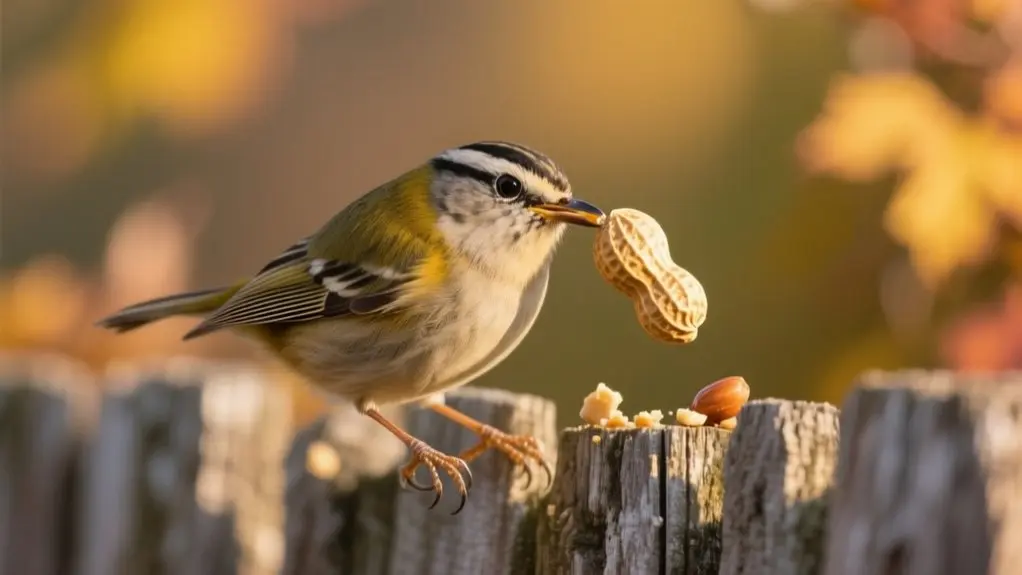
You shouldn’t feed honey roasted peanuts to birds because their added sugars, salt, and artificial ingredients can harm their health and disrupt natural diets. Salt can cause dehydration and kidney issues, while sugar may lead to obesity and weaker immune systems.
Instead, choose raw or unsalted peanuts to keep birds safe and healthy. If you want to understand which peanuts suit birds best and how to spot any problems, there’s more helpful information ahead.
Why Honey Roasted Peanuts Harm Birds
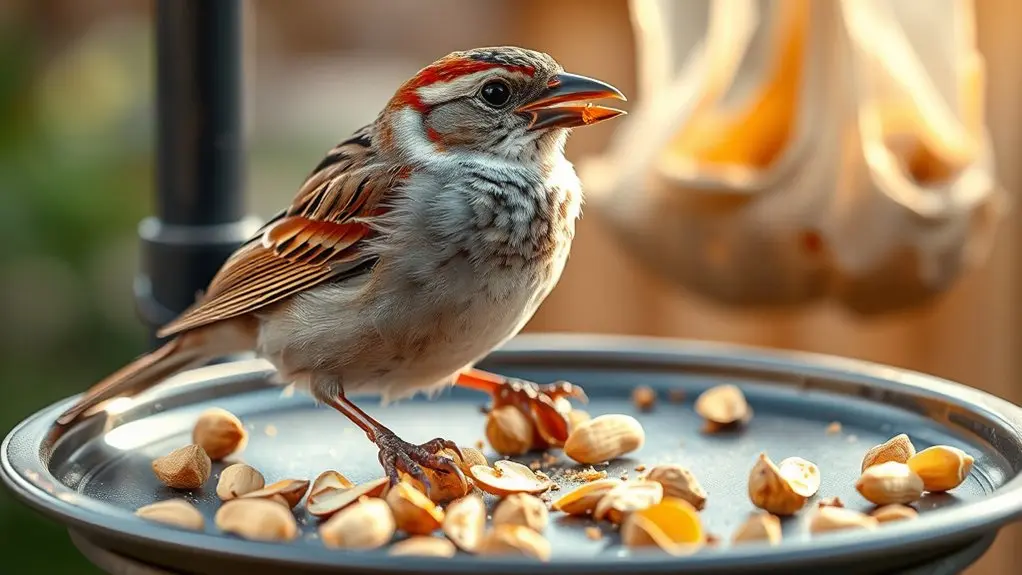
Although honey roasted peanuts might seem like a tasty treat for birds, they can actually harm their health. You mightn’t realize that these peanuts often contain added sugars, unhealthy oils, and artificial flavorings, all of which can disrupt birds’ digestive systems.
Honey roasted peanuts also come with a hard coating and sweetness that don’t match birds’ natural diets, especially smaller species struggling to eat them. When you offer honey roasted peanuts, you risk encouraging poor dietary habits because birds may reject more nutritious foods in favor of these sugary snacks.
Additionally, the preservatives and additives in honey roasted peanuts can be toxic since birds’ bodies aren’t designed to process them. Feeding birds these peanuts can do more harm than good.
How Salt and Sugar Harm Birds
Since birds can’t process salt effectively, feeding them salty foods like honey roasted peanuts can cause serious health issues such as dehydration and kidney damage.
Salted peanuts increase thirst and disrupt electrolyte balance, which can be fatal if not corrected.
On top of that, the high sugar content in honey roasted peanuts isn’t harmless either.
Sugar can throw off a bird’s natural diet, causing obesity and energy spikes followed by crashes, making it harder for them to forage and survive.
Long-term consumption of salted peanuts and sugary treats weakens their immune systems and raises the risk of heart disease.
If you want to keep birds healthy, it’s best to avoid offering any salted or sugary snacks and stick to safer, natural foods instead.
Raw vs. Roasted vs. Honey Roasted Peanuts: Which Is Safest?
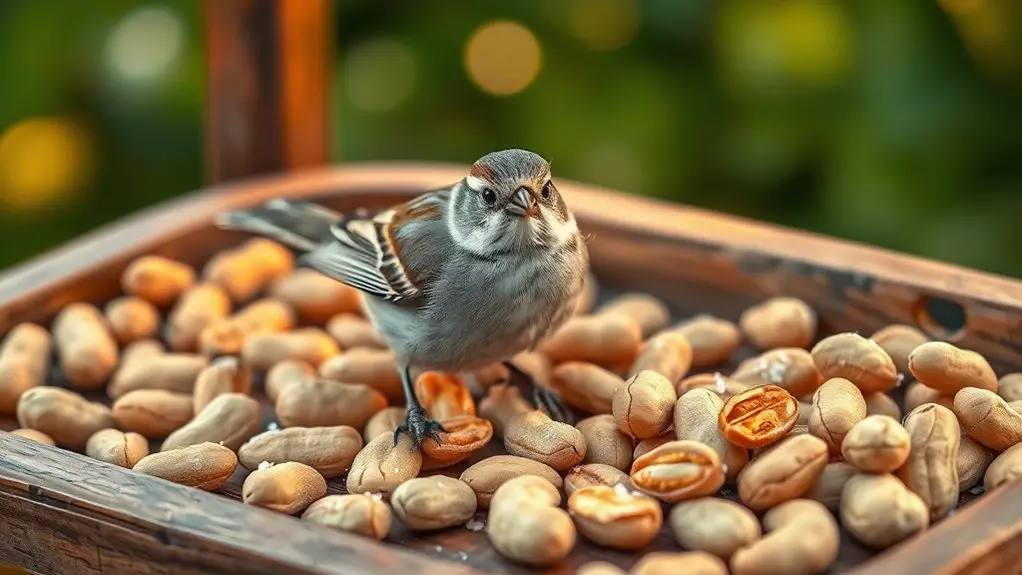
How do you choose the safest peanuts to feed birds?
You should avoid honey roasted peanuts altogether because their added sugars and flavors can harm birds. Instead, opt for raw peanuts or unsalted roasted peanuts.
Raw peanuts are often considered the best choice since they’re in their natural state without any additives.
Raw peanuts are ideal for feeding birds because they remain natural and free from harmful additives.
Although some worry about raw peanuts, no scientific evidence shows they’re harmful to birds.
Roasted peanuts are generally safe, but make sure they’re unsalted to prevent the health risks salt poses to birds.
Always avoid peanuts with oils or additives, as these can complicate feeding safety.
Bird Species That Eat Peanuts
When you offer peanuts in your backyard, you’ll notice that certain bird species like blue jays and red-bellied woodpeckers are especially drawn to them, particularly when the nuts are still in their shells.
Larger birds such as crows and jays find peanuts easier to handle, making your bird feeder a hotspot for them.
Smaller birds, like chickadees, titmice, and nuthatches, prefer shelled peanuts since they’re easier to eat. Not all birds will eat peanuts, though; their size and feeding habits influence their interest.
Peanuts provide a high-protein snack that’s safe for birds and especially valuable during cold months when they need more energy.
Offering peanuts in your bird feeder attracts a variety of species, making it a nutritious and popular choice.
Why Unsalted Peanuts Are Best for Feeders
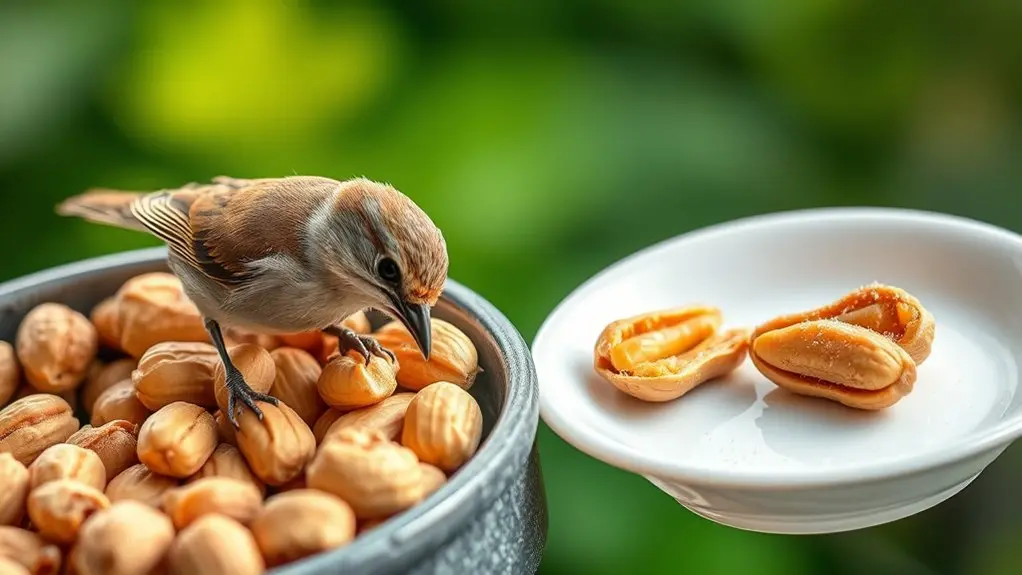
Offering peanuts attracts many birds, but choosing the right type matters for their health. Unsalted peanuts are the best choice when filling your feeder. Here’s why:
- Health Safety: Birds can’t process salt well, so salted peanuts risk causing dehydration and other health issues. Unsalted peanuts avoid this problem.
- Natural Nutrition: Unsalted peanuts provide a pure protein source without harmful additives like sugars or oils found in flavored nuts.
- Broad Appeal: Many backyard birds, including woodpeckers and jays, prefer unsalted peanuts, making them a versatile and welcomed treat.
How Birds Respond to Flavored vs. Plain Peanuts
Why do many birds turn up their beaks at honey roasted peanuts? It’s because birds can’t tolerate the added sugars and seasonings found in flavored options like honey roasted peanuts. Many species, including crows and jays, often reject these nuts, leaving them untouched at feeders.
In contrast, plain, unsalted peanuts consistently attract more birds. Flavored peanuts, whether honey or salted, are frequently ignored as birds seek out natural, simple food sources.
While bird preferences can vary day to day, you’ll notice better feeding success when you prioritize plain peanuts.
Offering a mix of nut options is fine, but remember: birds can’t handle flavored peanuts as well as plain ones, so stick mainly to unsalted varieties to keep your feathered visitors happy.
Risks of Feeding Honey Roasted or Salted Peanuts
You should avoid feeding birds honey roasted or salted peanuts. That extra salt isn’t good for them at all.
Birds have a hard time processing salt, and it can lead to dehydration and even kidney problems.
So, the best choice is to stick with raw, unsalted peanuts.
This way, you’re helping keep your feathered friends safe and healthy. It’s a simple switch that makes a big difference!
Salt Content Dangers
Although honey roasted peanuts might seem like a tasty treat, their high salt content can seriously harm birds. Salt content dangers are real because birds can’t process salt well, leading to health issues.
When you feed birds honey roasted or salted peanuts, consider these risks:
- Dehydration. Excess salt makes birds lose water, causing serious dehydration.
- Increased blood pressure. Too much salt stresses their cardiovascular system.
- Kidney problems. Salt overload can damage their kidneys, affecting overall health.
Feeding salted peanuts may also cause birds to reject healthier foods, disrupting their nutrition.
To avoid salt content dangers, always opt for unsalted, raw peanuts, which provide safe and beneficial nutrition for birds. This simple switch protects their well-being and helps maintain a balanced diet.
Bird Health Concerns
Beyond the dangers of salt content, honey roasted and salted peanuts pose several other health risks to birds. You should know these bird health concerns before offering such treats.
Honey roasted peanuts contain added sugars and oils that aren’t part of a bird’s natural diet, potentially causing nutritional imbalances. The sticky coating can also cling to their beaks, interfering with feeding.
Salted peanuts are especially harmful since birds can’t effectively process salt, risking dehydration and kidney damage.
If you want to keep your feathered friends healthy, it’s best to choose Peanuts Safe options like raw or unsalted peanuts.
These provide essential nutrients without the risks associated with honey roasted or salted varieties, supporting your birds’ well-being and natural diet preferences.
Avoiding Honey Roasted
Since honey roasted and salted peanuts contain ingredients harmful to birds, you should avoid feeding them these treats. Avoiding honey roasted peanuts is essential for your feathered friends’ health. Here’s why:
- Added sugars and flavors in honey roasted peanuts can upset birds’ digestion and cause long-term health issues.
- Salted peanuts contain salt that birds can’t metabolize, risking dehydration and kidney damage.
- The sticky texture of honey roasted peanuts makes it hard for smaller birds to eat properly, potentially leading to feeding difficulties.
Instead, offer plain, unsalted peanuts to guarantee birds get safe nutrition without harmful additives.
How to Feed Peanuts Safely to Backyard Birds
When you feed peanuts to backyard birds, choosing raw, unsalted varieties is essential to keep them healthy. Avoid honey roasted peanuts since added sugars and salts can harm birds.
You can feed peanuts either in their shells or shelled to suit different species’ preferences. Scatter them on the ground or place them in open feeders, which larger birds like woodpeckers and blue jays prefer. This reduces competition from smaller birds.
Always inspect peanuts to verify they’re fresh and free of mold, as spoiled peanuts can cause health issues.
By following these simple steps, you’ll provide nutritious peanuts safely, supporting your local birds without risking their well-being.
Spotting Signs of Peanut-Related Health Problems in Birds
You’ll want to keep an eye out for early signs like lethargy, diarrhea, or any changes in behavior that might point to peanut-related health issues.
These problems can sneak up on your bird, so it’s good to stay alert.
Common issues include dehydration and digestive upset, especially because of the added sugars and salts found in honey roasted peanuts.
Watching your bird’s feeding habits and droppings closely can really help you catch these symptoms before they become serious.
Recognizing Symptoms Early
Although honey roasted peanuts might seem like a tasty treat, they can cause health issues in birds because of the added sugars and salt.
To recognize symptoms early, you need to watch your bird closely after feeding peanuts.
Here are three key signs to spot:
1. Lethargy
If your bird becomes unusually tired or inactive, it might be reacting poorly to peanuts.
2. Appetite Changes
Notice if your bird suddenly eats less or refuses food after peanuts.
3. Digestive Upset
Look for vomiting, diarrhea, or other unusual droppings following peanut consumption.
Common Peanut Health Issues
Since honey roasted peanuts contain added sugars, oils, and salt, they can cause several health problems in birds that consume them. Birds are attracted to peanuts, but these additives often lead to common peanut health issues like digestive upset and sodium ion poisoning.
You might notice lethargy, vomiting, diarrhea, or changes in plumage as signs of peanut-related health problems. Overconsumption of sweetened peanuts can also result in obesity, impairing a bird’s ability to forage and thrive.
Salted varieties, in particular, pose a risk because birds can’t efficiently process excess salt. It’s essential to watch for unusual behavior or symptoms after birds eat honey roasted peanuts, so you can intervene early and protect their health.
Avoid feeding these peanuts regularly to minimize risks.
Best Alternatives to Honey Roasted Peanuts for Birds
A great way to keep birds healthy is by offering them alternatives to honey roasted peanuts, which often contain harmful sugars and additives.
Choosing the best alternatives to honey roasted peanuts for birds guarantees they get the right nutrients without the risks.
Here are three excellent options involving nuts and seeds:
- Raw, unsalted peanuts – packed with protein and free from harmful additives, they’re safe and nutritious.
- Sunflower seeds – rich in essential nutrients and loved by many bird species, they add variety to the diet.
- Safflower seeds – attract songbirds specifically and are less likely to draw squirrels, making them a smart choice.
Providing a mix of these natural nuts and seeds promotes balanced nutrition and supports the overall well-being of your feathered visitors.
Dealing With Squirrels at Peanut Feeders
When you set out peanut feeders, expect squirrels to show up quickly because they love peanuts just as much as birds do. To keep squirrels at bay, use squirrel-proof feeders that limit their access. You can also scatter peanuts away from feeders to distract them.
Mesh feeders work well. Smaller birds can’t get tangled, and squirrels find them tricky. Regularly monitor and adjust your feeding tactics to balance bird nourishment and squirrel control.
| Strategy | Benefit |
|---|---|
| Squirrel-proof feeders | Restricts squirrel access |
| Mesh feeders | Allows bird access, deters squirrels |
| Scatter peanuts away | Distracts squirrels |
| Regular monitoring | Optimizes feeding balance |
These steps help you enjoy birdwatching without constant squirrel interruptions.
Expert Advice on Feeding Peanuts to Birds and Squirrels
You’ll want to stick with raw, unsalted peanuts when feeding birds because they’re safer and healthier for them.
It’s best to avoid salted or roasted peanuts, as those can be harmful.
Now, squirrels love these peanuts too, but you don’t want to give them too many.
Feeding squirrels too much can actually mess with their natural foraging habits. So, it’s all about balance.
By offering just the right amount, you can support both the birds and squirrels in your yard without causing any problems.
It’s a win-win for everyone!
Raw Peanuts Safety
Raw peanuts are generally safe for birds and squirrels, with experts confirming no evidence of harm from feeding them. When considering raw peanuts safety, it’s important to follow expert advice to support healthy wildlife. Here’s what you should keep in mind:
- Raw peanuts pose no documented health risks to birds; ornithologists from the Cornell Lab back this up.
- While squirrels can safely eat raw peanuts, they need a varied diet for overall health.
- Moderation is key. Feeding raw peanuts in balanced amounts helps maintain natural dietary diversity for both birds and squirrels.
Citizen science projects like Project Feeder Watch reinforce that raw peanuts are a safe, nutritious treat. You can confidently include them in your feeding routine without worry.
Squirrel Feeding Impact
Although squirrels are attracted to peanuts, including honey roasted varieties, the added sugars and salts in these treats can harm their health.
When you’re involved in bird feeding, it’s important to take into account squirrels too, as they often compete for the same food.
Feeding squirrels raw, unsalted peanuts in moderation is safer and supports their health better than honey roasted ones.
Remember, squirrels need a varied diet, so peanuts should only be a small part of their intake to prevent nutritional imbalances.
Also, birds like crows tend to avoid honey roasted peanuts, preferring plain, unsalted options.
To protect both birds and squirrels, stick to unsalted, raw peanuts during your bird feeding sessions, ensuring a healthier environment for all wildlife visitors.
Frequently Asked Questions
Can Honey Roasted Peanut Shells Harm Birds if Ingested?
Yes, honey roasted peanut shells can harm birds if ingested.
These shells are tough to digest and might cause blockages in a bird’s digestive system. The added sugars and salts in honey roasted peanuts only increase the risk.
To keep birds safe, you shouldn’t offer them honey roasted peanuts with shells.
Instead, stick to plain, unsalted peanuts without shells to avoid any health issues.
Do Birds Prefer Honey Roasted Peanuts Over Other Snacks?
You’ll find that birds generally don’t prefer honey roasted peanuts over other snacks because their flavor preferences lean toward natural, unsalted options.
The added honey and salt can be off-putting, making them less appealing.
If you want to attract more birds, offer plain peanuts or seeds instead.
Their natural instincts guide them to simpler flavors, so catering to those flavor preferences will give you better success in bird feeding.
How Often Can Birds Safely Consume Plain Peanuts?
You can safely offer plain peanuts to birds a few times a week, making sure not to overdo it.
Peanut nutrients like protein and healthy fats provide essential energy, especially in colder months.
However, too many peanuts can upset their balanced diet, so moderation is key.
Stick to unsalted, raw, or shelled peanuts to keep your feathered friends healthy and happy while you enjoy watching them thrive.
Are There Seasonal Concerns When Feeding Peanuts to Birds?
Yes, you should consider seasonal concerns when feeding peanuts to birds.
Feeding guidelines suggest offering high-fat foods like peanuts during winter to help birds maintain energy.
In fall, avoid honey roasted peanuts since birds prefer natural, less sugary options.
During migration, provide a variety of unsalted raw peanuts to attract different species.
Adjust your feeding approach based on the season to support birds’ nutritional needs effectively and safely.
Can Peanut Allergies Affect Certain Bird Species?
Yes, peanut allergies can affect certain bird species, though it’s rare. You should practice Allergy Awareness by observing any unusual reactions when introducing peanuts.
While most birds tolerate peanuts well, some individuals might show signs of allergies, like digestive upset or feather issues.
Always introduce new foods cautiously and monitor your birds closely.
If you notice any adverse symptoms, stop feeding peanuts and consult an avian vet for proper guidance.
Conclusion
You shouldn’t feed honey roasted peanuts to birds because the added salt and sugar can harm them. Did you know that just a small amount of salt can be deadly to some bird species?
Instead, stick with unsalted, raw peanuts to keep your feathered friends healthy and happy. By choosing the right peanuts, you’re helping birds thrive while enjoying your backyard visitors safely.
So, skip the honey roasted and go natural!