
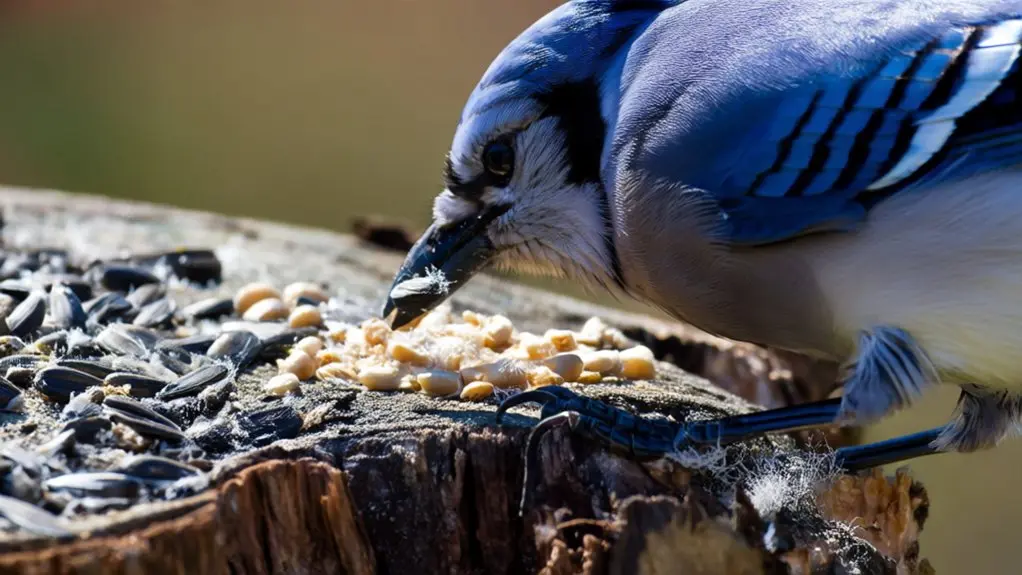
You shouldn’t feed birds moldy sunflower seeds because they often contain harmful mycotoxins like aflatoxins that can cause serious illness or even death. Moldy seeds may look fuzzy, green, or white and smell musty. These are signs you must watch for.
Birds might try moldy seeds but usually reject them once they detect spoilage. Eating these seeds can lead to liver damage, respiratory issues, and weakened immunity. So, it’s best to keep seeds fresh and safe to protect your feathered friends.
Make sure you learn how to spot and handle spoiled seeds properly. That way, you can keep your birds healthy and happy.
Dangers of Moldy Sunflower Seeds for Birds
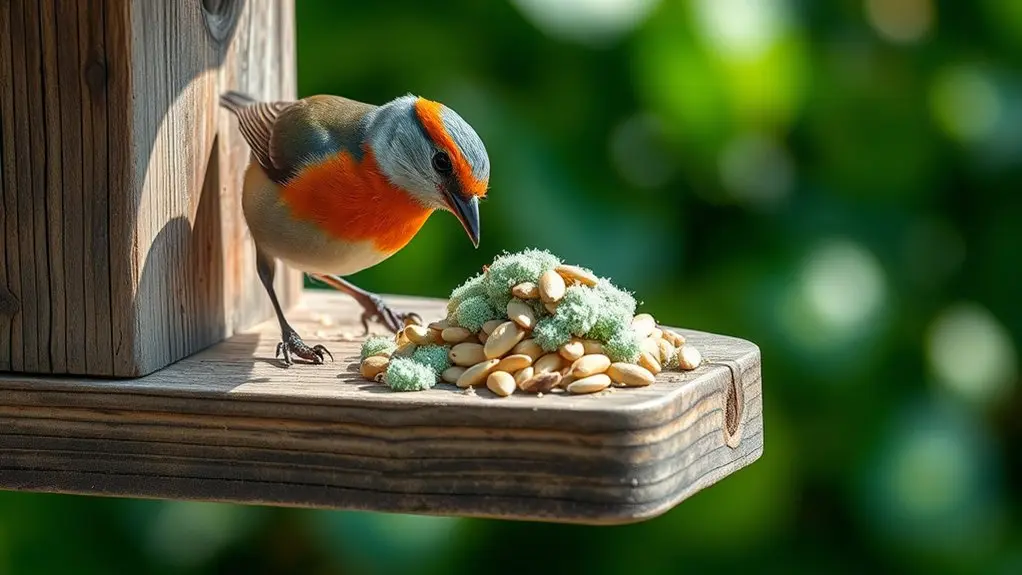
Although birds may instinctively avoid spoiled food, moldy sunflower seeds still pose serious dangers if consumed. You should understand that these seeds can harbor harmful mycotoxins like aflatoxins, which are highly toxic to birds.
Even if birds occasionally eat moldy seeds unknowingly, the health risks remain significant.
Consuming contaminated seeds may lead to respiratory issues, digestive problems, and immune system suppression. You need to realize that even small amounts of mold can cause fungal infections and poisoning, potentially resulting in severe illness or death.
To protect avian health, it’s critical to avoid feeding moldy sunflower seeds. Being aware of these dangers helps you maintain a safe feeding environment and prevent serious health issues for your birds.
How to Spot Mold and Spoilage in Sunflower Seeds
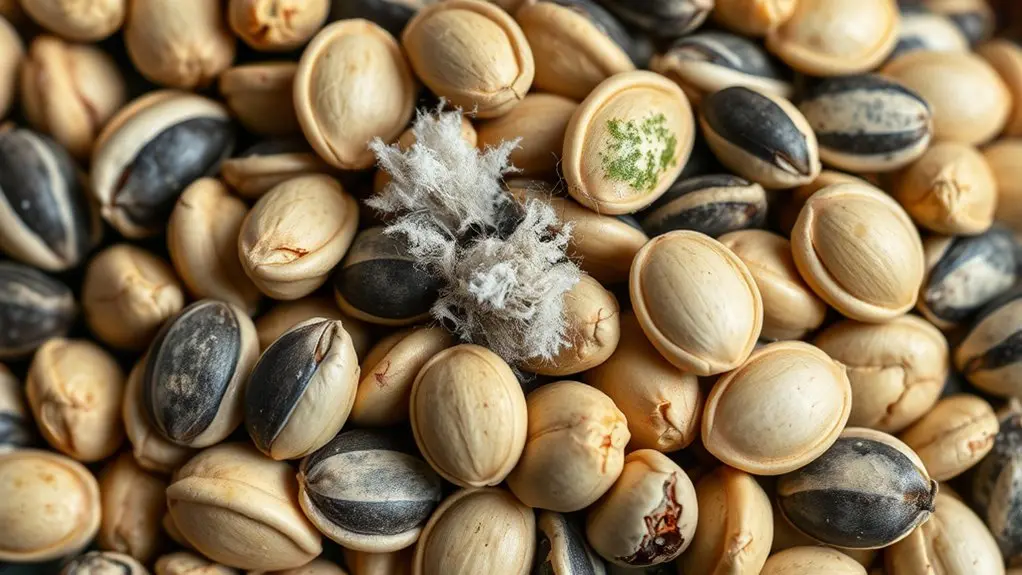
When you examine sunflower seeds closely, spotting mold and spoilage becomes straightforward if you know what signs to look for. Mold often appears as green, white, or fuzzy patches on the seed surface. Any visible mold growth clearly indicates the seeds are spoiled and unsafe for birds.
Spotting mold on sunflower seeds is easy when you know to look for green, white, or fuzzy patches.
Also, trust your nose. Foul or musty odors signal the seeds have undergone spoilage. Moldy seeds may harbor harmful mycotoxins like aflatoxins, which pose serious health risks to birds.
To protect your feathered friends, discard any seeds showing mold or off smells immediately. Regularly inspecting your sunflower seeds guarantees you provide safe, nutritious food and prevents exposing birds to dangerous contaminants.
Always prioritize quality when feeding wildlife to keep them healthy and happy.
How Birds React to Moldy Sunflower Seeds
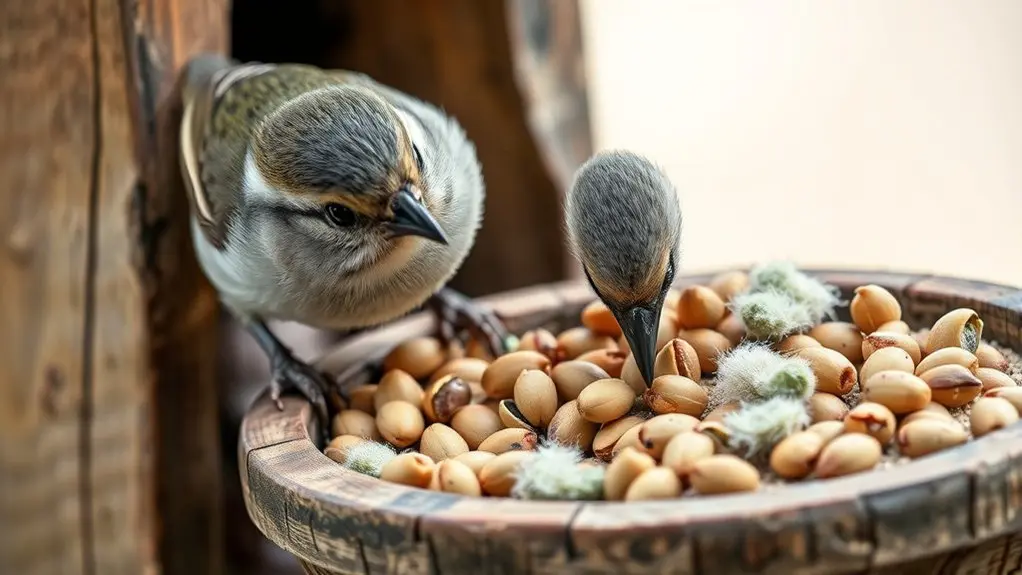
After identifying moldy sunflower seeds, understanding how birds react to consuming them becomes important for their safety. Birds may initially eat moldy seeds but often reject them once they detect spoilage through taste or smell. Many species avoid moldy seeds altogether because of potential toxicity or unpleasant flavors.
However, reactions vary. Some birds may be indifferent at first but could develop health issues over time. Mold and fungal contamination can cause signs of illness or distress in birds, especially in species sensitive to toxins.
Recognizing these reactions helps you protect birds by removing moldy seeds promptly. This prevents exposure to harmful substances that could compromise their well-being.
Keeping an eye on bird behavior around sunflower seeds is key to making sure they stay safe from contaminated food.
Health Effects of Eating Moldy Seeds
Because moldy sunflower seeds contain harmful mycotoxins, feeding them to birds can lead to serious health consequences. These toxic compounds, especially aflatoxins, can cause liver damage, weaken the immune system, and even result in death.
You might notice birds showing signs like lethargy, loss of appetite, or respiratory problems after consuming moldy seeds.
Even if the seeds look fine, mold spores and mycotoxins can hide under tough shells, increasing the risk of toxicity.
If birds eat moldy seeds regularly or in large amounts, they face chronic health issues that can shorten their lifespan considerably.
To protect birds, it’s crucial to avoid offering seeds that may harbor these dangerous toxins. Your vigilance ensures their health and longevity.
Safe Alternatives to Moldy Sunflower Seeds
Although moldy sunflower seeds pose serious risks, you can safely provide birds with fresh, high-quality seeds from trusted sources or commercially prepared mixes.
Providing birds with fresh, quality sunflower seeds from trusted sources ensures their health and safety.
Opt for sunflower hearts or shelled sunflower kernels, which offer excellent nutrition and are less prone to mold contamination.
To diversify your birds’ diet and reduce dependence on sunflower seeds, include alternatives like millet, safflower, or nyjer seeds. These varieties enhance nutrient intake and attract different bird species.
Always inspect seed supplies regularly and replace them if you detect spoilage.
How to Store Sunflower Seeds to Prevent Mold
To prevent mold growth on sunflower seeds, you should store them in airtight containers placed in a cool, dry area. This practice minimizes moisture buildup, which is the primary cause of mold development.
Keep the containers away from direct sunlight and humidity, as both accelerate seed deterioration and mold formation.
Opt for opaque containers to limit light exposure, which further preserves seed quality.
After purchase, seal the seeds properly and store them immediately to extend their shelf life and reduce mold risks.
Regularly inspect your stored seeds for any signs of mold or unusual odors before feeding them to birds.
Following these precise storage guidelines guarantees your sunflower seeds remain safe and nutritious for your feathered friends. It’s a simple way to keep your birds happy and healthy!
When to Toss Old or Moldy Sunflower Seeds and Next Steps
Even with careful storage, sunflower seeds can spoil over time. Knowing when to toss them is key to protecting your birds.
Discard any seeds showing green or fuzzy mold, a foul smell, or sticky texture immediately. These signs indicate harmful fungi and toxins like aflatoxins.
If you’re unsure, try a sprouting test. Seeds that sprout might still be okay, but handle them with caution.
Birds often avoid spoiled seeds, which can actually help you spot potential problems.
To prevent mold, always store sunflower seeds in airtight containers kept in cool, dry places.
When you see signs of spoilage, throw the seeds away promptly and replace them with fresh ones.
This way, your birds stay healthy and safe.
Frequently Asked Questions
Can Moldy Sunflower Seeds Affect Different Bird Species Differently?
Yes, moldy sunflower seeds affect bird species differently. You’ll find seed-eaters like finches are more sensitive, while pigeons tolerate them better.
Age, immunity, and diet also play a role in how mold toxins impact each bird’s health. So, it’s not just about the species but also individual factors. This means some birds might suffer more than others even within the same species.
Are There Natural Remedies to Counteract Mold Toxin Exposure in Birds?
You can fight mold toxins in birds with natural remedies like activated charcoal, milk thistle, probiotics, and antioxidant-rich foods. These can help support your bird’s body in detoxifying and recovering.
But don’t fly solo. Always consult an avian vet to guarantee safe and effective treatment. They’ll guide you on the best approach for your feathered friend.
How Long Can Birds Survive After Eating Moldy Sunflower Seeds?
You can expect birds to survive hours to days after eating moldy sunflower seeds, depending on toxin levels and health. Promptly removing contaminated seeds and seeking veterinary care improves their chances of recovery and longevity.
It really depends on how much toxin they ingested and how strong they are to begin with. So, acting quickly is key. Getting those moldy seeds out of the picture helps a lot.
If you notice your bird acting weird or sick after eating old seeds, don’t wait to get help. The sooner you act, the better their chances of bouncing back.
Is It Safe to Feed Birds Sunflower Seeds Treated With Antifungal Agents?
When it comes to feeding birds, you shouldn’t put all your eggs in one basket by using antifungal-treated sunflower seeds. They might contain harmful chemicals, so always check with experts and choose untreated seeds for safety.
It’s better to be safe than sorry, right? Birds are delicate, and what we feed them can make a big difference. So, sticking with untreated seeds is a smart move to keep your feathered friends healthy.
Can Moldy Sunflower Seeds Impact Wild Bird Populations or Ecosystems?
Yes, moldy sunflower seeds can harm wild bird populations by introducing toxins and diseases. When you feed these seeds, you risk causing health declines and reproductive issues.
This can disrupt the balance of ecosystems because birds play important roles in them. So, it’s really best to avoid offering moldy seeds if you want to help keep bird populations healthy and thriving.
Conclusion
You shouldn’t feed your birds moldy sunflower seeds. Doing so can do more harm than good. Mold can cause serious health issues, so it’s best to toss any questionable seeds and offer fresh, safe alternatives instead.
Remember, an ounce of prevention is worth a pound of cure. Proper storage and regular checks keep your feathered friends healthy and happy. Protect their well-being by staying vigilant and choosing quality food every time.