
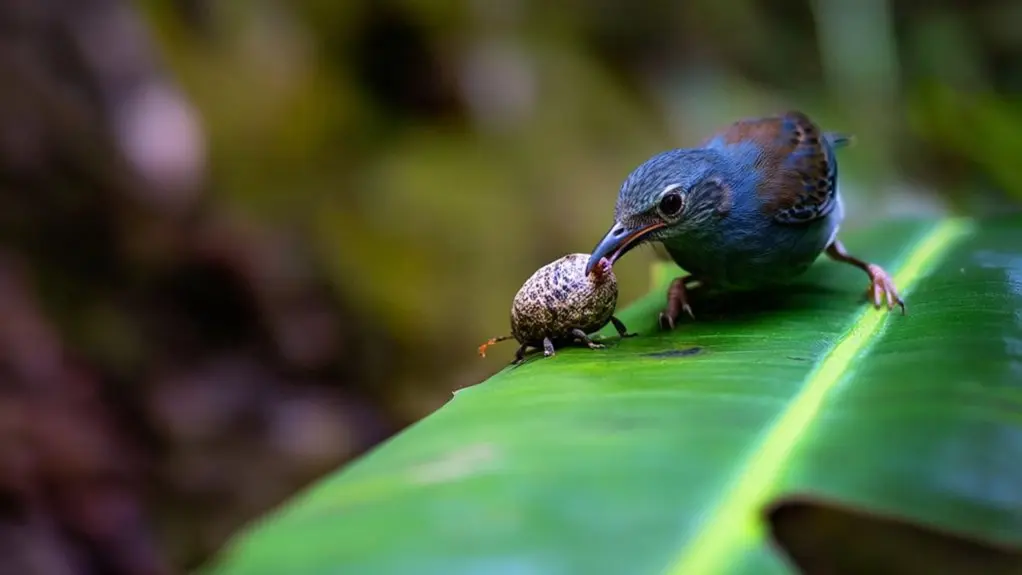
You can safely feed birds weevils because they’re non-toxic and offer modest nutrients like protein and fat. These nutrients support energy and feather growth.
However, avoid seeds that are heavily infested or moldy since contamination can risk bird health. Make sure to inspect seeds carefully for holes, larvae, or mold.
Also, store seeds in cool, dry, airtight containers to prevent infestations. Freezing seeds helps eliminate pests safely too. Managing seed quality guarantees bird well-being and a natural feeding balance.
If you want to learn more, there are plenty of insights available on proper handling and the benefits of feeding birds weevils.
Safety of Weevils for Birds
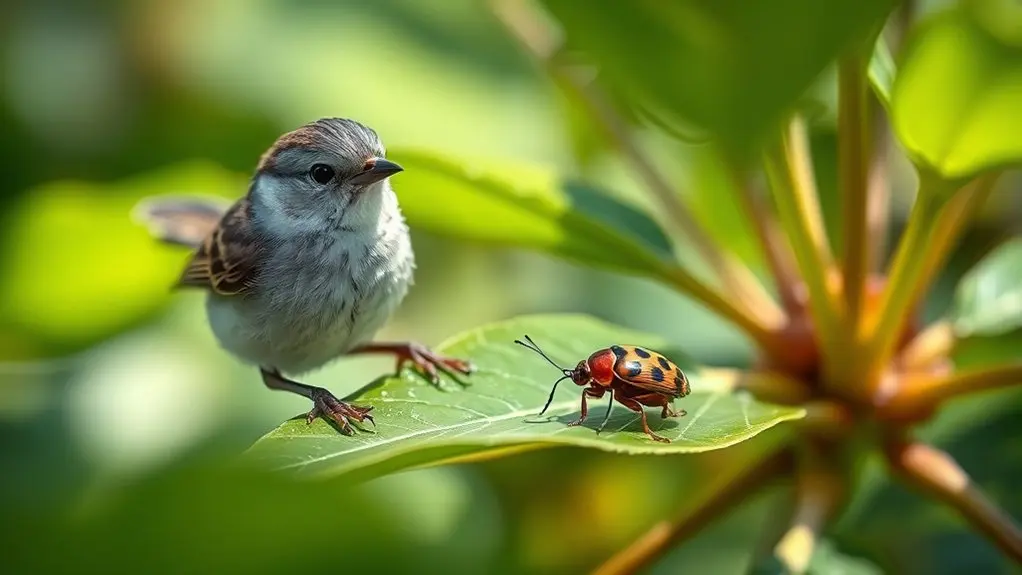
Although weevils aren’t toxic or harmful to birds, they offer little nutritional value and shouldn’t replace a bird’s regular diet. You’ll notice that weevil behavior involves burrowing into seeds, which can lead to contamination.
When you store seed, applying proper seed storage techniques is essential to minimize weevil infestation.
Freezing infested seed for at least five days effectively eliminates these pests without compromising seed safety for birds.
While birds may incidentally consume weevils present in seed, relying on such insects as a food source isn’t advisable due to their limited nutritional content.
When to Avoid Feeding Weevil-Infested Seeds
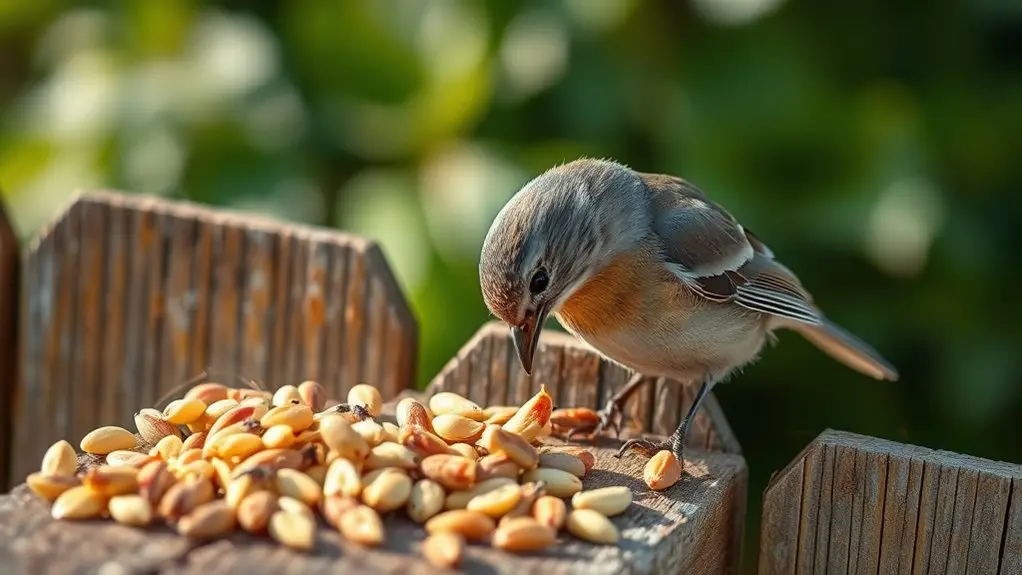
When you encounter seeds infested with weevils, you should avoid feeding them to birds if the seeds exhibit mold, foul odors, or visible contamination. Such compromised seed can negatively affect birds’ health, particularly during sensitive periods like migration or nesting.
Bird migration patterns demand high-energy, uncontaminated food sources to guarantee successful travel, while nesting behaviors require safe nourishment to support offspring development.
Bird migration and nesting require clean, nutrient-rich food to ensure survival and healthy growth.
Even if seeds contain weevils, as long as they remain fresh and free from spoilage, they pose minimal risk.
However, spoiled seeds can harbor harmful pathogens or toxins that disrupt avian physiology and behavior. Regular inspection and discarding of spoiled seeds help maintain food quality, supporting birds’ nutritional needs during critical life stages without introducing avoidable health hazards.
How to Identify Weevil Infestation in Bird Seed
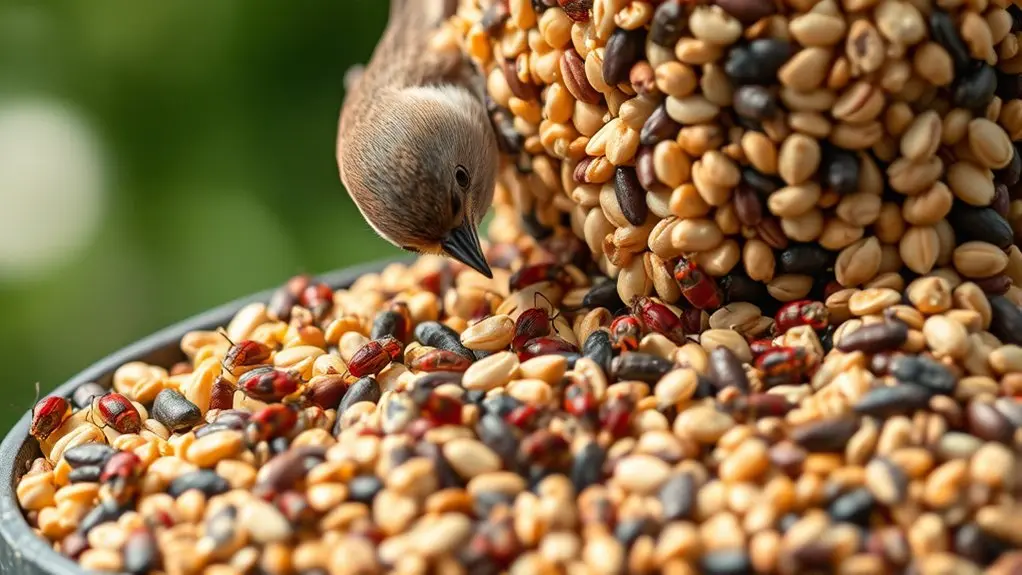
Detecting weevil infestation in bird seed requires close inspection for physical and sensory signs. You should look for tiny holes in the grains, which indicate the exit points of adult weevils as part of their lifecycle. Small, reddish-brown or black insects with long snouts crawling on or inside the seed are clear indicators of infestation.
Using a flashlight to examine the seed can help you spot live adults or larvae hidden within the grains. Additionally, you might find webbing or visible larvae inside the seed, signaling ongoing seed contamination. These signs reflect the weevil lifecycle stages occurring inside the seed, leading to compromised seed quality.
Identifying these factors early helps prevent feeding birds contaminated seed that could affect their health. So, it’s always a good idea to check your bird seed carefully before offering it to your feathered friends. That way, you can keep them safe and healthy.
Signs of Mold and Contamination in Weevil-Infested Seed
You’ll want to keep an eye out for mold by looking for any visible fuzzy patches or unusual discoloration on the seeds. Also, pay attention to any foul or musty odors, since these often point to fungal or bacterial contamination happening alongside the weevil activity.
Remember, mold can sometimes develop inside seeds that look perfectly fine on the outside, especially if they’ve been stored in humid conditions.
Detecting Mold Presence
How can you tell if weevil-infested seed has mold contamination? Detecting mold growth requires careful spoilage detection techniques.
First, observe the seed surface closely for fuzzy, powdery, or slimy patches. These visible signs usually indicate mold presence.
Next, use your sense of smell. A musty or foul odor often comes with mold growth, even when you can’t see mold spots right away.
Another trick is to flatten the seed in a bowl. This can reveal hidden mold that’s not immediately obvious on the surface.
Moldy or spoiled seed poses health risks and must be discarded to protect birds.
Identifying Seed Contamination
Mold contamination often comes along with weevil infestation, so it’s really important to spot signs that show seed quality might be compromised. When you’re checking seed for pests, look out for visible mold growth, a damp feel, or a musty smell. These are clear signs the seed is contaminated.
Seeds infested with weevils usually have tiny holes or webbing. This webbing can harbor mold spores, which makes seed germination less likely.
Moldy or foul-smelling seeds can be harmful to birds, so it’s best to throw those out right away.
Checking your seed batches regularly helps you catch contamination early. This way, you keep bird food safe and fresh.
Storing Seed to Prevent Weevil Infestation
Although weevils can infest seeds quickly, proper storage techniques substantially reduce this risk. Effective seed storage is essential for infestation prevention, ensuring seeds remain viable and uncontaminated.
Proper seed storage is crucial to prevent weevil infestations and maintain seed viability and purity.
To minimize weevil problems, you should:
- Store seed in airtight, rodent-proof containers to block weevil entry and limit oxygen, which hinders development.
- Keep seed in a cool, dry location since warmth and humidity accelerate weevil reproduction.
- Divide large seed quantities into smaller portions to contain potential infestations and facilitate regular inspection.
Make it a habit to regularly check seeds for signs of infestation, such as tiny holes or adult weevils. These scientific, targeted storage methods optimize seed preservation and substantially reduce the likelihood of weevil contamination.
This supports effective bird feeding and agricultural practices, helping you keep your seeds safe and useful for longer.
Freezing and Treating Weevil-Infested Seed Safely
While proper storage can considerably reduce the risk of weevil infestation, seeds already affected need a reliable treatment method to get rid of pests without harming seed quality.
Freezing seed at 0°F (-18°C) for at least 48 hours effectively kills weevils and their eggs. This helps preserve the seed and prevents further pest problems.
For thorough elimination, apply repeated freezing cycles: freeze for 48 hours, then leave the seed at room temperature for two days.
Always freeze seed in airtight, moisture-proof containers to keep mold and re-infestation at bay once thawed.
After freezing, let the seed gradually warm back to room temperature to avoid condensation and spoilage.
This chemical-free freezing method safely treats weevil-infested seed, keeps seed integrity intact, and makes it safe for bird consumption while effectively controlling pests.
Nutritional Benefits of Weevils for Birds
You’ll find that weevils are a great source of protein, providing essential amino acids that birds need for growing their feathers and building muscle. They naturally fit into the diets of insect-eating and omnivorous birds, so it’s no surprise they’re such a good match.
Including weevils in their meals helps keep their nutrition balanced, which supports their overall health and energy levels.
Protein Source Value
Because birds require essential amino acids for feather growth and muscle development, weevils serve as a valuable protein source that meets these nutritional needs. You should recognize that weevils, often found in diverse weevil habitats, contribute notably to pest control, which indirectly benefits birds by maintaining ecosystem balance.
The protein from weevils offers several advantages: it supplies essential amino acids vital for tissue repair and immune function. It also provides high-fat content, boosting energy for daily activities and migration. Plus, it contains calcium, supporting eggshell production and overall skeletal health.
Including weevils in a bird’s diet helps simulate natural insect consumption, enhancing nutrient intake without overreliance on artificial feeds. However, moderation is key to guarantee a balanced diet, as excessive intake could disrupt nutritional equilibrium.
Natural Diet Component
Although many bird species rely on a varied diet, incorporating weevils provides essential nutrients such as protein, fat, and amino acids that support feather development and energy metabolism.
Birds like parrots and finches exhibit natural bird foraging behavior by consuming weevils during various stages of the weevil lifecycle, guaranteeing a consistent nutrient source.
The amino acids found in weevils contribute to feather growth and overall health, while fats supply necessary energy.
Including weevils in a bird’s diet helps replicate natural feeding patterns, promoting instinctual foraging.
However, you must verify that any weevils offered are free from pesticides or contaminants to avoid harming the birds.
Understanding the nutritional role of weevils highlights their value as a natural diet component for many bird species.
Safe Feeding Practices for Birds With Weevil-Infested Seeds
When feeding birds seeds that show signs of weevil infestation, it’s important to know that these pests don’t pose health risks to the birds. Weevil larvae and adults are non-toxic, so birds can safely consume infested seeds during critical periods like bird migration when energy needs are high.
To guarantee safe feeding and maintain seed germination potential, follow these practices:
- Freeze seeds for five days to kill weevils, reducing pest spread.
- Discard any seeds that are moldy or emit foul odors, as these can harm birds.
- Regularly clean and inspect seed storage containers to prevent contamination and maintain seed quality.
Applying these steps helps you support bird health and preserve ecological balance effectively. It’s a simple way to make sure you’re doing right by the birds and the environment.
Frequently Asked Questions
Do All Bird Species Eat Weevils Equally?
You won’t find all bird species eating weevils equally. Bird foraging strategies and beak structure really influence how much they consume.
Weevil nutrition tends to attract insectivores more. On the other hand, seed eaters often avoid these tough, less accessible insects in their diet. So, it really depends on what kind of bird you’re talking about.
Can Weevils Spread Diseases to Birds?
Weevil infestation itself doesn’t directly spread diseases to birds, but you should know it signals spoiled seeds that might harbor harmful bacteria.
During bird migration, consuming such contaminated food increases risks of illness or secondary infections. So, while the weevils aren’t the problem themselves, they can be a warning sign to watch out for.
How Do Weevils Affect Wild Bird Populations?
You’ll find that weevil habitat boosts insect availability, increasing food for birds by up to 30%. This really helps support their energy needs during migration.
It also influences bird migration patterns. Birds might even change their routes based on seasonal weevil population changes. So, these little insects can have a big impact on where birds go.
Are There Natural Predators of Weevils Besides Birds?
Yes, you’ll find natural weevil control through parasitic wasps, predatory beetles, nematodes, and spiders. These little guys all play a part in keeping weevil numbers down.
Understanding bird dietary habits alongside these predators helps optimize integrated pest management strategies for effective weevil population reduction. So, it’s not just about birds; there’s a whole team working together to manage weevils naturally.
Can Feeding Weevils Alter Bird Behavior or Diet Preferences?
Feeding you weevils can subtly impact bird migration and nesting habits by shifting your diet preferences toward insects. This change could potentially affect your energy intake and foraging behavior.
However, these effects vary quite a bit and need more scientific investigation to be confirmed. So, while it’s interesting to think about, there’s still a lot we don’t know.
Conclusion
When you spot tiny weevils wriggling in birdseed, imagine the delicate balance of nature’s pantry. These insects can offer birds protein and nutrients. But you need to carefully inspect seeds for mold or contamination before feeding.
Proper storage and treatment, like freezing, help keep the seed safe. By taking these precautions, you make sure your feathered friends enjoy a nutritious, contaminant-free meal. This supports their health with every bite from your well-managed feeder.