
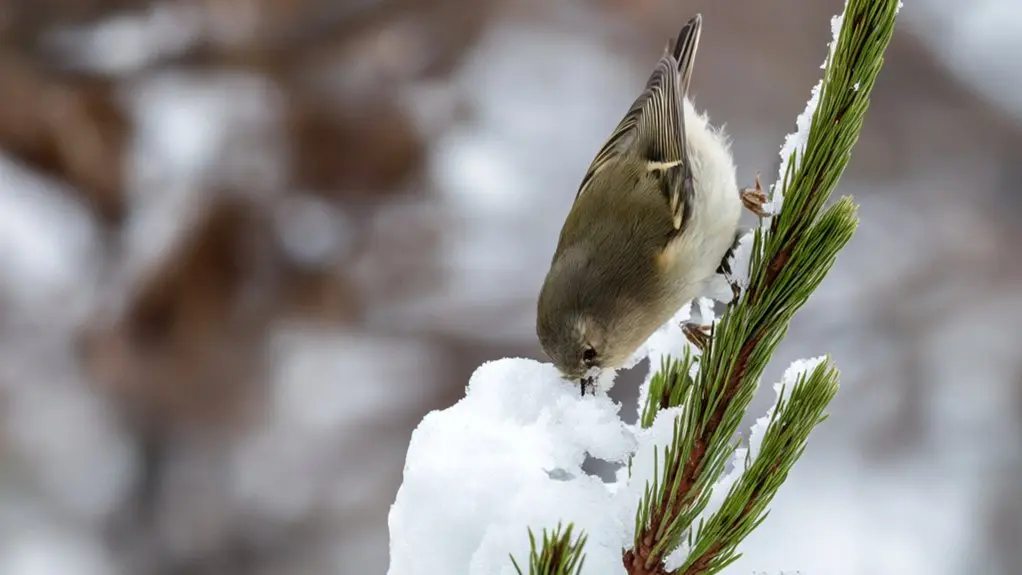
Yes, birds do eat snow to stay hydrated when liquid water is frozen. You should know melting snow inside their bodies demands extra energy, which strains their caloric reserves, especially in cold weather.
Birds have special adaptations like insulated feathers and vascular feet systems to help conserve heat during this process. However, relying on snow can risk energy loss and exposure to pollutants.
Understanding these strategies shows how birds balance hydration and survival in winter. It’s pretty fascinating how they manage it, isn’t it?
Why Do Birds Eat Snow in Winter?
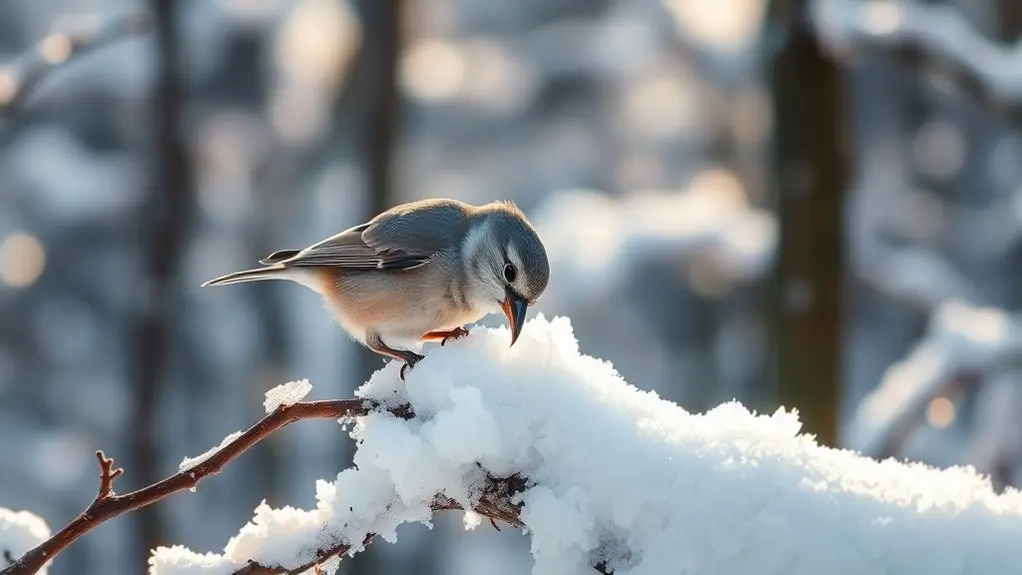
Why do birds eat snow in winter when liquid water is scarce? You’ll find that birds consume snow primarily to get water when lakes and streams freeze over. The snow chemistry varies, but it’s mostly frozen water with some potential pollutants from atmospheric emissions.
During bird migration or in snowy habitats, species like Redpolls rely heavily on snow as their water source. While eating snow does provide hydration, birds have to melt it inside their bodies using their body heat. This makes the process more energy-consuming compared to just drinking liquid water.
Still, despite these challenges, birds need to stay hydrated during harsh winter conditions, so they resort to eating snow. Understanding snow chemistry and what it means helps explain why birds turn to snow when they can’t find liquid water in winter.
How Does Eating Snow Affect Bird Energy?
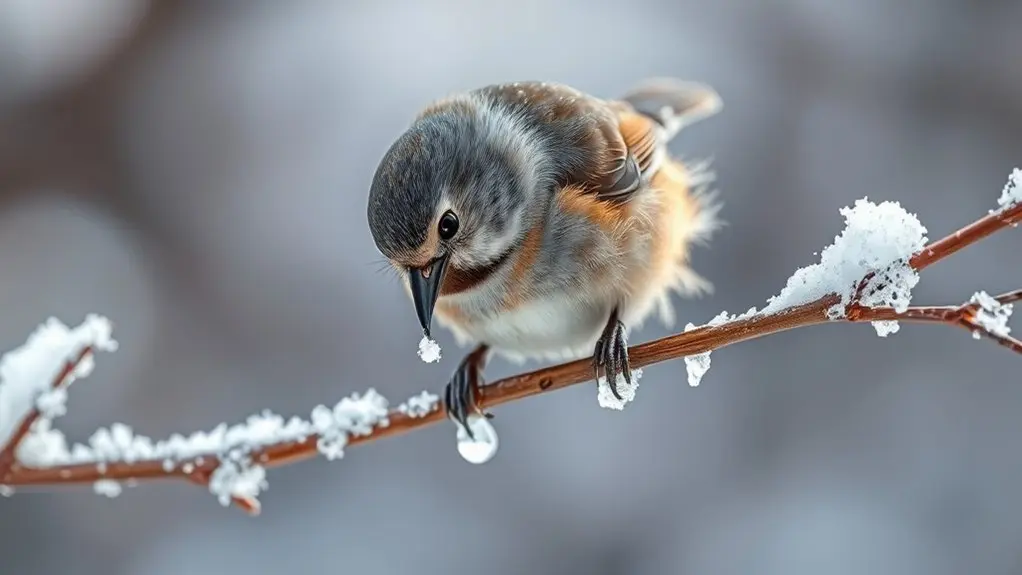
When you eat snow, your body has to work hard to melt it. This takes a lot of energy, which means there are fewer calories left for important things like flying and keeping warm.
This extra energy use can really put a strain on you, especially in winter when food is hard to find. Your body needs more fuel to stay alive.
Energy Cost of Snow
How much energy do birds expend when they eat snow? Snow hydration demands significant metabolic effort since birds must melt the ingested ice to access water.
Melting snow inside their bodies requires twice the energy compared to warming liquid water to body temperature.
This increased energy cost leads to caloric depletion as birds burn additional calories to convert snow to usable water and maintain their body heat.
So, relying on snow for hydration during winter is less efficient than drinking liquid water.
Birds that consume snow have to carefully balance this energy use with their overall needs to avoid risking their survival.
Understanding the energy cost of snow helps explain why birds prefer liquid water sources whenever they can find them.
It also shows why snow hydration can really strain their metabolic resources.
Impact on Caloric Reserves
What impact does eating snow have on a bird’s energy reserves? Consuming snow forces birds to use extra energy melting ice to get water, which can drain their caloric reserves. This higher energy demand may lead to nutritional deficiencies, especially when food is hard to find.
For birds getting ready to migrate, keeping ideal energy stores is super important. Spending more energy melting snow can mess with their migration by cutting down the calories they’ve for long flights.
- Melting snow takes twice the energy compared to warming up liquid water
- Using more energy means fewer calories left for things like foraging
- Depending on snow puts extra strain on energy budgets in cold places
- Calories get used up faster, which can hurt the bird’s overall health
- Not getting enough energy from eating snow can cause nutritional problems
Survival Challenges in Winter
Eating snow places significant demands on a bird’s energy reserves, especially during winter when survival depends on maintaining body heat and fuel for flight. Melting snow requires twice the energy compared to warming liquid water, forcing birds to expend valuable calories to convert ice to water.
This process can deplete reserves needed to sustain feather insulation and foot warmth, both vital for minimizing heat loss. As a result, birds may need to increase foraging to compensate for the added energy cost.
Prolonged cold spells with limited access to liquid water make these challenges even tougher, potentially putting survival at risk. So, relying on snow as a water source puts a big metabolic burden on birds and impacts their ability to keep essential physiological functions going during harsh winter conditions.
How Do Birds Melt Snow to Stay Hydrated?
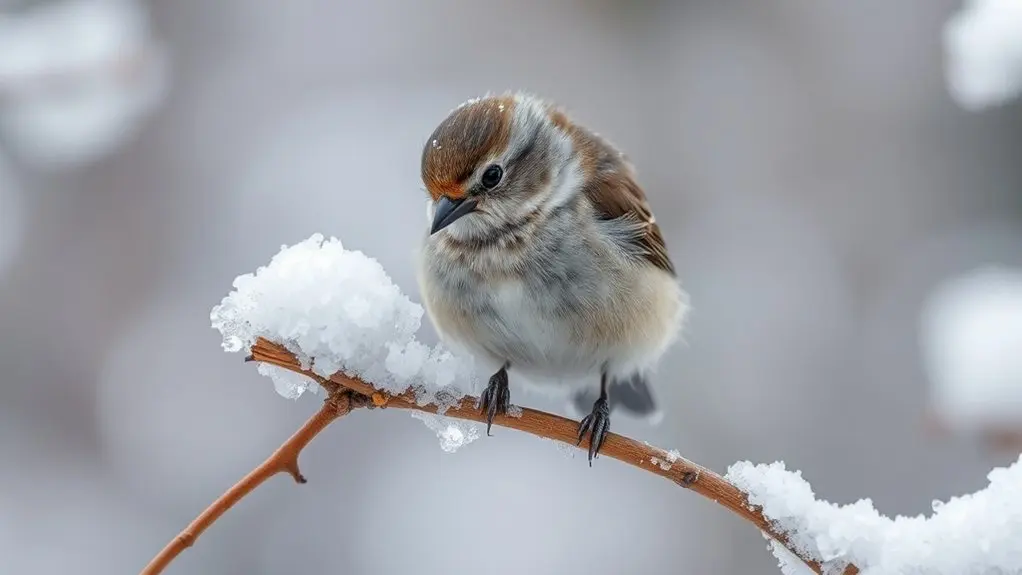
You use your body heat to melt snow and get water, but this takes a lot of energy. Melting snow actually uses twice as much heat as just warming up liquid water, so it’s a pretty expensive way to stay hydrated.
Knowing how much energy this costs helps us understand how birds handle staying hydrated when it’s cold outside.
Energy Cost Of Melting
How exactly do birds manage to hydrate themselves using snow despite the high energy demands? Melting snow requires birds to spend a lot of heat energy, often twice as much as warming up liquid water. This phase change uses up critical body heat, which affects their limited calorie reserves.
Feather insulation and beak size play a role in how well birds keep their heat during this process. But even with those advantages, the energetic cost remains pretty high.
Think about this:
Melting snow inside the body turns stored heat into what’s called latent heat of fusion. The energy spent often ends up being more than the calories the birds get from the snow itself.
Plus, the extra body heat they’ve to generate means less energy is available for flying and staying warm overall. Birds with better feather insulation lose less heat while melting snow, and having a larger beak can help cut down heat loss when handling snow.
Body Heat Usage
The high energy cost of melting snow means birds rely heavily on their internal heat to convert solid ice into liquid water. This process demands significant heat energy due to the phase change from solid to liquid, largely sourced from their body. Birds’ feather insulation helps retain this heat, minimizing loss, while beak adaptations aid in efficiently handling snow without excessive heat loss.
However, melting snow inside the body consumes twice the heat compared to warming liquid water. That makes it an energetically costly hydration method. So, birds often avoid snow when open water is available to conserve energy.
| Factor | Importance | Impact on Hydration |
|---|---|---|
| Feather insulation | Retains body heat | Reduces heat loss |
| Beak adaptations | Minimizes heat transfer | Efficient snow handling |
| Internal heat usage | Melts snow internally | High energy expenditure |
Which Bird Species Eat Snow and Why?
Although many birds rely on liquid water sources, certain species such as Redpolls, American Tree Sparrows, and Mourning Doves actively consume snow to meet their hydration needs during winter. These birds use feather insulation and foot adaptation to withstand cold while accessing snow. Snow serves as a critical moisture source when open water is scarce.
However, consuming snow requires energy to melt it internally, which affects their survival strategies.
Key points include:
- Redpolls use snow as a primary water source in northern habitats.
- American Tree Sparrows avoid heated water, preferring snow.
- Mourning Doves rely on snow for hydration during frozen conditions.
- Species like Common Redpolls and Pine Siskins have physiological adaptations to melt snow.
- Eating snow incurs an energetic cost influencing winter behavior.
You can see how these adaptations enable birds to hydrate efficiently in harsh winter climates.
How Do Feathers and Feet Keep Birds Warm?
When temperatures drop, birds rely on their feathers and feet to maintain core body heat essential for survival. Feather insulation works by trapping air pockets close to the skin, markedly reducing heat loss. Waterproof feathers also prevent moisture from reaching the skin, preserving warmth even in wet conditions.
Meanwhile, foot adaptation plays a critical role. Birds possess a specialized vascular system and a unique covering that enable them to regulate blood flow. This system uses counter-current heat exchange, transferring heat between arteries and veins to conserve warmth.
As a result, birds can perch on icy surfaces without their feet freezing. Together, feather insulation and foot adaptation form an efficient natural mechanism. They allow birds to withstand cold environments by minimizing heat loss and protecting extremities from frostbite.
Why Relying on Snow Can Be Risky for Birds
Because melting snow demands considerable energy, birds that rely on it for hydration risk depleting their limited caloric reserves. Snowflake patterns, while visually intricate, offer no nutritional benefit and require birds to expend double the energy to melt snow compared to liquid water.
This increased energy use can compromise survival during cold conditions, especially in periods critical for bird migration.
Also, pollutants trapped in snow pose health threats. You should understand these risks:
- Melting snow consumes significant internal energy.
- Energy spent reduces foraging efficiency.
- Pollutants in snow can be toxic.
- Over-reliance strains energy reserves during cold snaps.
- Reduced energy impairs maintaining body heat.
How Does Providing Fresh Water Help Birds?
How exactly does providing fresh water benefit birds during winter? When natural water sources freeze, birds struggle to stay hydrated, which impacts their feather insulation and overall health.
Having access to fresh water helps birds keep their feathers in good condition, which is super important for staying warm.
Fresh water keeps birds’ feathers healthy, which is essential for maintaining warmth in winter.
This hydration also supports metabolic functions that produce energy. Birds need this energy to keep warm and to protect their nesting sites.
Plus, supplying water means they don’t have to waste energy melting snow or searching for scarce liquid sources, which helps them save critical calories.
Consistent availability of clean water prevents dehydration and boosts birds’ resilience during harsh conditions.
Open water attracts different species, so they all get the fluids they need to keep their bodies working properly and to protect vulnerable nesting areas throughout winter.
Simple Ways to Offer Safe Water in Winter
Although providing water during winter is essential, you must guarantee it remains safe and accessible for birds. Liquid water supports feather maintenance by allowing birds to clean themselves and facilitates nesting behavior by ensuring hydration during cold months.
To offer safe water, consider these effective strategies:
- Use heated birdbaths or add non-toxic de-icers to prevent freezing.
- Elevate birdbaths on pedestals or railings to reduce debris and improve access.
- Place stones or branches inside baths to provide perches and reduce drowning risk.
- Avoid antifreeze or glycerine, as these chemicals harm feathers and are toxic.
- Clean and refill baths regularly to supply fresh, uncontaminated water.
Why Well-Fed Birds Handle Snow Better
When birds maintain adequate nutrition, they can efficiently manage the extra energy required to consume snow as a water source. Well-fed birds use their energy reserves to melt snow internally, which helps them stay hydrated without losing body heat. This good nutrition also supports effective feather insulation, which is essential for conserving warmth during cold spells.
On the other hand, birds with insufficient food intake struggle to meet the energy demands of melting snow. This puts them at risk of hypothermia. So, during bird migration and winter survival, keeping a good energy balance is really important.
| Factor | Well-Fed Birds | Underfed Birds |
|---|---|---|
| Energy Reserves | High, supports snow melting | Low, insufficient for melting |
| Feather Insulation | Maintains ideal heat | Compromised, heat loss occurs |
| Survival Efficiency | Balances energy and hydration | Energy drained, survival risk |
Frequently Asked Questions
Can Eating Snow Cause Illness in Birds?
Yes, eating snow can cause illness in birds. You risk introducing harmful bacteria and pollutants during snow digestion. This compromises bird hydration and weakens their immune system.
That makes them more susceptible to disease and dehydration. So, while it might seem like a good water source, snow isn’t the safest choice for birds.
Do Baby Birds Eat Snow Too?
Like a fledgling learning to fly, baby birds rarely embrace snowy foraging. They mostly rely on feather hydration from their parents’ water-rich meals.
Eating snow can risk energy loss and exposure to pollutants, so they avoid direct snow consumption whenever possible. It’s just not worth it for them.
How Much Snow Can a Bird Safely Consume?
You should know birds safely consume limited snow to avoid snow contamination and maintain bird hydration. Excessive intake increases energy use for melting, risking dehydration, so they rely more on liquid water when available for ideal hydration balance.
Basically, birds can eat some snow without any problems, but too much isn’t good for them. It takes a lot of energy to melt all that snow inside their bodies. So, whenever they can find liquid water, they’ll go for that instead to stay properly hydrated.
Can Birds Get Enough Nutrients From Snow?
Snow consumption alone is a nutritional mirage; you can’t rely on it for sustenance. While bird hydration improves through snow, it lacks calories and nutrients.
Does Snow-Eating Behavior Change With Different Climates?
Yes, you’ll see behavioral differences in birds’ snow-eating due to climate adaptation. Birds in colder regions rely more on snow for hydration, while those in milder climates prefer liquid water. This helps them minimize snow consumption to conserve energy.
It’s pretty interesting how these habits change based on where the birds live. In harsher cold, snow becomes a key water source. But when the weather’s milder, they go for easier options like liquid water instead.
Conclusion
You might think snow is just frozen water for birds, but relying on it isn’t that simple. Birds face hidden energy costs and risks when eating snow, making hydration a delicate balance. Understanding how different species manage this challenge reveals surprising survival strategies.
Next time you see birds in winter, consider how offering fresh water could be a game-changer. What seems like a simple act might just tip the scales between struggle and survival.