
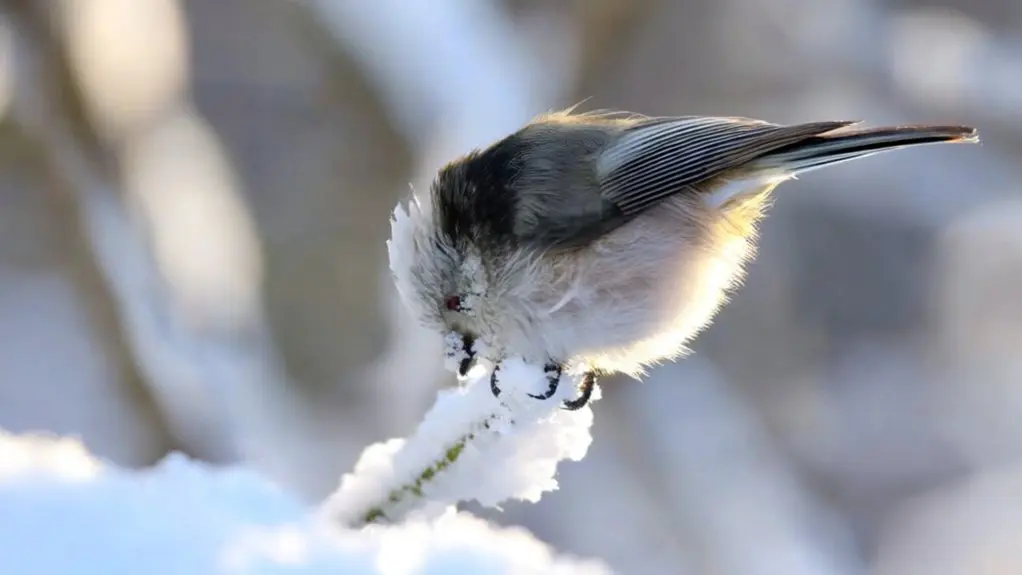
You might wonder if birds can eat snow for water. Birds do scoop and eat snow to hydrate, but it requires extra energy to melt it internally. This can be tough on smaller birds during cold weather.
Snow isn’t an efficient or sufficient water source by itself. So, birds actively seek liquid water like unfrozen streams or heated birdbaths.
Understanding these challenges helps you better support their hydration needs and survival through winter’s harsh conditions.
Why Water Is Vital for Birds in Winter
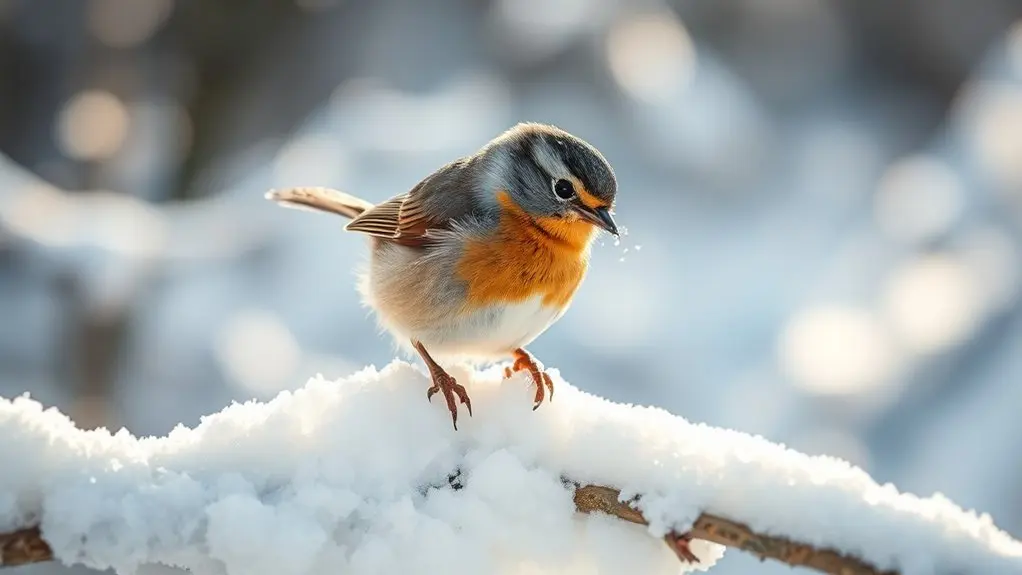
Although water sources often freeze in winter, birds still need access to liquid water to stay hydrated, maintain feather condition, and support essential physiological functions. During cold months, hydration is vital for sustaining metabolic processes that enable survival.
Water not only aids in drinking but also in bathing, which removes parasites and preserves feather insulation, essential for thermoregulation.
Proper feather maintenance ensures effective insulation against harsh temperatures. Additionally, bird migration demands significant energy, and adequate hydration supports muscle function and endurance during these journeys.
Since natural water bodies freeze, birds face challenges accessing liquid water, increasing their reliance on accessible unfrozen sources.
How Birds Use Snow for Hydration in Winter
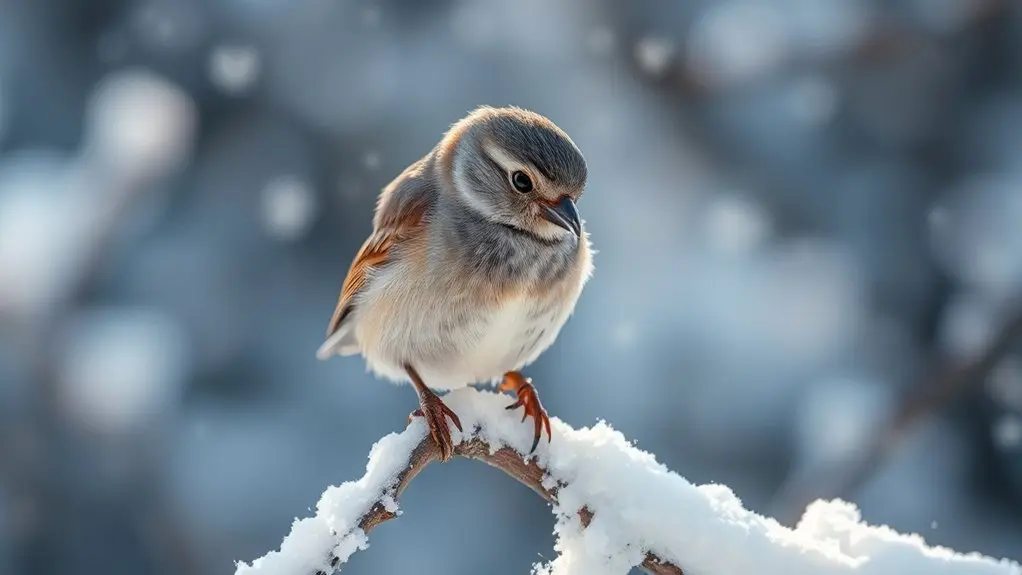
When liquid water freezes over in winter, birds adapt by using snow as an alternative hydration source. Snow consumption becomes a critical hydration strategy when liquid water is scarce. Birds often scoop fresh snow from the ground or rooftops, accessing it directly to meet hydration needs.
In winter, birds rely on fresh snow as a vital hydration source when liquid water is unavailable.
Certain species, like Cedar Waxwings, have unique behaviors such as catching snowflakes mid-air to get water. Some birds also break through icy snow layers to reach small ice shards, making sure they stay hydrated.
These strategies show how birds can use snow effectively during tough conditions. Snow is a readily available and safe water source. It helps birds maintain hydration despite environmental challenges.
Understanding these behaviors helps us see how birds keep themselves going in winter’s demanding hydration landscape.
Energy Costs of Using Snow as Water
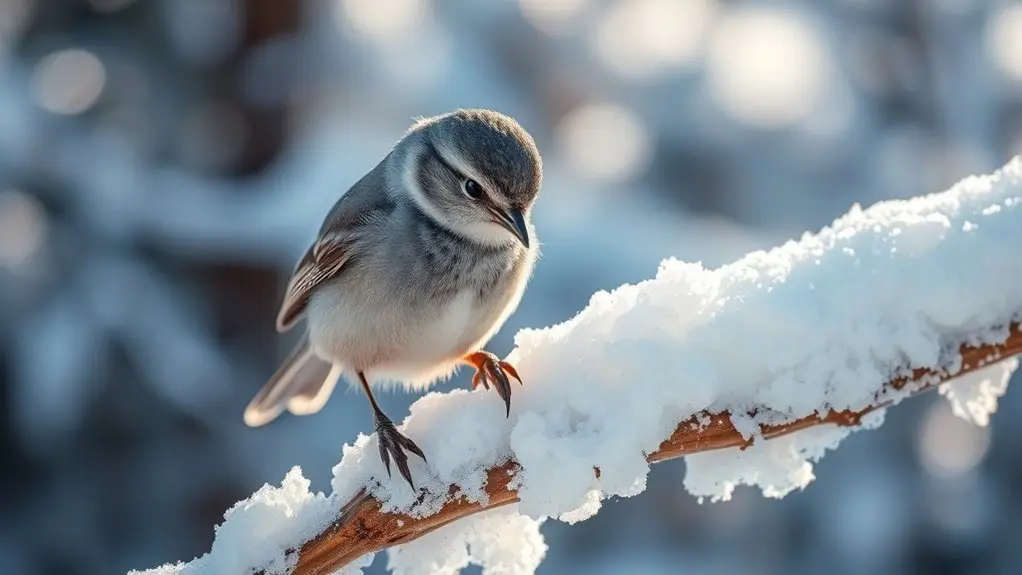
Using snow as a water source helps birds stay hydrated during winter, but it comes with a significant energy cost. Birds have to use their metabolism to warm up the snow they eat to their body temperature. This means they burn more energy overall. It’s a necessary process but definitely draining, especially when there’s no liquid water around.
Think about it this way: melting snow takes calories to turn ice into water the birds can actually use. This extra effort is especially hard on smaller birds since they don’t have big fat reserves to fall back on.
So, they’ve to carefully weigh whether staying hydrated is worth the extra energy they spend.
When you understand these energy demands, it makes sense why birds don’t always go for snow. They’re kind of balancing act pros, managing their metabolism to survive the tough winter conditions as best they can.
Can Birds Hydrate Using Snow Alone?
Even though birds can hydrate by consuming snow and melting it with their body heat, this method demands considerable energy that can strain their reserves. Feather insulation helps birds retain warmth, but melting snow internally still consumes calories, reducing available energy.
Relying solely on snow for hydration is often inefficient. The limited water gained may not meet physiological needs, especially during prolonged cold periods. Birds with specific migratory patterns might encounter varying access to liquid water, which influences their dependence on snow.
Species like chickadees and waxwings actively scoop snow when liquid water is scarce. But this strategy comes with risks, including potential contamination and insufficient hydration.
How Birds Find Liquid Water in Frozen Landscapes
You’ll notice that natural water sources often freeze over, which means birds have to get creative when it comes to finding a drink. Some species actually use their body heat to melt snow or find little pockets of liquid water hidden beneath the ice.
Plus, humans can play a big role here by offering accessible water. That way, birds can save energy and stay hydrated during those tough winter months.
Natural Water Source Challenges
Although liquid water becomes scarce during winter, birds have to find other ways to stay hydrated in frozen landscapes. Natural water sources like ponds and lakes often freeze solid, making it hard for birds to access liquid water.
This scarcity really impacts their migration patterns and nesting habits. Birds need reliable hydration to keep their energy up during long flights and breeding periods.
You’ll notice that birds often travel greater distances just to find unfrozen water sources. Sometimes they rely on melting snow or dripping icicles to get a drink.
They even use their body heat to melt snow, though it costs them a lot of energy.
These challenges force birds to adapt their behavior, balancing the need to stay hydrated with conserving energy. Understanding these struggles shows how important accessible water is for survival during harsh winters.
Bird Adaptations For Water
How do birds secure liquid water when their environment is frozen solid? Birds rely on several adaptations to access water despite freezing temperatures. Feather insulation conserves body heat, enabling them to melt snow or ice internally.
They often target sunlit or flowing water areas, such as dripping icicles, to access liquid water more easily. Using their beaks, species like chickadees hammer or scoop through snow and ice layers to reach water beneath. This behavior supplements hydration when natural liquid sources are scarce.
These adaptations are vital because water availability acts as a migration trigger. If birds can’t find enough water, they’ll move to more hospitable environments. Understanding these strategies shows us how birds survive harsh winters by making the most of minimal water resources in frozen landscapes.
Human Support For Birds
Access to liquid water remains a major challenge for birds in frozen environments, even with their natural adaptations such as feather insulation. During bird migration or harsh winters, birds expend considerable energy to melt snow for hydration, which can strain their reserves.
You can support them by providing accessible water sources that remain unfrozen. Consider these strategies:
- Place heated birdbaths or water containers in sheltered areas to prevent freezing.
- Regularly clear snow and ice from natural water sources to expose liquid water.
- Install drip systems or icicle feeders where birds like Cedar Waxwings can drink.
These measures reduce the energy birds spend locating water, helping conserve energy essential for survival and migration. Supporting birds in this way complements their natural behaviors and adaptations.
It really promotes their health in frozen landscapes.
Risks Birds Face When Using Snow and Ice for Water
When birds consume snow and ice to hydrate, they face several physiological and environmental risks. Melting snow demands significant energy to warm it to their body temperature, which can strain birds during winter. Feathers may freeze, impairing flight and increasing hypothermia risk.
Birds relying solely on snow risk dehydration, as energy spent melting may not meet hydration needs. In urban foraging, birds often leave protective cover, increasing predation risk when exposed on icy surfaces. Also, dripping icicles can quickly refreeze, posing injury hazards.
Nesting habits influence vulnerability too. Birds nesting in exposed areas may struggle more to access liquid water, which makes these risks even tougher. Overall, snow and ice present challenges that affect survival, energy balance, and safety during harsh conditions.
How Can You Safely Provide Water for Birds in Winter?
Providing reliable liquid water sources during winter can really help reduce the risks birds face when they’ve to rely on snow and ice for hydration. When birds are migrating, their energy needs go up, so having easy access to water is super important for keeping their feathers insulated and managing their body temperature.
To safely provide water in winter, here are some tips you can try:
Use shallow, sloped containers with perches or stones. This makes it easier for birds to get to the water without slipping or accidentally falling in.
Place water features in sunny, sheltered spots. This helps keep the water from freezing and makes sure it’s available when birds need it.
Also, make sure to clean birdbaths regularly to stop bacteria from growing. And definitely avoid using anything toxic like antifreeze or glycerin—they can harm the birds’ feathers and overall health.
Heated Birdbaths: Benefits and Risks
Although winter temperatures often freeze traditional birdbaths, heated birdbaths keep water from freezing. This means birds have a reliable source of water during cold weather.
These devices come with thermostat safety features to control the temperature, which helps prevent overheating and lowers the risk of electrical hazards.
You should also check if the birdbath has a Ground Fault Circuit Interrupter (GFCI) outlet for extra safety.
Keeping the water clean is really important. Regular cleaning stops mold and algae from building up, which can be harmful to birds.
But be careful—too much heat can cause feathers to freeze or get waterlogged, which is dangerous for birds after they bathe.
To help keep birds safe, nonmetallic grilles or covers can stop them from falling into the water.
By managing the heating carefully and keeping the water clean, you can provide a safer and more effective water source for birds all winter long.
This way, you help them stay healthy and safe without any added risks.
Tips to Keep Bird Water Unfrozen During Cold Weather
Heated birdbaths offer one effective method to keep water liquid during freezing temperatures, but you can also use several practical strategies to keep bird water from freezing. Birds rely on their feather insulation to conserve heat. Still, providing accessible liquid water is essential, especially since migration cues might prompt energy-demanding behaviors.
Heated birdbaths and practical tips ensure birds have access to liquid water during freezing temperatures.
To make sure water stays available during cold weather, consider these tips:
- Place water sources in sunny spots to soak up solar warmth. This helps delay ice formation.
- Add stones or perches inside containers so birds can rest without touching ice directly. This reduces freezing risk and helps preserve their feather insulation.
- Replace water regularly to prevent contamination and freezing. This ensures safe hydration for the birds.
Avoid toxic additives like antifreeze. They can damage feather insulation and pose deadly risks to birds. These simple steps help keep water accessible, which is vital for birds’ survival during harsh winter conditions.
Common Mistakes to Avoid When Offering Water to Birds
When you’re offering water to birds, one important thing to keep in mind is to never add harmful chemicals like antifreeze or salts. These substances are toxic and can be deadly to our feathered friends.
Also, during colder months, you want to make sure the water doesn’t freeze. But be careful—use safe methods that won’t put the birds or your property at risk.
Avoid Harmful Additives
Because birds are highly sensitive to toxins, you must avoid adding chemicals like salts, antifreeze, or glycerin to their water sources. Such substances compromise chemical safety and can damage feather protection by degrading plumage quality. This reduces insulation and waterproofing.
To guarantee bird health, always provide uncontaminated, fresh water without additives.
Avoid these common mistakes:
- Using chemical de-icers or antifreeze in or near bird water containers, which can cause poisoning
- Applying chemical treatments to snow or ice intended for bird consumption
- Introducing household cleaning agents into birdbaths or wildlife water sources
Maintaining strict chemical safety preserves feather integrity and supports birds’ ability to regulate temperature and stay dry. This is crucial for survival, especially in cold conditions.
Prevent Water Freezing
Although providing water is essential for birds during winter, you must take specific precautions to prevent it from freezing. Avoid placing water sources in shaded or wind-exposed areas, as these conditions accelerate freezing and reduce accessibility.
Don’t rely solely on natural water, especially during seasonal migration when birds need reliable hydration to sustain energy for flight and maintain bird song.
Use heated birdbaths but make certain they’re properly maintained to prevent overheating or electrical hazards. Avoid metal or glass containers, since they can crack in freezing temperatures.
And importantly, never add chemicals like antifreeze or salts, as they’re toxic to birds.
Frequently Asked Questions
Do All Bird Species Eat Snow for Water?
You won’t find all bird species eating snow for water. During bird migration, their feather insulation affects their water needs. So, some birds avoid snow altogether.
Instead, they rely on other sources to stay hydrated. This helps them maintain energy efficiently in different environments. It’s pretty interesting how they adapt, right?
Can Eating Snow Cause Hypothermia in Birds?
Yes, eating snow can cause hypothermia in birds during winter survival, especially when energy reserves deplete.
During bird migration, they minimize snow intake to avoid body temperature drops. This is essential for maintaining energy and surviving cold conditions.
How Does Snow Quality Affect Bird Hydration?
Like choosing the purest Elixir of Life, you’ll find snow melt quality essential for bird hydration.
Contaminated snow lacks necessary hydration minerals and may carry toxins, impairing birds’ health and disrupting their essential water intake balance.
Do Baby Birds Eat Snow for Water?
You won’t see baby birds eating snow for water because they can’t efficiently handle snow melting. Instead, their hydration depends on parents providing moist food and regurgitated fluids. This ensures proper hydration without direct snow consumption.
Basically, baby birds rely on their parents to keep them hydrated. They don’t have the ability to melt snow or ice on their own. So, the parents do all the work to make sure they get the water they need.
Can Birds Get Enough Minerals From Snow?
You can’t rely on snow melting for mineral absorption because snow contains minimal minerals. Birds must obtain essential nutrients from soil or food sources, as snow alone doesn’t provide sufficient minerals to meet their dietary needs.
Basically, snow just isn’t enough for their mineral intake. So, birds look elsewhere to get what they need to stay healthy. They depend on the things they eat or the ground they forage on.
Conclusion
As winter’s chill blankets the landscape, birds face the challenge of finding liquid water. While they can nibble on snow, it demands extra energy to melt it internally. That’s why liquid water is really important for their survival.
By offering a gently warmed birdbath or making sure water doesn’t freeze, you provide a crucial lifeline. Your thoughtful care helps birds thrive. It can even turn your backyard into a little sanctuary amid the icy stillness.