
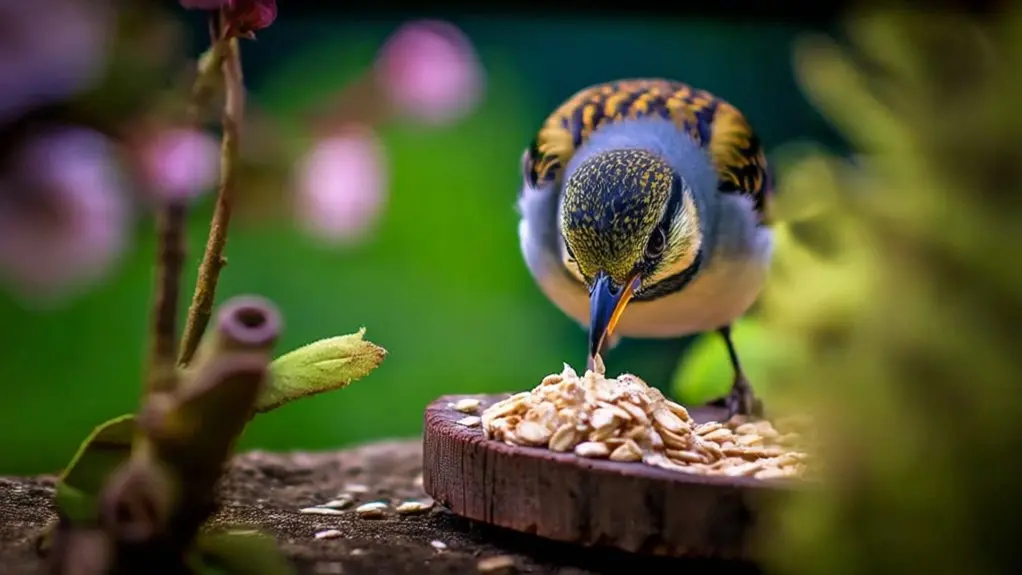
You can safely feed birds uncooked oatmeal as a nutritious treat that supports their energy and overall health. Just serve plain, dry oats without salt, sugar, or additives. Avoid cooked oatmeal, which can cause harm.
Use shallow dishes or feeders, keep the oats fresh, and clean feeders regularly to prevent mold. Offering oats gradually helps birds adjust, especially during nesting or migration.
Keep exploring to discover how to prepare, serve, and care for your feathered visitors effectively. It’s a simple way to enjoy watching them thrive!
Is Uncooked Oatmeal Safe for Birds?
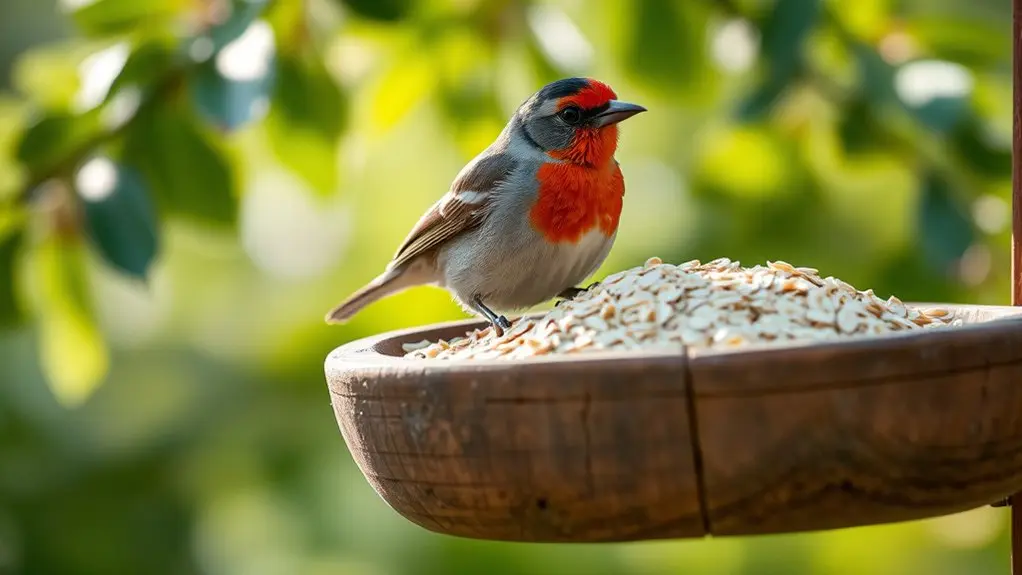
Although you might wonder if uncooked oatmeal is suitable for birds, you can feel confident offering it as a safe, nutritious snack.
Birds rely on energy-rich foods during bird migration and nesting habits, so providing plain, uncooked oatmeal without salt or additives supports their needs without harm.
Providing plain, uncooked oatmeal meets birds’ energy needs during migration and nesting without causing harm.
Cooking oatmeal makes it sticky, which can hinder birds’ ability to eat or clean their beaks properly. This could potentially affect their health.
By serving uncooked oatmeal on feeders or plates, you make it easy and safe for birds to access.
This simple choice respects their natural feeding behaviors and helps them maintain strength during critical periods like migration and nesting.
It ensures they stay healthy and active throughout these demanding life stages.
Nutritional Benefits of Uncooked Oatmeal for Birds
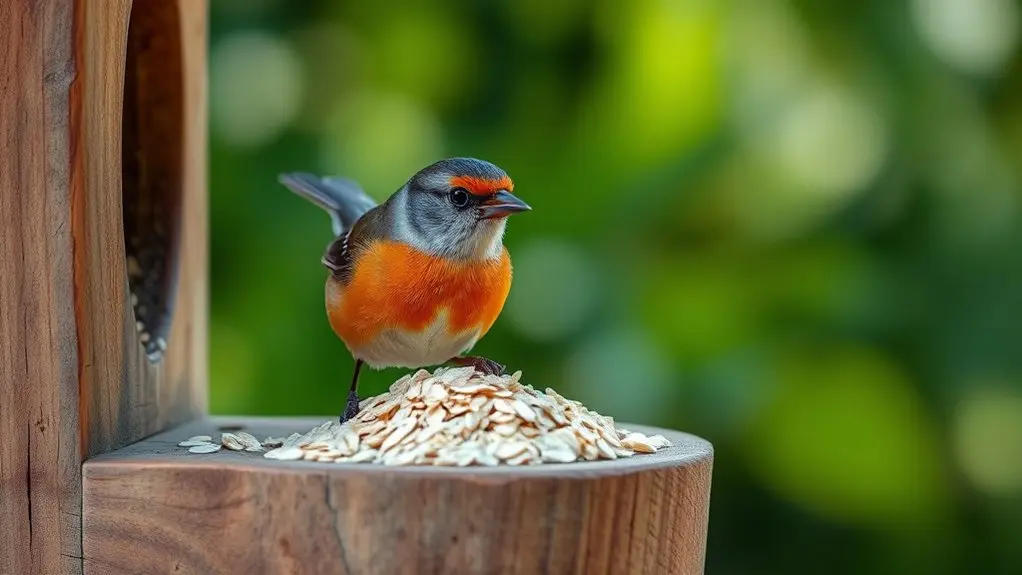
You’ll find that uncooked oatmeal offers birds essential B vitamins and minerals like iron and magnesium. These nutrients really help support their overall health.
Plus, oatmeal is packed with carbohydrates, giving birds a steady energy boost to keep them active throughout the day.
And it doesn’t stop there—antioxidants in oatmeal help strengthen their immune system and reduce inflammation, which promotes lasting lifeforce.
Pretty great stuff for our feathered friends!
Essential Vitamins In Oats
Because uncooked oats are packed with essential vitamins and minerals, they offer significant nutritional benefits for birds. During oat harvesting, careful handling ensures these vitamins like B1, B2, B3, B5, B6, and B9 remain intact. This supports your bird’s energy metabolism and overall health.
Proper oat storage also preserves these nutrients. So, when you feed birds uncooked oatmeal, they get crucial support for feather growth and immune strength. These B vitamins help convert food into energy, keeping birds active throughout the day.
Mineral Content Benefits
Alongside essential vitamins, uncooked oatmeal delivers a wealth of minerals that play a significant role in supporting your bird’s health. Different oatmeal varieties provide a natural source of crucial minerals, but you should always consider bird dietary restrictions before introducing them.
Here are four key mineral benefits:
- Magnesium, iron, and zinc support overall health and immune function.
- Potassium and calcium help maintain electrolyte balance and bone strength.
- Minerals promote strong bones, healthy feathers, and proper muscle function.
- Dietary fiber combined with these minerals improves digestion and nutrient absorption.
Energy And Immune Support
When you include uncooked oatmeal in your bird’s diet, you provide them with a steady source of complex carbohydrates that fuel sustained energy throughout the day. This supports bird digestive health by promoting proper gut function through its high fiber content.
Additionally, oats are rich in essential B vitamins like B1 and B6, which help enhance immune support. Minerals such as magnesium, zinc, and iron further boost immunity and cellular health. Proper oat nutrient absorption guarantees your bird stays resilient against illnesses, benefiting overall vitality.
| Nutrient | Benefit |
|---|---|
| Complex Carbohydrates | Sustained energy |
| Fiber | Supports bird digestive health |
| B Vitamins (B1, B6) | Immune system boost |
| Minerals (Mg, Zn, Fe) | Enhances immune responses |
Wild Birds That Eat Uncooked Oatmeal
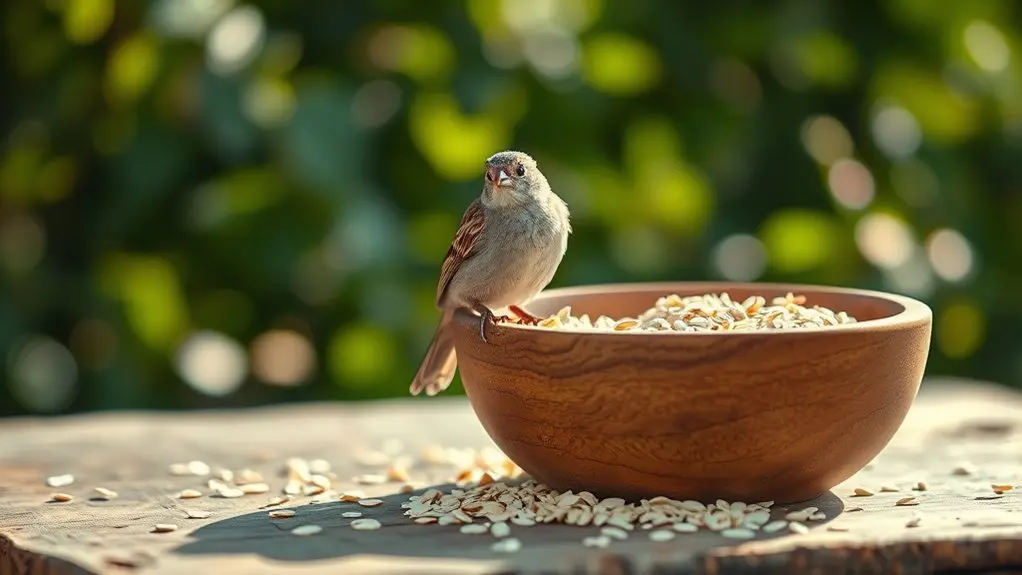
If you’ve ever scattered uncooked oatmeal outdoors, you’ve likely noticed sparrows, finches, and juncos enthusiastically gathering the grains. These birds rely on accessible food sources during bird migration and nesting seasons when energy demands spike.
You’ll also find ground-feeding birds like quail and blackbirds drawn to loose oats. These oats provide essential nutrients to support their survival.
Here are four wild birds that eat uncooked oatmeal:
- Sparrows – Adapt well to various habitats during migration.
- Finches – Use oats to fuel their energy-intensive nesting habits.
- Juncos – Forage on oats especially in colder months.
- Quail and Blackbirds – Prefer oats scattered on the ground.
Offering uncooked oatmeal can support these wild birds’ health and natural behaviors effectively. It’s a simple way to help them thrive!
How to Prepare and Serve Uncooked Oatmeal at Your Feeder
When you’re getting ready to offer uncooked oatmeal at your feeder, start by picking dry, fresh oats. This helps keep the birds safe and healthy.
You can simply spread the oats right on a plate feeder, or if you want to attract even more birds, try mixing the oats with seeds and suet. It’s a nice little treat that many birds love.
Just don’t forget to clean your feeder regularly.
Also, be sure to replace the oatmeal often to prevent mold and keep the feeding spot nice and hygienic.
Choosing The Right Oats
Although you might be tempted to offer any type of oatmeal, choosing rolled oats or plain, uncooked oatmeal guarantees a safe and nutritious snack for your backyard birds. Avoid oat flavoring or added sugars, as these can harm birds.
Understanding oat processing helps you pick the right oats. Rolled oats are minimally processed and retain nutrients, making them ideal.
Keep these tips in mind:
- Choose fresh, dry rolled oats or plain oatmeal to prevent spoilage.
- Avoid instant oats with added flavoring or sweeteners.
- Store oats properly to maintain freshness.
- Mix oats with seeds like sunflower or millet to attract diverse bird species.
Serving Methods For Birds
Since birds prefer easy access to their food, spreading uncooked oatmeal directly on a platform or ground feeder works well to attract them. You’ll want to keep the oatmeal dry and fresh to maintain its appealing texture and prevent mold.
Mixing oats with other bird seeds or grains creates a nutritious blend that suits varied bird behavior, encouraging more visits.
Using shallow dishes or plate feeders helps contain the oats, minimizing scattering and making it easier for birds to feed comfortably.
By preparing their food thoughtfully, you support healthy feeding habits and enhance their experience at your feeder.
Maintaining Feeder Cleanliness
To keep your feeder safe and inviting, you’ll want to regularly clean it with soap and water, especially when serving uncooked oatmeal. Proper feeder placement helps reduce contamination from dirt or droppings, keeping oats fresh longer.
Also, think about how often you feed. Replenish oats often and remove uneaten portions promptly to prevent mold from forming.
Follow these steps to maintain clean, healthy feeding conditions:
- Spread uncooked oatmeal on a clean plate feeder or platform so birds can easily get to it.
- Store oats in a dry, airtight container to keep them fresh before serving.
- Mix oats with bird-friendly seeds to encourage natural foraging behavior.
- Clean your feeder thoroughly at each feeding, removing any residue to stop microbial growth.
Mixing Uncooked Oatmeal With Other Bird Foods
When you mix uncooked oatmeal with seeds, nuts, or dried fruits, you create a more nutritious and appealing meal for birds. This combination caters to different bird species and their feeding preferences, offering variety and balanced nutrients.
Always confirm the added ingredients are safe and free from sugars or artificial additives, as some birds can be sensitive to these.
Ensure all added ingredients are natural and free from sugars or artificial additives to protect sensitive birds.
Keep the portion size moderate to avoid digestive issues, especially for smaller bird species.
Remember to replace the mix regularly and clean feeders thoroughly to prevent mold and maintain freshness.
By thoughtfully blending uncooked oatmeal with other natural bird foods, you support their health and encourage diverse feeding habits.
This benefits both common backyard visitors and more specialized bird species alike.
Common Mistakes to Avoid When Feeding Oatmeal to Birds
Although oatmeal can be a healthy treat for birds, you need to avoid common mistakes that could harm them. During bird migration or nesting behavior, birds are especially vulnerable, so it’s essential to feed oatmeal correctly.
Here are four mistakes to avoid:
- Don’t feed flavored or sugared oatmeal; additives can harm birds’ health.
- Avoid cooked oatmeal since its sticky texture may cause beak or feather problems.
- Never add salt, sugar, or dairy. Stick to plain, uncooked oatmeal to prevent digestive issues.
- Don’t overfeed oatmeal. Large amounts can cause bloating and disrupt nutritional balance.
Introduce oatmeal gradually to monitor how birds tolerate it, especially during critical times like migration or nesting. This careful approach supports their well-being effectively.
Why Cooked Oats Are Not Recommended for Wild Birds
Why should you avoid feeding cooked oats to wild birds? Cooking oats creates sticky textures that can cause serious hazards for birds. Sticky oats often cling to their beaks and feathers, making it hard for them to swallow or clean themselves properly.
This messes with beak hygiene, which is super important for their health. Plus, the moisture in cooked oats encourages mold growth, which can be risky if the oats aren’t eaten quickly.
Cooked oats lose their natural dry texture, and that throws off birds’ natural foraging habits. They’re used to eating dry grains, so feeding them cooked oats can interfere with their ability to forage and stay clean. This can lead to stress or even illness.
Signs Birds Are Healthy After Eating Oatmeal
Feeding wild birds uncooked oatmeal can be a safe and nutritious choice, but it’s important to recognize how to tell if they’re responding well to it. Monitoring bird health after oatmeal digestion guarantees you’re supporting their well-being.
Look for these signs that indicate healthy oatmeal digestion:
- Active behavior and increased foraging, showing they’ve energy.
- Smooth feathers and normal vocalizations, which reflect overall health.
- Normal droppings without diarrhea or signs of gastrointestinal discomfort.
- Consistent weight and absence of feather plucking or lethargy.
If you notice these positive indicators, it means the birds are tolerating oatmeal well and benefiting from it. Always observe closely to ensure their continued health and comfort.
Frequently Asked Questions
Can Baby Birds Eat Uncooked Oatmeal Safely?
Yes, you can safely feed baby birds small amounts of plain, uncooked oatmeal. Following bird nutrition and feeding guidelines, offer it dry and fresh to support growth without causing choking or digestive problems.
Just make sure to keep the portions small and monitor how the birds respond. It’s all about helping them grow strong without any issues.
How Often Should I Offer Uncooked Oatmeal to Birds?
Think of uncooked oatmeal as a sunny-side-up treat. Offer it two to three times weekly.
You’ll provide nutritional benefits through different oatmeal varieties while keeping birds’ diets balanced and varied. This way, you avoid overfeeding and any digestive troubles.
Does Uncooked Oatmeal Attract Unwanted Pests or Animals?
Yes, uncooked oatmeal can cause pest attraction because of its carbohydrate content. Knowing a bit about animal behavior can really help you keep unwanted pests like ants or rodents away.
Just make sure to store your oats properly and clean feeding areas regularly. That way, you can avoid any issues before they start.
Can Uncooked Oatmeal Cause Allergies in Birds?
You’ll notice a gentle crunch as your bird digests uncooked oatmeal, which is rich in nutrition.
Though it’s pretty rare, some birds can develop allergies. So, keep an eye out for signs like feather plucking or irritation. This way, you can help keep their health thriving.
Is It Okay to Feed Uncooked Oatmeal Year-Round?
Yes, you can feed uncooked oatmeal year-round by choosing plain oatmeal varieties and using proper feeding techniques to keep it dry. This guarantees birds receive safe, nutritious energy without mold risks, supporting their health consistently.
Just make sure to avoid flavored or instant oatmeal, as those often contain additives that aren’t great for birds. Keeping the oatmeal dry is key to preventing mold, so a well-ventilated feeder or regularly refreshed supply works best.
Conclusion
Feeding uncooked oatmeal to birds is like offering a crunchy salad instead of soggy soup. It keeps them energized and healthy. Just like a friend who thrives on fresh, wholesome food, your feathered visitors appreciate the natural nutrients in raw oats.
Remember, a balanced mix and avoiding cooked oats guarantee they stay happy and vibrant. Watching a chickadee enthusiastically nibble your oatmeal reminds you that simple, thoughtful care makes a world of difference.