
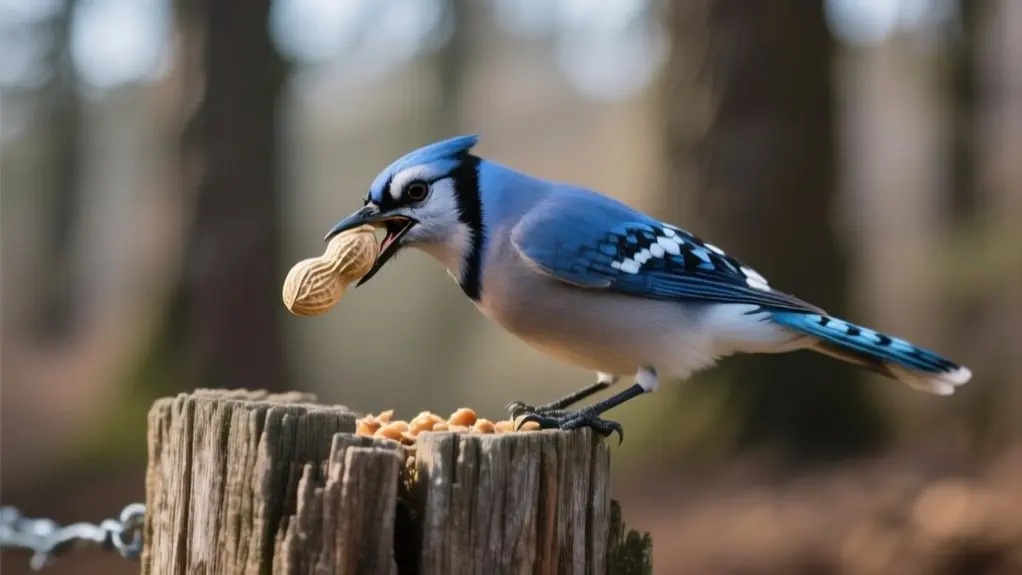
You can safely offer whole peanuts to larger birds like jays and woodpeckers. They easily crack the shells and benefit from the protein and fat-rich treat. Just make sure the peanuts are raw, unsalted, and free of additives to avoid any health risks.
Smaller birds usually prefer shelled peanuts or smaller pieces because they’re easier to eat. Proper storage is important too, and you’ll want to avoid flavored or roasted peanuts to keep your feeders safe and appealing.
Keep exploring to discover how to attract more birds and manage squirrels effectively. There’s a lot to learn about creating the perfect bird-friendly environment!
Can Birds Safely Eat Whole Peanuts?
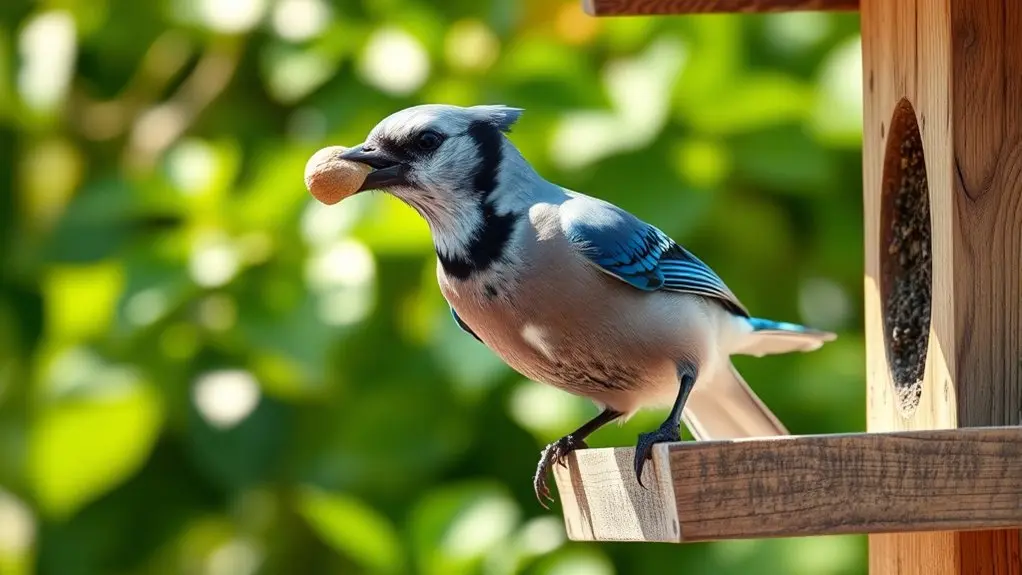
Although some might worry about feeding birds whole peanuts, many larger species like jays and woodpeckers can safely eat them in the shell. When you provide whole peanuts, you support natural foraging behavior as these birds carry and crack the shells themselves.
This aligns well with their bird dietary needs, offering a rich source of protein and fat essential for energy.
It’s important to guarantee the peanuts are unseasoned, unsalted, and free from additives to avoid health risks. From peanut harvesting to feeding, selecting quality, safe peanuts enhances their diet without harm.
Properly managed, whole peanuts serve as an enriching and nutritious food source that complements the natural habits and nutritional requirements of many larger bird species.
Which Bird Species Prefer Whole Peanuts?
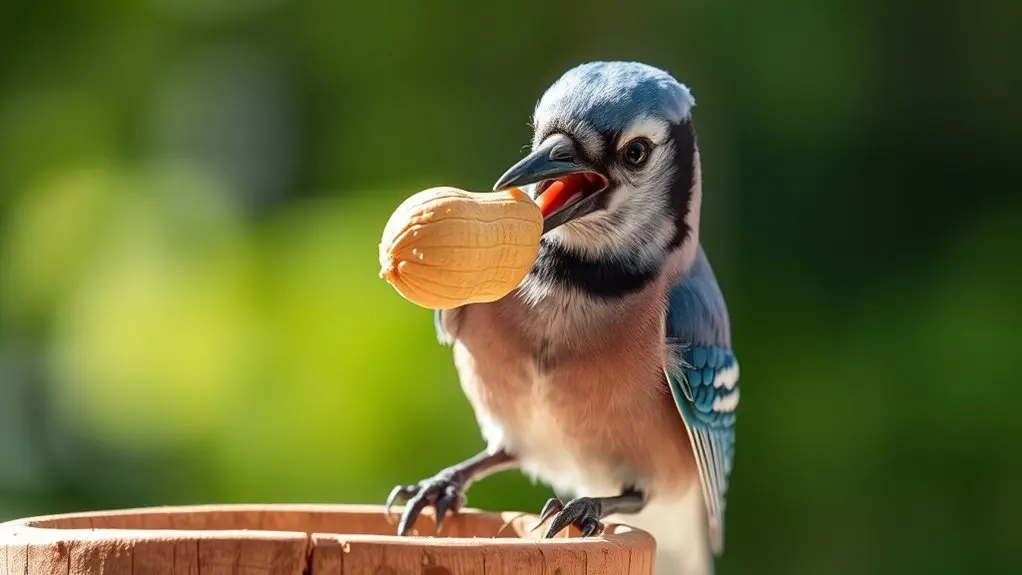
You’ll notice that larger birds like blue jays, crows, and red-bellied woodpeckers often prefer whole peanuts. That’s because they can easily crack or carry them.
On the other hand, smaller birds such as chickadees and titmice usually avoid whole peanuts since they find them harder to handle.
Larger Birds Preference
When you observe larger bird species like blue jays, red-bellied woodpeckers, crows, and grackles, you’ll notice they actively prefer whole peanuts in the shell. Their strong beaks allow them to crack open shells efficiently, accessing the peanut’s rich nutritional benefits.
This preference aligns with good bird feeding etiquette, as providing whole peanuts caters to their natural behaviors and dietary needs.
Blue jays often crack shells on tree branches, while red-bellied woodpeckers may carry peanuts to a favored spot to open them.
Crows and grackles also take advantage of their size and strength to enjoy whole peanuts.
Offering whole peanuts to these larger species supports their health and stimulates natural foraging behavior, enhancing their feeding experience.
Smaller Birds Challenges
How do smaller birds handle whole peanuts compared to their larger counterparts? Many smaller birds face challenges because their beaks aren’t adapted for cracking tough shells.
For example, chickadees and titmice prefer peanut hearts or chips since those are easier for them to manage. Small-billed species often can’t crack whole peanuts because their beaks aren’t strong or big enough. Tiny birds like goldcrests and warblers usually avoid whole peanuts altogether.
Some small birds carry whole peanuts away to break them open later. This helps with seed dispersal, but they generally prefer smaller pieces.
If you only offer whole peanuts, smaller birds might miss out because they struggle to get to the nut inside. Knowing these challenges means you can provide food that works well for a variety of bird species.
Should You Offer Shelled or Unshelled Peanuts?
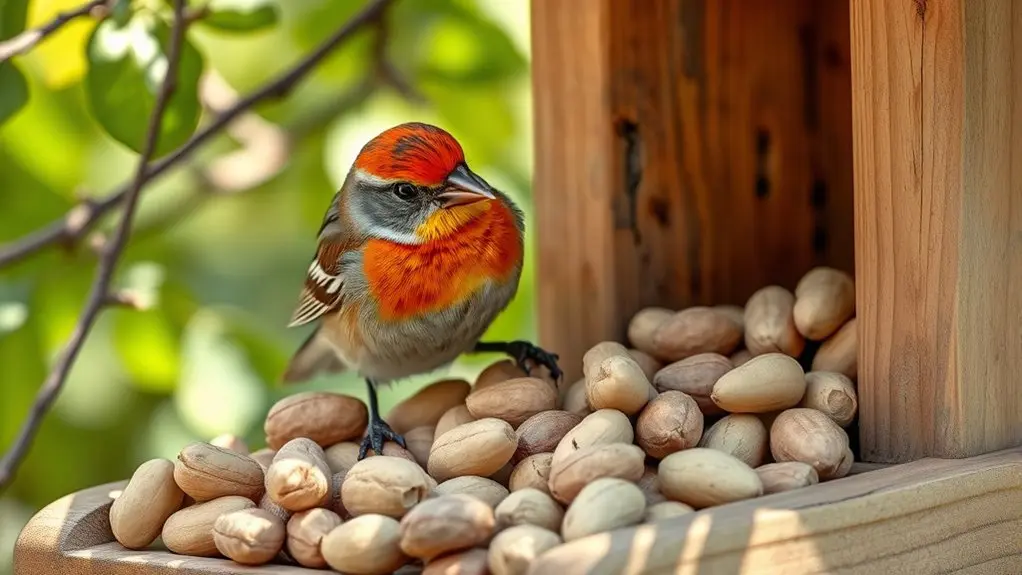
Although both shelled and unshelled peanuts provide safe nutrition for birds, choosing between them depends on the species you want to attract and their feeding habits.
Shelled peanuts simplify bird feeding etiquette by eliminating the need for peanut shell removal, making them ideal for smaller birds that struggle with cracking shells. They also reduce mess and waste around feeders.
On the other hand, unshelled peanuts suit larger, stronger birds like jays and woodpeckers. They offer enrichment through the natural shell-cracking process.
When deciding, consider your local bird species and their capabilities.
Providing the appropriate form of peanuts guarantees efficient feeding, supports natural behaviors, and maintains cleanliness.
Are Raw Whole Peanuts Safe for Birds and Squirrels?
You can safely offer raw whole peanuts to both birds and squirrels without worrying about health risks. Experts and research agree that these peanuts don’t have any harmful additives and aren’t dangerous.
Knowing how they affect squirrels can help you create a balanced and safe feeding experience for them.
Raw Peanuts Safety
When you offer raw whole peanuts to birds and squirrels, you can be confident they’re generally safe to consume. Research shows no health risks when fed in moderation, and bird feeding programs report no adverse effects.
To guarantee safety, consider these key points:
- Store peanuts in dry, cool conditions to prevent mold.
- Provide peanuts whole to encourage natural peanut shelling, which benefits birds’ feeding behavior.
- Avoid overfeeding to maintain a balanced diet, especially during bird migration seasons.
- Inspect peanuts regularly for spoilage or contamination.
Raw peanuts lack harmful toxins or additives, making them a reliable food source.
Effects On Squirrels
How do raw whole peanuts affect squirrels in your backyard? Raw whole peanuts are safe and natural for squirrels, fitting well within their typical diet. During squirrel foraging, these nuts serve as an attractive, nutritious option.
Squirrels demonstrate impressive peanut cracking skills, easily breaking open the shells to access the kernels inside. This behavior aligns with their natural foraging instincts and causes no harm to them.
Scientific studies show no evidence that feeding raw whole peanuts negatively impacts squirrel health or populations.
Offering peanuts in moderation can be a beneficial treat without known risks. So, if you’re considering feeding squirrels alongside birds, raw whole peanuts are a safe and suitable choice that supports their natural feeding habits effectively.
Why Avoid Salted, Roasted, or Flavored Peanuts for Birds
Although salted, roasted, or flavored peanuts might seem like a tempting treat for birds, they often contain added salts, oils, and artificial seasonings that can harm avian health. You should avoid offering these peanuts because added salts can cause dehydration and kidney damage since birds can’t metabolize high salt levels.
Oils from roasting introduce preservatives unsuitable for birds. Plus, artificial flavorings and sugars pose peanut flavoring concerns, potentially leading to toxicity. And just so you know, removing the peanut shell doesn’t get rid of these harmful additives, so the shell’s presence isn’t really a safety indicator.
For your birds’ wellbeing, stick to raw, unsalted, unflavored peanuts without shells. This way, you keep their diet safe and natural. It helps prevent health risks and supports their nutritional needs effectively.
Best Feeders for Offering Whole Peanuts to Birds
Because whole peanuts are larger and heavier than typical birdseed, choosing the right feeder is essential to keep them secure and accessible. Specialized peanut feeders with wider mesh or holes work best, preventing peanuts from falling out while allowing birds to engage in natural peanut shelling.
Choosing feeders with wider mesh ensures whole peanuts stay secure and accessible for natural bird feeding.
Tray or platform feeders provide easy access for larger birds and encourage bird foraging by offering a stable surface.
Log-style feeders with compartments filled with whole peanuts mimic natural foraging conditions, promoting enrichment.
To protect your peanuts from squirrels, opt for squirrel-proof feeders featuring baffles or enclosed designs.
Position hanging or pole-mounted feeders in sheltered spots to guarantee safe, convenient feeding.
Picking feeders that accommodate whole peanuts really helps enhance bird foraging behavior and supports their dietary needs effectively. It’s all about making feeding time easy and enjoyable for the birds!
How to Feed Shelled and Unshelled Peanuts Effectively
Selecting the right feeder for whole peanuts is just one part of attracting a variety of birds to your yard. To feed shelled and unshelled peanuts effectively, consider these steps:
Offer shelled peanuts for easy access. This minimizes the need for birds to remove peanut shells and is great for smaller birds. They can enjoy the peanuts without much effort.
Provide unshelled peanuts in feeders with wider mesh. This will attract larger birds that can crack the shells open. It’s a simple way to cater to different bird sizes and preferences.
Dispense small quantities at a time. This prevents spoilage and shows good bird feeding etiquette. Plus, it ensures the food stays fresh and safe for the birds.
Use separate feeders or compartments for shelled and unshelled peanuts. This helps cater to different species’ preferences. You’ll attract a wider variety of birds to your yard this way.
Tips to Keep Squirrels Away From Your Peanut Feeders
When you want to keep squirrels from raiding your peanut feeders, implementing effective deterrents is vital. Start with squirrel deterrent strategies like using squirrel-proof feeders equipped with baffles and narrow openings to limit their access.
Bird feeder placement plays a key role. Mount feeders on metal poles or use weight-activated mechanisms that close when squirrels land.
Proper feeder placement, like mounting on metal poles or using weight-activated closures, effectively deters squirrels.
You can also offer alternative food sources by setting up squirrel-specific feeders filled with peanuts, redirecting their attention.
Additionally, spreading a ring of hot pepper-coated peanuts around your feeder can discourage squirrels without affecting birds.
Don’t forget to regularly clean up spilled peanuts and shells, as leftover food attracts squirrels.
Combining these methods will help maintain a squirrel-free feeding area, ensuring birds enjoy the peanuts safely.
How to Spot Peanut Spoilage and Store Peanuts Safely
You’ll want to store peanuts in a cool, dry place using airtight containers to keep mold and rancidity at bay.
It’s a good idea to check them regularly for any signs of spoilage, like discoloration, a musty smell, or fuzzy coatings.
If you notice any peanuts that look shriveled or show these warning signs, it’s best to toss them out.
That way, you’ll keep your feathered visitors happy and safe!
Signs Of Peanut Spoilage
Although peanuts are a nutritious treat for birds, you need to inspect them carefully to avoid offering spoiled ones. When checking peanuts, especially after shell cracking, look for clear signs of spoilage to protect your birds’ health.
Here’s what to watch for:
- Mold: Look for fuzzy or discolored surfaces. This is a common sign after peanut planting and improper storage.
- Smell: Spoiled peanuts develop a rancid, unpleasant odor.
- Color: Dark spots or unusual discoloration signal spoilage.
- Texture: Peanuts that feel soft, shriveled, or sticky are unsafe.
Keep an eye out for these signs so your birds stay happy and healthy!
Proper Peanut Storage
How can you guarantee the peanuts you offer your birds stay fresh and safe? Proper peanut storage is essential to prevent spoilage and health risks.
Store peanuts in a cool, dry place, away from heat and humidity. These conditions speed up rancidity and mold growth.
Use airtight containers or resealable bags to protect against moisture and pests.
Regularly check your peanuts for mold, discoloration, or a sour smell. If you see any of these signs, discard the peanuts right away.
Since peanut allergies can affect some birds and humans, making sure peanuts are uncontaminated is really important.
Avoid storing peanuts in warm environments for long periods because it speeds up spoilage.
Preventing Mold And Rancidity
Keeping peanuts fresh starts with proper storage, but preventing mold and rancidity requires careful monitoring as well. To guarantee safety for birds, here’s how you can spot spoilage and store peanuts effectively:
- Store peanuts in airtight containers in a cool, dry place to avoid moisture exposure.
- Regularly inspect peanuts for mold, characterized by a fuzzy appearance or musty smell.
- Note any rancid signs such as oily texture or sour odor; discard immediately.
- Understand that peanut shelling and nutrient analysis reveal spoilage risks that affect bird health.
Fun Ways to Watch and Engage Birds Eating Peanuts
When you hide peanuts around your yard, you encourage birds to forage naturally. This increases their activity and offers a more dynamic viewing experience. It’s pretty cool because this mirrors their natural caching behavior tied to bird migration patterns and nesting habits.
Try placing peanuts in different feeders, especially transparent or mesh types. This way, you get clear views of various species as they crack shells or carry whole peanuts away. It’s a great chance to see their distinct feeding techniques up close.
Place peanuts in clear or mesh feeders for up-close views of birds’ unique feeding habits.
Keep track of which peanuts attract the most visitors. Doing this helps you understand local bird preferences better. Plus, engaging in these activities not only entertains but also deepens your awareness of how birds adapt their foraging during migration and nesting seasons.
All in all, this makes your birdwatching experience richer and supports their natural behaviors at the same time.
Frequently Asked Questions
Can Peanuts Cause Allergies in Birds?
You don’t need to worry about peanut allergies in birds, as their immune systems are different from humans. For bird safety, peanuts are generally safe.
There’s no evidence showing they cause allergic reactions in avian species. So, you can feel pretty comfortable offering peanuts to your feathered friends. Just make sure to give them in moderation!
How Do Peanuts Compare Nutritionally to Other Bird Foods?
While seeds offer variety, peanuts pack higher nutritional value with protein and healthy fats. You’ll boost birds’ energy and feather health, making peanuts a valuable addition to their food variety, especially during colder months.
They’re a great way to help birds stay strong and warm when the weather gets chilly. Plus, many birds really love the taste of peanuts, so it’s a win-win! Adding peanuts can make your bird feeding more nutritious and enjoyable for them.
Are Peanut Shells Biodegradable in Bird Feeders?
Yes, peanut shell decomposition occurs naturally in bird feeders, but you should monitor accumulation to prevent mold.
Be cautious about bird shell ingestion risks, as sharp or large shell fragments might cause harm or digestive issues for birds.
It’s a good idea to keep an eye on the shells and clean the feeder regularly. This way, you can keep your feathered friends safe and healthy.
Can Feeding Peanuts Affect Bird Migration Patterns?
Think of migration triggers as nature’s clock. You won’t change its time just by offering peanuts. Seasonal feeding helps support birds’ energy needs but doesn’t mess with their migration patterns.
You can still help birds thrive without disrupting their natural journeys. It’s all about giving them a little boost while respecting their instincts. So, keep feeding those peanuts if you want, but know it won’t change where or when they fly.
Do Birds Prefer Peanuts Year-Round or Seasonally?
You’ll notice birds show seasonal preferences for peanuts, favoring them more in winter for energy but maintaining year-round habits of eating peanuts. Their consumption adjusts with natural food availability, reflecting both seasonal and consistent dietary needs.
Birds really ramp up their peanut intake when food gets scarce in the colder months. But they don’t stop eating peanuts once spring and summer roll around. They just balance it out with other foods that are easier to find.
Conclusion
You might worry whole peanuts could harm birds, but when offered properly, unsalted, raw, and fresh, they’re a nutritious treat many species love. Just avoid roasted or flavored varieties and watch for spoilage to keep birds safe.
Feeding whole peanuts not only supports their diet but also invites delightful birdwatching moments. With simple storage and feeder tips, you can confidently enjoy sharing peanuts without attracting unwanted pests or risking bird health.