
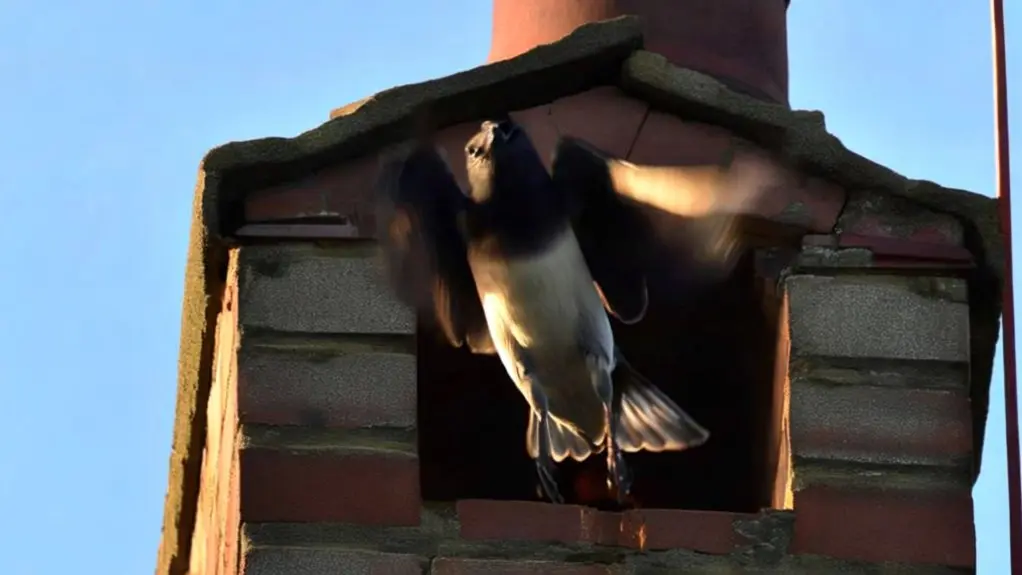
You can’t count on birds flying out of a chimney by themselves. Confined spaces, glare, and obstacles often confuse and trap them inside. Birds may panic, causing damage or blockages that threaten safety.
Chimney design and blockages heavily influence their chances of escape. To understand how birds behave when stuck, the risks involved, and how you can safely assist or prevent these situations, it helps to explore proper handling and prevention strategies.
Why Do Birds Enter Chimneys?
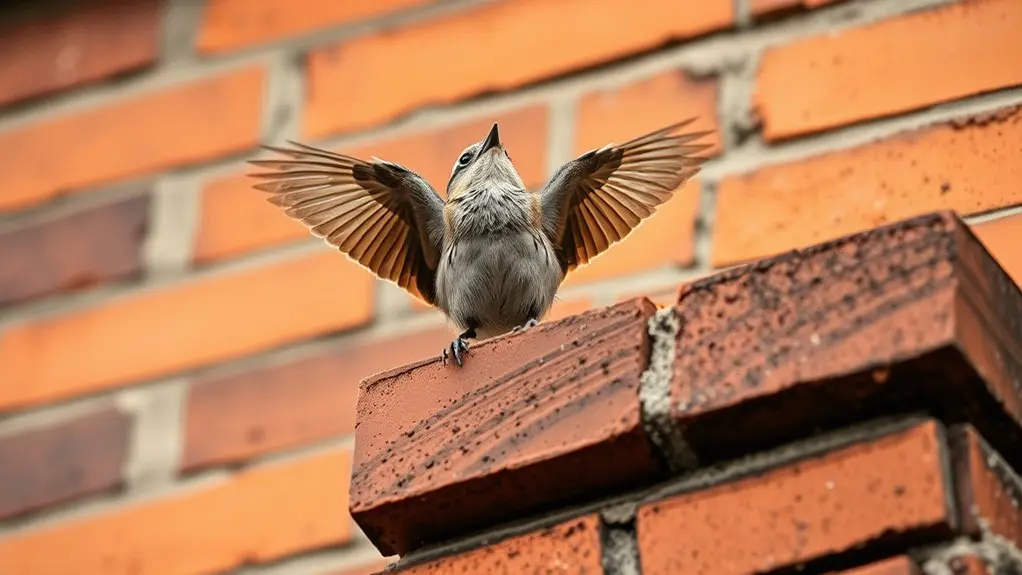
Why do birds choose chimneys as nesting or resting sites? During bird migration, many species look for safe spots to rest or nest. Chimneys often provide that kind of shelter.
Birds like chimney swifts, starlings, and swallows are drawn to unused or unprotected chimneys because these spots mimic natural cavities. That fits right in with their nesting habits.
Plus, being up high helps keep them safe from ground predators and other disturbances.
Sometimes, birds enter chimneys looking for refuge or food, mistaking the opening for a safe place. But things like sun glare and heat can confuse them, causing accidental falls inside.
Knowing this helps us see why chimneys accidentally become attractive nesting or resting spots during important times like migration and breeding seasons.
How Do Birds Behave When Trapped in Chimneys?
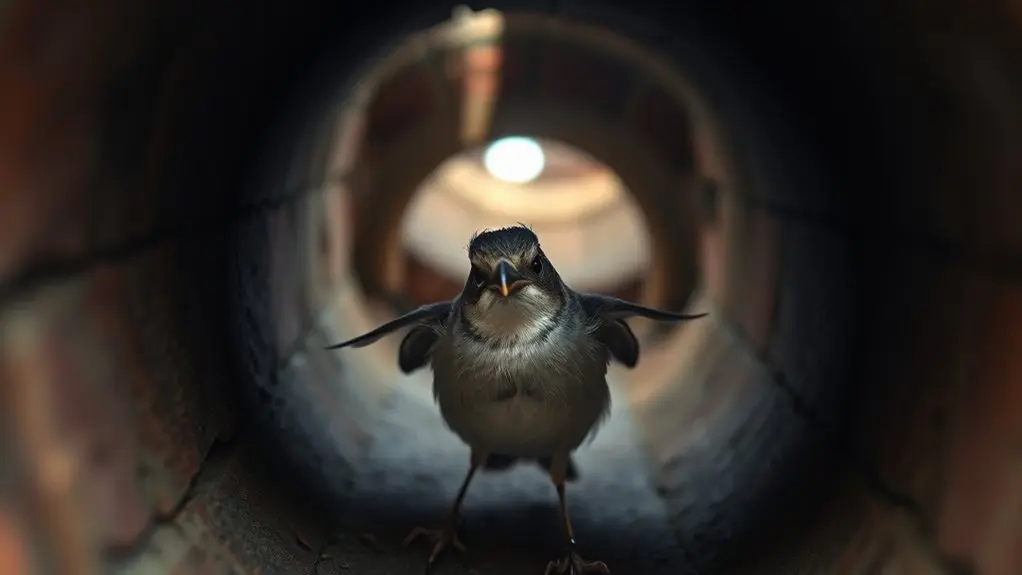
When birds become trapped inside chimneys, they usually act frantic. They flutter around and keep trying to fly upward toward any opening they can see. This instinct to fly up is similar to how they move during migration, using vertical flight to navigate.
Inside the narrow space of a chimney, birds often panic. They might fly in erratic circles or bump into the walls, especially if something blocks their way. When it’s nesting season, trapped birds can get even more agitated because they’re eager to protect or reach their nests.
Larger birds like pigeons can sometimes be helped out gently. But in general, trapped birds show a lot of stress and keep trying to escape. How well they survive depends a lot on the chimney’s design and whether there are blockages or dampers restricting their movement.
Can Birds Escape Chimneys on Their Own?
Birds trapped in chimneys often exhibit frantic behavior as they seek an exit, but their ability to escape largely depends on the chimney’s design and condition.
Bird species with strong flight abilities and specific nesting habits near chimneys tend to have higher success escaping when the damper or chimney cap is open.
Many species instinctively fly upward toward daylight, making it easier for them to get out if the path is clear.
However, smaller or weaker birds, especially those nesting deeper inside, may struggle without help.
The damper’s position and chimney cap functionality play a big role in escape chances.
If these parts are properly maintained and open, they significantly increase the likelihood that trapped birds can exit on their own.
This aligns well with their natural behaviors and nesting habits.
What Are the Signs That a Bird Is Stuck in Your Chimney?
If you notice unusual sounds like scratching, chirping, or flapping coming from your chimney, especially during windy conditions, it’s a clear indicator that a bird might be trapped inside. During bird migration, many species seek shelter, and some may attempt nest building within chimneys.
Visible debris such as twigs, leaves, or nesting materials inside the fireplace often signals entrapment. You might also detect feathers or bird droppings near the chimney opening, indicating prolonged presence.
Twigs, leaves, feathers, or droppings near your chimney often indicate a trapped bird inside.
A sudden absence of typical bird calls or ambient sounds around the chimney can suggest a bird is stuck and unable to exit. Additionally, an accumulation of flies or a foul odor could indicate the bird has been trapped for an extended period.
These signs require prompt attention to prevent harm to the bird. So, if you notice any of these clues, it’s a good idea to check your chimney and take action soon.
What Happens When Birds Can’t Get Out of Your Chimney?
When birds get stuck in your chimney and can’t find a way out, you’ll probably notice some clear signs. They might be moving around frantically or making a lot of noise inside the chimney. It’s not just upsetting for the birds—it can actually cause some serious problems for your home too.
For one, these trapped birds can create blockages. And when that happens, dangerous gases can build up, which is definitely something you don’t want.
Plus, there’s the risk of damage to the structure of your chimney. So, it’s really important to act quickly.
The best thing to do is to use safe rescue and removal methods. That way, you help keep the birds safe and protect your home from any further harm.
Signs Of Bird Distress
Although chimneys provide a seemingly safe refuge, trapped birds quickly show signs of severe distress through frantic flapping, persistent chirping, and repeated pounding against the interior walls.
You’ll notice altered feather patterns from excessive preening or damage during these escape attempts.
During nesting behaviors, birds emit loud, persistent calls, especially in breeding seasons, signaling distress.
You might also observe nesting materials or debris falling into the fireplace, which means birds are trying to build or maintain nests despite being trapped.
Trapped birds often try to fly upward toward the chimney cap or damper but fail because of disorientation or blockages.
These behaviors, along with visible signs like debris and changes in feather condition, clearly show when birds can’t get out of your chimney.
Risks Of Trapped Birds
Birds trapped inside chimneys face severe risks beyond visible distress signals. When these birds, especially during bird migration or nest building seasons, become stuck, their survival chances diminish rapidly. You should understand these risks:
- Exhaustion and Injury: Birds repeatedly try to fly upward but may injure themselves or even perish if the damper is closed or the exit is blocked.
- Structural and Health Hazards: Blockages caused by trapped birds prevent smoke from escaping. This risks indoor air quality and fire safety.
- Decomposition and Infestation: Dead birds lead to foul odors, attract pests, and introduce bacteria and parasites. This makes chimney maintenance more complicated.
Recognizing these dangers really highlights the importance of preventing bird entrapment during critical periods like migration and nest building. It’s something to keep in mind if you want to protect both your home and the birds.
Rescue And Removal Methods
If trapped inside a chimney, you’ll find that the confined space and lack of clear escape routes make it difficult for birds to exit on their own. Different bird species vary in size and behavior, which affects their ability to navigate chimney construction features like narrow flues or obstructed passages.
Rescue and removal methods depend on chimney design and bird species. Professionals often use cameras to locate trapped birds, then employ tools to carefully dislodge or guide them downward.
Humane extraction techniques minimize distress, dehydration, and injury risks. When escape is impossible, prompt intervention is critical to prevent exhaustion or starvation.
Understanding chimney construction and bird species behavior allows for targeted, effective rescue methods that preserve the health and safety of both birds and homeowners. It really helps to know what you’re dealing with so that the rescue goes smoothly for everyone involved.
How Can You Safely Help Birds Exit a Chimney?
When you need to assist a bird trapped in a chimney, start by opening the damper and creating an external escape route, like an open window or door. This helps encourage the bird to leave on its own. Proper chimney maintenance is key to preventing bird nesting that can cause entrapment.
To safely help birds exit a chimney, follow these steps:
- Use a camera or mirror to locate the bird precisely inside the chimney.
- Try to keep noise and sudden movements to a minimum. This reduces the bird’s stress and encourages it to fly naturally.
- If you need to remove the bird, gently cover it with a towel and carry it outside carefully to avoid injury.
Afterwards, putting on chimney caps helps prevent future nesting and ensures safe exit paths for birds.
Why You Shouldn’T Try to Remove Birds From Chimneys Yourself
You really shouldn’t try to remove birds from chimneys yourself. Not only can you accidentally hurt the birds, but you might also injure yourself or cause damage to the chimney.
Plus, wild birds are protected by laws like the Migratory Bird Treaty Act. This means removing them without proper authorization is actually illegal.
That’s why it’s much better to hire professionals. They’ve the right equipment and know-how to safely and humanely get the birds out, while keeping you and the birds safe and avoiding any legal trouble.
Risks Of DIY Removal
Although removing birds from chimneys yourself may seem straightforward, it often leads to unintended harm for both the animals and your property. During bird nesting seasons, improper DIY removal can actually make things worse by pushing birds deeper into the flue or causing injury.
Without a thorough chimney inspection, you might miss critical structural damage or nest debris, which can increase fire risks. Here are some things to consider:
- You might accidentally trap or injure birds, which only adds to their distress or can even cause death.
- Using the wrong tools can damage the chimney lining or make blockages worse.
- Handling wild birds without the right know-how can lead to legal issues and mightn’t solve the problem.
It’s really best to rely on professionals who’ve the specialized equipment and knowledge to ensure safe, humane removal while protecting your chimney’s integrity.
Legal Protection For Birds
Improper attempts to remove birds from chimneys not only risk physical harm to the animals and structural damage but also expose you to significant legal consequences. Birds are protected under laws like the Migratory Bird Treaty Act, which prohibits harming, disturbing, or removing them without authorization.
This protection covers critical periods such as nest building and bird migration seasons, when birds are especially vulnerable.
Disturbing nesting birds from March to October can lead to legal penalties, including fines and liabilities for property owners. Since bird migration and nest building are essential for species survival, interfering without expertise violates federal regulations.
You really shouldn’t try to remove birds yourself.
Improper handling can injure birds and break wildlife laws. Always respect legal protections to avoid penalties and help safeguard avian populations during these sensitive times. It’s better to be safe and let the experts handle it.
Benefits Of Professionals
When dealing with birds trapped in chimneys, hiring professional chimney services guarantees the safe and humane removal of the animals. They use specialized tools and techniques designed to minimize harm. You shouldn’t attempt DIY removal, as improper handling can injure the bird or push it deeper.
Professionals conduct thorough chimney inspections to detect bird nesting, trapped birds, and hazards like debris or dead animals. They also comply with legal protections such as the Migratory Bird Treaty Act. This ensures everything is handled properly and legally.
Here’s why you should rely on experts:
- They use precise, humane removal methods that minimize bird injury and chimney damage.
- They identify and resolve nesting-related blockages, which reduces fire and health risks.
- They ensure legal compliance and provide all-encompassing cleanup, safeguarding your home and wildlife.
It really pays off to let the pros handle it!
How Can You Prevent Birds From Entering Your Chimney?
Because birds can easily enter chimneys through open or damaged areas, you should install a chimney cap with a bird guard to block their access while allowing smoke and gases to escape safely. Regular chimney cleaning and inspections help detect gaps or damage, preventing bird nesting.
Sealing cracks around the chimney structure further reduces entry points. Visual deterrents like predator decoys also discourage birds.
| Prevention Method | Purpose | Timing |
|---|---|---|
| Chimney Cap with Bird Guard | Blocks birds, allows ventilation | Install before nesting season (Mar-Oct) |
| Regular Inspections | Detects damage and gaps | Annual or biannual |
| Sealing Cracks | Eliminates access points | Anytime |
| Visual Deterrents | Discourages birds from landing | Use year-round |
What Should You Do If You Find a Dead Bird in Your Chimney?
If you discover a dead bird in your chimney, you should avoid removing it yourself to minimize health risks and prevent structural damage. Dead birds can carry pathogens and attract pests, which may worsen air quality and cause blockages.
Bird migration and nest building often lead birds into chimneys, making prompt action vital.
Here’s what you should do: wear protective gloves and a mask if you must inspect the area to reduce exposure to harmful microbes. Then, contact a professional chimney sweep or wildlife removal service trained in safe and humane carcass extraction.
Also, make sure to schedule regular chimney inspections and install a chimney cap to prevent future bird intrusion and fatalities.
Following these steps guarantees safety, maintains chimney integrity, and respects avian life cycles.
Frequently Asked Questions
What Types of Birds Are Most Likely to Enter Chimneys?
You’ll find chimney swifts, starlings, and swallows most likely entering chimneys because of their nesting behaviors. These birds see chimneys as a cozy spot to raise their young. It’s pretty common for them to use these spaces during certain seasons.
Small birds like sparrows often get trapped inside, which can create chimney hazards. It’s something you should watch out for carefully. Keeping an eye on your chimney helps protect both the birds and your home.
Do Birds Cause Damage to Chimney Structures?
You should know that bird nesting causes up to 30% of chimney blockages, leading to moisture buildup and structural damage.
This blockage weakens masonry, corrodes metal, and compromises your chimney’s safety and durability over time. It’s something many people overlook but can cause serious problems down the line.
Can Bird Droppings in Chimneys Affect Indoor Air Quality?
Yes, bird droppings in chimneys degrade indoor air quality by releasing bacteria and fungi, causing air pollution.
You’ll risk compromised bird health and respiratory issues due to airborne contaminants and mold growth from decomposing waste.
It’s definitely something to watch out for to keep your home air clean and safe.
How Long Can Birds Survive Trapped Inside a Chimney?
You witness bird migration and observe nest building. Yet, trapped birds can survive days to weeks inside chimneys, depending on factors like oxygen levels, size, and debris.
Larger birds tend to endure longer. Smaller ones perish quickly without air, water, or food. They face exhaustion and suffocation.
Are There Humane Deterrents to Keep Birds Away From Chimneys?
Yes, you can use humane deterrents like bird-proof chimney caps and predator decoys. These tools help keep birds from nesting without harming them.
It’s smart to align these deterrents with bird migration patterns and chimney cleaning routines. That way, you minimize nesting risks while keeping things safe and ethical.
This approach protects wildlife and ensures your chimney works properly. It’s a win-win for you and the birds!
Conclusion
Birds entering chimneys are like lost travelers in a dark maze, often unable to find their way out. While some may escape on their own, many get trapped, leading to distress or injury.
You should never try to remove them yourself. Instead, it’s best to seek professional help to make sure the rescue is safe for both you and the bird.
Preventive measures, like chimney caps, are really important. By understanding these behaviors and acting responsibly, you protect both the birds and your home’s safety.