
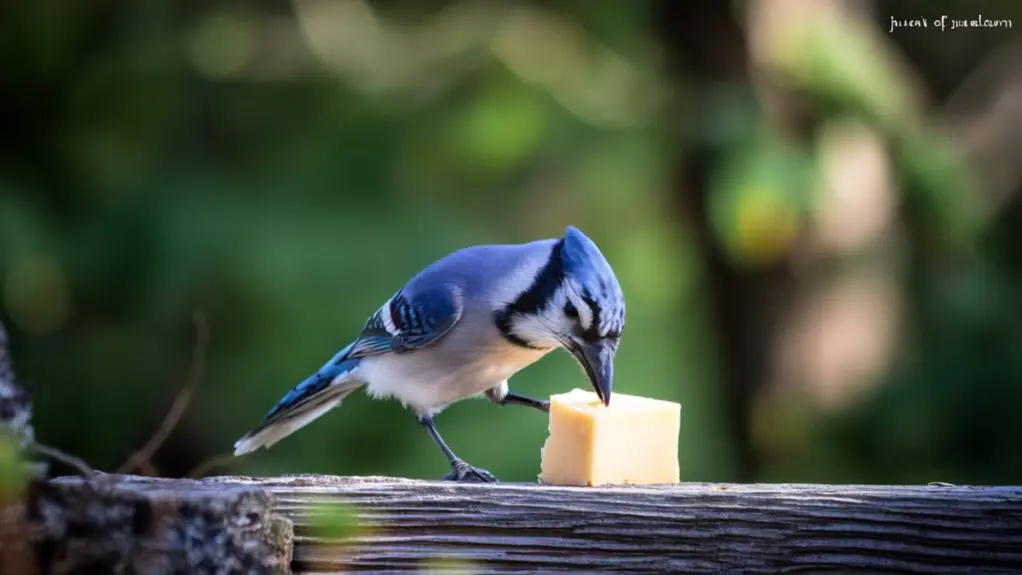
You can give your bird small amounts of aged cheeses like sharp cheddar or Parmesan. These are lower in lactose and safer for your bird to digest.
Avoid soft cheeses like ricotta or cream cheese because birds don’t have the enzyme to break down lactose properly. This can lead to digestive upset.
Cheese should only be an occasional treat, not a regular part of their diet. Keep an eye out for symptoms like bloating or diarrhea.
Knowing these details helps you take better care of your feathered friend and offer healthier treats.
Which Cheeses Are Safe for Birds
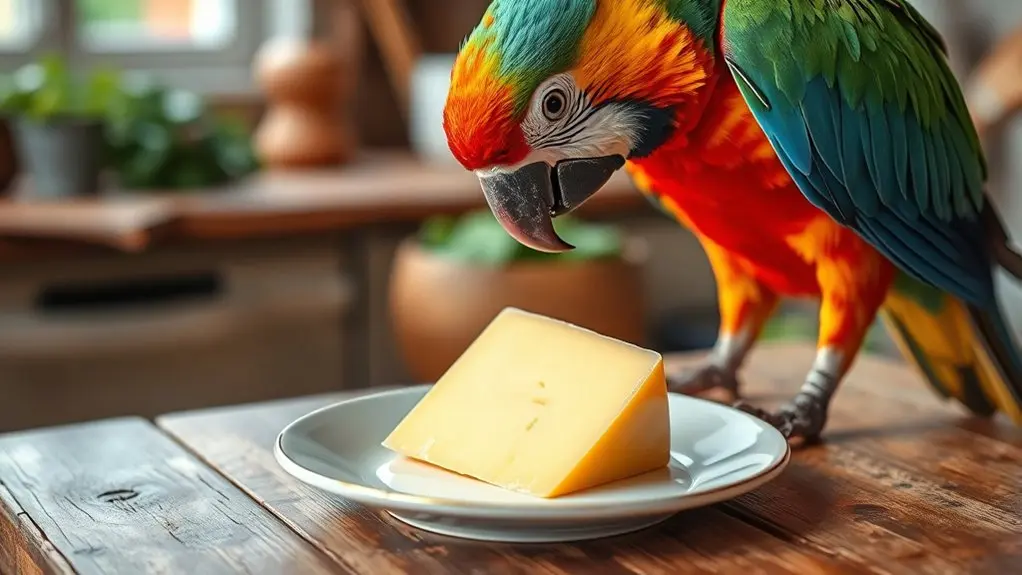
Although many cheeses vary in lactose content, aged and hard varieties like sharp cheddar or Parmesan are generally safer for birds when given in small amounts. These cheese varieties contain lower lactose levels and reduced moisture, making them more compatible with bird nutrition.
In contrast, soft or fresh cheeses such as ricotta or cream cheese have higher lactose content and should be avoided or offered very sparingly to prevent digestive issues.
When selecting cheese for your bird, always check ingredient labels for additives or preservatives that could be harmful.
Safe Cheese Portions for Birds
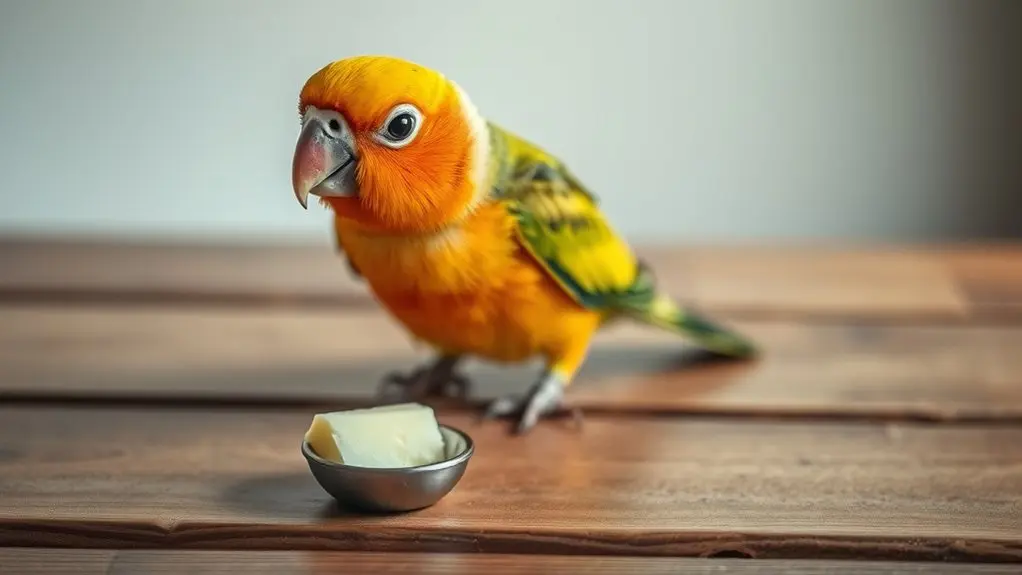
When you offer cheese to your bird, keeping the portion size very small is essential to prevent digestive issues and nutrient imbalances. A tiny piece, about the size of a pea or a thin sliver, is ideal.
Aged cheeses like sharp cheddar are preferable due to their reduced lactose, while soft cheeses should be given sparingly.
Cheese should remain an occasional treat, respecting your bird’s dietary restrictions.
Improper cheese storage can increase spoilage risk, so always store cheese properly to maintain freshness and safety.
After feeding, monitor your bird closely for any adverse reactions.
If you notice any symptoms or have concerns, consult a veterinarian promptly to make sure your bird stays healthy.
Why Birds Can’t Digest Lactose Well
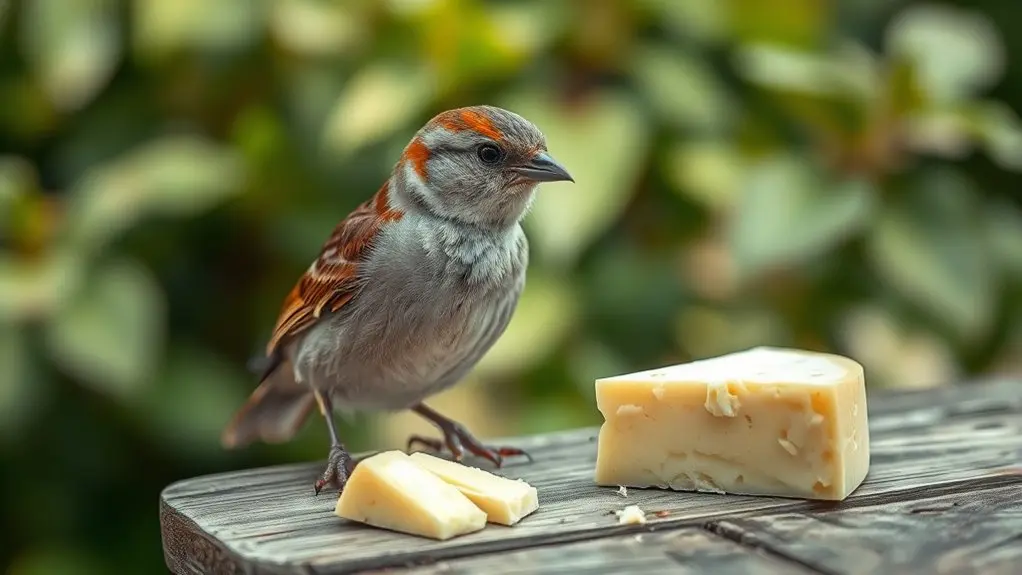
Because birds lack the enzyme lactase, they can’t break down lactose found in dairy products. This deficiency means lactose passes undigested through their digestive system, causing lactose intolerance.
Without enough digestive enzymes to process lactose, birds experience gastrointestinal upset, including diarrhea, bloating, and discomfort.
Even small amounts of dairy products can provoke these symptoms, as birds are naturally lactose intolerant. This condition is widespread among many bird species, making dairy products generally unsuitable for their consumption.
Understanding this biological limitation helps you avoid feeding birds cheese or other dairy items that contain lactose. That way, you can prevent digestive distress and keep them healthy.
Cheese’s Role in a Balanced Bird Diet
While cheese isn’t a natural component of most birds’ diets, you can offer it occasionally as a small treat to add variety. Cheese’s role in a balanced bird diet remains limited because of its high fat content and lactose, which many birds struggle to digest.
To keep things balanced, it’s best to focus on species-appropriate foods like seeds, fruits, and vegetables that meet essential dietary needs.
If you do decide to include cheese, go for aged varieties such as sharp cheddar since they’ve less lactose. Just be sure to give only small portions to avoid upsetting your bird’s digestion.
Cheese should never replace the core parts of your bird’s diet. Overfeeding it can throw off their nutrient intake and cause health problems.
Always think about your bird’s unique dietary needs and restrictions before adding new foods, including cheese, so you can keep them healthy and happy.
How to Spot If Cheese Upsets Your Bird
You should keep an eye on your bird after it eats cheese to see if there are any signs of digestive trouble, like soft droppings, vomiting, or bloating.
Also, watch for changes in behavior—things like your bird becoming lethargic, puffing up its feathers, or not wanting to eat as much can mean it’s feeling uncomfortable.
If you spot any of these symptoms, it’s a good idea to check in with an avian veterinarian right away.
Signs Of Digestive Upset
If your bird experiences digestive upset after eating cheese, you may notice symptoms such as vomiting, diarrhea, or lethargy. Understanding bird dietary restrictions is vital, as many birds can’t properly digest dairy, leading to cheese allergy symptoms.
To spot if cheese upsets your bird, observe these signs closely:
- Changes in droppings. Look for increased looseness or abnormal color indicating gastrointestinal distress.
- Decreased appetite or reluctance to eat, which can signal stomach discomfort.
- Physical signs like bloating or abdominal swelling, suggesting digestive issues.
If these symptoms appear shortly after cheese consumption, it’s important to seek veterinary attention promptly to prevent serious health complications.
Monitoring these signs helps guarantee your bird stays healthy and avoids adverse reactions linked to improper foods.
Keep an eye on your bird after feeding new foods, and don’t hesitate to ask a vet if something seems off. It’s always better to be safe when it comes to your feathered friend’s health!
Behavioral Changes To Watch
Because behavioral changes often come before visible physical symptoms, it’s important to keep an eye on your bird’s activity and mood after it eats cheese. You might notice shifts in behavior, like your bird becoming more irritable or aggressive, which can suggest digestive discomfort from dairy.
Look out for signs such as feather fluffing, tail bobbing, or unusual vocalizations. These often mean your bird is feeling distressed or has an upset stomach.
If your bird seems less active, lethargic, or refuses to eat other foods, this could also point to gastrointestinal issues linked to cheese. Excessive restlessness or weird behavior should prompt a quick trip to the vet to avoid complications.
Healthy Alternatives to Cheese Treats
Although cheese can be a tempting treat for birds, it often contains lactose and fats that may not suit their digestive systems. Considering bird dietary restrictions and cheese flavor preferences, it’s better to offer healthier alternatives that provide essential nutrients without adverse effects. You can replace cheese treats with options that align with their natural dietary needs.
Cheese may appeal to birds, but lactose and fats can disrupt digestion—choose healthier, natural alternatives instead.
Fresh vegetables like bell peppers, leafy greens, and carrots supply vitamins and fiber without added fats or lactose. Fruits such as berries, apple slices (seedless), and melons offer sweet, nutritious treats safer than cheese.
Cooked eggs or small pieces of lean poultry provide protein while avoiding dairy-related digestion issues.
These alternatives respect your bird’s health while catering to their taste preferences safely and effectively. They’re easy to prepare and your bird will love the variety! Give them a try and see how your feathered friend responds.
How to Introduce Cheese Safely to Your Bird
While healthier alternatives to cheese treat better align with your bird’s nutritional needs, you might still want to offer cheese occasionally. To introduce cheese safely, start with small, limited quantities to observe any adverse reactions.
Choose aged cheeses like sharp cheddar, as they’ve lower lactose levels and pose less risk for lactose intolerance, respecting your bird’s dietary restrictions.
Always serve cheese as an occasional treat, not a staple, to avoid digestive upset and maintain balanced bird nutrition.
Confirm cheese never replaces fruits, vegetables, or pellets essential to your bird’s health.
Monitor your bird closely after introducing cheese for signs of intolerance or health changes, such as digestive discomfort.
If negative symptoms appear, discontinue cheese immediately to safeguard your bird’s well-being.
Frequently Asked Questions
Can Cheese Cause Allergies in Birds?
Yes, cheese can cause allergies in birds because their digestion is pretty sensitive. You’ll want to keep an eye out for any reactions after they eat it.
It’s a good idea to consider alternatives like lactose-free cheese or plant-based options. These can help avoid digestive upset and any possible allergic responses. Better safe than sorry!
Is Processed Cheese Harmful to Birds?
Yes, processed cheese can harm your bird’s digestion because it has a lot of fat and sodium. Even though cheese has calcium, the additives in processed cheese might mess with your bird’s gut health.
This can lead to obesity and other problems. It’s best to avoid giving it to your bird. If you do, only offer very small amounts and not very often.
Can Baby Birds Eat Cheese?
You wouldn’t feed a baby bird cheese, much like you wouldn’t serve a medieval knight a smartphone.
Stick to a proper bird diet and cheese alternatives, ensuring safe nutrition tailored for developing digestive systems.
Does Cheese Affect a Bird’s Feather Quality?
Yes, cheese negatively affects your bird’s feather quality by disrupting bird digestion and causing nutritional imbalance. Its high fat and low essential nutrients impair feather growth, leading to poor feather condition and potential health issues over time.
Basically, cheese isn’t a good fit for your bird’s diet. It can throw off their nutrition and make it harder for feathers to grow strong and healthy. So, it’s best to keep cheese away from your feathered friends.
How Often Can Birds Have Cheese Treats?
Treat cheese like a rare comet crossing your bird’s digestive sky. Offer it no more than once or twice weekly.
Balance cheese nutritional content carefully to protect bird digestion from distress or lactose overload. It’s all about keeping things safe and tasty for your feathered friend.
Conclusion
While cheese can offer your bird a small, occasional treat, its lactose content contrasts sharply with your bird’s limited ability to digest dairy. This can potentially cause discomfort.
Balancing cheese with safer, nutrient-rich alternatives guarantees their diet remains healthy and varied. By introducing cheese cautiously and in minimal amounts, you protect your feathered friend from digestive upset.
This helps maintain their wellbeing and energy. Remember, moderation and observation are key to a happy, healthy bird.